What to wear to a career fair: outfits for women and men, by field
Business casual is the usual career fair dress code; business professional is the safe upgrade. Outfits, shoes for hours of standing, bags and virtual fairs.
Wear It On Me earns a commission on garments bought through affiliate links in our guides. That never decides what we recommend. Details.
To a career fair, wear business casual unless the fair or your field asks for more: tailored trousers or a knee-length skirt, a collared shirt, blouse or fine sweater, a blazer, and closed shoes you can stand in all afternoon. If no dress code is given, or you are aiming at finance, consulting, law, government or a business school fair, wear a suit or a matching jacket and trousers. Add a slim folder for your résumés, leave the backpack at home if you can, and dress in layers, because halls run hot and cold. This guide sets out who asks for which level, the outfits, the shoes, the bag rules of real fairs, the differences by field, virtual fairs, and what the surveys say about whether fairs still lead to jobs. A career fair, a job fair and a career expo are the same event under different names, as UT Austin's news office puts it.
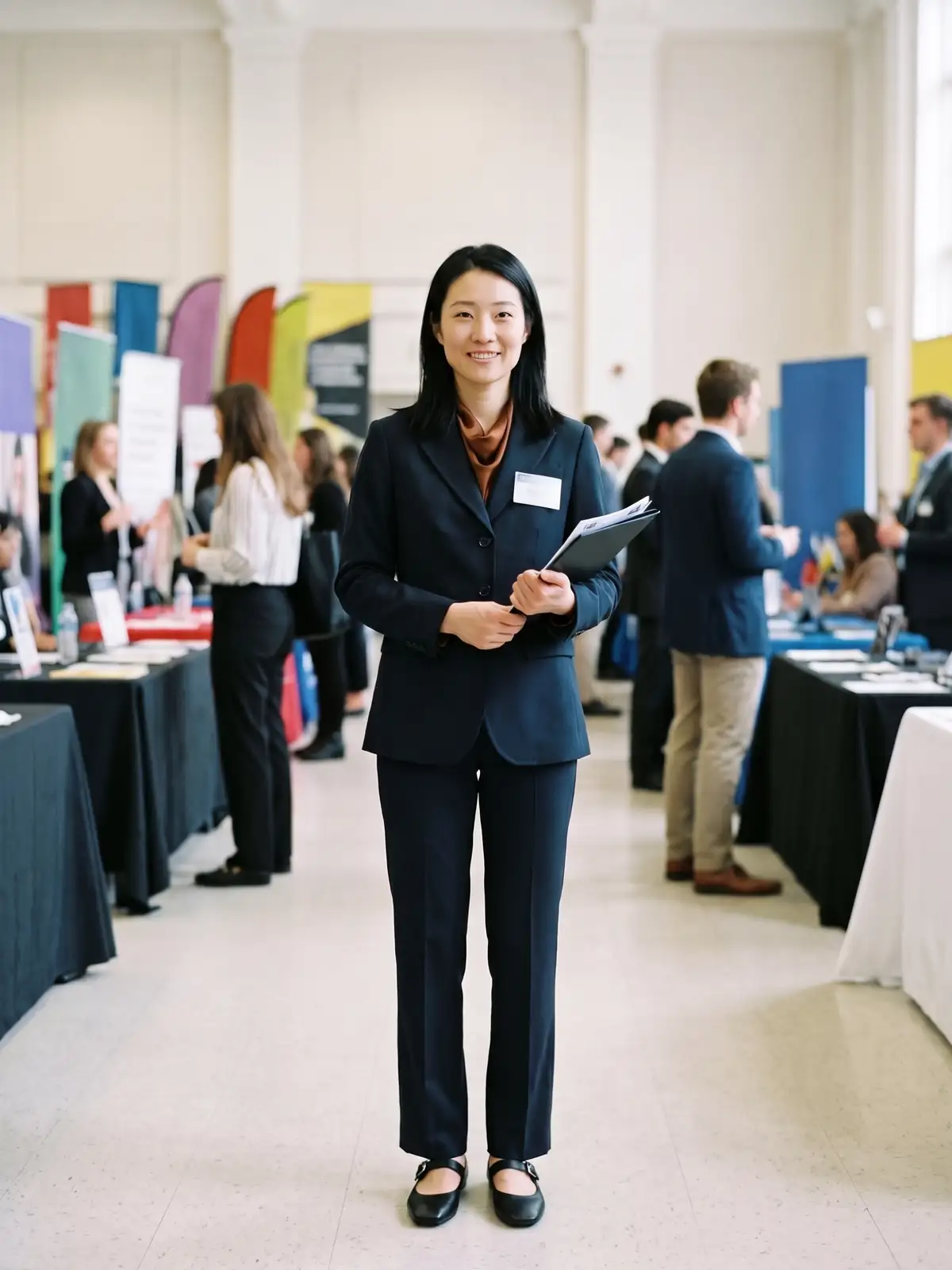
- M&S Womens M&S 3 Button Cinched Single Breasted Blazer, Navy CA$129 no longer sold
- M&S Womens M&S Satin Scarf Neck Blouse, Cognac CA$73.99 no longer sold
- M&S Womens M&S Jersey Straight Leg Trousers with Stretch, Dark Navy CA$52.99 no longer sold
- M&S Womens M&S Leather Buckle Flat Mary Jane Ballet Pump, Black CA$115 no longer sold
The first picture is the answer for most fairs: M&S's navy blazer with three buttons and a cinched waist (CA$129), worn buttoned over its satin scarf-neck blouse in cognac (CA$73.99), with M&S's straight-leg trousers in dark navy (CA$52.99), in a jersey with stretch that is easy to stand in all afternoon, and its leather Mary Jane flats with a buckle in black (CA$115), on a US size 4. The folder and the name tag are described, not sold. It sits at the formal end of business casual: take off the blazer and it is a blouse and trousers; keep it on and it passes at a business school fair. The flats are the point. You will walk the hall for two or three hours.
If an employer invites you to interview the next day, our guide to what to wear to an interview covers that step. This page is about the fair itself.
Business casual or business professional: who asks for which
Most career offices set business casual as the default. Harvard's career center is plain about it: "Business casual is the default attire for career fairs and networking events." Notre Dame's fair guide says suits have become rare at its fairs and that a full suit is "no longer the norm or expectation from employers"; it adds that recruiters themselves often wear short sleeves, slacks and even dress jeans. Indeed's career guide: "In most cases, the dress code is business casual."
Others ask for the level above, and a few enforce it. Here is what the fairs we read actually print:
| School or fair | Rule, as the page words it |
|---|---|
| Texas Tech, engineering job fairs | Business professional "is required"; "Students that are not in dress code will not be allowed into the Fair." |
| Penn State Smeal, business career center | "For career fairs and interviews, we at the BCC strongly recommend that you dress in business professional attire." |
| Virginia Tech Pamplin, Business Horizons fair | "We strongly recommend dressing business professional for the career fair." |
| University of Maryland, engineering | Business professional expected "for most career fairs" |
| University of Illinois, Grainger engineering | "Business professional is recommended, but you do not have to wear a suit if you do not have one." |
| University of Illinois Springfield | "Business casual attire is required for this year's Career Fair. Business professional attire is also acceptable." |
| Stephen F. Austin State | The career center "requires a minimum dress of business casual to attend any career fair on campus" |
| UW-Madison, engineering | Business casual recommended; "If you prefer to wear a suit, go for it!" |
| Harvard, Notre Dame, College of Charleston | Business casual |
| University of Kentucky | Students not in professional dress are offered the "I'm exploring" sticker |
The Kentucky rule is the gentlest form of enforcement and the most revealing. Students dressed professionally can wear an "Internship Seeker" or "Career Ready" sticker; everyone else gets one telling employers they are only looking around.
The pattern is simple. Business casual gets you in almost everywhere; business professional is never wrong, and in business and some engineering fairs it is what recruiters expect. The University of Cincinnati's advice settles the doubt: "When in doubt, go a touch more formal. You can always take off a blazer if the vibe feels more casual". If you are unsure what each level means, our guides to business casual and business professional attire define both with examples.
What makes a fair different from an interview
An interview is one conversation in a chair. A fair is dozens of short ones on your feet. The University of Maryland's engineering career office asks students to treat "the 2-3 minute exchange with an employer at a career fair as a mini job interview", and that is the right frame: the same standard of dress, worn for hours instead of minutes.
Four things change the outfit:
- You stand and walk for hours. Harvard: "For career fairs, there is usually a lot of standing and walking, so keep this in mind when selecting your footwear." Indeed's guide to fairs: "Since you will be on your feet for several hours walking around, look for comfortable shoes to wear."
- The temperature swings. "Career fairs aren't always climate-controlled," the University of Cincinnati warns; a packed arena runs warm, a side room cold. TARGETjobs, the UK graduate site, is shorter: "Layers are your friend." Harvard adds that sweating in a wool jacket will show in your mood and your conversations.
- Your hands are full. You carry résumés, a pen, notes and the flyers and giveaways recruiters hand you. Indeed suggests a small bag, briefcase or folder "to keep your hands free for handshakes".
- The lines are long. You will wait behind other students at the booths you care about. A Texas A&M engineering student who wrote up her four years of fairs remembers the first one: "my feet were bleeding and my confidence was low."
So choose fabrics that do not crease when you sit and do not trap heat, a jacket you can take off and carry, and the most comfortable dress shoes you own.
Career fair outfits for women
Three outfits that clear almost any fair, from the most formal down. The first picture, above, is the fourth: the business casual answer. Our guide to business casual for women has more at that level.

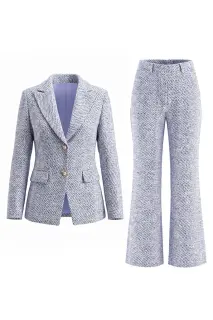 Zapaka 2-Piece Light Blue Tweed Notched Lapel Women Suits $139 Shop at Zapakaaffiliate link
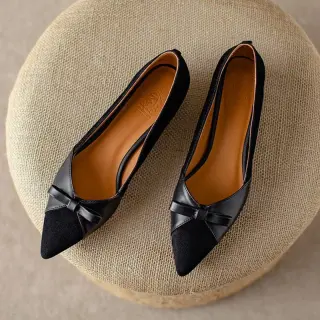 CHIKO Ieasha Pointy Toe Block Heels Pumps Shoes $105 Shop at CHIKOaffiliate link
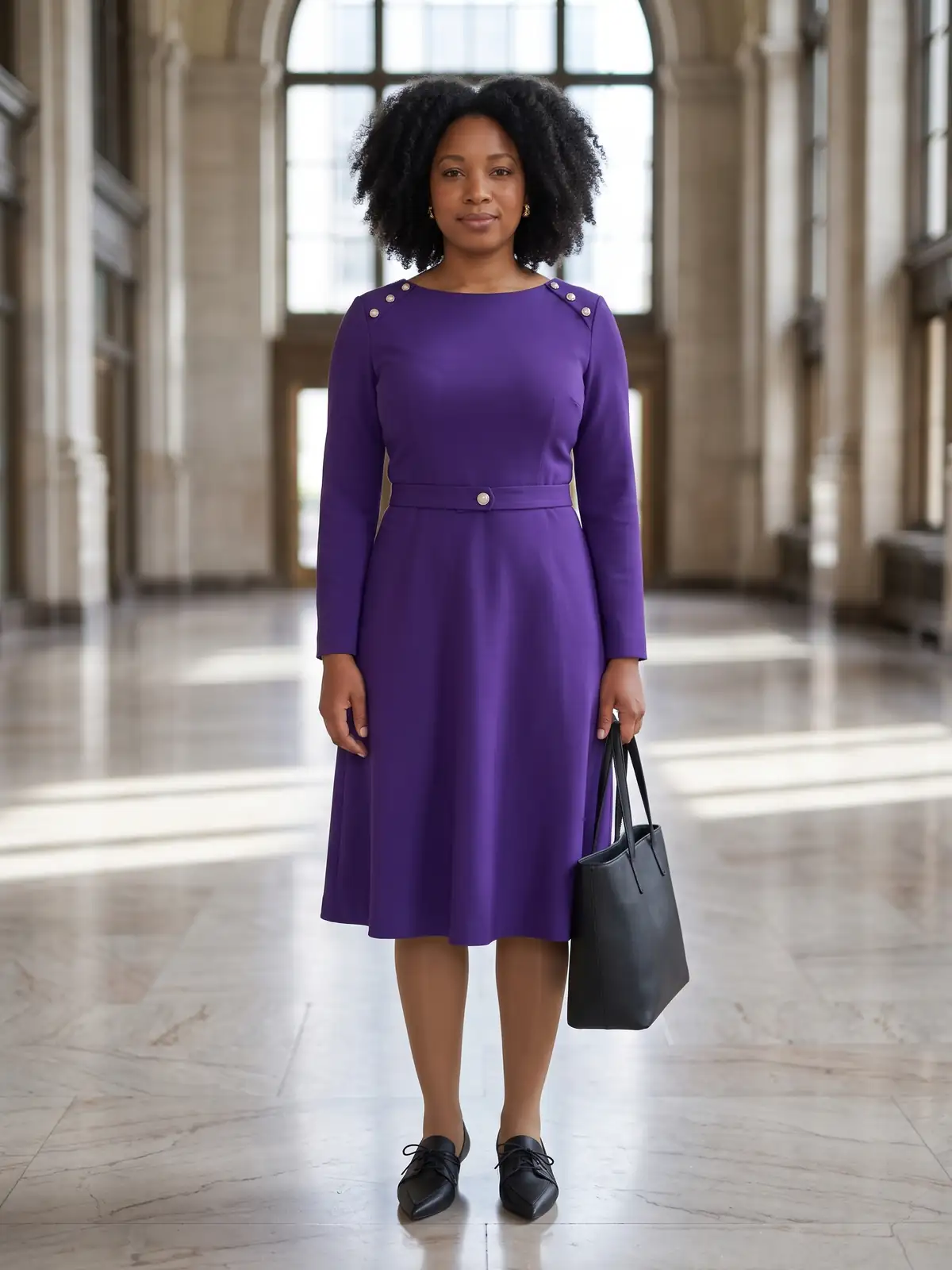
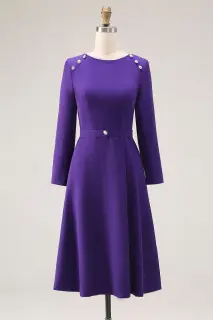 Zapaka Purple A Line Boat Neck Long Sleeve Work Dress $135 Shop at Zapakaaffiliate link
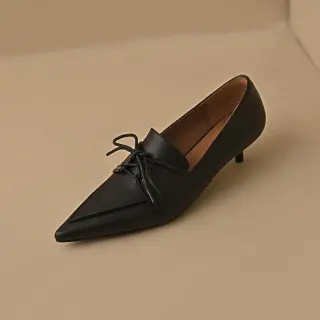 CHIKO Coralee Pointy Toe Kitten Heels Oxfords Shoes $109 Shop at CHIKOaffiliate link
On the left, the suit for a business, finance or consulting fair: Zapaka's two-piece in light blue tweed (US$139), the jacket buttoned over a white top, with matching flared trousers and CHIKO's Ieasha pumps in black (US$105), pointed, with a bow and a low block heel, on a US size 4. The top and the portfolio are described, not sold. Penn State Smeal asks for "a pant suit or skirt suit in a solid neutral color (black, blue, or gray)"; a pale blue tweed is softer than that, so for a bank's booth pick the same cut in navy or gray. The block heel is the right height for a long afternoon.
On the right, the dress that does a suit's job: Zapaka's purple A-line work dress (US$135), with long sleeves, a boat neck and a belt, and CHIKO's Coralee kitten-heel oxfords in black (US$109), on a US size 12. The tote is described, not sold. The University of Cincinnati lists "a professional dress" as a base for women; the sleeves make a blazer optional, which helps in a warm hall.
What the career offices add:
- Hemlines. Illinois Springfield asks for skirts at least knee length. Maryland sets the limit at two inches above the knee and tells you to check it sitting down; Texas Tech bans skirts and dresses shorter than that. TARGETjobs adds a check leaning forward.
- Necklines. Indeed says a blouse should sit no lower than the collarbone. Illinois Springfield rules out skin-tight or very low-cut tops, glitter and a bare midriff.
- Heels. Augustana College: "Wear boots or pumps with heels less than 3 inches." Texas Tech requires flats or low heels and bans stilettos. More on shoes below.
- Trousers. Illinois Springfield does not accept capris or cropped trousers at its fair.
- Spills. Augustana suggests a blouse with a simple pattern, because it hides the small stains of a coffee or a snack between booths.
Career fair outfits for men

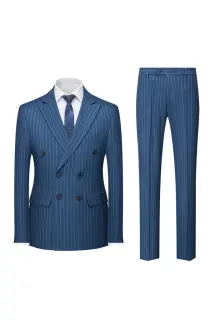 Zapaka Navy Pinstriped Peak Lapel 2 Piece Men's Formal Suits $126 Shop at Zapakaaffiliate link
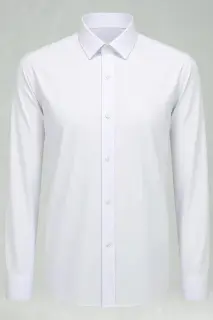 Zapaka White Classic Solid Point Collar Slim Fit Men's Suits Shirt $39 Shop at Zapakaaffiliate link
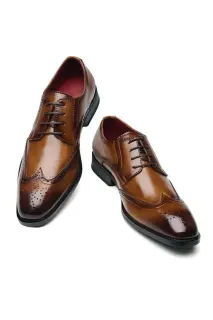 Zapaka Brown Lace-Up Leather Men's Shoes $89 Shop at Zapakaaffiliate link
For a business, finance or law fair: Zapaka's double-breasted pinstripe suit in navy (US$126), its white point-collar shirt (US$39), a navy tie and Zapaka's tan lace-up leather shoes (US$89), on a 40R. The tie is described, not sold. Texas Tech's dress code starts the same way: "If you have a suit, wear it!" Keep a double-breasted jacket buttoned while you stand at the booths.
Without a suit, the career offices agree on the business casual version: dress trousers or chinos in gray, navy, black or khaki, a long-sleeved button-down tucked in, a leather belt, leather shoes and dark socks, with a blazer or sport coat on top. Augustana says no suit is needed if you wear a clean jacket with gray, navy or black trousers and a light shirt; it suggests a subtle pattern to hide lint and coffee. Illinois Springfield accepts a polo for outdoor or warm-season events, and a sweater or sweater vest. Our guide to business casual for men has outfits at that level.
What the career offices add for men:
- The tie is optional and removable. Illinois Springfield and Texas Tech both say so. Marquette's career center asks that a tie reach below the belt line and rules out flashy or cartoony ones.
- No collarless shirts at Texas Tech's engineering fairs; polos are fine at Illinois.
- Socks. Indeed wants dark socks that cover your legs when you sit; Marquette rules out athletic socks.
Outfits for any wardrobe
The University of North Carolina's career center writes its guide by level, not by gender, and it is the clearest model. Business professional, which it calls "Best for interviews, career fairs, or corporate visits": a structured blazer, a collared or modest high-neck top such as a button-up, a mock neck or a blouse, and dress trousers or a skirt at the knee or longer, "whichever style fits your identity and comfort". Business casual: a sweater, button-up or blouse; trousers, chinos or a midi skirt; an optional blazer, cardigan or overshirt. Any piece in this guide can be worn by anyone; pick the level, then the pieces you are comfortable in.
Shoes for hours on your feet
Shoes are where career fair advice parts most from interview advice. Every office we read asks for closed-toe, clean, professional shoes, and almost every one adds that you must be able to walk in them all afternoon. North Dakota State wants shoes "you can stand and walk in for several hours", and "probably not busted up sneakers".
- Heel height. Under three inches (Augustana); flats or low heels, no stilettos (Texas Tech); low- to medium-height heels (Indeed); UNC asks you to "avoid flip-flops, very high heels or heavily worn sneakers". Illinois Springfield's rule is the most practical: a heel height suited to the amount of walking you will do.
- The student verdict. The Texas A&M student's first tip after her blistered first fair: "Skip the heels, wear flats". She also packs band-aids.
- A back-up pair. TARGETjobs suggests carrying smart flat shoes in your bag if you wear heels.
- Styles that pass. Flats, pumps with low heels, loafers, oxfords, wingtips, brogues and low ankle boots appear across the lists. Illinois Springfield suggests dark shoes and says white and pastel ones are not generally suggested.
- Sneakers. Harvard, Texas Tech and TARGETjobs rule them out ("Don't wear trainers, even if they're black."). UNC accepts "Flats, low boots, or minimalist sneakers (if appropriate for the setting)" at business casual level, which mostly means tech.
Wear the shoes for a few hours before the day, never new on the morning of the fair. For what podiatrists say about soles and heel support, see our guide to the best shoes for standing all day.
What to carry, and the bag rules
A slim folder or padfolio. It holds your résumés, a pen, a notepad and everything recruiters hand you, and it looks better than a backpack. Ohio State, North Dakota State, Maryland, UW-Madison and Penn State Smeal all list one. Virginia Tech notes that its bookstore sells folders for under $5.
How many résumés? The advice does not agree:
- Ohio State: "at least two per organization".
- Kentucky: "Print one resume for every employer you are interested in and then add five more".
- Virginia Tech's business fair: a minimum of 15 paper copies.
- Indeed: "It is best to bring at least 20 copies of your resume to a job fair."
- UT Austin: bring extras, but "don't feel the need to hand one out to everyone you meet".
- Alberta and Loughborough say printed copies are optional, because many employers recruit online. The University of South Australia goes further: it says "it is not recommended that you hand out your resume on the day".
The honest answer: check your fair's page, print one per employer on your list plus a few spares, and do not be hurt if a recruiter sends you to apply online. Marquette's career center warns about exactly that: "Do not be discouraged if the employer cannot accept your resume since they may be instructed to tell prospective job candidates to apply online."
Bags and coats depend on the venue. Read your fair's page before you pack:
| Fair | Bag and coat rule |
|---|---|
| Georgia Tech, College of Computing (arena) | No bags inside; bag check outside; metal detectors; "we highly discourage bags and recommend you travel light" |
| Virginia Tech, Business Horizons | "We strongly recommend that students DO NOT bring their backpacks to the event." Backpacks are checked in a separate room |
| University of Kentucky | Bag drop at check-in, before the fair; keep your phone for the QR check-in at each booth |
| University of Nebraska-Lincoln | A drop-off zone for coats and backpacks near check-in |
| University of Illinois, engineering | A bag drop that is not watched: "This area is not monitored; leave your bag at your own discretion." |
| University of Colorado Boulder | "Keep your bag with you (no bag drop available)." |
| UW-Madison, engineering | "It is ok to bring your backpack as you may be coming from or going to class after attending the fair" |
In winter, wear a coat you do not mind checking or carrying over an arm. Indeed suggests leaving the jacket in your car or checking it on arrival so your hands are free.
The rest. Your student ID, a phone with the fair's app or map, two pens, breath mints and a small kit (Maryland lists a safety pin, comb, nail file and lint roller). If you are handed a name tag, Maryland and Marquette both say to wear it on your right side, so it sits in line with your hand when you shake. Our picture has it on the left: follow the career centers, not the picture.
What to wear, field by field
| Fair or field | What the sources say |
|---|---|
| Business, finance, consulting, law, government | Business professional: a suit, or a matching jacket with trousers or a skirt, in navy, gray or black |
| Engineering and STEM | Split: business professional required at Texas Tech, expected at Maryland, recommended without a suit at Illinois; business casual recommended at UW-Madison |
| Computing and tech | Business casual; Georgia Tech says its fair follows tech's casual codes, but with "no ripped clothing, no flip flops, and no revealing attire permitted" |
| Hospital and nursing job fairs | "Wear an interview suit", with conservative jewelry and shoes and a leather portfolio, says UK HealthCare's nursing career center |
| Architecture, design, creative | Some creative license, but "Dress like you care" (WashU); err on the formal side for portfolio reviews (RISD) |
| Education, nonprofits | Business casual is common (UNC) |
| Community job fairs, career changers | Check the exhibitor list and dress for your target employers, not for the crowd (Military.com) |
A few notes behind the table.
Nursing. UK HealthCare, the University of Kentucky's hospital system, treats a hospital job fair as an interview: "conservative jewelry, conservative shoes and carry a leather portfolio or folder", résumés on bonded paper in a quiet color, and a targeted version for each unit you want, such as the NICU or oncology.
Architecture and design. WashU's career center says firms give each student 10 to 20 minutes, so the portfolio matters more than the clothes, but the dress rule still holds: "Imagine going to a nice dinner for someone you care about." Harvard notes that the fashion industry may expect a different level of style altogether.
Tech. Even where recruiters wear company T-shirts, the career offices ask students to dress one level up. Augustana's advice is to stay conservative even for casual tech companies; Harvard's is to note the industry standard before you go.
Virtual career fairs
Virtual fairs run on platforms like Handshake, with group sessions and short one-on-ones. Handshake calls the one-on-ones "10 minute conversations"; video is optional but it recommends turning it on for them.
What to wear on camera:
- At least the top half, properly. Handshake: "But you don't have to have the full head-to-toe ensemble"; a collared shirt or dressy sweater is enough. TARGETjobs disagrees and asks for the whole outfit: "Your leopard print pyjama bottoms might be comfortable but they could also raise a couple of eyebrows" if you stand up with the camera on.
- How formal. Handshake says business casual works best. Arizona State goes further: "We recommend wearing business professional clothing to a virtual event as you would to an in-person fair." Maryland's engineering office sits between them: a shirt and tie but no jacket, or a nice blouse.
- Plain colors. Handshake: "Leave the busy patterns or statement accessories in your closet; these won't translate well on video."
- Light and background. RISD: "Make sure the light is in front of you, not behind you." It warns that virtual backgrounds can distort or pixelate you; a tidy wall works better. The University of Toronto Mississauga asks for a well-lit, clutter-free background.
- Test it. Handshake suggests testing the outfit on video before the day.
Virtual fairs are shrinking. In NACE's employer survey, the share of employers taking part in virtual fairs fell from 94.2% in 2021 to 74.0% in 2023 and 58.8% in 2024, and fewer than one-fifth rated them effective. For 2024-25, NACE reports that "93.9% of respondents indicated they will hold career fairs in person, while 33.2% of respondents will hold a virtual career fair". Dress for the hall first.
Career changers, veterans and job seekers over 25
Most career fair advice is written for 20-year-olds, but community job fairs and alumni fairs draw people at every stage. NACE's data shows older students go less often: "Twenty-nine percent of nontraditional-aged students attended a career fair in the past year", against almost half of students under 25.
The rule does not change with age, but the reference point does. Military.com's advice for veterans is to get the exhibitor list, check the dress norms of the companies you want, and "wear a suit if the companies and positions you seek require a more formal dress code", whatever the crowd wears. It notes that not knowing what to wear in a civilian workplace is one thing veterans say stresses them. If you have worked for years, wear what you would wear to meet a client in your field, one level up if in doubt.
On a budget
You do not need new clothes. Almost every campus we read runs a free career closet: Kentucky lends "three pieces of professional attire per semester", Penn State's closet asks students to take one outfit each, Warwick's WorkWear Wardrobe lets students take clothes away on the day, and Cincinnati, Texas Tech, Stephen F. Austin, North Dakota State and Michigan run their own, free to borrow or keep. The University of Cincinnati also suggests thrift and consignment shops for blazers and dress shoes, and swapping with friends.
If you are buying, Stephen F. Austin's starter list is the right order: dark slacks, a coordinating blazer, a button-down top and comfortable dress shoes. That set covers a fair, an interview and a first month of business casual.
What not to wear
The lists are long and remarkably similar. Avoid:
- Jeans, especially ripped or distressed ones. Texas Tech bans "Denim of any color"; Illinois Springfield says no jeans or denim; Notre Dame and UW-Superior flag only distressed ones.
- T-shirts, hoodies, sweats, joggers, leggings and gym clothes. Ohio State, Notre Dame, Cincinnati State and UW-Superior all list them.
- Shorts, cargo trousers, caps and hats (Texas Tech, Cincinnati State).
- Flip-flops, sandals, stilettos and worn-out sneakers.
- Low-cut, skin-tight or cropped tops, and anything with large text or slogans.
- Wrinkles, stains, frayed seams and pilling. UW-Superior lists visibly worn clothing first.
- Strong perfume or cologne. Maryland notes employers may be averse to it; Michigan's School of Information also tells students to avoid strong fragrances.
And try the outfit on a few days before. Augustana's career center says that too often students show up to fairs in ill-fitting clothes.
Do career fairs still lead to jobs?
They do, for a meaningful share of students. In NACE's 2024 student survey of 20,482 college students, more than half had attended a career fair in the past year, and among them "more than 45% indicated they received an offer to interview with an organization after the fair and nearly one-quarter were offered a job post-fair." Employers agree: in NACE's 2025 internship survey, more than two-thirds rated in-person fairs effective.
The figure from a single school is more sobering. At the University of Michigan's School of Information, "8-10% of UMSI students report getting jobs and internships directly from the UMSI career fair". The fair opens the door; the follow-up email and the application do the rest. UT Austin suggests following up with an email and your résumé within 48 hours.
Where the sources disagree
Suit or no suit. Notre Dame says suits are no longer expected; Penn State Smeal strongly recommends business professional; Texas Tech turns students away without it; UMSL's career services calls a suit "always a good option". The answer depends on your field and your fair's page.
How many résumés. From "at least two per organization" (Ohio State) to 20 (Indeed) to none on the day (South Australia, Loughborough). Print for your list, plus spares.
Jeans. Banned at Texas Tech and Illinois Springfield, avoided at Michigan's School of Information and Marquette. Yet Notre Dame says employers themselves wear dress jeans. Students should not.
Sneakers. Ruled out by Harvard, Texas Tech and TARGETjobs, accepted in minimalist form by UNC for business casual settings.
The whole outfit on camera, or the top half. Handshake says the top half; TARGETjobs and Arizona State say the whole outfit, as in person.
Self-expression. Harvard: "Wear your favorite color, and your power heels!" Michigan's School of Information says a "thoughtful pop of color is OK". An older 2017 engineering column from Iowa State's student paper asked for dark suits and no bright colors. Recent career offices lean toward Harvard's view, within a conservative base.
Even one page can disagree with itself. Cincinnati State's tip sheet tells students to "Select a business professional outfit to wear to the job fair." A few lines later, its attire section says "Business casual is usually appropriate". If your fair's own page is that unclear, wear the more formal option.
In the United Kingdom, Canada and Australia
United Kingdom. British universities call them careers fairs, and TARGETjobs notes that many students dress more casually there than at an interview. Prospects, the UK graduate careers site: "you don't need to be in formal business attire". Loughborough University: "Wearing a smart top and a casual bottom is sufficient". Warwick asks for smart-casual or professional. TARGETjobs adds the caveat for law, finance and management consulting, where business wear is the safe bet; recruiters "will care if they can't imagine putting you in front of a client". Loughborough searches bags at the entrance and asks students to avoid bringing them, and says "There is no need to bring it in paper form to the event", meaning your CV. Prospects suggests going alone: "Don't go with eight of your best friends".
Canada. The University of Toronto Mississauga: "Present yourself as if attending a job interview." The University of Alberta is more relaxed and practical: "Take note of what the recruiters are wearing at the booth", and "Employers at fairs understand that you are a student and may not have the time or resources to dress formally." It asks for neat, not overly casual. At UBC, "What should I wear?" is one of the questions career strategists hear most before a fair.
Australia. Fairs are often called careers expos. The University of Sydney says "employers don't expect you to wear a suit at a Careers Fair", but you should look professional. The University of South Australia asks students to dress as for a job interview, suggests a name tag with your name, discipline and university, and advises against handing out résumés on the day.
Questions people ask
What should you wear to a career fair?
Business casual unless told otherwise: tailored trousers or a knee-length skirt, a collared shirt, blouse or fine knit, a blazer and closed shoes you can walk in. For business, finance, law or a fair that asks for it, wear a suit.
What should a woman wear to a career fair?
A blazer over a blouse with tailored trousers or a knee-length skirt, or a tailored dress with sleeves, in navy, gray, black or another quiet color. Add flats or low heels under three inches and a slim folder. For a business fair, a pant suit or skirt suit.
What should a man wear to a career fair?
Dress trousers or chinos, a tucked-in button-down shirt, a leather belt, leather shoes and dark socks, with a blazer. A tie is optional at most fairs. For business, finance or law, a navy or gray suit with a tie.
Is business casual OK for a career fair?
At most fairs, yes: it is the default at Harvard, Notre Dame and many engineering fairs. Some business and engineering fairs recommend or require business professional, so check the fair's page.
Can you wear jeans to a career fair?
Avoid them. Many fairs ban denim outright, and the rest rule out ripped or distressed jeans. Even where recruiters wear dress jeans, students are asked to dress one level up.
Can you wear sneakers to a career fair?
Usually not. Most career offices ask for leather dress shoes, flats or low heels. Clean minimalist sneakers can pass at a business casual tech fair, but polished flats or loafers are as comfortable and never wrong.
Should you wear a suit to a job fair?
If you have one and are aiming at business, finance, law, consulting, government or hospital roles, yes. For tech, education and most general fairs, a blazer with trousers or a skirt is enough.
What should you wear to a virtual career fair?
Dress at least the top half as you would in person: a collared shirt, blouse or dressy sweater in a plain color, ideally with a blazer. Sit with the light in front of you and test the outfit on camera first.
Can you bring a backpack to a career fair?
It depends on the venue. Some fairs ban bags inside or check them in a separate room; others allow backpacks. Carry a slim folder or padfolio and check your fair's page before you go.
Sources
- Indeed Editorial Team: What To Wear To a Job Fair (updated June 15, 2026)
- Indeed Editorial Team: The Best Ways To Find a Job at a Career Fair (updated June 16, 2026)
- University of Cincinnati, Samantha Green: Career fair outfits: How to make a great first impression (October 3, 2025, updated March 25, 2026)
- University of Missouri-St. Louis Career Services: What to wear to a career fair
- The Ohio State University Career Resource Guide: What to Do Before the Career Fair
- The Ohio State University Career Resource Guide: What To Do During the Career Fair
- Harvard FAS Mignone Center for Career Success: MCS Professional Attire Guide (August 22, 2023, updated September 4, 2026)
- University of Notre Dame Center for Career Development: How to dress for a career fair (PDF)
- Penn State Smeal Business Career Center: What do I Wear to Interviews and the Career Fair? (September 18, 2019)
- Penn State News, Jenna Kyger Lewis: Professional Attire Closet available for students prior to Fall Career Days (September 5, 2017)
- University of Illinois Springfield Career Development: Career Fair Student Dress Code
- Augustana College Career Development: Not Sure What To Wear To A Career Fair (February 13, 2024)
- UConn Center for Career Readiness and Life Skills: How to Prepare for a Career Fair (September 24, 2025)
- University of Colorado Boulder, Student Life: How to prepare for career fairs
- Virginia Tech Pamplin College of Business: Business Horizons Career Fair
- University of Kentucky Stuckert Career Center: All Majors Career Fair
- University of Nebraska-Lincoln Career Services: Career Fair and Events Information for Students
- University of Illinois Grainger Engineering Career Services: Career Fair Tips
- University of Maryland Engineering Career Services: Career Fair Success (2020, PDF)
- Georgia Tech College of Computing: Spring 2024 Career Fair FAQ, In-Person (PDF)
- UW-Madison Engineering Career Services: Career Fairs
- Texas A&M Engineering, Ingenium student blog: Anna's Declassified Career Fair Survival Guide (August 28, 2019)
- Texas Tech Whitacre College of Engineering: In-Person Job Fair Dress Code (2022, PDF)
- NACE, Kevin Gray: Employers, Students Favor In-person Career Fairs (March 10, 2025)
- NACE, Kevin Gray: In-person Activities More Effective Than Virtual Ones for Recruiting Interns (April 21, 2025)
- NACE, Kevin Gray: More Than Half of Students Attended a Career Fair in the Past 12 Months (October 7, 2024)
- NACE, Mary Gatta: Nontraditional-Aged College Students and Career Preparation (October 28, 2024)
- Handshake, Brinton Botkin: Plan Your Virtual Career Fair Outfit in 30 Seconds or Less (February 12, 2021, updated December 25, 2025)
- Handshake: Your 10 Biggest Virtual Career Fair Questions, Answered (October 2, 2020, updated August 25, 2023)
- UT News, Rosalind Faires: 8 Things To Do (and Not Do) Before a Career Fair (February 16, 2022)
- University of Michigan School of Information: How to stand out at a career fair, according to experts (January 22, 2024)
- WashU Center for Career Engagement, Alex Harner: Alex's 11 Tips for Navigating the Architecture Career Fair (February 13, 2026)
- RISD Career Center, Design Portfolio Review: Student FAQ
- Stephen F. Austin State University Career Center: Professional Dress
- North Dakota State University Career and Advising Center: Tips for the Career Expo! (February 7, 2023)
- Cincinnati State Career Center: Career Fair Tip Sheet (updated February 11, 2026)
- UK HealthCare Nursing Career Center: Preparing for a Nursing Job or Career Fair
- Military.com, Lida Citroen: How Job Seekers Should Decide What to Wear (February 8, 2017, updated June 28, 2023)
- Iowa State Daily, Bridget Degnan: Dressing for a Career Fair: College of Engineering (January 29, 2017)
- Marquette University Career Center: Making the Most of a Career Fair
- University of North Carolina Career Center: Interview and Career Fair Attire (August 16, 2025)
- College of Charleston Career Center, Cougar Career Column: What to Wear vs. What Not to Wear, Career Fair Edition (February 2024)
- Arizona State University, Hey Sunny: How to prepare for virtual career fairs
- University of Wisconsin-Superior: Prepare for the Fair: Dress for Success (PDF)
- TARGETjobs editorial team: Careers event tips: what to wear and how to prepare (updated January 25, 2023)
- Prospects, Jemma Smith: 5 ways to make the most of careers fairs (August 18, 2026)
- Loughborough University Careers Network: Futures Careers Fair
- University of Warwick Careers: Autumn Careers Fair 2025
- University of Toronto Mississauga Career Centre: Tips, Career Fairs
- University of Alberta Career Centre: Guide to Career Fairs
- UBC Faculty of Arts, Robyn Stalkie: Career Fairs 101: Your guide to showing up and standing out (March 2, 2026)
- The University of Sydney: 7 ways to impress at the Careers Fair (2017)
- University of South Australia Careers: 2024 Expo students tips and tricks (PDF)
The images in this guide are AI-generated: real garments from our catalogue, shown on our own recurring models and made from the shops' photos of each piece. They are not photographs of real people. Prices are the ones the shops showed on November 21, 2026 and can change. Wear It On Me earns a commission when you buy a garment through an affiliate link in a guide (the links are marked, and it costs you nothing extra); a commission never decides what we recommend. How we make these guides.