Business casual: what it means, what to wear and the rules nobody agrees on
Business casual means tailored pants or a skirt, a collared shirt or a blouse and leather shoes, no suit and no tie. The rules on jeans, sneakers and polos.
Wear It On Me earns a commission on garments bought through affiliate links in our guides. That never decides what we recommend. Details.
Business casual means clothes you could wear to a client meeting without a suit: tailored pants, chinos or a knee-length skirt or dress, a collared shirt, a blouse or a fine-gauge sweater, and closed leather shoes. A blazer is welcome and a tie is optional. That is the part everyone agrees on. The rest (jeans, sneakers, polos, open toes, how short a skirt can be) depends on who you ask, and this page shows who says what, so you can pick the reading that fits your office. The five outfits on it are built from pieces you can buy, each worn by one of our regular models.
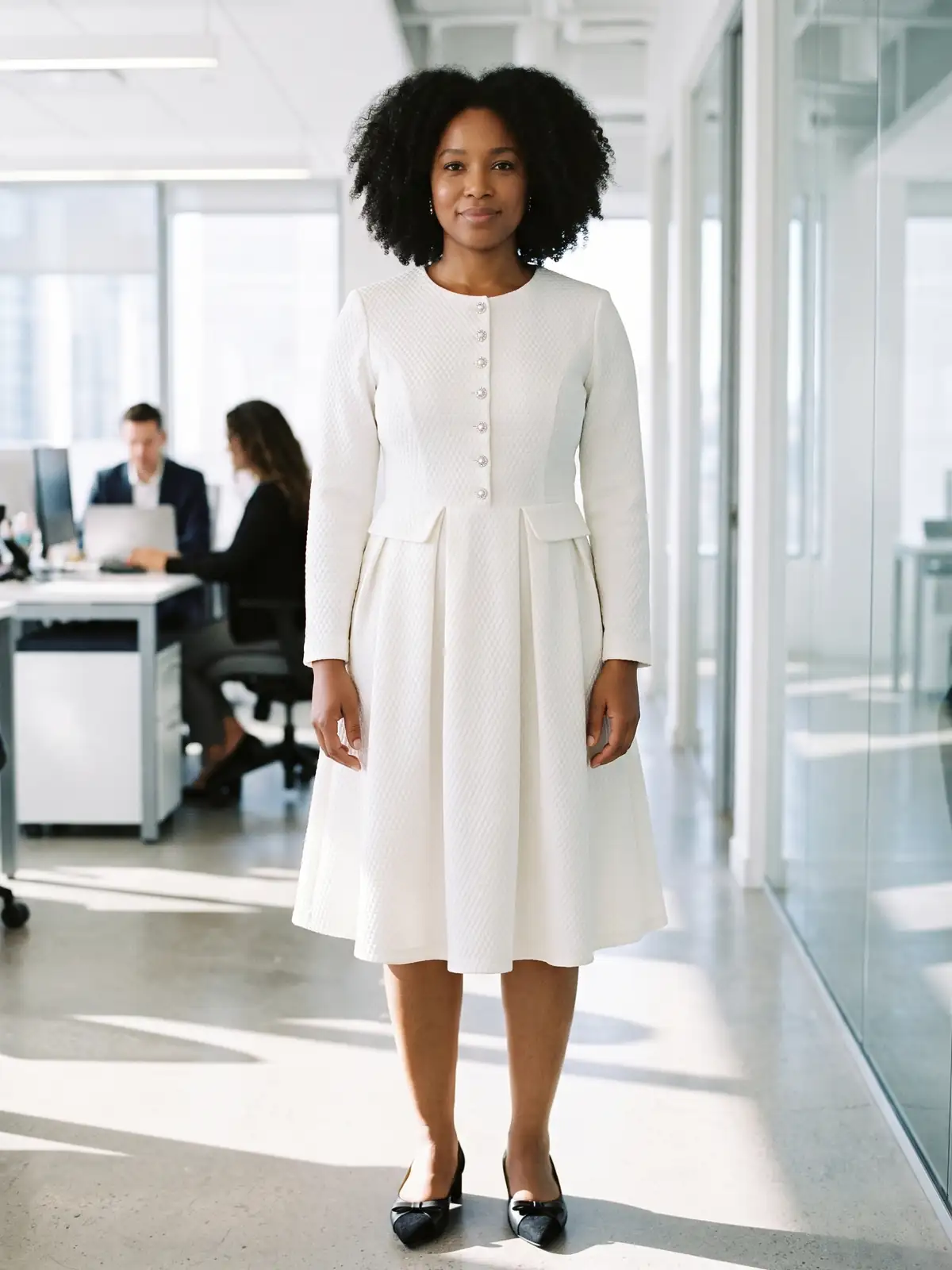
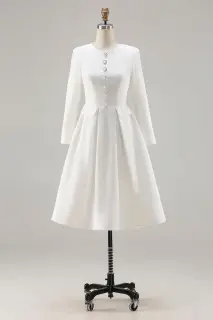 Zapaka A Line Round Neck Midi Ivory Work Dress $129 Shop at Zapakaaffiliate link
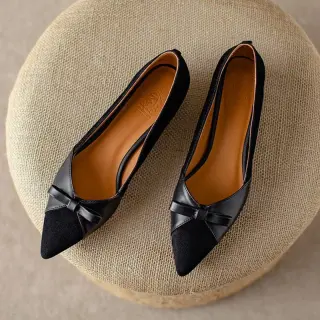 CHIKO Ieasha Pointy Toe Block Heels Pumps Shoes $105 Shop at CHIKOaffiliate link
What business casual means
The Emily Post Institute, the American etiquette authority, defines it by list. For women: "Skirt, khakis, or pants", an "Open-collar shirt, knit shirt or sweater (no spaghetti straps or décolleté)", or a "Dress". For men: a "Seasonal sport coat or blazer with slacks or khakis", a "Dress shirt, casual button-down shirt, open-collar or polo shirt", an "Optional tie", and "Loafers or loafer-style shoes, and socks".
Career sites say the same thing with different edges. Indeed, the job site, lists the bottoms as "Slacks or business dress pants, khakis, chinos, knee-length skirts, dark jeans without holes" and the shoes as "Closed-toed shoes such as loafers, Oxfords, boots, pumps or flats". Matthew Cowley, quoted by the University of Florida's career center, gives the shortest version: "It's a more relaxed version of business professional." Creighton University's career center gives the best test I have read: the clothes should be "crisp, neat, and should look appropriate even for a chance meeting with a CEO."
Notice what those three already disagree on. Indeed allows dark jeans; Emily Post does not mention them. Emily Post allows a polo; plenty of offices do not. This is normal. Wikipedia opens its article by calling business casual "an ambiguously defined Western dress code", and Georgetown University's business school tells its students there is "no clear or standardized definition". The phrase describes a zone between a suit and weekend clothes, and each employer draws its own lines inside it.
The business casual checklist
This table sorts the usual pieces by how safe they are. The first column works in any office that says business casual. The second works in most and is the one to check. The third is outside the dress code almost everywhere.
| Always fine | Depends on the office | Leave at home | |
|---|---|---|---|
| Tops | Button-down or dress shirt, blouse, fine sweater, cardigan, blazer | Polo shirt, sleeveless blouse, plain crew-neck T-shirt under a blazer | Graphic T-shirts, hoodies, crop tops, spaghetti straps |
| Bottoms | Tailored pants, chinos, khakis, knee-length or midi skirt | Dark jeans with no rips or fading, ankle pants | Ripped or faded jeans, leggings as pants, shorts, sweatpants |
| Dresses | Sheath, shirt dress, A-line or wrap dress to the knee or below | Sleeveless dress without a jacket, maxi dress | Mini dress, bodycon, sundress |
| Shoes | Loafers, oxfords, derbies, flats, pumps, ankle boots | Clean leather sneakers, open-toe heels, dressy sandals | Flip-flops, running shoes, worn-out anything |
| Extras | Leather belt, watch, simple jewelry, a structured bag | Tie (never wrong, rarely needed), visible tattoos and piercings by office | Baseball caps, gym bags as a work bag |
The middle column is where every argument in this guide lives, and the sections below take them one at a time.
Business casual for women
The picture at the top of the page is the simplest answer: a dress with sleeves, a hem below the knee and a closed shoe. The dress is Zapaka's ivory A-line work dress (US$129), with a round neck, long sleeves and a row of pearl buttons to the waist. It needs nothing else to be office-ready, which is the point of a work dress. (The women's wardrobe has its own page, business casual for women, with six outfits and the survey figures on jeans, sandals and leggings.) The shoes are CHIKO's Ieasha pumps (US$105), black, pointed, with a small bow and a low block heel.
Two things about that outfit follow rules that career centers actually write down.
Hemlines. Virginia Tech tells students "Skirts should be knee-length". Duke University says "Hemlines should not be above the top of your kneecap". The University of Tennessee is the most generous of the three, at "No more than approximately two inches above the kneecap". Indeed's list says "knee-length skirts". So the knee is the line, and a midi clears it in every chair you will sit in.
Heels. You do not need them. Gardner-Webb University puts it in capitals: "Heels are NOT required". Corporette, the long-running workwear blog for women in law, finance and consulting, says "you don't need to necessarily wear heels anymore". If you do wear them, the University of Georgia caps the height at "no higher than 3.5 inches" and Tennessee advises against anything over two. A low block heel like the one in the picture satisfies all of them, and you can walk to a meeting in it.
The pantsuit, and what to wear under it
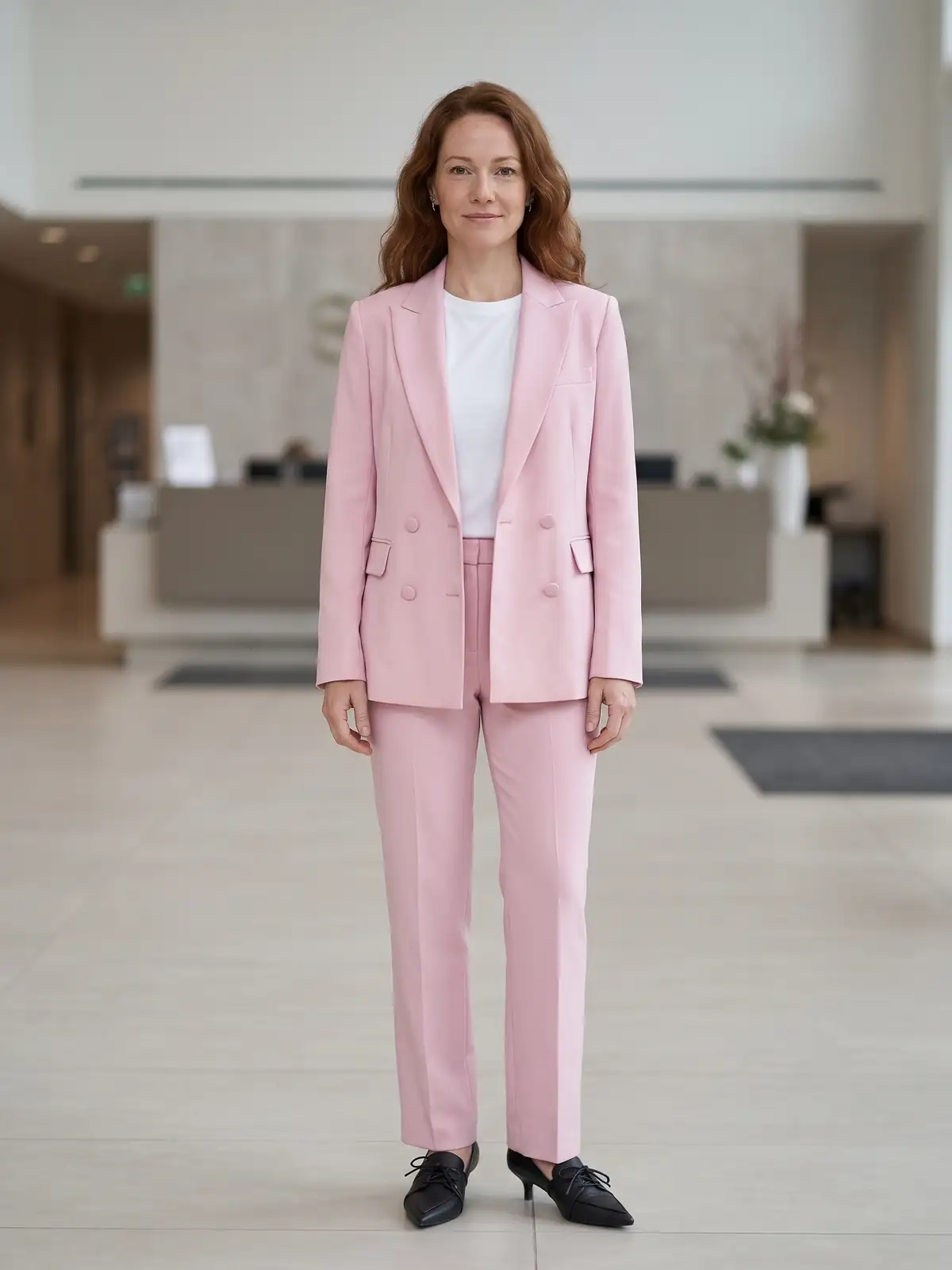
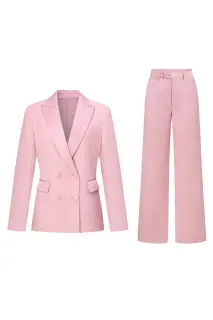 Zapaka Blush Double Breasted 2 Piece Women's Suit $125 Shop at Zapakaaffiliate link
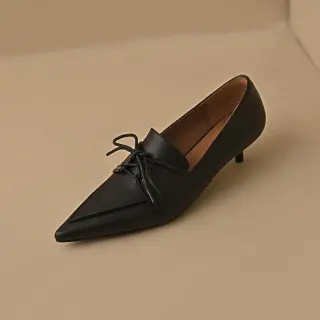 CHIKO Coralee Pointy Toe Kitten Heels Oxfords Shoes $109 Shop at CHIKOaffiliate link
A matching suit is allowed in business casual as long as it does not look like the suit you would wear to court. Color does that work here. This is Zapaka's blush double-breasted two-piece (US$125): a long double-breasted jacket over straight pants, in a pink that no one will mistake for business professional. A plain white top under it, with no collar, takes it down another step. The shoes are CHIKO's Coralee (US$109), black pointed lace-up oxfords on a kitten heel, which read as a flat from the front.
The stylist Cassandra Sethi, who runs the New York firm Next Level Wardrobe, calls the jacket the key piece: "A well-fitted blazer is the easiest way to dress up any outfit." It is also the easiest piece to take off when the office turns out to be more relaxed than you expected. Wear the suit together on the first day, then split it: the jacket over a dress, the pants with a sweater.
Corporette sums up where women's business casual stands now: "Business casual for women isn't one thing anymore." A dress and flats, a pantsuit with a T-shirt, and tailored pants with a blouse all count. If you are choosing between cuts, our guide to how to dress for your body type shows the same dresses on different women. What does not count is on the right of the checklist above. Sethi is direct about the most common question: "Nope, leggings are not business casual." Tennessee's career center agrees: "Avoid leggings, sweatpants".
Business casual for men
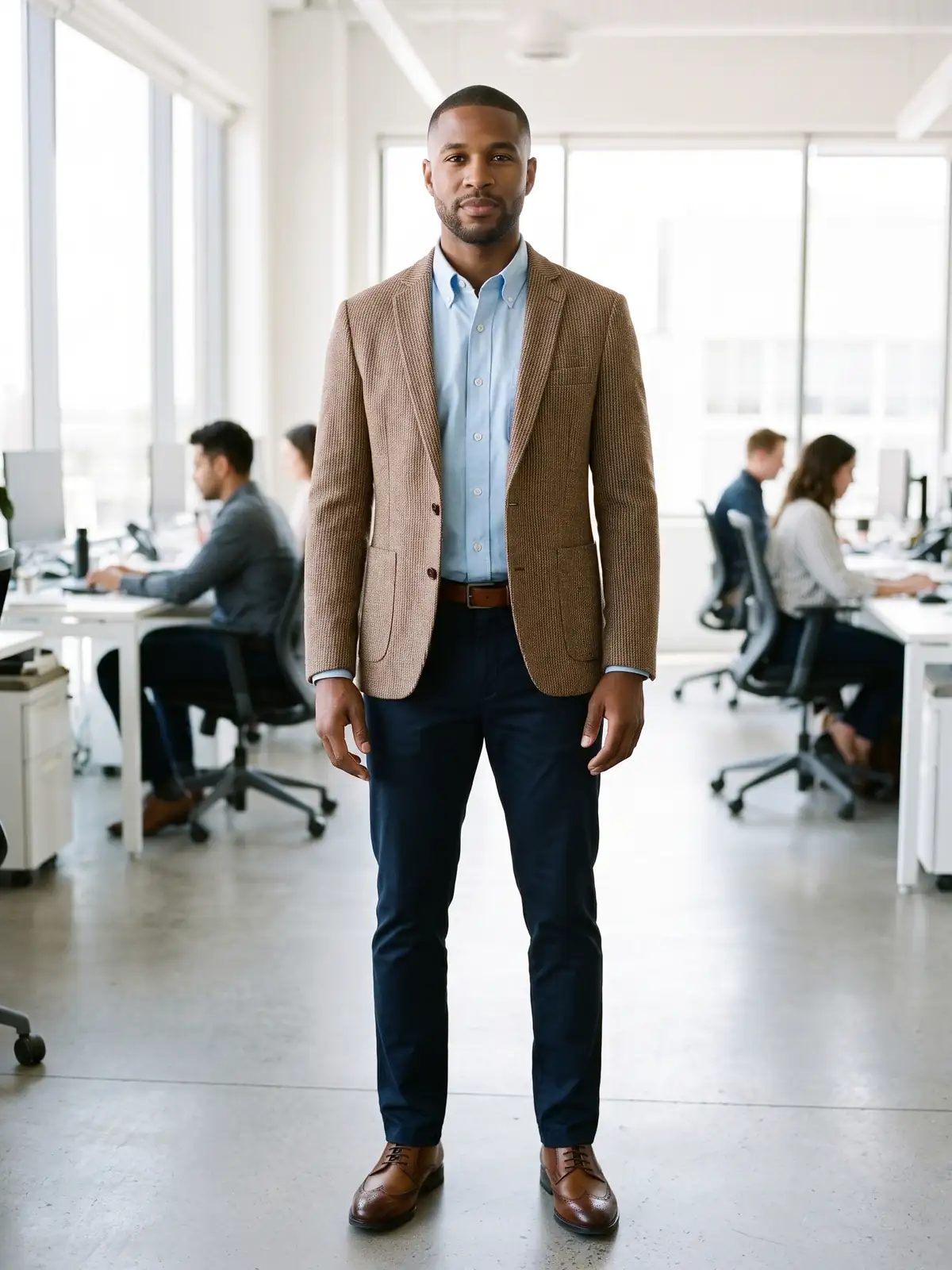
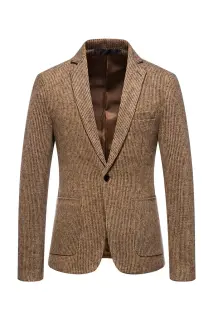 Zapaka Khaki Tweed One Button Notched Lapel Men's Blazer $79 Shop at Zapakaaffiliate link
- Farah Brewer Relaxed Fit Oxford Shirt In Sky Blue £70 no longer sold
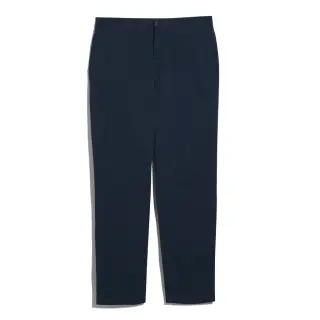 Original Penguin Straight Fit Chinos In Dark Sapphire £56 Shop at Original Penguinaffiliate link
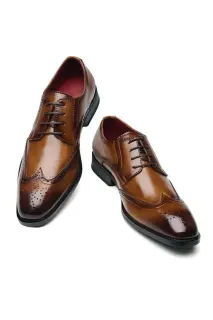 Zapaka Brown Lace-Up Leather Men's Shoes $89 Shop at Zapakaaffiliate link

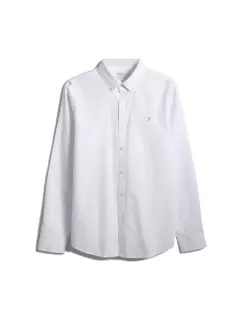 Farah Brewer Slim Fit Oxford Shirt In White £45.50 Shop at Farahaffiliate link
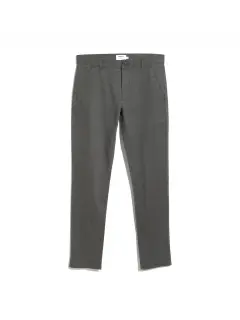 Farah Elm Slim Fit Chinos In Charcoal £42 Shop at Farahaffiliate link
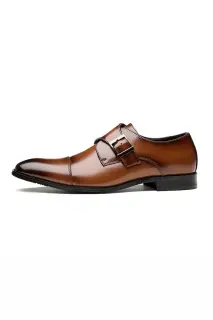 Zapaka Brown Slip-On Leather Men's Party Shoes $89 Shop at Zapakaaffiliate link
For men the formula is shorter: a collared shirt, chinos or wool pants, a belt and leather shoes, with a blazer on top when the day calls for it. The University of Georgia notes that "Ties are generally not necessary for business casual", and Gardner-Webb describes the top half as a "Well pressed collared shirt or polo shirt. A sport coat is optional."
The first picture is the dressier end. The jacket is Zapaka's khaki tweed blazer (US$79), a single-button sport coat with notched lapels. Under it, Farah's Brewer oxford shirt in sky blue (£70), collar buttoned down and open at the neck. The chinos are Original Penguin's straight fit in Dark Sapphire, a deep navy (£80), and the shoes are Zapaka's brown lace-up brogues (US$89). Tweed, an oxford shirt and brogues are all a notch more relaxed than their suit equivalents (smooth wool, a poplin shirt, plain oxfords), and that is what makes the outfit business casual and not a suit that lost its tie.
The second picture is the same idea without the jacket, which is how most business casual offices actually look by ten in the morning: Farah's white Brewer oxford shirt (£65), tucked in, its Elm slim chinos in charcoal (£60), a brown belt and Zapaka's brown monk-strap shoes (US$89). Tucked, pressed and belted is what keeps a shirt and chinos on the right side of the line.
There is much more to say on blazers, knitwear, polos and shoes, and it has its own page: business casual for men. If you are not sure what separates a sport coat from a suit jacket, our guide to what a sport coat is explains it.
Are jeans business casual?
Sometimes, and the sources split almost evenly.
- Yes, if they are dark. Indeed lists "dark jeans without holes" among business casual bottoms. Virginia Tech: "Dark jeans are often considered acceptable". Corporette: "Can you wear jeans? Maybe!"
- No. Forage, the career-training site: "Generally, no, jeans are not business casual." The University of Illinois lists "Chinos, khakis, non-denim pants (no shorts)". Emmanuel College says simply "Avoid jeans".
Workers are divided too. In a June 2025 survey of 1,000 US workers for IWG, the office-space company, 38 percent said jeans were inappropriate for the office. That means a majority think they are fine, and a large minority, which may include your manager, does not. Ripped jeans are a different matter: in Randstad's 2019 survey of 1,204 employed Americans, 73 percent said they are not appropriate workwear.
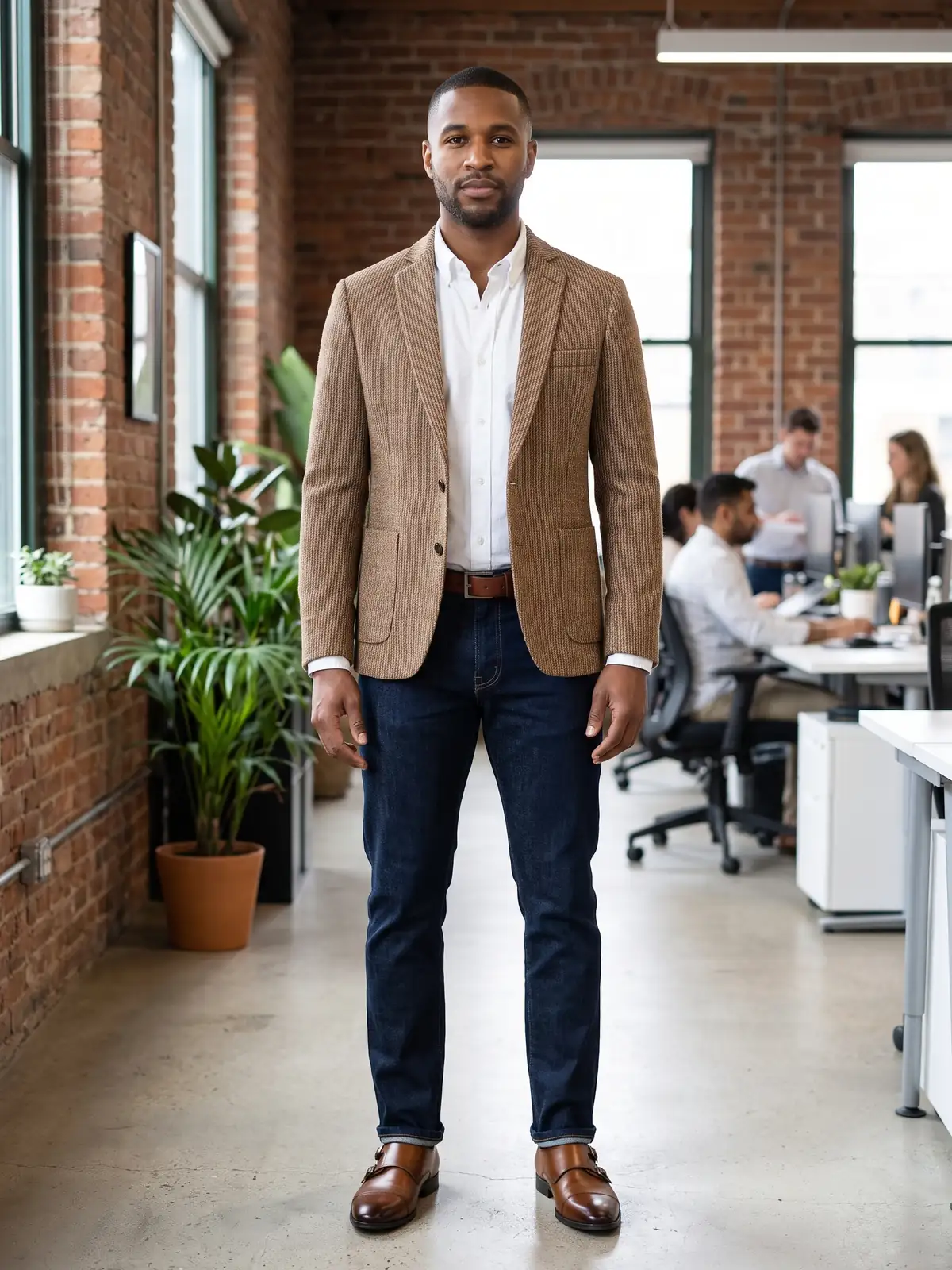
- Zapaka Khaki Tweed One Button Notched Lapel Men's Blazer $79 Shop at Zapakaaffiliate link
- Farah Brewer Slim Fit Oxford Shirt In White £45.50 Shop at Farahaffiliate link
- Zapaka Brown Slip-On Leather Men's Party Shoes $89 Shop at Zapakaaffiliate link
When jeans are allowed, this is the version that passes: dark indigo, straight leg, no fading, no rips, hemmed at the ankle, and everything around them dressed up. The blazer and the shoes are the same Zapaka tweed and monk straps as above, with Farah's white oxford shirt. Swap the jacket for a hoodie and the same jeans are weekend clothes.
Creighton's career center has the rule I would follow: "If you're not sure if jeans are okay, go a step more formal." Wear chinos or wool pants for the first week and look at what the people one level above you wear on a Tuesday.
Sneakers, polos, open toes: the other arguments
| Question | The stricter answer | The looser answer |
|---|---|---|
| Sneakers | The University of Tennessee rules them out; Indeed lists only "Closed-toed shoes such as loafers, Oxfords, boots, pumps or flats" | Sethi: "sneakers can be business casual too." Emmanuel College: "Sneakers may be acceptable in some workplaces" |
| Polo shirts | Left out by offices that want a button-front shirt, common in law and finance | Emily Post and Gardner-Webb both list the polo for men |
| Open-toe shoes | Indeed's list is closed-toe only | Virginia Tech: "Open-toed shoes are considered acceptable" |
| Skirt above the knee | Duke: not "above the top of your kneecap" | Tennessee: up to about two inches above |
| A tie | Never required by any source I read | Emily Post lists it as optional; wearing one is not a mistake |
On sneakers, the workers IWG surveyed were about as split as on jeans: 36 percent called them inappropriate. If your office allows them, the pair that works is plain leather, white or black, clean, with a low profile. Running shoes are sportswear in every guide. Every type of shoe, with the surveys on open toes and the medical advice on heel height, is in our guide to business casual shoes.
One item is not in dispute. The etiquette consultant Diane Gottsman, on summer office wear: "Flip flops are not an option for either gender unless you work on the beach."
Business casual, business professional and smart casual
| Dress code | In one line | Women | Men |
|---|---|---|---|
| Business professional | The suit | A pant or skirt suit, or a dress with a jacket, closed pumps or flats | A dark suit, a dress shirt, a tie, leather dress shoes |
| Business casual | The suit, taken apart | Tailored pants or a knee-length skirt or dress, a blouse or sweater, a blazer if you like | Chinos or wool pants, a collared shirt, a blazer if you like, no tie needed |
| Smart casual | Weekend clothes, dressed up | Dark jeans or pants with a blazer or a good knit, a casual dress | Dark jeans or chinos, a polo, knit or casual shirt, clean leather sneakers or loafers |
The stricter code has its own guide, business professional attire. Emily Post's list for "Business Formal" shows how far apart the first two are: for men, a "Dark business suit", a "Dress shirt" and a "Conservative tie"; for women, a "Suit", a "Business-style dress" or a "Dress with a jacket".
The line between business casual and smart casual is blurrier. The British shirtmaker T.M.Lewin puts it this way: "Smart casual is more relaxed than business casual". SEEK, the Australian job site, is more careful: "Business casual is often a step more formal, but neither term has one universal definition." The practical difference is jeans and sneakers. Smart casual expects that you might wear them; business casual tolerates them at best. Our guide to smart casual covers that dress code on its own.
Business casual for an interview
An interview is the one day the looser column does not apply. Cowley's advice at the University of Florida is plain: "If they don't specify anything, wear business professional." Indeed says the same thing more gently: "When deciding what to wear to an interview, it's best to overdress than to underdress." And in Randstad's survey, "65 percent feel it's important to wear a suit during an interview", in the same sample where most people wore casual or business casual clothes to work.
If the recruiter tells you the dress code is business casual, take the top of the range: for women, the dress at the top of this page or tailored pants with a blouse and a blazer; for men, the blazer, oxford shirt and chinos, and a tie in your bag. No jeans and no sneakers, even if you can see them through the glass on your way in. The people wearing them already have the job. Our guide to what to wear to an interview goes through each industry and the video call. For recruiting events, our guide to what to wear to a career fair covers outfits by field and shoes for hours of standing.
Summer and winter
In summer the fabrics change before the rules do: cotton, linen blends and lightweight wool in place of flannel and tweed, lighter colors, short sleeves on a blouse or a polo where polos are allowed. Bare legs with a knee-length skirt are accepted in most offices. Emily Post's own list for the stricter business formal code says stockings are "optional in summer". Shorts stay out. Illinois writes "(no shorts)" into its definition, and 57 percent of the workers IWG surveyed agreed.
In winter, add layers that still look like office clothes: a fine merino sweater over a shirt, a cardigan in place of a blazer, tights under a dress, leather ankle boots. If you wear tights to work, our guide to how to wear tights with dresses shows which weights go with which shoes, and the one on how to wear ankle boots covers the pants lengths that work with them.
Where business casual comes from
The idea started in Hawaii. In 1962 the Hawaiian Fashion Guild ran a campaign it called "Operation Liberation", sending aloha shirts to the state's legislators to argue for lighter clothes at work. According to Wikipedia's history of the shirt, "Aloha Friday officially began in 1966", and by 1970 aloha shirts were accepted in Hawaiian offices any day of the week.
The mainland version came later, and it had a sponsor. Levi Strauss launched Dockers khakis in 1986. In 1992, the company's own history says, it produced a "Guide To Casual Business Wear" and "mailed the pamphlet to approximately 25,000 HR managers across the country." The timing was good. By 1995, a survey by Evans Research found that "nine out of ten companies allowed their staff to dress casually", at least some of the time.
After that the suit kept losing ground. Gallup has asked American workers what they wear since 2002:
| 2002 | 2007 | 2023 | |
|---|---|---|---|
| Business casual | 32% | 43% | 41% |
| Casual street clothes | 32% | 28% | 31% |
| Uniform | 23% | 19% | 23% |
| Formal business clothes | 12% | 9% | 3% |
The 2023 poll interviewed 396 workers between August 1 and 23, so the margins are wide, but the direction is clear. Among women, 51 percent wear business casual. Among men, Gallup found, "Just 3% of men report they regularly wear a suit to work." Even banking moved: in March 2019 Goldman Sachs announced a "firm-wide flexible dress code".
So when an office says business casual today, it is no longer offering a relaxed Friday. It is describing the default.
In the United Kingdom, Canada and Australia
In Canada the term means what it means in the US. In the UK and Australia you will see "smart casual" used for the office at least as often. In YouGov's November 2023 survey of British workers, "smart casual attire" was the most common answer, chosen by 34 percent, and only 7 percent said they wear business attire. Many British employers have stopped writing the rules down at all: Brightmine, an HR data company, found that the share of UK organizations enforcing a dress code through employment contracts fell from 30 percent to 4.3 percent between 2018 and 2024.
A few words change with the country. American "pants" are British "trousers" (in the UK, "pants" means underwear). A "sport coat" is a "sports jacket", a "sweater" is a "jumper", and "sneakers" are "trainers". The clothes are the same.
Questions people ask
What is business casual attire?
Office clothing that is neat and professional without being a suit: tailored pants, chinos or a knee-length skirt, with a collared shirt, a blouse or a fine sweater, and closed leather shoes. A blazer is optional and so is a tie.
Are jeans business casual?
In some offices. Indeed and Virginia Tech accept dark jeans with no holes; Forage, Emmanuel College and the University of Illinois say no. If the handbook does not mention them, wear chinos or tailored pants until you have seen what your colleagues wear.
Are sneakers business casual?
Only clean, plain leather ones, and only where the office allows them. Several career centers rule sneakers out, and 36 percent of US workers surveyed for IWG in 2025 called them inappropriate for the office. Loafers or flats are never a risk.
Is a polo shirt business casual?
Yes by the Emily Post Institute's list, which includes an "open-collar or polo shirt" for men. Conservative offices, law and finance in particular, often expect a button-front shirt. A plain polo in a dark color, tucked in, is the version that passes most often.
What is the difference between business casual and business professional?
Business professional is a matching suit, with a tie for men. Business casual takes the suit apart: the pants without the jacket, or a blazer over different pants, and no tie.
What should a woman wear for business casual?
A knee-length or midi dress with sleeves, or tailored pants or a skirt with a blouse or a fine sweater, and flats, loafers or low pumps. Add a blazer or a cardigan for meetings. Heels are not required.
Can you wear leggings for business casual?
Not as pants. Stylists and career centers both rule them out. Under a dress that reaches the knee, opaque tights do the same job and fit the dress code.
What do you wear to a business casual interview?
The top of the range: a blazer, a pressed shirt or blouse, tailored pants or a knee-length dress, and leather shoes. If the dress code was not stated, career advisers still say to wear a suit.
Sources
- Emily Post Institute: Attire Guide, Dress Codes from Casual to White Tie
- Indeed: Guide to Business Casual Attire (updated November 9, 2026)
- Wikipedia: Business casual
- University of Florida Career Connections Center: business casual and business professional
- Creighton University Career Center: Business Casual
- Georgetown University McDonough School of Business: Businesswear
- Virginia Tech Career and Professional Development: Professional Dress Codes
- Duke University Career Hub: Attire Guide
- University of Tennessee: Dress for Success
- University of Georgia Career Center: Dress for Success
- Gardner-Webb University: Business Attire Guide
- University of Illinois Career Center: Dress for Success
- Emmanuel College Career Center: Professional Attire
- Corporette: Business Casual for Women
- Next Level Wardrobe: What Is Business Casual?
- Next Level Wardrobe: Answers to Business Casual Questions for Women
- Forage: What Is Business Casual?
- Diane Gottsman: Summer Office Style Tips
- Gallup: Casual Work Attire Is the Norm for U.S. Workers (September 8, 2023)
- Gallup: "Business Casual" Most Common Work Attire (October 4, 2007)
- Randstad US: Casual Dress Is Almost Always in Fashion in Today's Workplace (August 27, 2019)
- IWG: Workwear Reimagined report (July 30, 2025)
- Levi Strauss & Co.: Dockers and the Birth of Casual Fridays
- Wikipedia: Aloha shirt
- Ivy Style: Upending What Guys Wear to Work Forever, the Dockers Story
- NBC News: Goldman Sachs rolls out a flexible dress code (March 5, 2019)
- YouGov: Just 7% of workers wear a suit to work (November 14, 2023)
- Personnel Today: Strict dress codes decrease (January 15, 2025)
- T.M.Lewin: Business Casual vs Smart Casual
- SEEK: Your complete guide to smart casual work attire
The images in this guide are AI-generated: real garments from our catalogue, shown on our own recurring models and made from the shops' photos of each piece. They are not photographs of real people. Prices are the ones the shops showed on November 21, 2026 and can change. Wear It On Me earns a commission when you buy a garment through an affiliate link in a guide (the links are marked, and it costs you nothing extra); a commission never decides what we recommend. How we make these guides.