How to dress for your body type: the five shapes, what the research says, and what to wear
The five body shapes, how to measure yours and the cuts stylists suggest for each. What studies found: rectangle is the most common, the labels are rough.
Wear It On Me earns a commission on garments bought through affiliate links in our guides. That never decides what we recommend. Details.
To dress for your body type, measure your shoulders or bust, your waist and your hips, see which of five shapes those numbers describe, and use that as a starting point for choosing cuts: A-lines and detail on top for a pear, V-necks and volume below for an inverted triangle, wrap dresses and belts for an hourglass, shape-adding seams for a rectangle, V-necks and long lines for an apple. That is the standard advice, and this guide gives it in full. It also gives what the standard advice leaves out: what researchers found when they measured thousands of bodies, how unreliable the labels are, and the same three dresses on six different women, so you can see how much a cut changes from one body to the next.
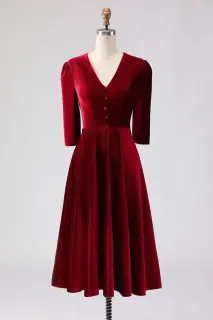 Zapaka Burgundy Velvet A Line V-Neck Midi Work Dress with Half Sleeves $109 Shop at Zapakaaffiliate link
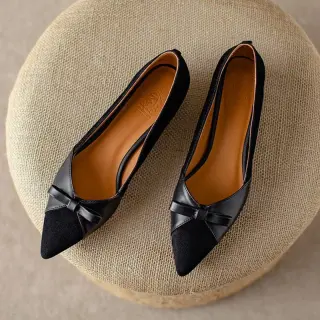 CHIKO Ieasha Pointy Toe Block Heels Pumps Shoes $105 Shop at CHIKOaffiliate link
- Zapaka Burgundy Velvet A Line V-Neck Midi Work Dress with Half Sleeves $109 Shop at Zapakaaffiliate link
- CHIKO Ieasha Pointy Toe Block Heels Pumps Shoes $105 Shop at CHIKOaffiliate link
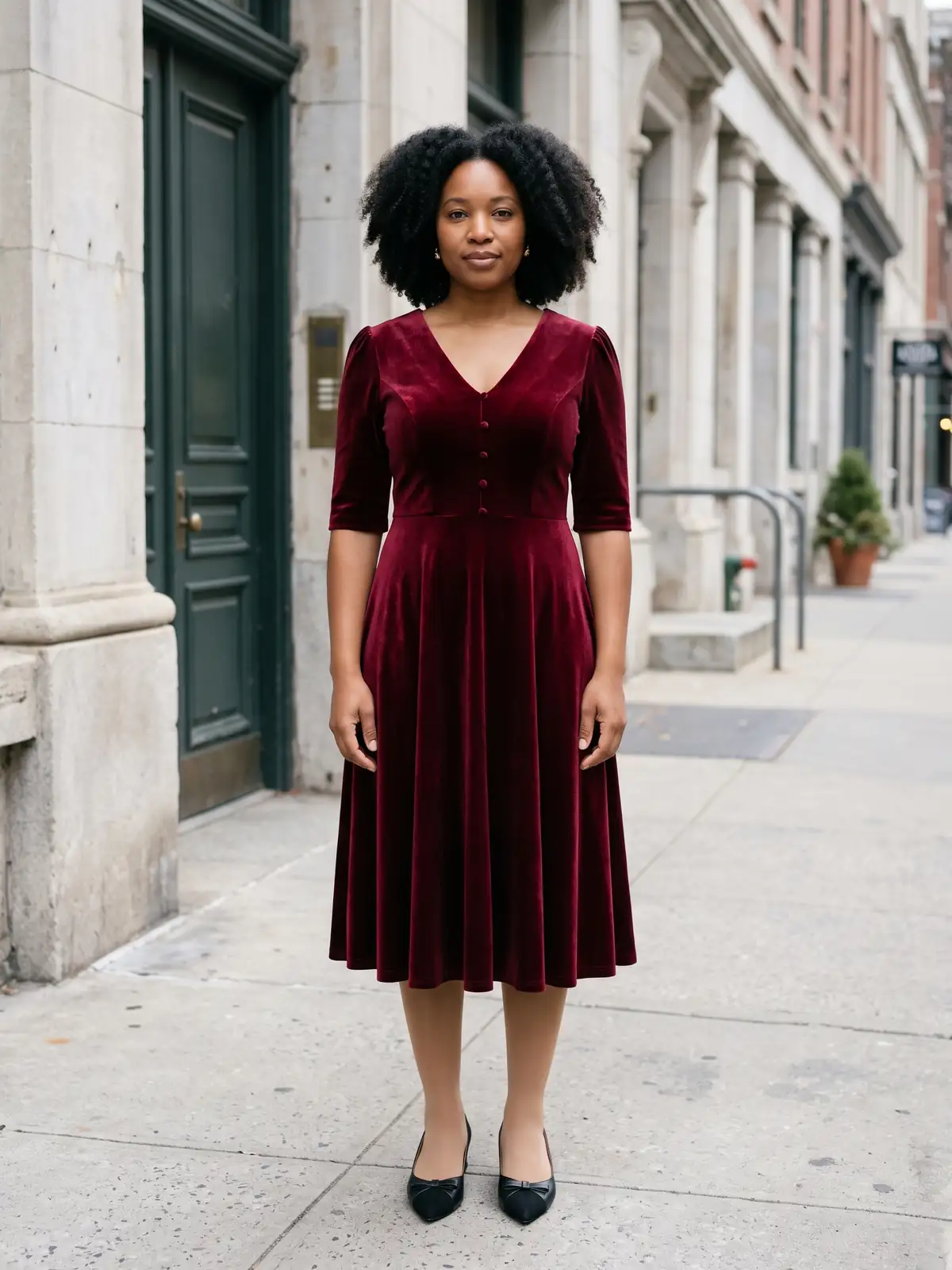
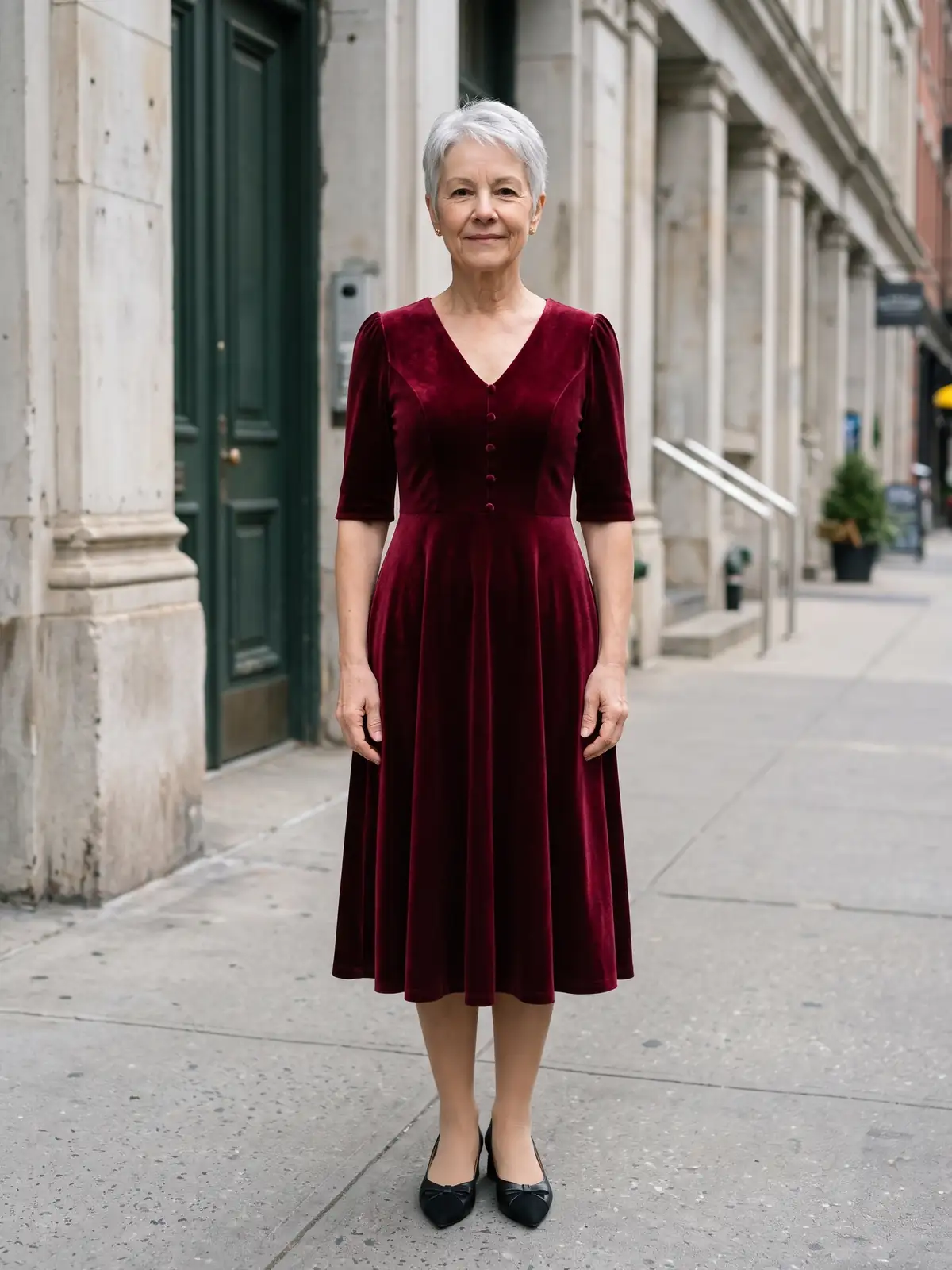
These two women wear the same dress, Zapaka's burgundy velvet A-line midi (US$109), with the same CHIKO pumps (US$105). The model on the left is a US 12 and 5'7". The model on the right is a US 10, 5'4" and in her sixties. The V-neck, the half sleeves and the waist seam sit in the same places on both. What can change from one body to the next is where the hem lands, since the same skirt ends lower on a shorter leg. Neither of them needed a chart to wear it. More on these pairs below.
The five body shapes
| Shape | Also called | The proportions | Share in the NC State study |
|---|---|---|---|
| Rectangle | Straight, athletic, banana, column | Shoulders, waist and hips close in width; little waist definition | 46% |
| Pear | Triangle, spoon | Hips wider than shoulders and bust | Just over 20% |
| Inverted triangle | Heart, strawberry | Shoulders or bust wider than hips | Just under 14% |
| Hourglass | Curvy | Bust and hips about equal, waist clearly narrower | 8% |
| Apple | Oval, round | Fullness through the middle; waist as wide as or wider than bust and hips | Not counted separately |
The figures come from the best-known study on the subject. As Wikipedia summarizes it: "A study of the shapes of over 6,000 women, carried out by researchers at the North Carolina State University circa 2005," made "for apparel, found that 46% were rectangular, just over 20% spoon, just under 14% inverted triangle, and 8% hourglass." The same article gives the measurement behind each label. Rectangular: "The waist is less than 9 in (23 cm) smaller than the hips and bust." Spoon: "The hips are wider than the bust." Inverted triangle: "The shoulders are broader than the hips." Hourglass: "The hips and bust are almost of equal size, and the waist is narrower than both."
Two things stand out. The hourglass, the shape most clothing advice treats as the reference, is the rarest of the four. And "apple" does not have one meaning. Calculator.net uses it for the inverted triangle. The Concept Wardrobe, a style site, defines it as "a large bust, narrow hips and a full midsection." Stitch Fix calls the same shape oval. If two guides give you different advice for an apple, they may be describing different bodies.
How to find your body shape
You need a soft tape measure and four measurements, taken over underwear, standing straight.
- Shoulders. Around the widest point, over the top of both arms. Someone else should do this one.
- Bust. Around the fullest part, tape level.
- Waist. Stitch Fix: "Measure around the narrowest part of your natural waistline (usually just above your belly button)".
- Hips. Around the fullest part of your hips and seat.
Then compare. The Concept Wardrobe uses percentages:
- Pear: "Your hips will be at least 5% bigger than your bust/shoulders."
- Inverted triangle: "Your bust/shoulder measurements are more than 5% bigger than your hip measurement."
- Hourglass: "your waist will be at least 25% smaller than both your bust/shoulders and hips."
- Rectangle: none of the above. The three numbers are within 5 percent of each other and the waist is less than 25 percent smaller.
- Apple: the waist is the largest of the three, or close to it.
Calculator.net works in inches, using the formulas of a 2007 study: a triangle when the hips are at least 3.6 inches larger than the bust, an inverted triangle when the bust is at least 3.6 inches larger than the hips, an hourglass when bust and hips are close and the waist is at least 9 inches smaller than the bust. Omni Calculator uses a third set of numbers: a spoon when "hips are two or more inches larger than their busts".
Three calculators, three thresholds. You can be a pear by one and a rectangle by another, and that is the first sign that the labels are less solid than they look. The Concept Wardrobe says so itself: "Most likely you won't fit into just one of the body shape categories."
What the research says
The shapes used in fashion come from the apparel industry, which needs to cut patterns that fit, and not from medicine.
The method. The North Carolina State system is called the Female Figure Identification Technique, or FFIT. A 2007 paper by Lee, Istook, Nam and Park applied it to body scans of American and Korean women and found that "The largest shape category was the rectangle shape in both countries". It worked on almost everyone: "Of the over 6,300 US female subjects in this study, only five failed to be identified by the seven shapes identified."
The problem. In 2021 four researchers at the University of Manchester tested how reliable that system is, using 1,679 three-dimensional body scans. Their paper, in the journal Ergonomics, concludes that "researchers use FFIT without a scientific basis or considering their ergonomic suitability." Small differences in where the measurements were taken "cause the same body to be categorised into different shapes - in up to 40% of cases."
A second check. In 2012 researchers at Oxylane, a French sports retail group, ran one sample of women through two published methods. The results did not agree: "method 1 identifying 49% and 10% of the population as spoon or hourglass shape respectively, compared to 10% and 36% when using method 2."
So the honest summary is this. Bodies do differ in proportion, and the rectangle is probably the most common female shape. But the borders between categories are drawn by whoever wrote the formula, and a tape measure held an inch higher can move you across one. Treat your shape as a rough description, the way "medium" describes a size.
How to dress for each body type
Nearly all of the advice below follows one of two ideas. The first is balance: add width, detail or color to the narrower half of the body so that shoulders and hips look more even. The second is to follow the line you have, usually by marking the waist. Megan Kristel, a stylist who writes The Well Dressed Life, frames the first one fairly: "Dressing for balance is an option, not an obligation."
Pear (triangle)
Hips wider than shoulders. The standard advice puts the interest on top and keeps the skirt simple.
- Stitch Fix: "Structured jackets, statement sleeves and boat necklines that bring structure to your shoulders".
- Stitch Fix again, on dresses: "A-line styles naturally complement triangle shapes, while wrap dresses accentuate the waist and balance the figure."
- The Concept Wardrobe suggests "lower, wider necklines such as square, bateau and Sabrina necklines".
- Kristel: "Look for jackets that hit at the natural waist."
- La Redoute's UK guide: "Dresses that skim your figure and flare out in the skirt are your staple pieces."
The A-line dress at the top of this page and the fit-and-flare further down are both that last sentence.
Apple (oval)
Fullness through the middle, often with slimmer legs. The advice is about long lines and an open neckline.
- Stitch Fix: "Empire-waist tops and A-line dresses that skim gracefully".
- Stitch Fix, on necklines: "V-necks and scoop necks: These open up the neckline and elongate the torso".
- Kristel: "Create vertical lines with open layers and longer hemlines."
- The Concept Wardrobe: "Wide-leg, flowing trousers are very flattering on an apple body shape".
An open cardigan or an unbuttoned jacket over a top of another color is the easiest way to make the vertical line Kristel describes.
Hourglass
Bust and hips about equal with a defined waist. The advice is to follow it.
- Stitch Fix: "Wrap dresses and belted silhouettes that highlight your waist".
- The Concept Wardrobe: "Belted tops and wrap tops are great to accentuate the waist."
- Kristel: "Follow your natural waist instead of disguising it."
- Bobbie Thomas, on TODAY: "focus on tailored pieces that show off your slim waist."
Boxy, straight cuts hang from the bust and hide the waist, which is why they are usually left off the list. That is a description of what the fabric does, and you are free to like the result.
Rectangle (straight, athletic)
Shoulders, waist and hips close in width. The advice adds shape with seams, belts and volume.
- Kristel: "Add waist definition with belts, tailored jackets, or wrap silhouettes."
- Stitch Fix: "High-waisted bottoms in boot-cut, wide-leg or flare silhouettes lend movement and volume in all the right places."
- TODAY: "Jackets or blazers that have darts at the waist and V-neck tops are other ways to curve out your silhouette."
The sources disagree on pants here. The Concept Wardrobe recommends "low- to mid-rise trousers with wide waistbands", the opposite of Stitch Fix's high rise. Since this is the most common shape of all, it is also the one for which "almost anything works" is closest to true: straight shift dresses, column skirts and tailoring all hang well on it.
Inverted triangle (heart)
Shoulders or bust wider than hips. The advice narrows the top visually and adds volume below.
- Stitch Fix's stylist Erin: "V-neck and wrap-style tops are ideal for the heart shape."
- Kristel: "Try wide-leg, A-line, or softly structured bottoms."
- Azazie: "Adding volume below balances broad shoulders."
- The Concept Wardrobe prefers necklines that are "slim and long".
Full skirts, wide-leg pants and patterned bottoms all follow from that. Padded shoulders, boat necks and wide horizontal details on top do the reverse.
The same dress on two bodies
Charts describe bodies in the abstract. Here is what three common cuts look like when two different women put them on. Each pair wears the same dress in her own size, with the same shoes, in the same place.
The A-line (top of the page). A fitted bodice and a skirt that widens from the waist. On our US 12 model and our US 10 model the dress behaves the same way: the V-neck opens the top, the seam marks the waist and the skirt stands away from the hips. This is the cut that appears on the recommended list for the pear, the apple and the inverted triangle, and the pictures show why it is so widely suggested. It asks very little of the body under it. The one thing to check is length. The model on the right is three inches shorter, and the same skirt ends lower on a shorter leg.
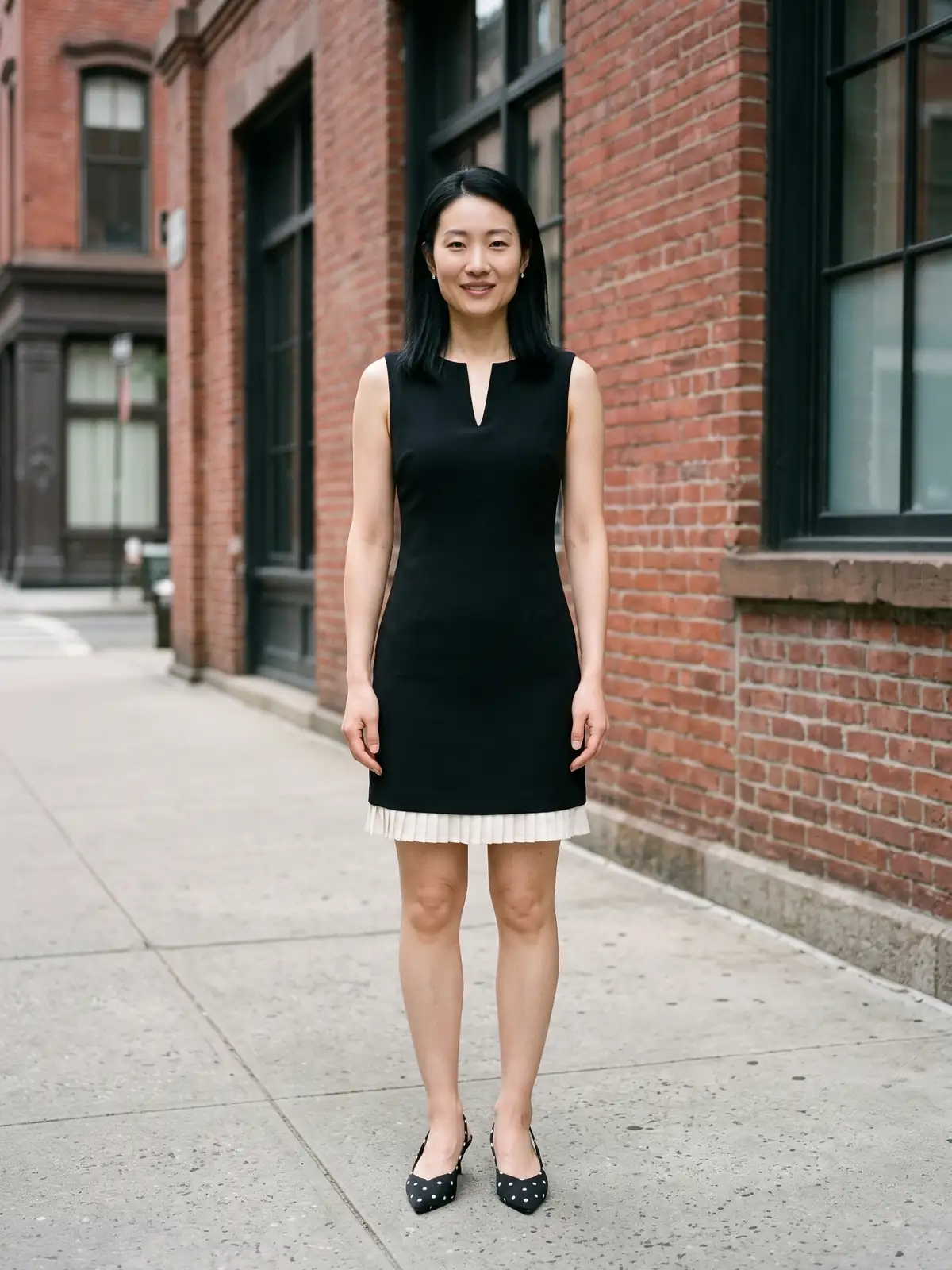
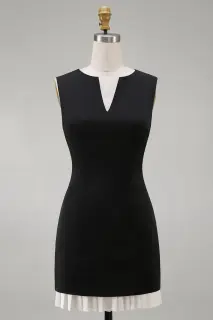 Zapaka Simple Black Tight V Neck Cocktail Dress with Pleats $99 Shop at Zapakaaffiliate link
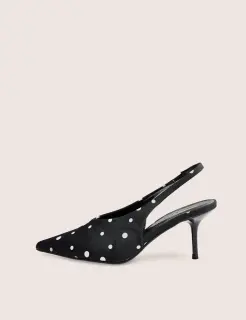 Public Desire UK Brooke Black Polka Dot Court Mid Heels £27.99 Shop at Public Desireaffiliate link
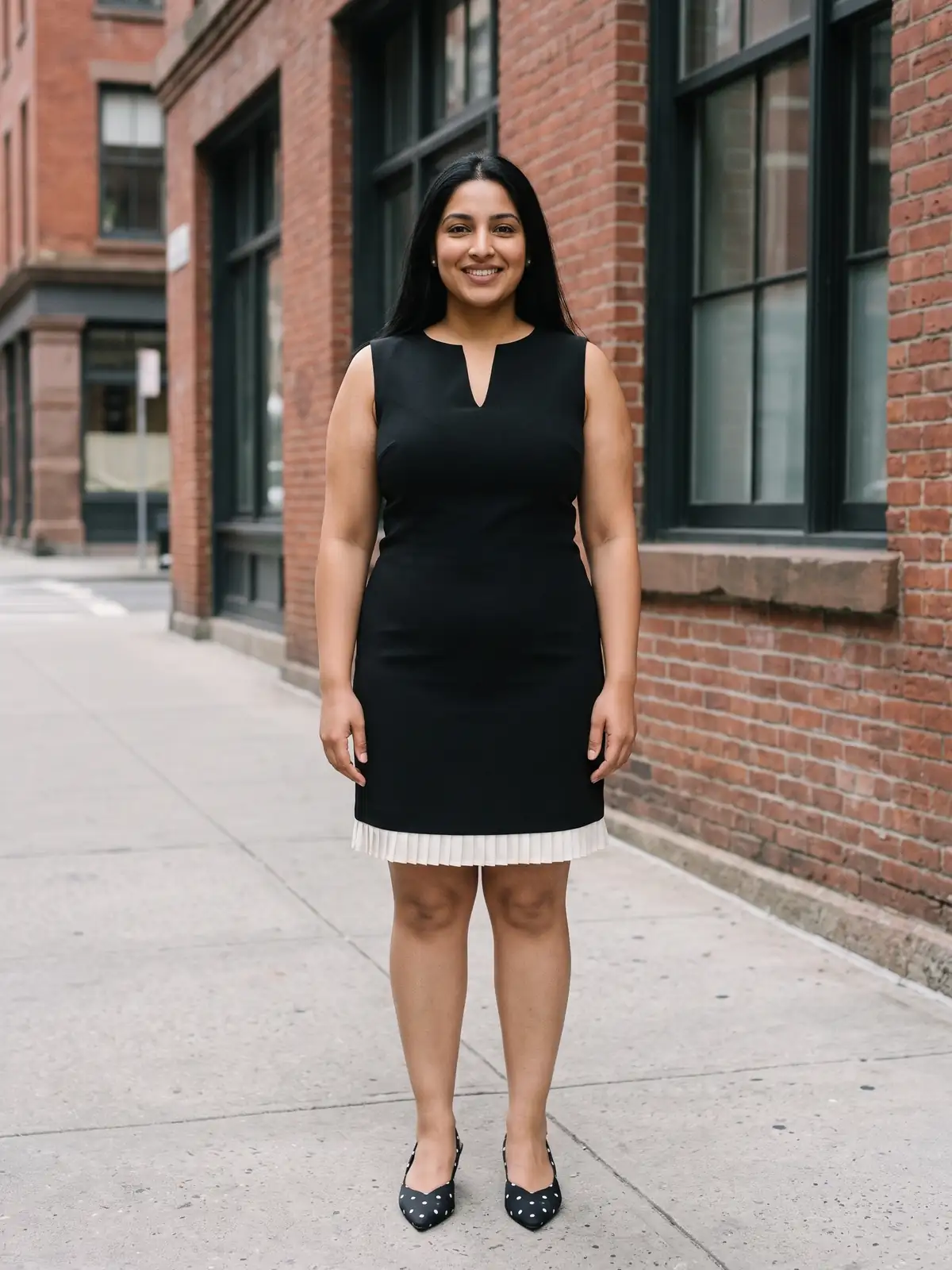
- Zapaka Simple Black Tight V Neck Cocktail Dress with Pleats $99 Shop at Zapakaaffiliate link
- Public Desire UK Brooke Black Polka Dot Court Mid Heels £27.99 Shop at Public Desireaffiliate link
The sheath. A straight, close cut with no waist seam. This is Zapaka's black V-neck dress with an ivory pleated hem (US$99), with Public Desire's Brooke polka-dot slingbacks (£27.99), on our US 4 model at 5'9" and our US 18 model at 5'8". A sheath follows the body from shoulder to hem, so it shows the wearer's own outline more than any other cut on this page. On the left it draws a long, narrow line. On the right it follows the bust, the waist and the hips. Guides often reserve the sheath for hourglass and rectangle shapes. Both women here are wearing it well, and what makes that true is the same for each of them: the shoulders fit, the armholes sit flat and the hem lands just above the knee.
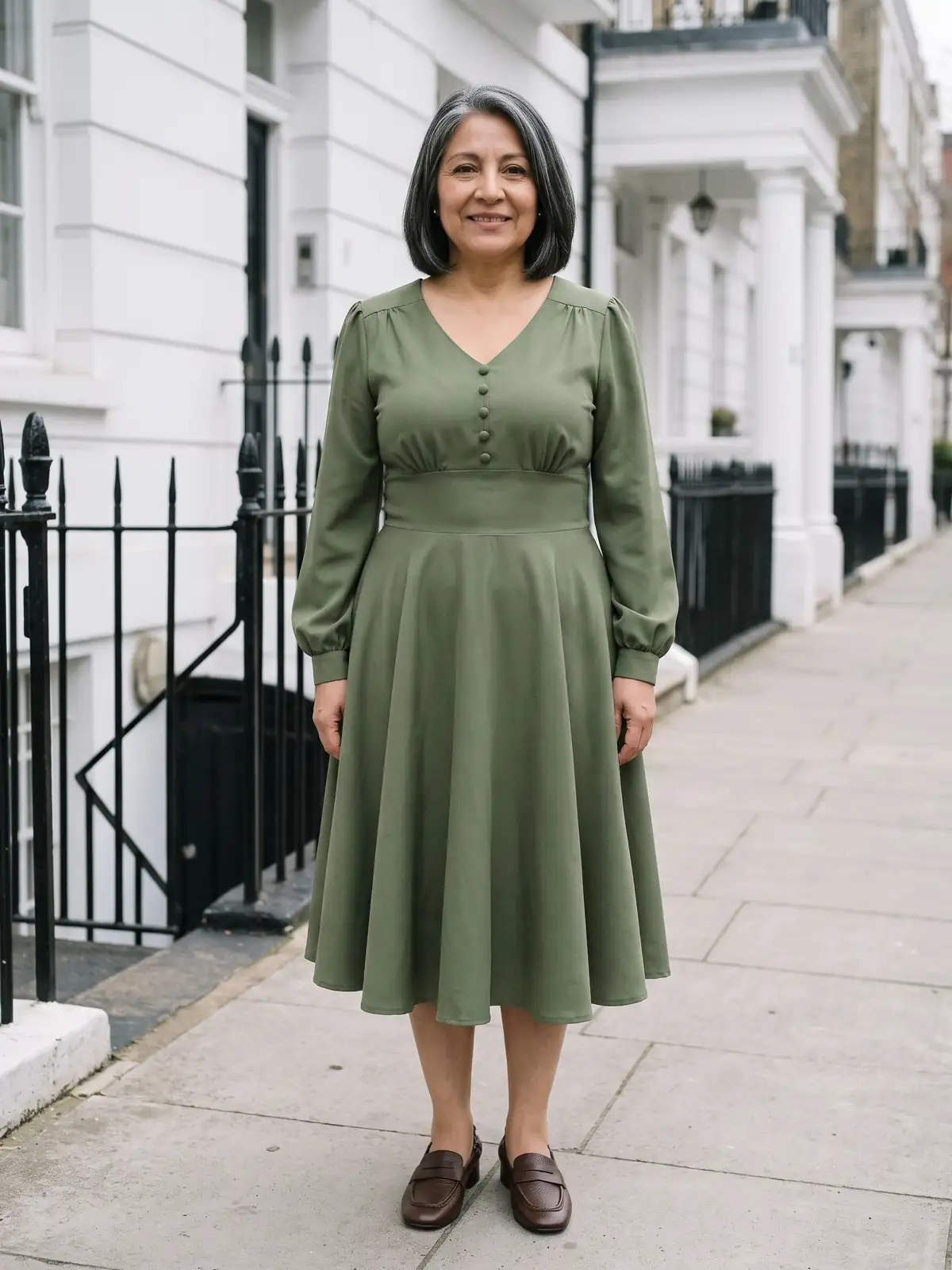
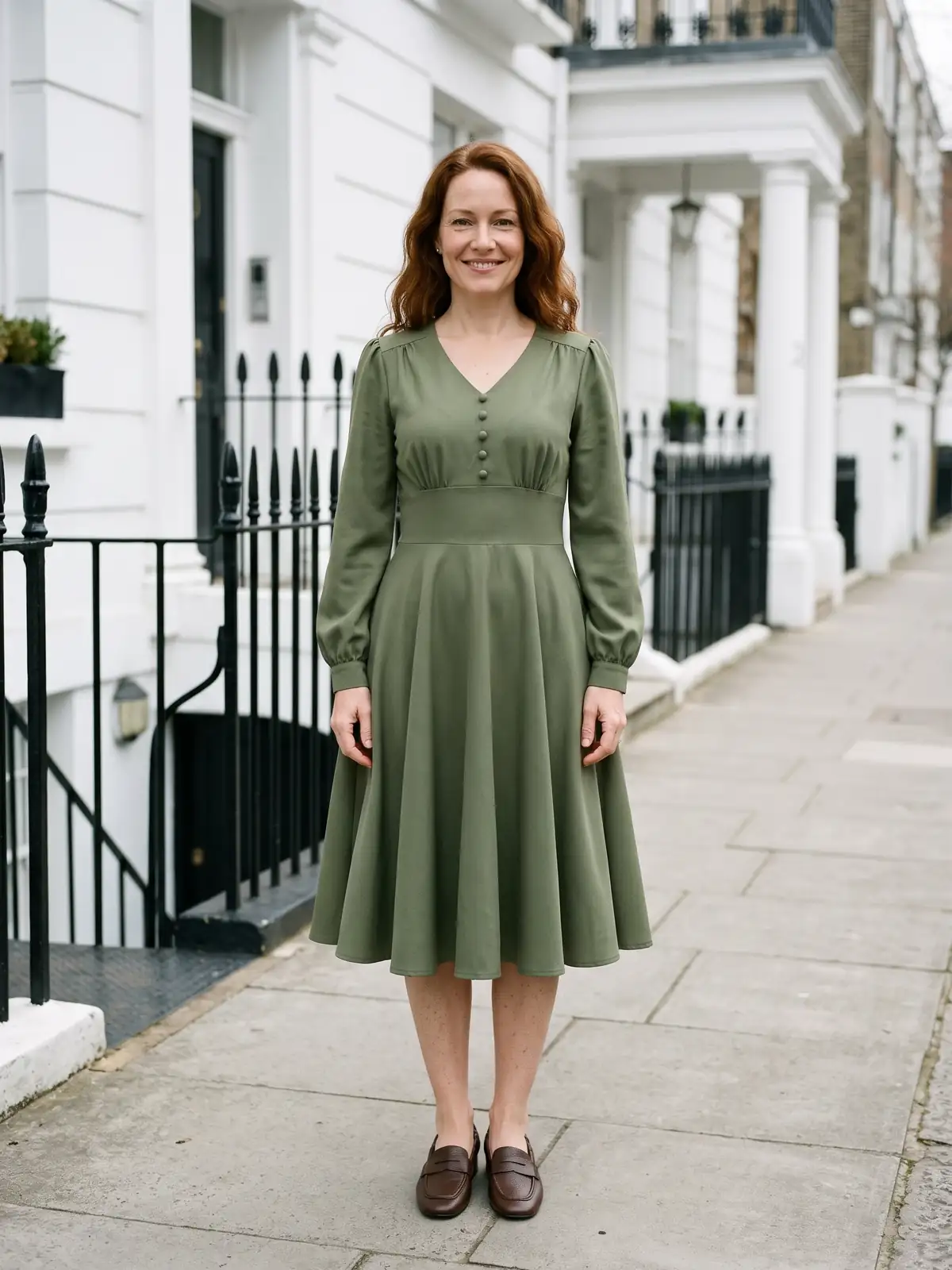
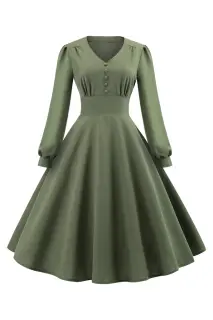 Zapaka Green V-Neck Long Sleeves Vintage Swing Dress $47 Shop at Zapakaaffiliate link
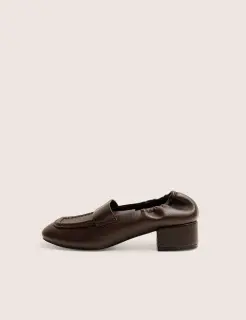 Public Desire UK Kelsy Brown Loafers £12 Shop at Public Desireaffiliate link
- Zapaka Green V-Neck Long Sleeves Vintage Swing Dress $47 Shop at Zapakaaffiliate link
- Public Desire UK Kelsy Brown Loafers £12 Shop at Public Desireaffiliate link
The fit-and-flare. A fitted bodice, a seam at the natural waist and a full skirt. This is Zapaka's olive green swing dress (US$47), with long sleeves gathered at the cuff, and Public Desire's Kelsy loafers (£12), on our US 14 model at 5'5" and our US 8 model at 5'6". This is the cut that creates a waist by construction: the seam is the narrowest point of the dress, and the skirt widens from it on any body. That is why it is recommended to rectangles, to add shape, and to pears, to skim the hips. On both women the waist seam is the first thing you see.
What the three pairs show is that the cut does most of the work, and the body under it changes the result less than the charts suggest. They also show the limit of looking at someone else. Our six models cover US sizes 4 to 18 and heights from 5'4" to 5'9", and none of them is you. (For readers outside the US: a US 12 is a UK 16 and an AU 16; a US 4 is a UK 8.)
Do stripes and black really change how you look?
Two of the oldest rules can be checked, because psychologists have tested them.
Stripes. The rule says horizontal stripes widen and vertical stripes slim. In 2011 Peter Thompson and Kyriaki Mikellidou of the University of York tested it and found the opposite. Their paper in the journal i-Perception starts from a nineteenth-century illusion: "A square composed of horizontal lines appears taller and narrower than an identical square made up of vertical lines." Applied to clothed figures, "the mannequin in horizontal stripes needed to be 10.7% broader" to be judged the same width as the one in vertical stripes. Their conclusion: "there is no evidence to support the widely held beliefs that horizontal stripes make the human form appear wider". The experiments were small, with about ten observers each. A 2021 study in the journal Perception found the same direction of effect: "horizontal stripes and lower luminance have—independently—a small-to-moderate thinning effect". A 2020 analysis of about a thousand photographs found that "horizontal stripes have no discernible effect compared to solid light-colored clothes".
Dark colors. Here the rule holds, modestly. The same 2020 analysis found that "dark clothes indeed decrease perceived weight slightly but statistically significantly", and the 2021 study found a similar effect for darker shades.
So wear the striped top. And wear black because you like it; the effect on how others see your size is real and small.
Why fit matters more than shape
Every stylist quoted on this page, including the ones who publish body-shape guides, says some version of the same thing.
- Kristel: "Fit matters more than size."
- Imogen Lamport, an Australian image consultant, calls fit "the single most transformative variable in how clothing looks and feels".
- Lauren Di Bartolo, founder of the Australian Style Institute, in Fashion Journal: "Fit is key, which is why tailoring looks amazing on so many people."
Fit can be checked in a mirror in four places.
- Shoulders. The seam should sit at the edge of your shoulder. Dan Trepanier of Articles of Style, a custom clothier, puts it precisely: "The shoulder seam should hit just before the downward slope of the arm begins." It is the one part of a garment that is hard to alter, so buy for the shoulders and adjust the rest.
- Bust and buttons. Nothing should pull into horizontal creases, and a button placket should lie flat.
- Waist. If the dress has a seam, it should sit at your natural waist, not above or below it. On a petite or a tall body this is the measurement that most often misses.
- Hem. Decide where you want it and have it moved there. Shortening a hem is the cheapest alteration there is.
There is also a rule of proportion that has nothing to do with body type. Jennifer Connolly, an image consultant, describes the rule of thirds: an outfit divided one third to two thirds looks more balanced than one cut in half, and "The fastest way to achieve a 1/3-to-2/3 ratio is to define the waistline." A tucked-in top with high-rise pants does it. So does a cropped jacket over a long dress.
The case against body-type rules
Not everyone thinks these charts should exist. The sociologist Lisa Wade observed in 2011 that the advice is "almost always aimed at getting women's bodies, whatever shape they might be, to conform with one ideal body type". Every "balance" tip, read closely, moves the body toward an hourglass.
Stylists have noticed the same thing from the inside. Tina Abeysekara, in Mamamia: "Flattering and slimmer have become interchangeable." Lamport says the systems "reduce an infinite variation of human bodies to four geometric categories". Refinery29's Alyssa Coscarelli: "There aren't just 10 or 12 or 15 body shapes out there, and no two bodies are the same." And Jess Fuchs, in Fashion Journal, names what went wrong: "The issue came from the insistence that body shapes dictate 'right' and 'wrong' ways to dress."
Abeysekara's conclusion is the one I would keep: "Use body shape guidelines as a tool, not a rule." The charts are useful for one job. When something does not look the way you hoped and you cannot say why, they give you a vocabulary: the waist seam is too high, the neckline is too wide for this jacket, the volume is all on one half. Use them to diagnose. Do not use them to rule clothes out before you have tried them.
Body types for men
Men's guides use a similar set of five: rectangle, triangle, inverted triangle, oval and trapezoid, the last being broad shoulders with a slightly narrower waist. FashionBeans describes the most common one: "Usually tall and thin, rectangular body shapes have shoulders roughly the same width as their waist and hips."
The advice is shorter than for women and leans even more on fit. Sven Raphael Schneider of Gentleman's Gazette: "It's essential that you have your clothing tailored". Art of Manliness: "every man could improve his appearance with the help of a skilled tailor." Antonio Centeno of Real Men Real Style adds the reminder that applies to everyone: "Dress for the body you have NOW". For how a jacket should sit on the shoulders and where it should end, our guide to what a sport coat is has the details, and business casual for men covers pants length and the tuck.
Height and size change the picture
The five shapes describe width and nothing else. A study by the retailer Long Tall Sally, reported by The Lady, pointed out that "the classic body shapes fail to account for how a woman's height affects the shape of her body." A pear at 5'2" and a pear at 5'10" need different hem lengths, rises and jacket lengths, and no chart covers that.
Size is the other missing piece. Most body-shape illustrations are drawn on a slim figure. The average American woman is not one. A 2016 study in the International Journal of Fashion Design, Technology and Education, based on the waist measurements of more than 5,500 women collected by the US Centers for Disease Control and Prevention, concluded, as TIME reported it, that "American women are on average between a misses size 16-18". That is why half the women on this page are a US 12 or above. Our guide to outfits for women over 50 uses the same models for everyday looks.
If you are choosing between dress types as well as between sizes, our guide to the types of dresses explains each cut named here, from the sheath to the wrap, and the guide to how to wear tights with dresses covers what happens below the hem. To turn the cuts that suit you into a small set of clothes that all work together, see our guide to the capsule wardrobe.
In the UK and Australia
The shapes are the same and some names differ. British guides often use pear, apple, hourglass, rectangle and inverted triangle; you will also meet "column" for the rectangle and "athletic" for the inverted triangle. The fruit names were popularized in Britain by the television stylists Trinny Woodall and Susannah Constantine, whose 2007 book The Body Shape Bible expanded the list to twelve: "A Skittle, Goblet, Hourglass, Cornet, Cello, Apple, Column, Bell, Vase, Brick, Lollipop or a Pear". Their summary of the whole subject is still a fair one: "In each case, it is proportion, not size, that matters."
Sizes do not translate directly. As a rule of thumb a US size is two sizes below the UK and Australian one, so a US 8 is a UK 12. Check each shop's own chart; the three dresses on this page are sold in US sizes and the shoes from Public Desire in UK sizes.
Questions people ask
What are the five female body types?
Rectangle, pear (triangle), inverted triangle, hourglass and apple (oval). They are defined by comparing the width of the shoulders or bust, the waist and the hips.
What is the most common body shape?
The rectangle. In the North Carolina State University study of more than 6,000 women, 46 percent were rectangular, just over 20 percent pear or spoon, just under 14 percent inverted triangle and 8 percent hourglass.
How do I know my body shape?
Measure your shoulders, bust, waist and hips. If your hips are at least 5 percent larger than your shoulders or bust, you are a pear; if the reverse, an inverted triangle; if your waist is at least 25 percent smaller than both, an hourglass; if all three are close, a rectangle.
Can you be more than one body type?
Yes, and most people are. The Concept Wardrobe says you most likely will not fit one category, and a 2021 study found the same body classified differently in up to 40 percent of cases depending on how it was measured.
Does your body shape change with weight or age?
Your proportions can shift as weight is gained or lost and with age, since fat is stored differently over time, but your bone structure, shoulders and hip width, stays the same. Measure again every few years.
What is the most flattering dress for every body type?
No dress suits everyone, but the A-line and the fit-and-flare are recommended for more shapes than any other cut, because the skirt widens from the waist whatever is under it. The shirt dress is the other one called universal: the stylist Bronagh Webster told HELLO! that shirt dresses "suit every body shape, whether it be belted or oversized."
Do horizontal stripes make you look wider?
Not according to the research. A 2011 University of York study found that horizontal stripes made figures look slightly narrower than vertical ones, and later studies found either the same or no effect.
What if I do not want to dress to "balance" my body?
Then do not. Balance is one way of choosing clothes, and stylists themselves call it an option. Clothes that fit your shoulders and end where you want them to will look right on any shape.
Sources
- Wikipedia: Female body shape
- Lee, Istook, Nam, Park: Comparison of body shape between USA and Korean women, International Journal of Clothing Science and Technology (2007)
- Parker, Hayes, Brownbridge, Gill: Assessing the female figure identification technique's reliability, Ergonomics (2021)
- Webster, Cornolo, Kelkel (Oxylane Research): paper at the 3D Body Scanning Technologies conference (2012)
- Thompson and Mikellidou: Applying the Helmholtz illusion to fashion, i-Perception (2011)
- Koutsoumpis, Economou, van der Burg: Helmholtz versus haute couture, Perception (2021)
- Martynov, Garimella, West: study of perceived weight in photographs (2020)
- Calculator.net: Body Type Calculator
- Omni Calculator: Body Shape Calculator
- The Concept Wardrobe: Determine your body shape
- The Concept Wardrobe: Pear body shape
- The Concept Wardrobe: Apple body shape
- The Concept Wardrobe: Hourglass body shape
- The Concept Wardrobe: Rectangle body shape
- The Concept Wardrobe: Inverted triangle body shape
- Stitch Fix: Find the fit for your body type (October 21, 2026)
- Stitch Fix: How to dress a triangle body shape
- Stitch Fix: Styling an oval figure
- Stitch Fix: How to dress a rectangle body shape
- Stitch Fix: How to dress for a heart body shape
- The Well Dressed Life: How to dress your body type (January 23, 2026)
- La Redoute UK: How to dress for your body type
- TODAY: Dos and don'ts of dressing your body type
- Azazie: The most flattering formal dress for my body type
- Sociological Images: A fashion advice counterfactual, Lisa Wade (2011)
- Inside Out Style: How do I dress for my body shape, Imogen Lamport (April 2026)
- Fashion Journal: Dressing for body type (November 26, 2024)
- Fashion Journal: Fruit body shapes (October 9, 2023)
- Mamamia: Style rules to break (October 1, 2025)
- Refinery29: Body types and flattering clothing guide
- A Well Styled Life: The rule of thirds for outfits
- Articles of Style: Fit guide
- FashionBeans: How to dress for your body shape (men)
- Gentleman's Gazette: How to dress for your body type
- Art of Manliness: Men's fashion by body type
- Real Men Real Style: How to Dress for Your Body Type
- The Lady: Long Tall Sally research on height and body shape
- HELLO!: Body shape styling advice
- TIME: The average American woman's clothing size (September 26, 2016)
- Trinny Woodall and Susannah Constantine: The Body Shape Bible (2007)
The images in this guide are AI-generated: real garments from our catalogue, shown on our own recurring models and made from the shops' photos of each piece. They are not photographs of real people. Prices are the ones the shops showed on November 21, 2026 and can change. Wear It On Me earns a commission when you buy a garment through an affiliate link in a guide (the links are marked, and it costs you nothing extra); a commission never decides what we recommend. How we make these guides.