Types of dresses: 30 styles, 7 lengths and 10 necklines, explained
Every type of dress by silhouette, length and neckline: A-line, sheath, shift, wrap, slip, bodycon, mermaid and more, each defined, dated and shown.
Wear It On Me earns a commission on garments bought through affiliate links in our guides. That never decides what we recommend. Details.
There are three ways to name a dress: by its silhouette, by its length and by its neckline. The silhouette is the cut from shoulder to hem (A-line, sheath, shift, wrap, slip and so on). The length is where the hem lands (mini, knee, midi, maxi). The neckline is the shape of the opening at the top (V, scoop, halter, off-the-shoulder). This guide defines 30 styles, 7 lengths and 10 necklines, gives the date and designer behind the famous ones, sorts out the pairs people mix up, and shows fifteen of them on our models, in dresses you can buy.
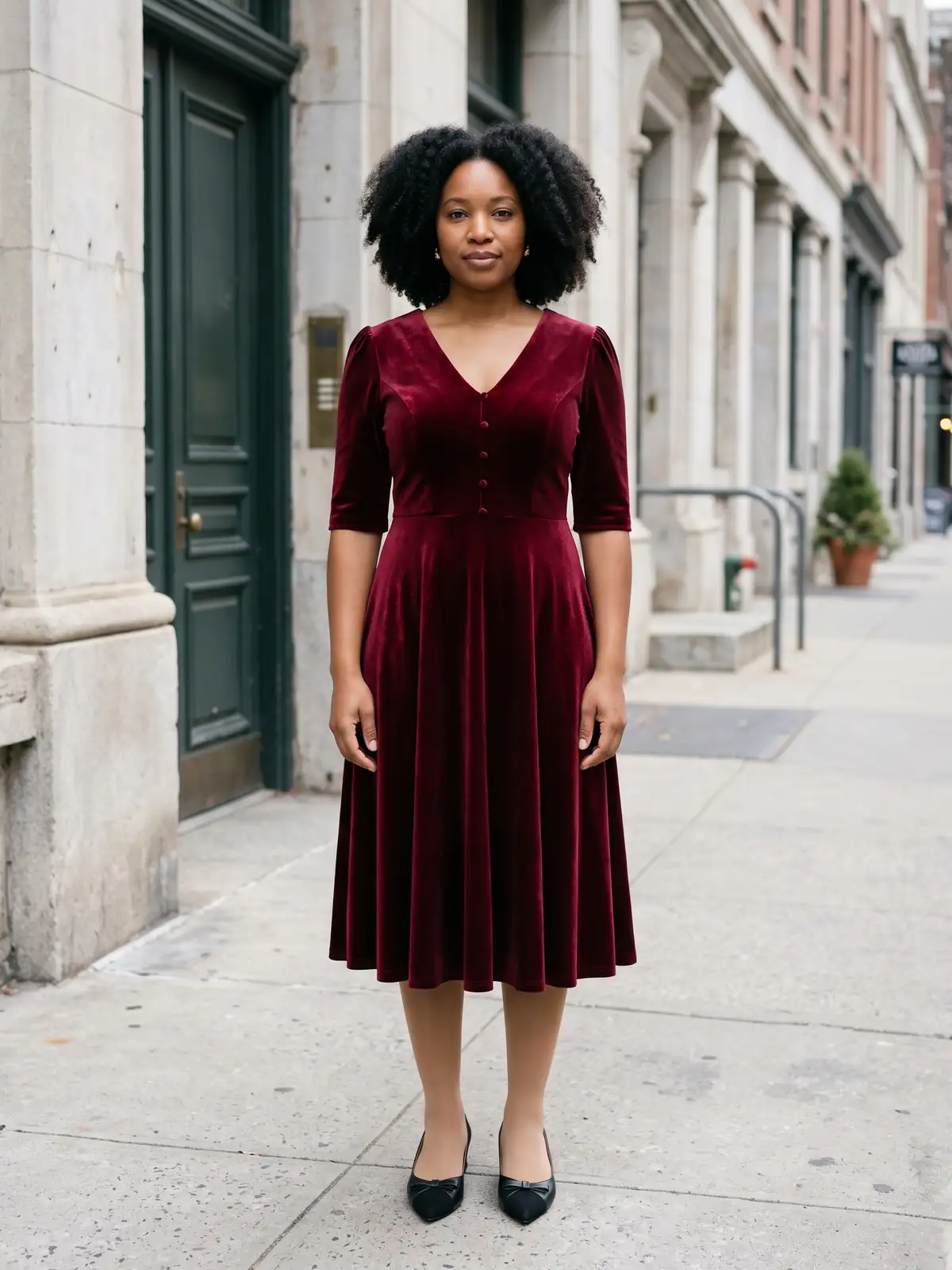
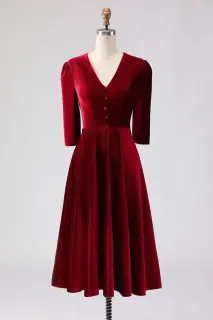 Zapaka Burgundy Velvet A Line V-Neck Midi Work Dress with Half Sleeves $109 Shop at Zapakaaffiliate link
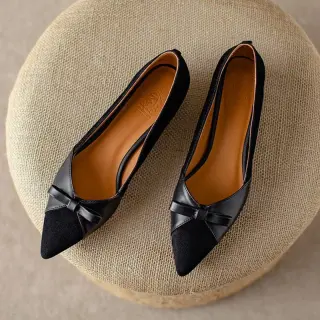 CHIKO Ieasha Pointy Toe Block Heels Pumps Shoes $105 Shop at CHIKOaffiliate link

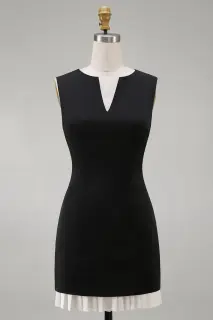 Zapaka Simple Black Tight V Neck Cocktail Dress with Pleats $99 Shop at Zapakaaffiliate link
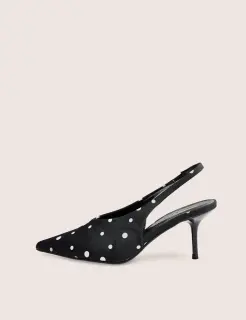 Public Desire UK Brooke Black Polka Dot Court Mid Heels £27.99 Shop at Public Desireaffiliate link
The five dress types to know first
If you learn only five words, learn these. Between them they describe most dresses in any shop.
| Type | What defines it | Waist | Skirt |
|---|---|---|---|
| A-line | Narrow at the top, widening steadily to the hem, like a capital A | Fitted or lightly shaped | Flares gradually |
| Sheath | Fitted and straight, shaped with darts and tucks | Nipped in, usually with no waist seam | Narrow |
| Shift | Falls straight from the shoulders | Not marked | Straight and loose |
| Fit-and-flare | Fitted bodice, seam at the waist, full skirt | Marked by a seam | Full |
| Wrap | One side of the front crosses over the other and ties | Marked by the tie | A-line or straight |
The two dresses above are the first two rows. On the left, an A-line: Zapaka's burgundy velvet midi (US$109), fitted through the bodice and widening from the waist. On the right, a sheath: Zapaka's black V-neck dress with an ivory pleated hem (US$99), which follows the body in a straight line to just above the knee.
Types of dresses by silhouette
A-line
Wikipedia's definition: a dress or skirt that is "fitted at the hips and gradually widens towards the hem". The name is recent and has an author. It was "first used by the French couture designer Christian Dior as the label for his collection of spring 1955". Three years later his successor made it looser: the Fashion History Timeline of the Fashion Institute of Technology records that in 1958 the young Yves Saint Laurent showed his first collection at Dior, the Trapeze. Today the word covers any dress shaped like the letter. Our guide to how many pieces a capsule wardrobe needs uses an A-line midi as the one dress in its set.
Sheath
"A fitted, straight cut dress, often nipped at the waistline with no waist seam", in Wikipedia's words. The shape "reached the United States in 1908", and the modern version follows Dior again: "In 1950, Christian Dior introduced the 'Vertical Line'". It is the dress of the office and of the little black dress.
Shift
A shift is the sheath's loose cousin: "the cloth falls straight from the shoulders and has darts around the bust". Shifts were "popular in western fashion in the 1920s and were revived in the 1960s", when "Lilly Pulitzer's designs for Jacqueline Kennedy" made them an American summer uniform.
Fit-and-flare, swing and skater
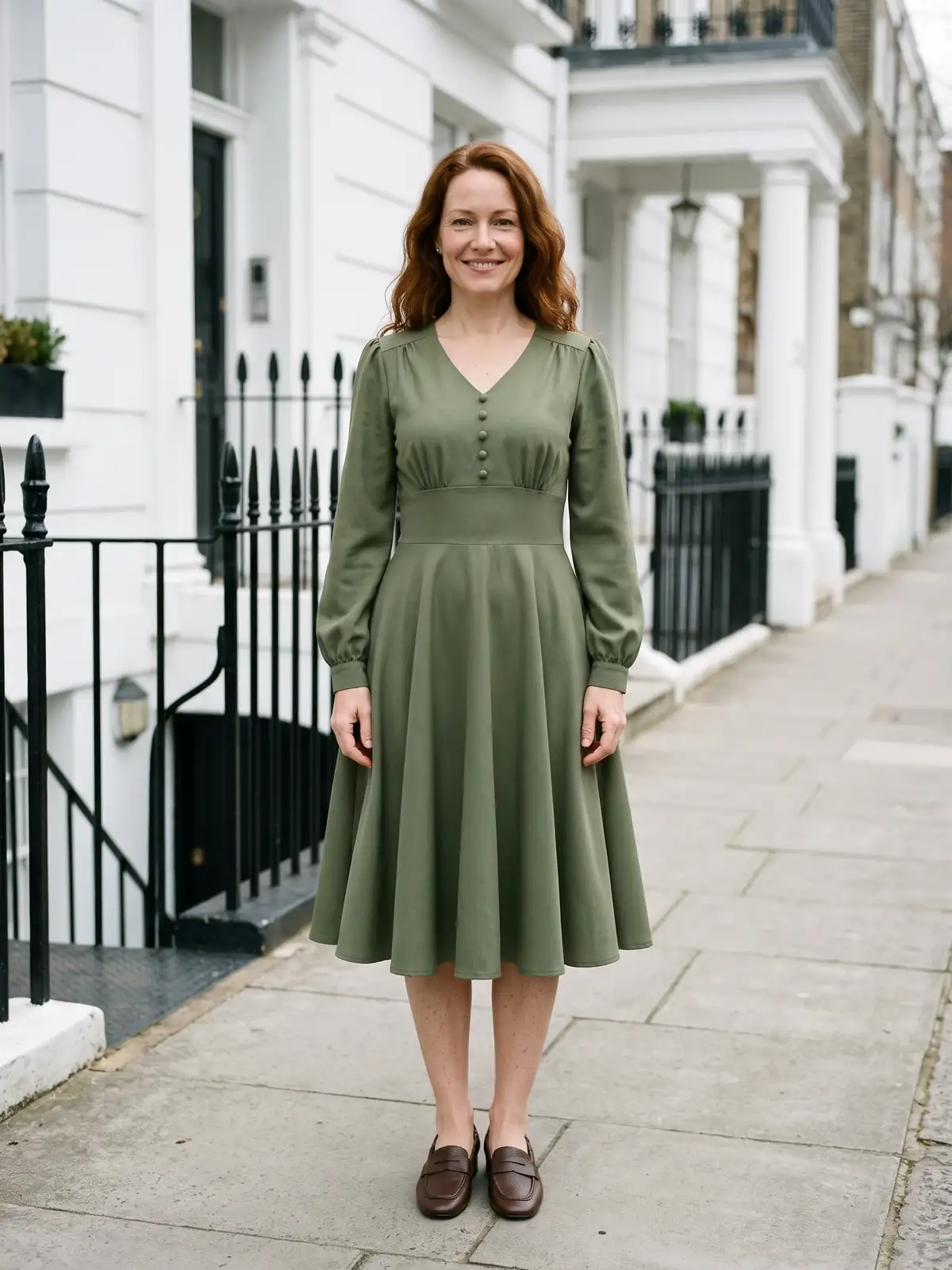
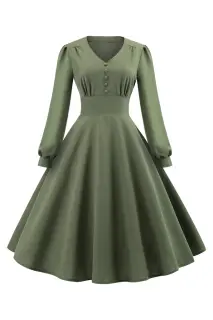 Zapaka Green V-Neck Long Sleeves Vintage Swing Dress $47 Shop at Zapakaaffiliate link
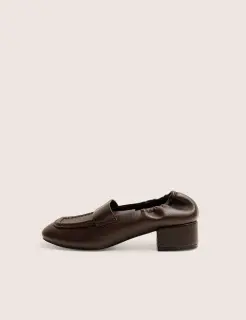 Public Desire UK Kelsy Brown Loafers £12 Shop at Public Desireaffiliate link
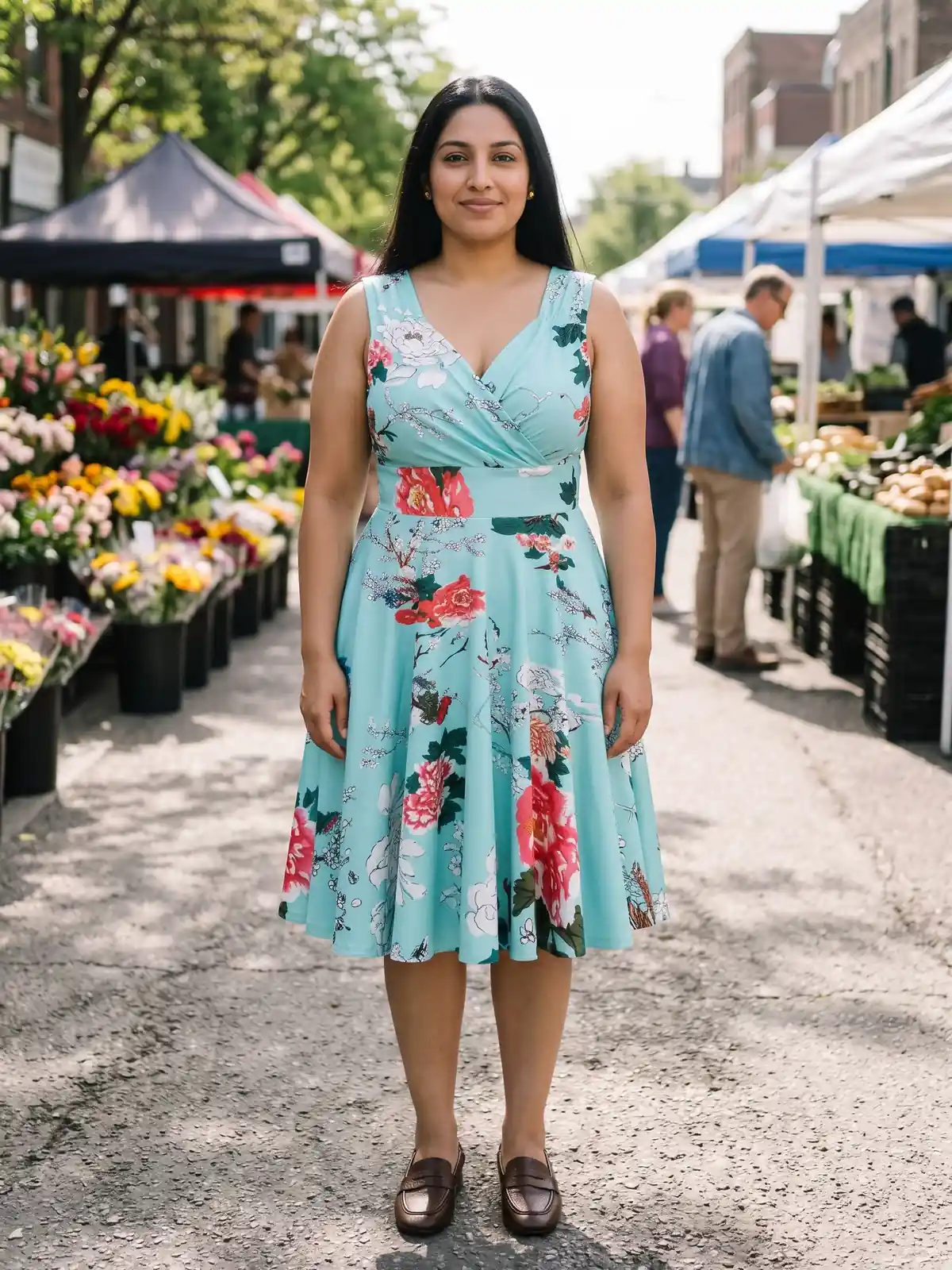
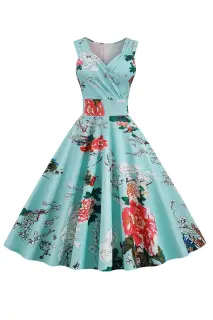 Zapaka Light Blue V Neck 1950s Vintage Dress $46 Shop at Zapakaaffiliate link
- Public Desire UK Kelsy Brown Loafers £12 Shop at Public Desireaffiliate link
Wikipedia: "a fitted upper body (the 'fit') and a full skirt (the 'flare')". A swing dress is a fit-and-flare with a very full skirt, in the style of the 1950s; a skater dress is a short one. The dress on the left is a swing dress: Zapaka's olive green long-sleeved dress (US$47), with a seam at the natural waist and a skirt that widens to below the knee.
Wrap
"A dress with a front closure formed by wrapping one side across the other", which creates a V-neck and ties at the waist. The famous one is American: Diane von Furstenberg's jersey wrap dress, "designed in 1974", which, according to the Fashion History Timeline, "sold over five million dresses in just two years". She did not invent the idea. Wikipedia notes that "Wrap dresses were designed by Elsa Schiaparelli in the 1930s", and that "In 1942, McCardell created her famed 'Popover Dress'", a wrap-front house dress by the American designer Claire McCardell that "sold for $6.95".
A true wrap opens flat like a robe. Many dresses sold as wraps are faux wraps: the bodice crosses over but is sewn shut. The dress on the right above is one of those: Zapaka's turquoise floral dress (US$46), with a crossover V bodice above a full 1950s skirt.
Slip
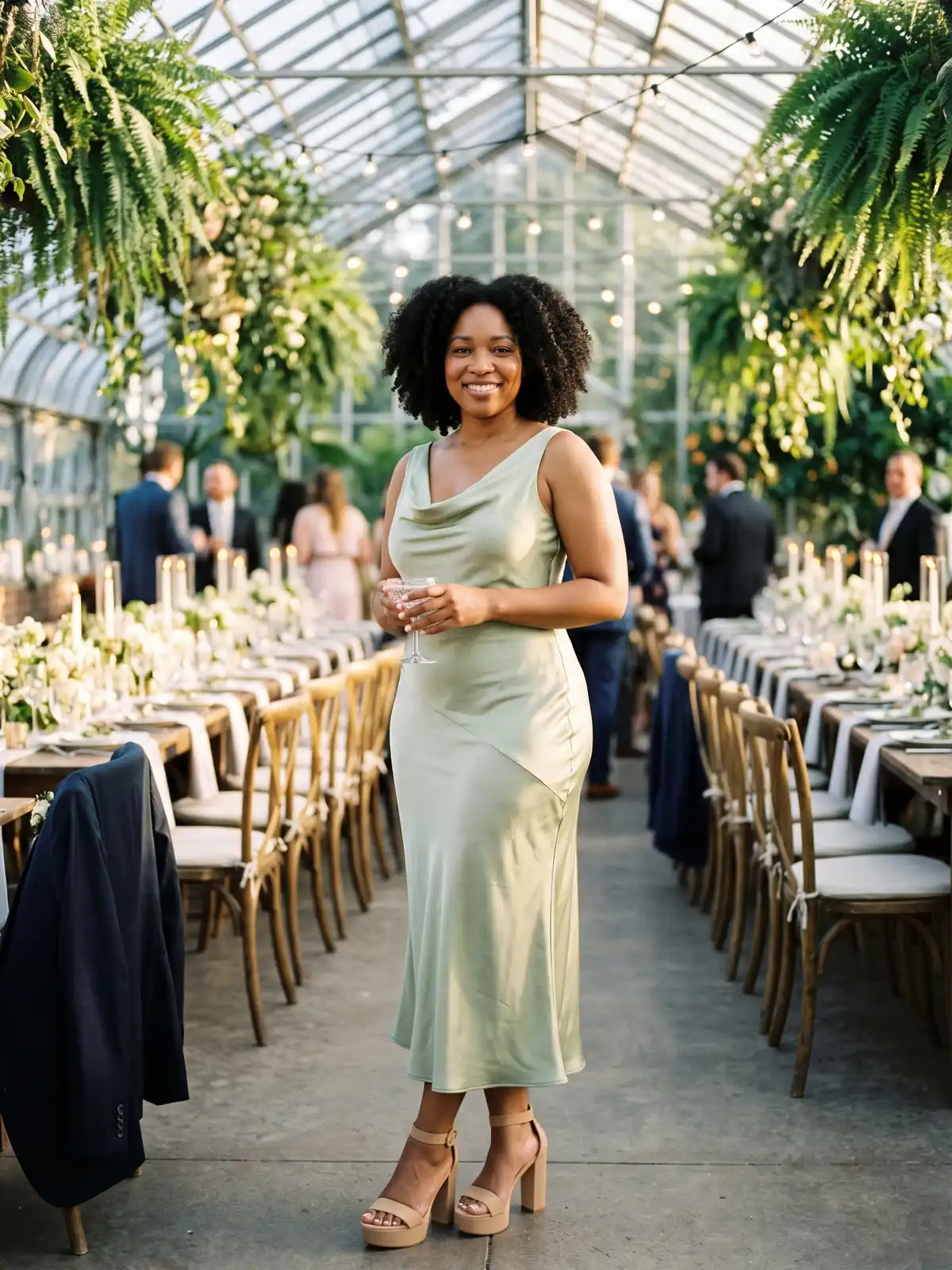
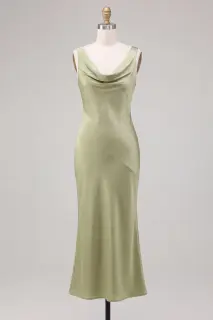 Zapaka Light Green Cowl Neck Mermaid Satin Midi Dress $109 Shop at Zapakaaffiliate link
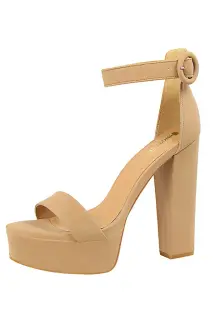 Zapaka Khaki Chunky High Heel Sandals $54 Shop at Zapakaaffiliate link
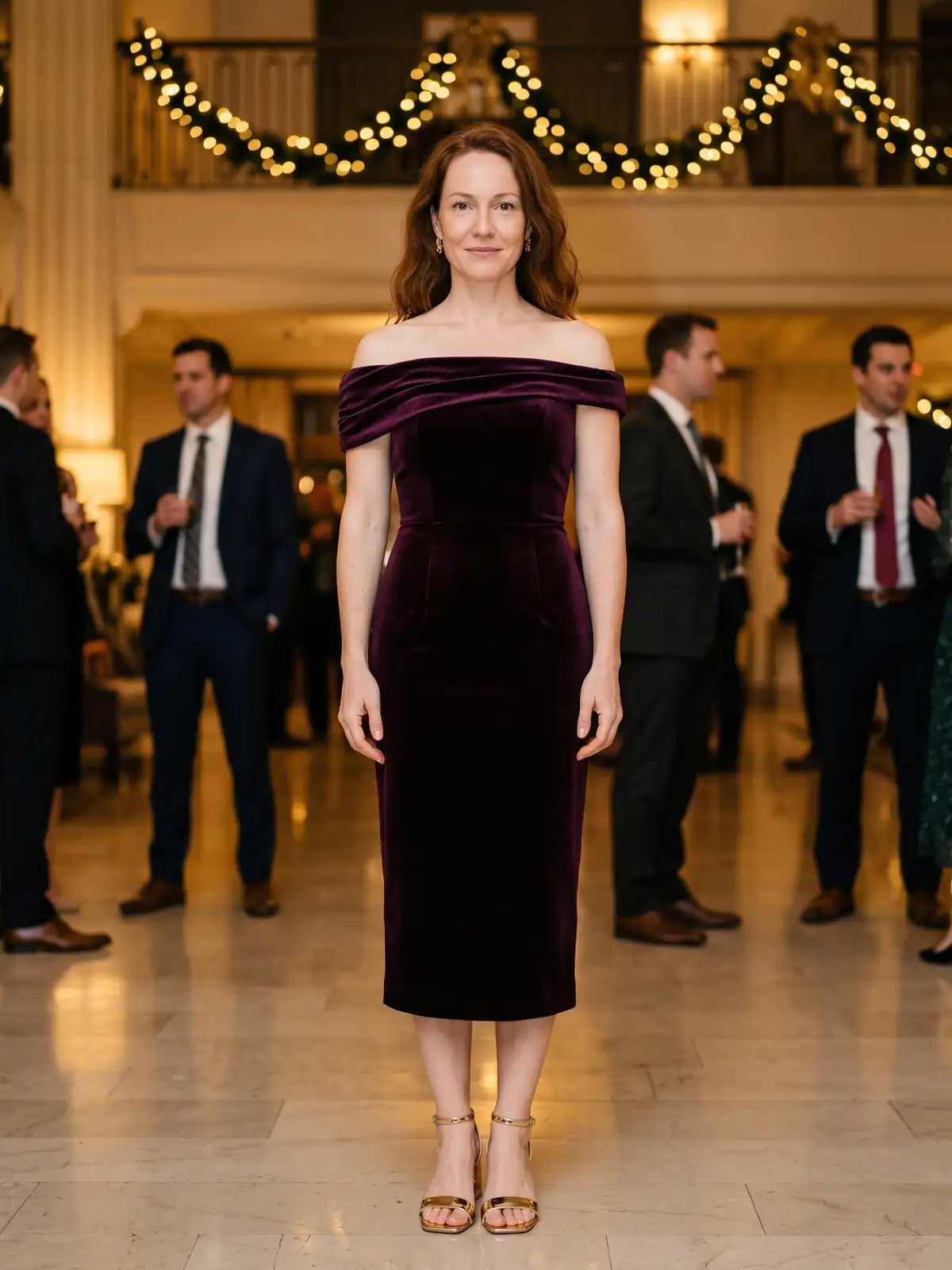
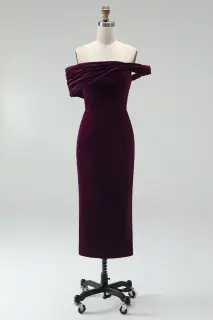 Zapaka Burgundy Bodycon Off the Shoulder Midi Velvet Dress $109 Shop at Zapakaaffiliate link
- Public Desire UK Maryse Gold Mirror Pu Barely There Mid Block Heels £27.99 no longer sold
A dress that "closely resembles an underslip or petticoat", "traditionally cut on the bias, with spaghetti straps". It belongs to the 1990s: Wikipedia records Kate Moss in a "sheer version in 1993" and the "lace-trimmed slip dress worn by Diana, Princess of Wales in 1996", designed by John Galliano. The pale sage dress on the left is a slip in satin with a cowl neck and wider straps, by Zapaka (US$109).
A cami dress is the same thing under another name. The trade site FashionUnited writes of "The cami dress, which can also be known as the slip dress".
Bodycon and bandage
Bodycon is "a tight figure-hugging dress, often made from stretchy material". The word is short for "body-conscious", and Wikipedia traces it through Japan, where it "transformed into Japanese in the 1980s as 'bodikon'". The plum velvet dress on the right above is a bodycon midi by Zapaka (US$109), with an off-the-shoulder neckline.
The bandage dress is a specific kind. It was "created by Azzedine Alaïa and is most closely associated with the designer Hervé Léger", and it is made differently. The marketplace 1stDibs explains: "The difference... is construction"; bandage dresses "look as if they consist of strips of fabric sewn together".
Shirt dress

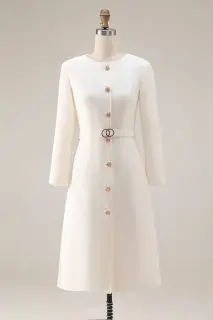 Zapaka Ivory A Line Single-breasted Work Dress With Belt $148 Shop at Zapakaaffiliate link
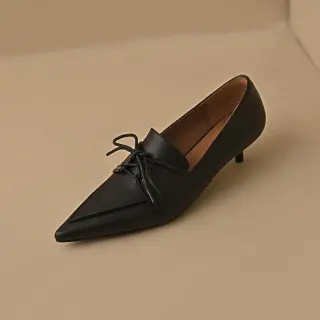 CHIKO Coralee Pointy Toe Kitten Heels Oxfords Shoes $109 Shop at CHIKOaffiliate link
A dress that "borrows details from a man's shirt": a collar or a button front, cuffs, often a belt. Wikipedia adds that these were "sometimes called a 'shirtwaist dress' when they were fashionable during the 1950s". The ivory dress here, by Zapaka (US$148), has the button front, the long sleeves and the belt, with a round neck in place of a collar; it sits between a shirt dress and a coat dress. Its casual descendant is the T-shirt dress. Those "began being produced in the 1960s, and are simply an elongated version of a T-shirt".
Empire
A dress with a "fitted bodice ending just below the bust", so the skirt falls from the highest possible waist. The name is historical: "The last few years of the 18th century first saw the style", and it is tied to the "First French Empire (1804–1815)". It is the dress of Jane Austen adaptations.
Mermaid and trumpet
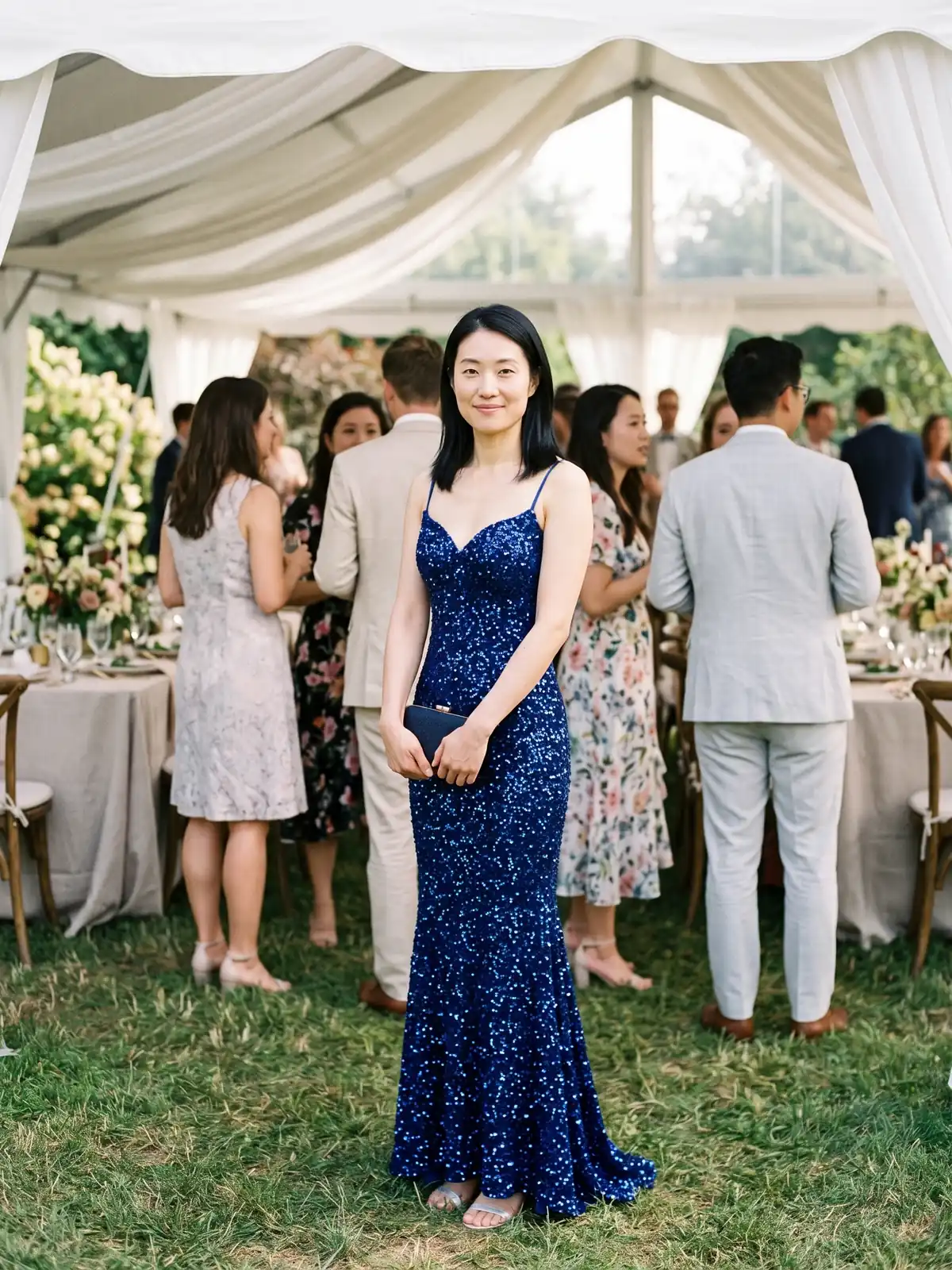
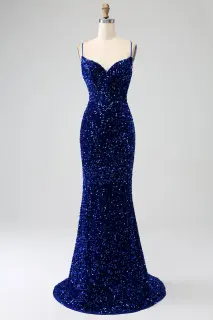 Zapaka Elegant Royal Blue Mermaid Spaghetti Straps Velvet Sequin Long Prom Dress $146 Shop at Zapakaaffiliate link
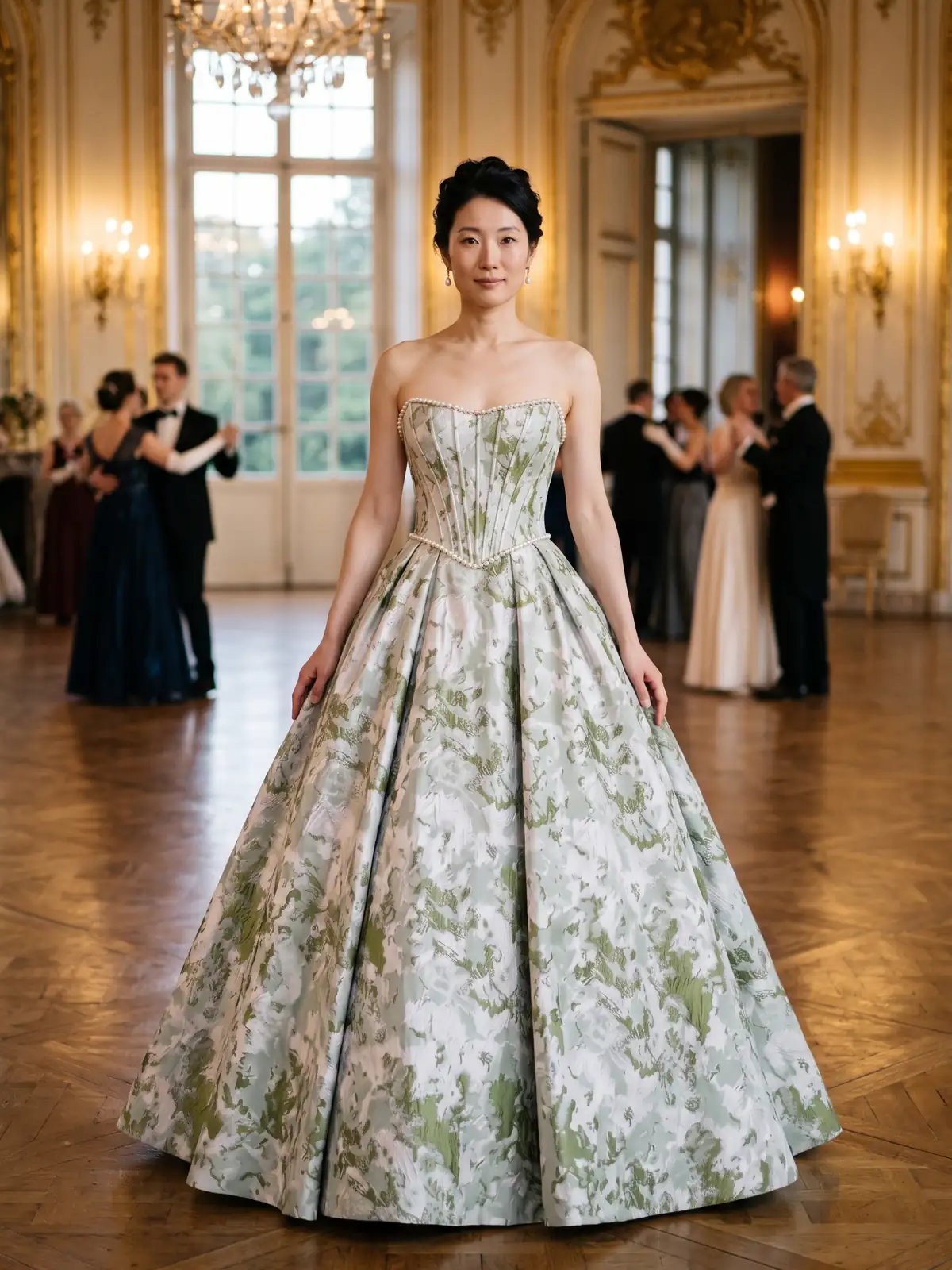
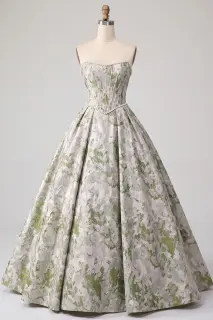 Zapaka Sage Green Corset Ball Gown Strapless Jacquard Long Prom Dress with Pearls $139 Shop at Zapakaaffiliate link
Both are fitted through the body and flare near the bottom. The difference is where. The dress brand Jovani draws the line: a trumpet "flares outward from around the mid-thigh", and a mermaid "releases at or just below the knee". The lower the flare, the more dramatic the shape and the shorter your stride. On the left is a mermaid gown in royal blue sequins by Zapaka (US$146).
Ball gown
Wikipedia: "a ball gown will always have a full skirt and a fitted bodice". It is the most formal dress shape, and the one for white tie. On the right above is one by Zapaka (US$139): a strapless corset bodice edged with pearls, and a full skirt in pale sage jacquard.
Column
A long dress that, in the words of one bridal glossary, "can be fitted at the bodice but straight and narrow to the hem". The same glossary calls a sheath "also known as a column dress"; in practice people say column for the floor-length version and sheath for the knee-length one.
Tent and trapeze
A tent dress "hangs loose from the shoulder to below the hips and does not have a waistline". The trapeze, from Saint Laurent's 1958 collection, is the same idea with more flare.
Drop waist
"A low, horizontal waistline that usually falls near the level of the upper hips". This is the flapper line of the 1920s. The Fashion History Timeline dates it: "waistlines dropped until 1923 before beginning to rise again in 1928".
Princess line
"A dress without a horizontal waist seam, fitted instead with long, vertical tucks and darts". It was "Named for Alexandra, Princess of Wales" and "began around 1876". Many sheath and A-line dresses are cut this way without saying so.
Peplum
A peplum is "A short overskirt attached to the waist of a garment". A peplum dress is a fitted dress with that ruffle at the waist.
Tunic, T-shirt, sweater and sundress
Four casual shapes. A tunic reaches "from the shoulders to a length somewhere between the hips and the ankles" and hangs loose. A sweater dress is "A knitted dress, especially of wool, worn for warmth". Our guide on how to style a sweater dress covers the boots and tights that go with one. A sundress is an "informal or casual dress intended to be worn in warm weather"; the word was "first used in the early 1940s", and the style was "popularized by Lilly Pulitzer in the 1960s".
Pinafore, or jumper
A "sleeveless, collarless dress intended to be worn over a blouse". Americans call it a jumper. In Britain it is a pinafore, because there "the term jumper describes what is called a sweater in American English".
Babydoll and smock
Loose dresses gathered from a high yoke. "Short daywear dresses of a similar style are sometimes called babydoll dresses", after a nightgown the designer Sylvia Pedlar created in "1942", and the name was "popularized by the 1956 movie Baby Doll". Smock dresses are "loosely styled after smock-frocks", the old work garment.
Kaftan
"A variant of the robe or tunic" with roots across Asia and North Africa. It entered Western fashion when "In the 1950s, fashion designers such as Christian Dior and Balenciaga adopted the kaftan".
Blazer dress
A dress cut like a long tailored jacket. The Australian magazine New Idea lists its other names: "The tuxedo dress (otherwise known as the jacket dress, blazer dress, or suit dress)".
Little black dress and cocktail dress
These two are defined by use, not by cut. The little black dress has a birth date: "In 1926 Coco Chanel published a picture of a short, simple black dress in American Vogue", and "Vogue called it 'Chanel's Ford'", after the car that everyone could own. The cocktail dress was named two decades later: "In 1948, Christian Dior labeled this business-casual dress 'cocktail dress'". What that dress code asks for today is in our guide to cocktail attire.
Cheongsam
One named traditional dress that has entered everyday fashion vocabulary: a "figure-fitting, one piece garment with a standing collar", which "From the 1920s onwards" was popularized in Shanghai. It is also called a qipao.
Dress lengths, from micro to floor
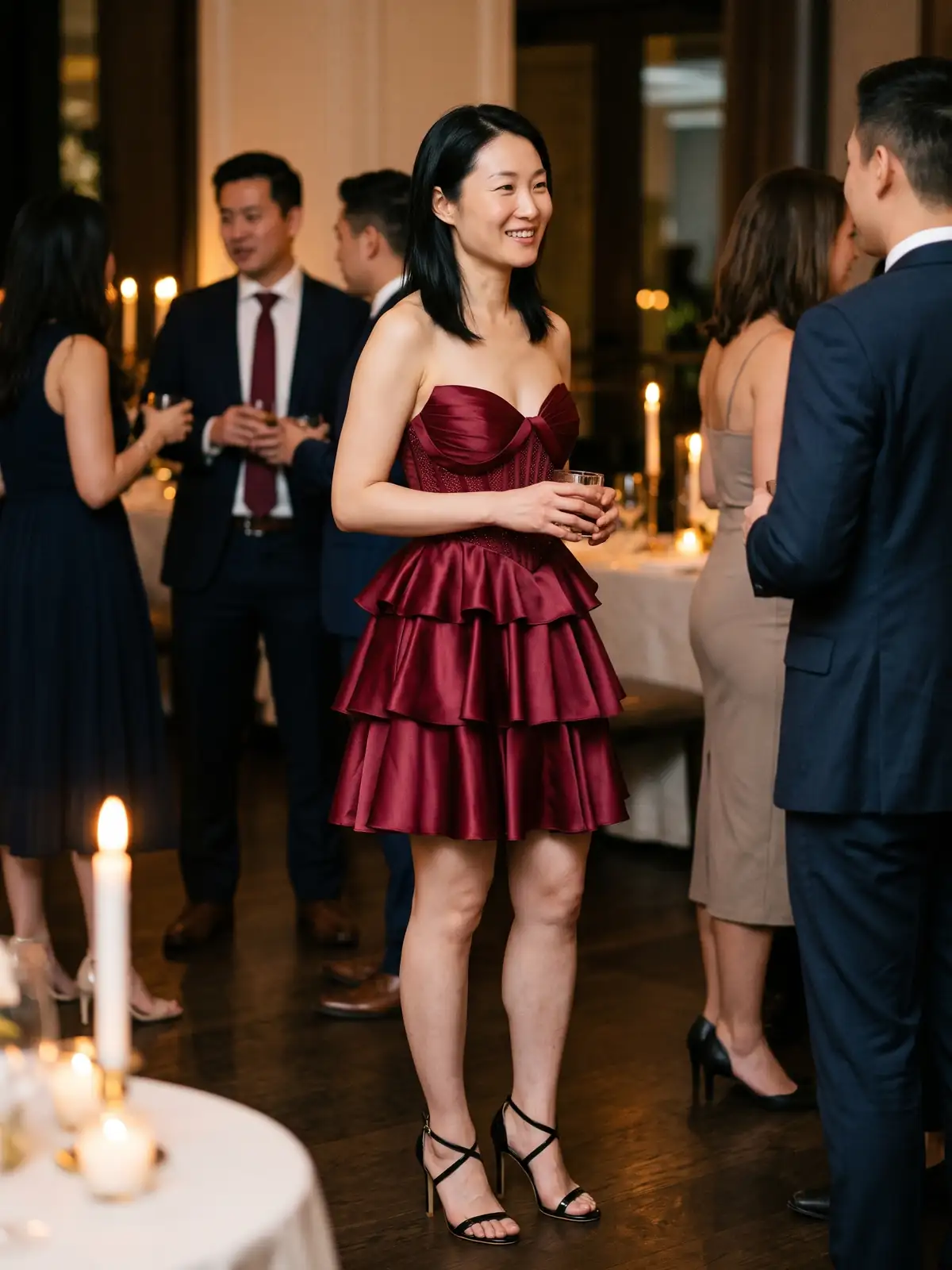
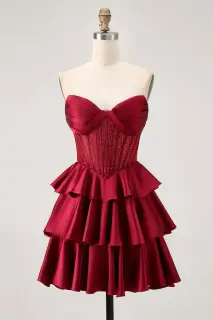 Zapaka Strapless A Line Tiered Satin Burgundy Homecoming Dress $125 Shop at Zapakaaffiliate link
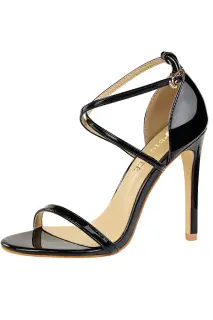 Zapaka Black Stiletto Sandals $61 Shop at Zapakaaffiliate link
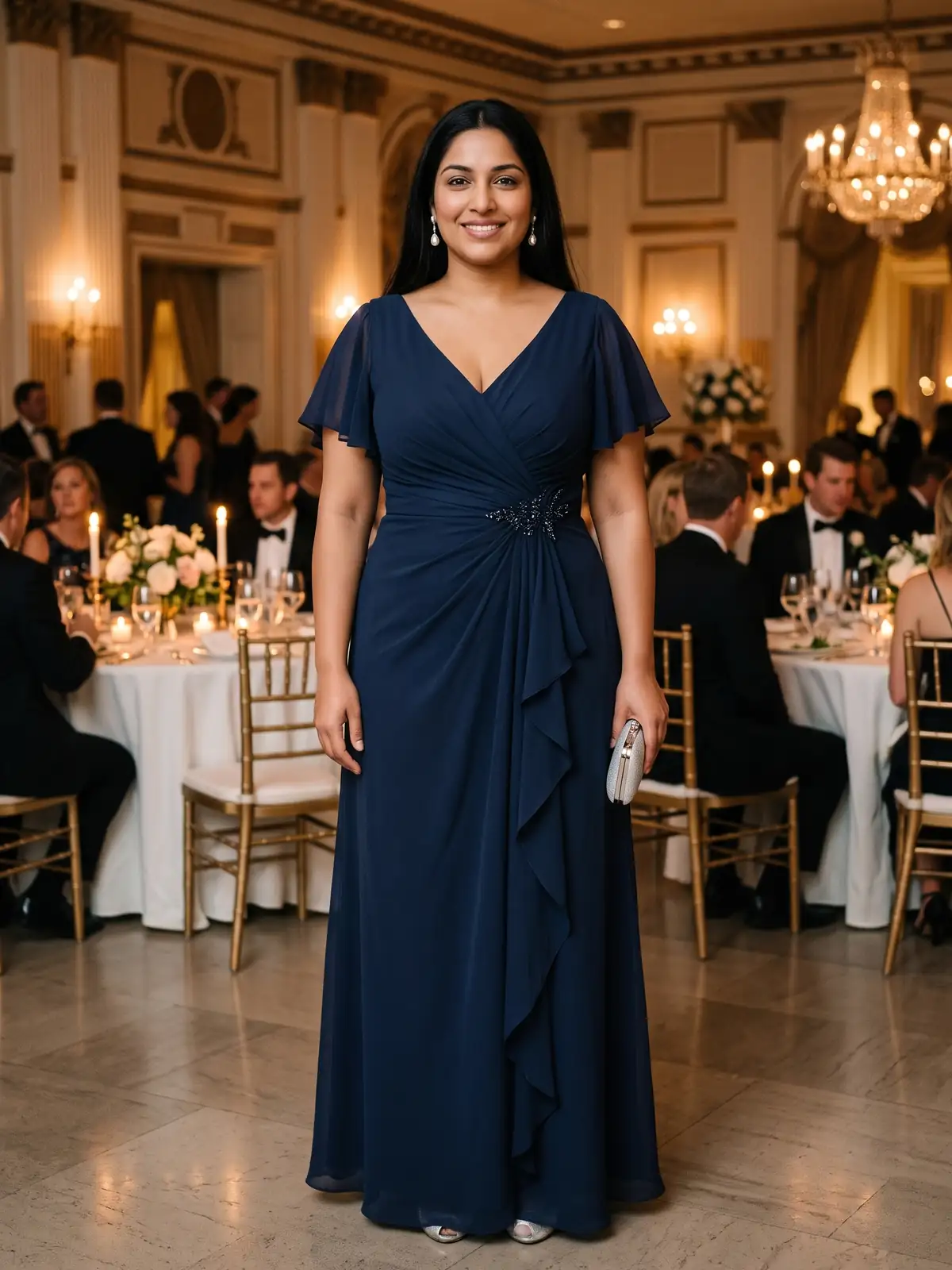
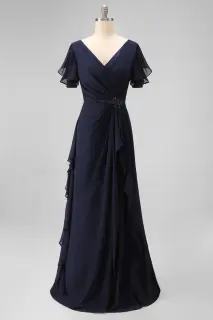 Zapaka Navy V-Neck Maxi Mother of the Bride Dress with Ruffles $139 Shop at Zapakaaffiliate link
| Length | Where the hem falls |
|---|---|
| Micro | Upper thigh. Wikipedia: an "extremely short version of a mini" |
| Mini | Mid-thigh. A "hemline well above the knees, generally at mid-thigh level" |
| Knee-length | At the knee, or just above or below it |
| Midi | Mid-calf. Wikipedia: "hits at mid-calf – halfway between the knee and ankle" |
| Tea-length | Lower calf. Wiktionary: a "hemline that is below the knees and above the ankle" |
| Maxi | The ankle. A "term used since the late 1960s for ankle-length, typically informal dresses" |
| Floor-length | Touching the floor. The length of a gown |
The pictures show the two ends. On the left, a mini: Zapaka's burgundy strapless dress with a tiered skirt (US$125). On the right, a floor-length dress: Zapaka's navy chiffon maxi (US$139).
Midi and tea-length are the two that sources blur. Wikipedia puts the midi at mid-calf and tea length "above the ankles". Alice + Olivia's guide gives the midi the whole range "between the knee and ankle". Jovani merges the two. The working rule: a midi shows the lower half of the calf, a tea-length dress shows only the ankle, and both are longer than knee-length.
The lengths have their own history. The mini belongs to the 1960s. Wikipedia credits two designers: "Courrèges had been designing miniskirts as early as 1961", and Mary Quant was "experimenting with shorter skirts in the late 1950s". The Victoria and Albert Museum says: "Quant is often credited with inventing the decade's most iconic look". The maxi followed: the Fashion History Timeline notes that "by 1969, the full-length maxi-skirt had emerged". The midi was launched in 1970 and failed at first. The Encyclopedia of Clothing and Fashion records that "most women rejected the midi". It came back for good decades later.
Necklines
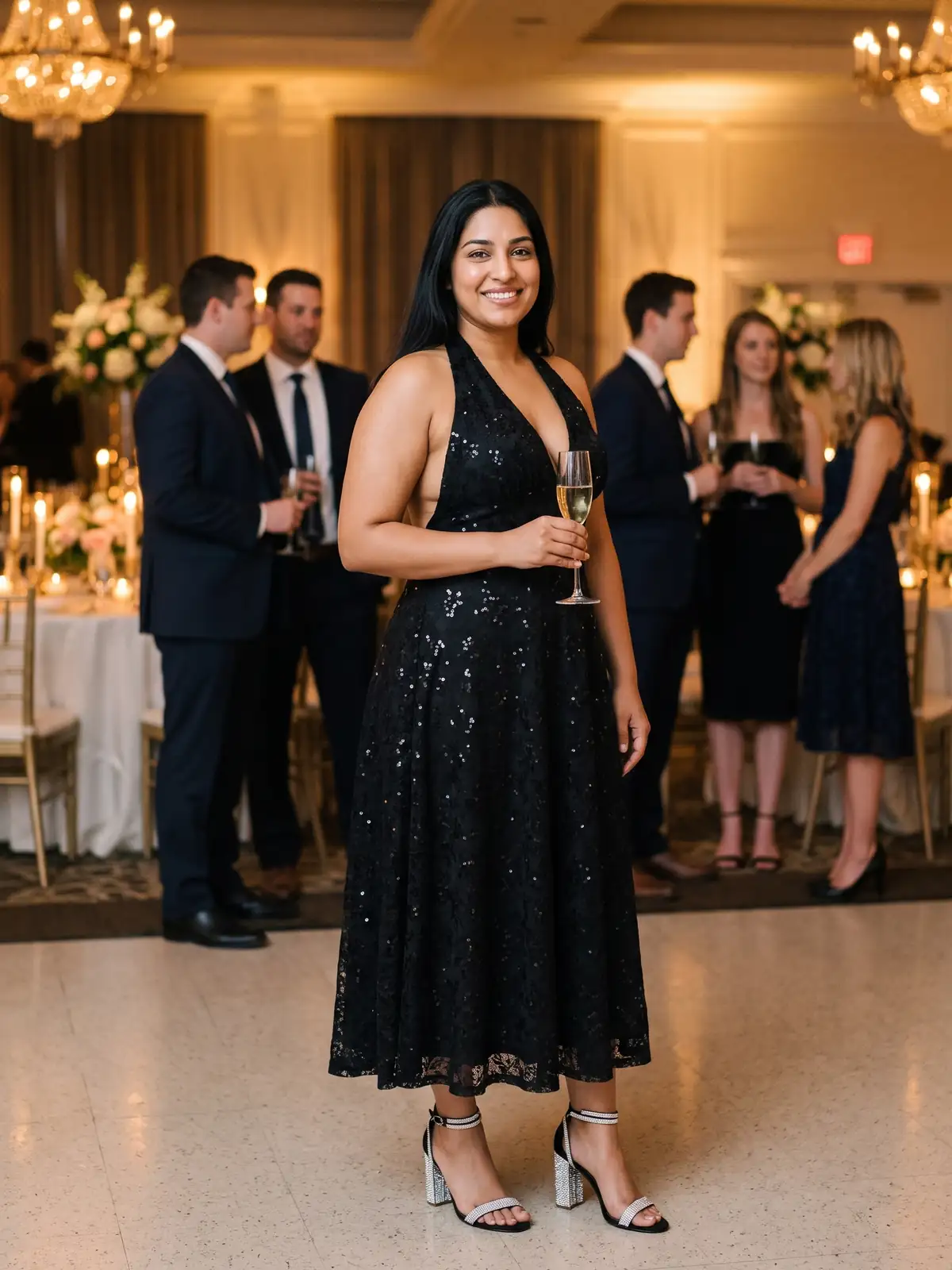
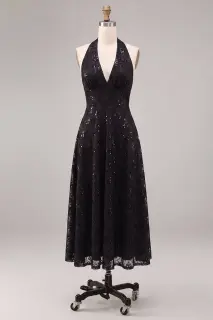 Zapaka Black Halter Neck Sequins A-Line Backless Midi Formal Dress $125 Shop at Zapakaaffiliate link
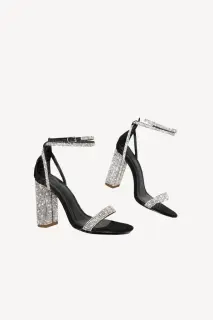 Zapaka Rhinestone Chunky Heel One Buckle Sexy High Heel Sandals $59 Shop at Zapakaaffiliate link
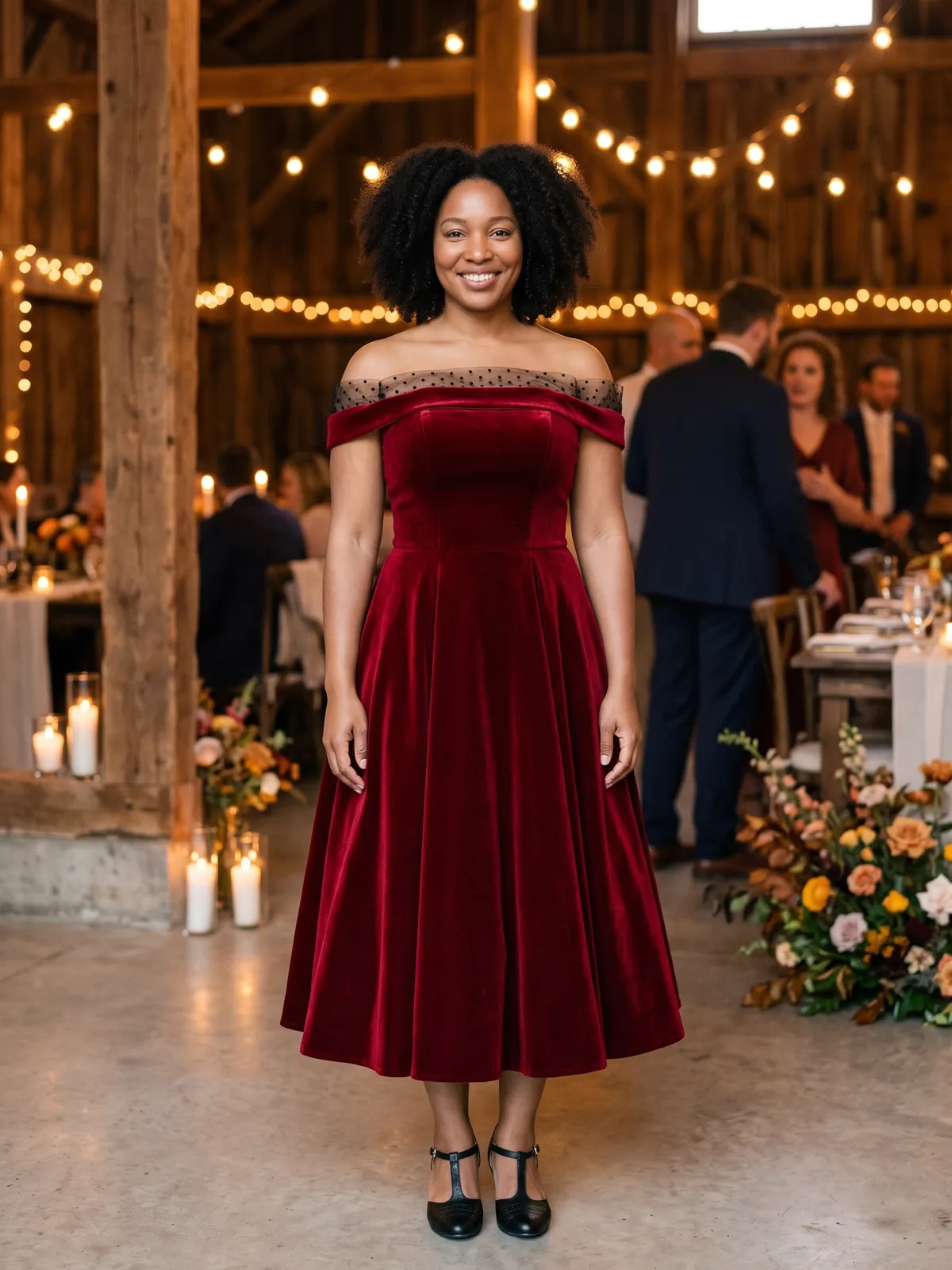
- Zapaka Burgundy Off the Shoulder Velvet Prom Dress $119 no longer sold
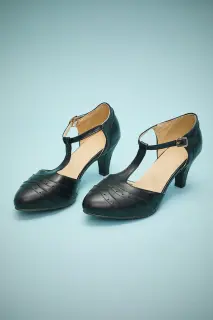 Zapaka Black Leather Pointy Heels $54 Shop at Zapakaaffiliate link
| Neckline | Shape |
|---|---|
| V-neck | "Two diagonal lines from the shoulders that meet on the chest" |
| Scoop | A "curved U-shape" |
| Crew and jewel | Round and high; a jewel neck "sits near the base of the throat" |
| Boat (bateau) | A "high, wide, slightly curved neckline that passes past the collarbones" |
| Square | "Three linear edges" |
| Sweetheart | A "curved bottom edge that is concave down and usually doubly scalloped", like the top of a heart |
| Halter | Held by a "strap that runs from the front of the garment" around the back of the neck, leaving the shoulders bare |
| Off-the-shoulder | "Similar to boat necklines but is significantly lower", below the shoulders |
| One-shoulder | "Asymmetrical linear necklines with one edge, which cut across the torso diagonally" |
| Turtleneck | "High, close-fitting collars" that cover the neck |
The definitions are Wikipedia's. The two dresses above show the fourth and third from last. On the left, a halter: Zapaka's black sequin lace midi (US$125), held by a band behind the neck. Wikipedia notes that the halter "didn't gain large social recognition until the 1930s". On the right, an off-the-shoulder neckline on Zapaka's deep red velvet midi (US$119). This one is also called a Bardot neckline, after the actress Brigitte Bardot; as HELLO! put it, it "was named after her penchant for showing off her shoulders".
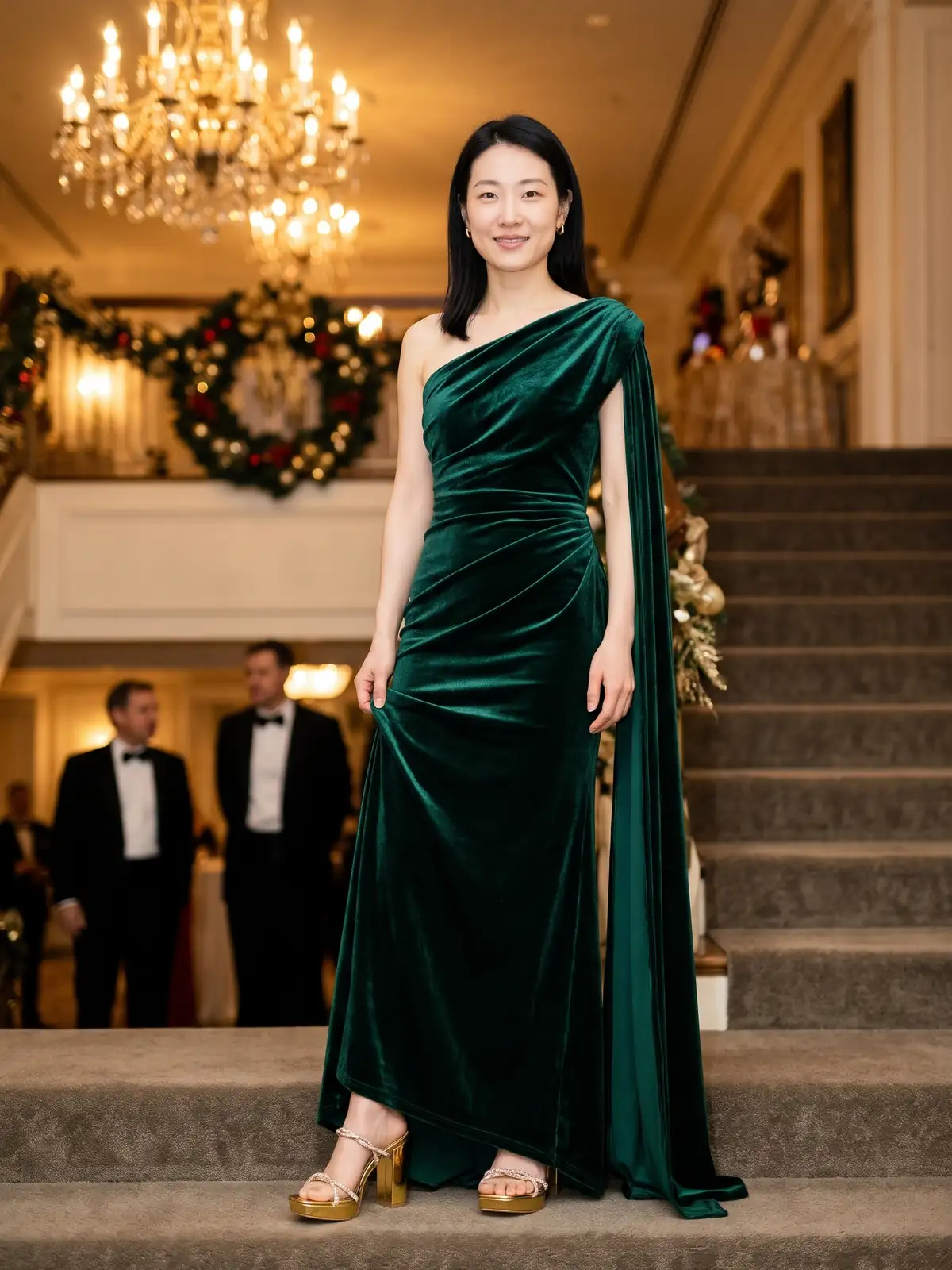
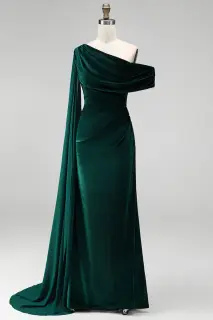 Zapaka Dark Green Sheath Ruched One Shoulder Maxi Velvet Dress with Side Cape $129 Shop at Zapakaaffiliate link
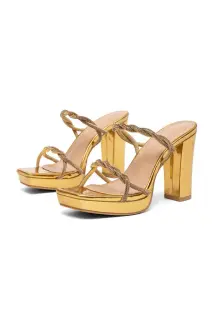 Zapaka Sparkly Golden Double Strap Rhinestones Prom High Heels Chunky Sandal $37 Shop at Zapakaaffiliate link
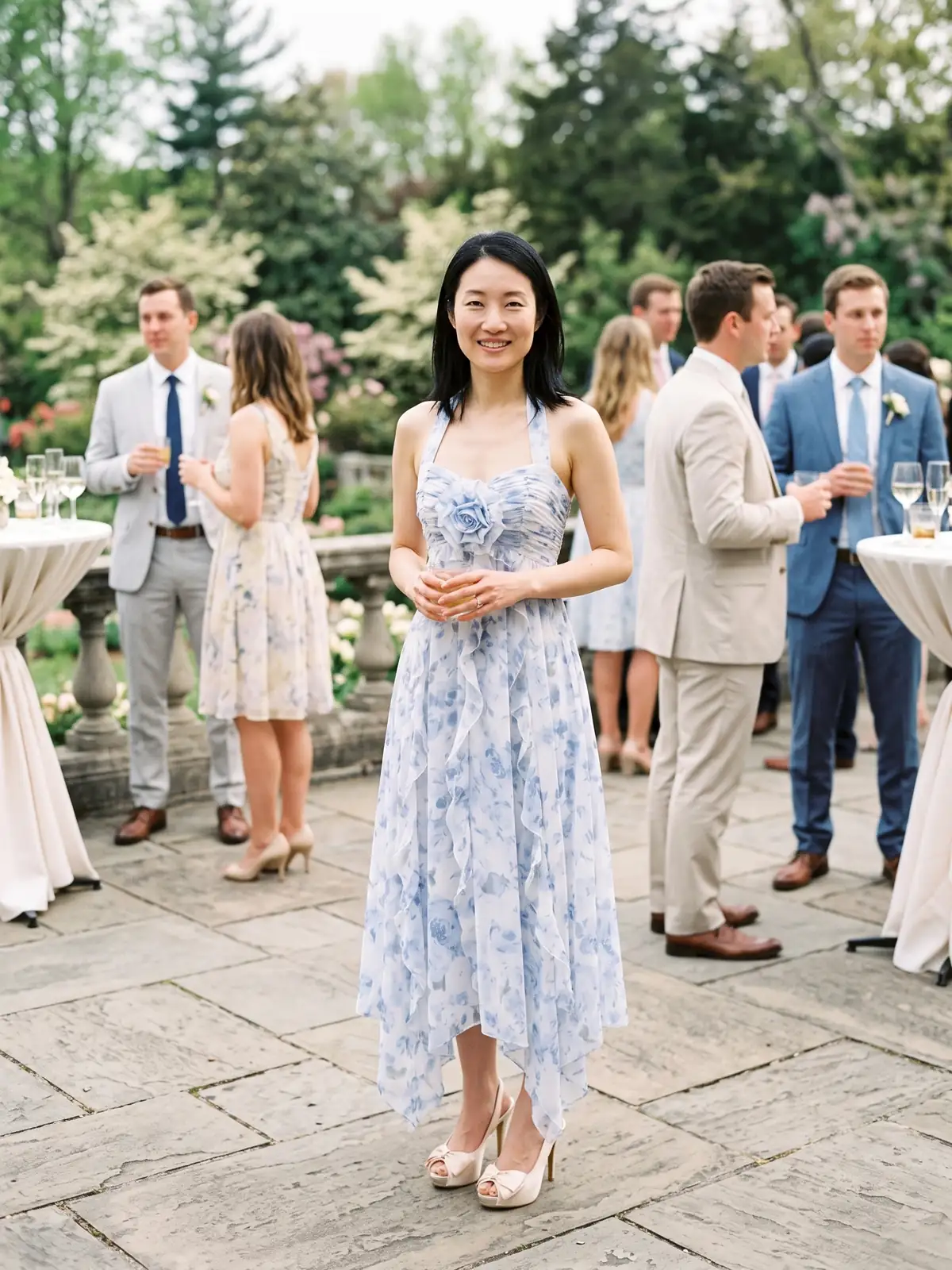
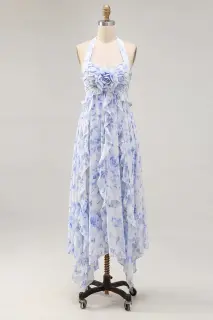 Zapaka Halter Neck A-Line Blue Flower Chiffon Midi Dress with Ruffles $109 Shop at Zapakaaffiliate link
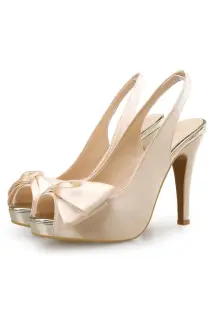 Zapaka Champagne Bow Fish Mouth Platform High Heels $59 Shop at Zapakaaffiliate link
On the left, a one-shoulder gown: Zapaka's dark green velvet dress with a cape panel falling from the covered shoulder (US$129). The dress on the right brings us to hems.
Hem shapes: handkerchief, high-low and tiered
The hem can be a feature too.
- Handkerchief hem. A skirt with "asymmetric hems" that fall in points, as if made from a square of cloth held by its center. The pale blue chiffon dress above, by Zapaka (US$109), has one: the hem drops lower at the sides.
- High-low. "A hem that is higher in the front, or side, than in the back". Wikipedia dates its recent wave to "a trend in Europe and America in late 2011".
- Tiered. A skirt made of "several horizontal layers, each wider than the one above". The burgundy mini in the lengths section has three tiers.
- Pleated. Fabric folded and pressed or stitched. The most famous pleated dress is the Delphos gown, a "finely pleated silk dress first created in about 1907". The Japanese designer Issey Miyake made permanent pleats modern when he "released his Pleats, Please line in 1993".
- Bias cut. Not a hem but a way of cutting that changes how the whole skirt hangs: "cutting the fabric 45 degrees against the weave", so it clings and flows. The Fashion History Timeline credits it to one designer: "Madeleine Vionnet began using the bias cut in the 1920s".
Pairs people confuse
| Pair | The difference |
|---|---|
| Sheath vs shift | A sheath is fitted at the waist; a shift falls straight. Wikipedia: the shift is "often confused with the sheath dress, which is form-fitting and shaped by tucks on the waist area" |
| A-line vs fit-and-flare | A fit-and-flare has a seam at a fitted waist. An A-line can widen from the shoulder or the bust without one |
| Mermaid vs trumpet | The mermaid flares at or below the knee, the trumpet from mid-thigh (Jovani) |
| Midi vs tea-length | Midi at mid-calf; tea-length lower, above the ankle |
| Maxi vs gown | A maxi is ankle-length and usually informal. A gown is formal and floor-length. As one glossary puts it, "every gown is a dress but not every dress is a gown" |
| Bodycon vs bandage | Any tight stretch dress is bodycon; a bandage dress is built from sewn strips |
| Slip vs cami | The same dress under two names |
| Jumper (US) vs pinafore (UK) | The same sleeveless dress worn over a top. In the UK a jumper is a sweater |
| Sheath vs column | Often the same cut; column usually means the floor-length version |
Which type of dress for which occasion
| Occasion | The types that fit | Our guide |
|---|---|---|
| The office | Sheath, shirt dress, A-line to the knee | Business casual |
| A cocktail party or most weddings | A-line, sheath, slip or fit-and-flare in a dressy fabric, knee to midi | Cocktail attire |
| A black tie event | Column, A-line gown, mermaid, ball gown, floor-length | Black tie attire |
| A semi-formal event | Knee-length or midi A-line, wrap, sheath | Semi formal attire |
| Choosing by your own proportions | Any; start with the A-line or fit-and-flare | How to dress for your body type |
The history of dress types, in twelve dates
- Late 1700s to 1815. The empire waist, under the bust.
- About 1876. The princess line, with no waist seam.
- About 1907. The pleated Delphos gown.
- The 1920s. The drop waist, the shift, and Vionnet's bias cut.
- 1926. Chanel's little black dress in American Vogue.
- 1942. Claire McCardell's Popover wrap dress, at $6.95.
- 1948. Dior names the cocktail dress.
- 1955. Dior's A-line collection. In 1958, Saint Laurent's Trapeze.
- The 1960s. The mini (Quant and Courrèges), the revived shift, the T-shirt dress, and by 1969 the maxi.
- 1974. Diane von Furstenberg's wrap dress.
- The 1980s and early 1990s. Bodycon, and the bandage dress of Alaïa and Léger.
- 1993 to 1996. The slip dress, from Kate Moss to Princess Diana.
British and American words
A few dress words change across the Atlantic. A US jumper is a UK pinafore, and a UK jumper is a US sweater. A US vest is a UK waistcoat, and a UK vest is an undershirt. British shops say "frock" for a dress more readily than American ones, and "court shoes" for pumps. Lengths and silhouettes use the same names everywhere.
Questions people ask
What are the main types of dresses?
By silhouette: A-line, sheath, shift, fit-and-flare, wrap, slip, shirt dress, bodycon, empire, mermaid and ball gown are the main ones. Each can come in any length, from mini to floor, and with any neckline.
What is the difference between a sheath and a shift dress?
A sheath is fitted, shaped at the waist with darts and tucks. A shift hangs straight from the shoulders with no waist definition. Sheaths are closer and more formal; shifts are looser and easier.
What is the difference between a midi and a maxi dress?
A midi ends at mid-calf. A maxi ends at the ankle. A tea-length dress falls between the two, and a floor-length dress is longer than all of them.
What is an A-line dress?
A dress that is narrower at the top and widens steadily to the hem, in the shape of a capital A. The name comes from Christian Dior's spring 1955 collection.
What is the difference between a mermaid and a trumpet dress?
Both are fitted and flare at the bottom. A trumpet starts to flare around mid-thigh; a mermaid stays fitted to the knee or just below it, which makes it more dramatic and harder to walk in.
What is a wrap dress?
A dress that closes by wrapping one side of the front across the other and tying at the waist, which forms a V-neck. Diane von Furstenberg's 1974 jersey version made it famous; a faux wrap has the same look sewn shut.
What is the most flattering type of dress?
No single type suits everyone. The A-line and the fit-and-flare are recommended for the widest range of bodies, because the skirt widens from the waist whatever is under it. Our guide to dressing for your body type shows both on different women.
Is a jumpsuit a type of dress?
No. A jumpsuit is a one-piece with pants. It is accepted in place of a dress under most dress codes, from cocktail to black tie, when the fabric is dressy.
Sources
- Wikipedia: A-line (clothing)
- Wikipedia: Sheath dress
- Wikipedia: Shift dress
- Wikipedia: Fit and flare
- Wikipedia: Wrap dress
- Wikipedia: Claire McCardell
- Wikipedia: Slip dress
- Wikipedia: Shirtdress
- Wikipedia: Dress
- Wikipedia: Bandage dress
- Wikipedia: Empire silhouette
- Wikipedia: Evening gown
- Wikipedia: Tent dress
- Wikipedia: Waistline (clothing)
- Wikipedia: Tunic
- Wikipedia: Sundress
- Wikipedia: Jumper (dress)
- Wikipedia: Babydoll
- Wikipedia: Smock-frock
- Wikipedia: Kaftan
- Wikipedia: Little black dress
- Wikipedia: Cocktail dress
- Wikipedia: Cheongsam
- Wikipedia: Miniskirt
- Wikipedia: Neckline
- Wikipedia: Halterneck
- Wikipedia: Handkerchief skirt
- Wikipedia: High-low skirt
- Wikipedia: Skirt
- Wikipedia: Delphos gown
- Wikipedia: Issey Miyake
- Wiktionary: tea-length
- Wiktionary: peplum
- Wiktionary: sweater dress
- Fashion History Timeline (FIT): 1870-1879
- Fashion History Timeline (FIT): 1920-1929
- Fashion History Timeline (FIT): 1930-1939
- Fashion History Timeline (FIT): 1950-1959
- Fashion History Timeline (FIT): 1960-1969
- Fashion History Timeline (FIT): 1970-1979
- Encyclopedia of Clothing and Fashion: Hemlines
- Victoria and Albert Museum: Introducing Mary Quant
- Jovani: Trumpet dress
- Vows Bridal: Wedding gown glossary
- 1stDibs: The difference between a bodycon dress and a bandage dress
- FashionUnited: Item of the week, the cami dress
- New Idea: Blazer dress and tuxedo dress
- HELLO!: Brigitte Bardot's iconic fashion moments
- Apparel Search: The difference between a dress and a gown
- Alice + Olivia: 25 Types of Dresses Every Woman Should Know
The images in this guide are AI-generated: real garments from our catalogue, shown on our own recurring models and made from the shops' photos of each piece. They are not photographs of real people. Prices are the ones the shops showed on November 21, 2026 and can change. Wear It On Me earns a commission when you buy a garment through an affiliate link in a guide (the links are marked, and it costs you nothing extra); a commission never decides what we recommend. How we make these guides.