How to wear a scarf: knots, coats and fabrics for women and men
How to wear a scarf: choose it by your coat, tie it by the weather. Ten knots step by step, scarf and coat pairings for women and men, sizes, fabrics and care.
Wear It On Me earns a commission on garments bought through affiliate links in our guides. That never decides what we recommend. Details.
How do you wear a scarf? Pick it to match your coat, then tie it to match the weather. A long wool or cashmere scarf, about 70 to 75 inches, goes with a tailored overcoat and takes every classic knot; an oversized blanket scarf goes with a big wool coat; a silk square goes at an open collar, in the hair or on a bag; a chunky knit or a loop scarf goes with a parka or a puffer. When it is properly cold, wrap it so it closes the neck of the coat and tuck the ends inside. The Irreverent Gent, a menswear blog that tested this, sums it up: making a scarf look good "has more to do with the what" than with how you tie it. This guide covers both: which scarf with which coat, ten knots in plain steps, fabrics, sizes and care, for women and men.
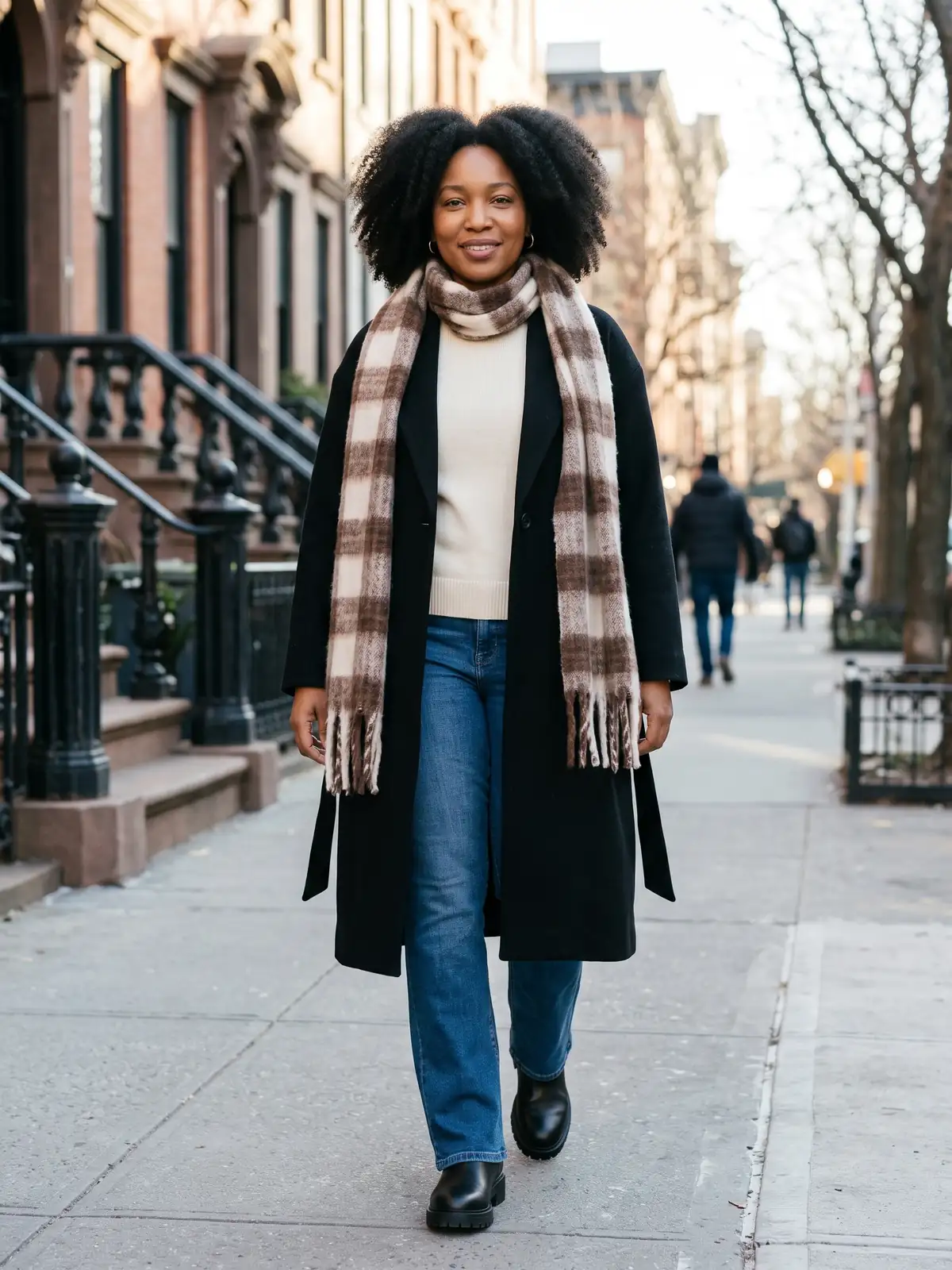
- M&S Womens M&S Wool Blend Longline Coat, Black CA$235 no longer sold
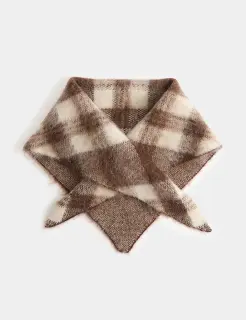 Autograph Womens Autograph Wool Blend Checked Scarf, Brown Mix CA$119 Shop at M&Saffiliate link
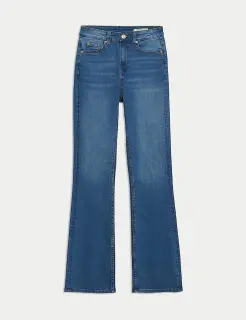 M&S Womens M&S Eva Bootcut Jeans, Medium Indigo CA$68.99 Shop at M&Saffiliate link
- M&S Womens M&S Leather Chelsea Boots With Cleated Sole, Brown CA$159 no longer sold
The first picture is the most common winter version: a black wool-blend longline coat from M&S (CA$235), worn open over a cream knit, with Autograph's checked wool scarf in a brown, cream and taupe mix (CA$119) wrapped once around the neck so both fringed ends fall down the front of the coat. Under it, M&S's Eva bootcut jeans in medium indigo (CA$68.99) and its leather Chelsea boots with a cleated sole (CA$159; the shop calls them brown, they read near black in photos), on a US size 12. A long checked scarf over a plain dark coat is the pairing Joules, the British brand, recommends for large scarves: "Opt for a neutral or classic check to ensure it looks good with whatever coat you're sporting".
Start with the coat: which scarf goes with what
Most how-to pages start with knots. The sources that think about outfits start with the coat, because the coat decides how much scarf you can carry and where the ends can go. Who What Wear's take on the oversized look is a good example of a pairing rule: "The scarf must be big (made of brushed wool preferably), and the coat must be wool and tailored to perfection."
| Scarf | Typical size | Wear it with | Knots that work | Skip it with |
|---|---|---|---|---|
| Woven wool (lambswool, merino), mid-weight | About 70-75 in x 10-14 in | Overcoat, topcoat, pea coat, wool car coat | Once-around tucked in, Parisian loop, knotted once-around | Ends flapping below the belt |
| Fine cashmere | 55-75 in long, depending on the source | Tailored overcoat over a suit, blazer, sport coat; a camel or grey wool coat | Drape under a deep V, Parisian loop, overhand | Machine washing; cheap, over-soft cashmere |
| Blanket scarf (oversized, fringed or not) | Around 74 x 220 cm for one British maker | A big tailored wool coat, a belted trench, jeans and knits | Fold in thirds first, then once-around, shrug or belted wrap | A suit, a short fitted jacket |
| Chunky knit | Varies | Parka, puffer, casual jacket, crew-neck sweater | Once-around, twice-around | Tailored coats and suits (too bulky to tie neatly) |
| Silk square | 90 cm is the classic carré; 45 to 100 cm exist | Open-collar shirt, Breton top, sweater vest, trench collar, hair, bag handle | Bandana, kerchief drape, triangle knot, French knot (band version) | A cold, windy day on its own |
| Long silk or silk-wool | Oblong | Blazer or sport coat with no coat, spring and fall coats, dresses | Drape, over-the-shoulder, Italian twist | Wind (light silk with no texture blows off) |
| Triangle scarf | Triangle, often knitted | Under a coat collar, over a jumper or a shirt | Point at the chest, ends tied at the back or the side | Nothing much: it is built to sit flat |
| Faux fur collar or scarf | Short | Evening coats, a dress and coat | Laid flat, ends crossed under the coat | Rain |
Two habits save money. Next Level Wardrobe, a personal styling firm, says you need "one light color and one dark color" to cover every outfit, and names navy and light grey for both women and men. Savile Row Company, a London shirtmaker, gives the quiet palette for men: "charcoal, navy and black".
The knots, step by step
The same knot has several names, and the same name is used for different knots. The Met Store's French Knot is a band crossed behind the neck and knotted under the chin; Gentleman's Gazette's French Knot is the folded loop most people call the Parisian. Here is each knot by what your hands do.
- Drape (no knot). Hang the scarf around the back of the neck with both ends even in front. Wear it under an open coat or a deep-V overcoat over a suit. The Art of Manliness calls it a way of wearing a scarf "meant more for ornamentation than actual warmth".
- Over the shoulder. Drape it with one end longer, then throw the long end across your chest and over the opposite shoulder. The Met Store calls it "a fail-safe scarf wearing option". It needs a scarf with some texture, or it slides off when you walk.
- Once-around. Let one end hang longer, wrap it once around your neck, and let both ends fall in front. To make it a chest warmer, split the scarf one-third and two-thirds, cross the ends diagonally over your chest and button the coat over them.
- Parisian knot (also French loop, European loop, slip knot, loop tie). Fold the scarf in half lengthwise, put it around the back of your neck, then pull both loose ends through the folded loop and slide the loop up. Savile Row Company: "Fold the scarf in two, end to end." It needs length: a short scarf opens up as you walk.
- Knotted once-around. Do a once-around, tie the two front ends in a loose half knot, then tuck the knot under the wrap or pass one end through the neck loop. It holds all day and closes the coat's V.
- Overhand (some sites call it an ascot). Drape the scarf with one end longer, cross the long end over the short one and pull it up through the loop at your neck, like the first step of tying shoelaces. Spread the top so it lies flat.
- Twice-around. Wrap a long scarf twice around the neck and leave two short ends in front, or tie them loosely to one side. The Art of Manliness wants a scarf "at least 72 inches long" for it.
- Reverse drape. Lay the scarf across the front of your neck and throw both ends back over your shoulders. The Met Store's direction for it: "the messier the better". Best with thick wool.
- Bandana or neckerchief (silk square). Fold the square into a triangle, bring the two ends around your neck and tie a small knot, at the front, to one side or at the back. The V&A holds a 19th-century printed cotton neckcloth tied much the same way, folded on the diagonal and crossed at the neck.
- Kerchief drape and triangle knot (square or large wrap). Fold the square into a triangle with the point at the centre of your chest, take the two corners around the back of the neck and over the opposite shoulders, and leave them, or tie them loosely at the side of the neck.
He Spoke Style, a menswear site that rates every knot, puts the drape and the over-the-shoulder at "Slight to none" for warmth and the Parisian loop at medium. Gentleman's Gazette's rule for the ends holds for every knot: "untucked ends add a certain dramatic charm, but will not be as warm."
How to wear a scarf for men
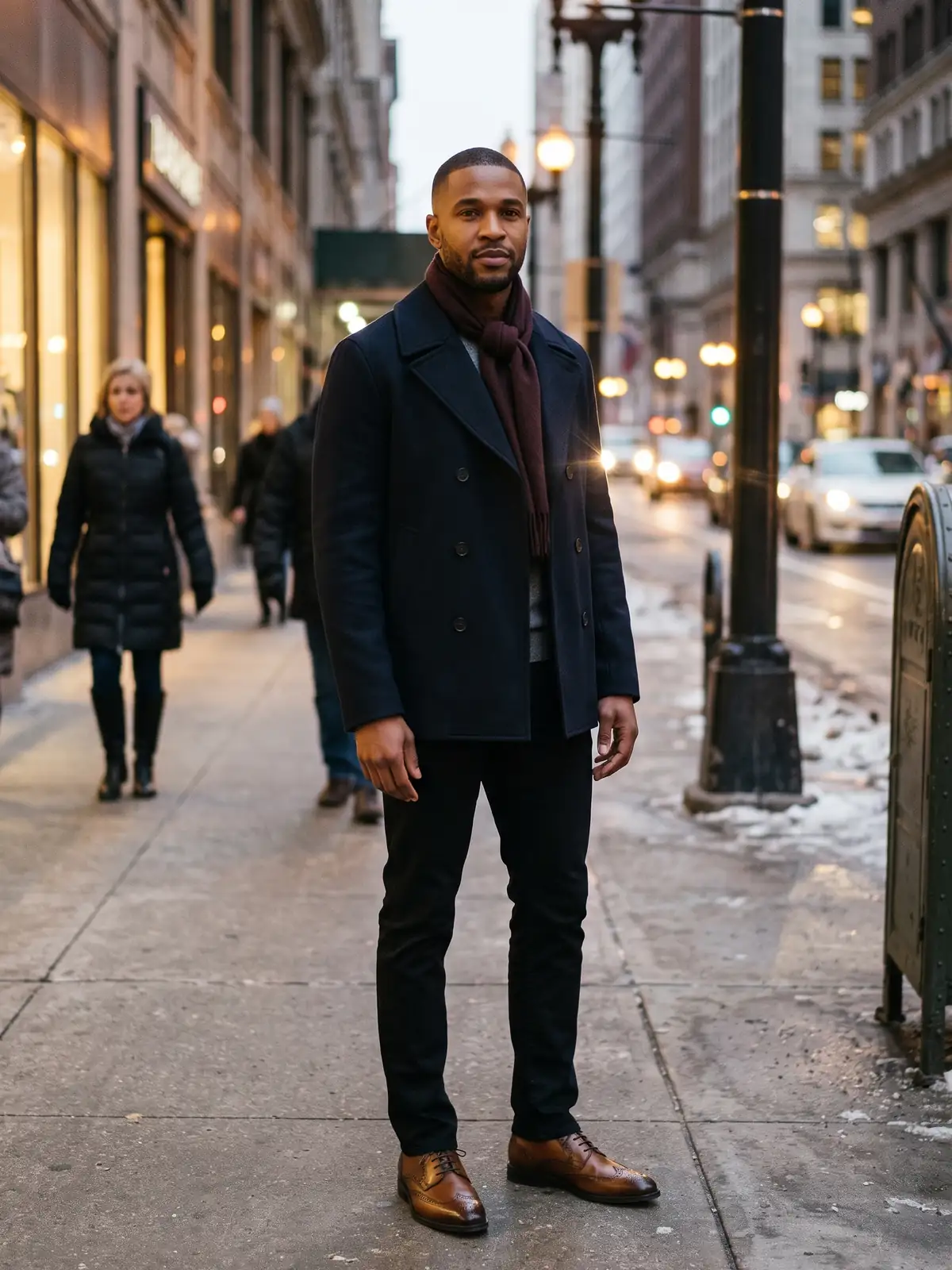
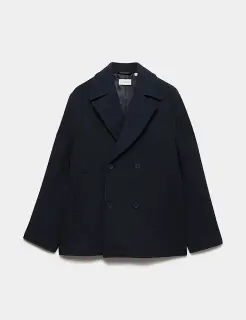 Autograph Mens Autograph Wool Blend Melton Pea Coat, Dark Navy CA$299 Shop at M&Saffiliate link
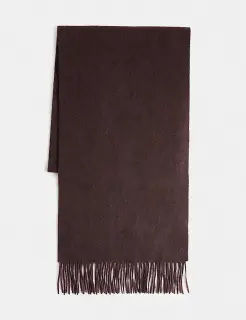 Autograph Mens Autograph Pure Cashmere Scarf, Dark Burgundy CA$155 Shop at M&Saffiliate link
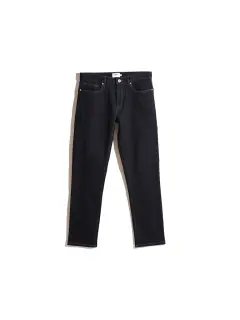 Farah Elm Slim Fit Jeans In Rinse Denim £49 Shop at Farahaffiliate link
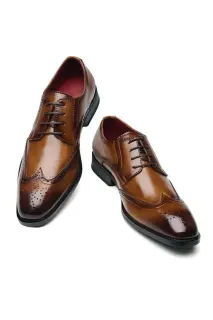 Zapaka Brown Lace-Up Leather Men's Shoes $89 Shop at Zapakaaffiliate link
The men's picture is the knot most men learn first: Autograph's pure cashmere scarf in dark burgundy (CA$155), folded in half and pulled through itself in a Parisian knot, over Autograph's wool-blend melton pea coat in dark navy (CA$299), buttoned. Farah's Elm slim jeans in rinse denim (£49; they read black) and Zapaka's brown wingtip brogues (US$89) finish it, on a 40R. One colour of scarf against a dark coat is the safe start; a pattern comes later.
Size first. Gentleman's Gazette tells men to "find a scarf that is 70 to 75 inches (178 to 191 centimeters) in length and 10 to 14 inches (25 to 35 centimeters) in width". Its founder shows why on video with a cashmere scarf that is "only sixty inches long": tied in a loop, it opens up as he walks.
With an overcoat. For cold, a once-around tucked into the coat or a knotted once-around. For a dry, mild day, a Parisian loop sits well in a coat with a medium V. Under a deep-V overcoat worn over a suit, the drape is the classic.
With a pea coat. The Irreverent Gent's rule: if you tie it, "make sure it's fully contained within the collar of your peacoat", with the tail tucked in. The other way is to leave it untied, turn the collar up and wrap the scarf around the back of it.
With a suit or a blazer. Black Lapel, a custom suit maker, wants a scarf that isn't chunky, in wool or cashmere, 60 to 75 inches long and with two ends, because "infinity scarves don't have the same versatility." Tuck the ends under the lapels. The Irreverent Gent's length rule: the tail should fall "no lower than your belt", ideally around the navel. Choose the colour as "an exterior version of your tie". Smart casual without a coat works the same way; our guide to smart casual for men has the outfits to put it on.
With a parka or a puffer. A wider, heavier wool scarf. Here a loop scarf without ends is fine: the same blog says an infinity scarf looks bulky on light jackets, but "since a parka is about as heavyweight as a jacket gets", it works. For a cold night out, our hockey game and après-ski guides build outfits around exactly that kind of layer.
With a sweater and no coat. A crew-neck knit with a wool scarf, colours muted, matching "the scarf's texture to the sweater". Skip the scarf with a shawl-collar sweater: the collar already does the job.
Two don'ts. Black Lapel says pins "don't look great with men's scarves". And The Art of Manliness: "A scarf isn't a necktie–keep it loose." Gentleman's Gazette has the last word on showing off: "If the knot of your scarf is the most noticeable component of your outfit, it is definitely not a classic scarf knot."
How to wear a scarf for women
Women's guides use the scarf in more places: on the neck, over the shoulders, in the hair, on the bag, even as a belt. The winter rules are the same as the men's; the extra options come with silk and with oversized scarves.
A blanket scarf with a big coat. Joules explains the name: "Sometimes called a blanket scarf due to the size". The British Blanket Company, which sells them, starts every style with one step: "Fold your blanket scarf into thirds lengthways". Then wrap it once, shrug it over the shoulders, or belt it at the waist. Its version measures 74 by 220 centimetres, so it can also be worn as a shawl. Joules adds the trend it saw on the street: loop the scarf around, then pull the back up over your head like a hood.
A trench or a belted coat. Liberty, the London store that prints its own silk scarves, gives the street-style trick: slip into the coat, "cloak the scarf over just one shoulder and then fasten your coat's waist-tie as usual."
A silk square at the neck. Fold it into a band or a triangle and tie it at the side, as in the second picture. Joules suggests it over a shirt: "Tying the scarf around the collar of the shirt, layered over a sweater vest, will create a preppy, tie-effect." Liberty knots one "loosely around your neck to elevate an off-duty jumper and jeans combination".
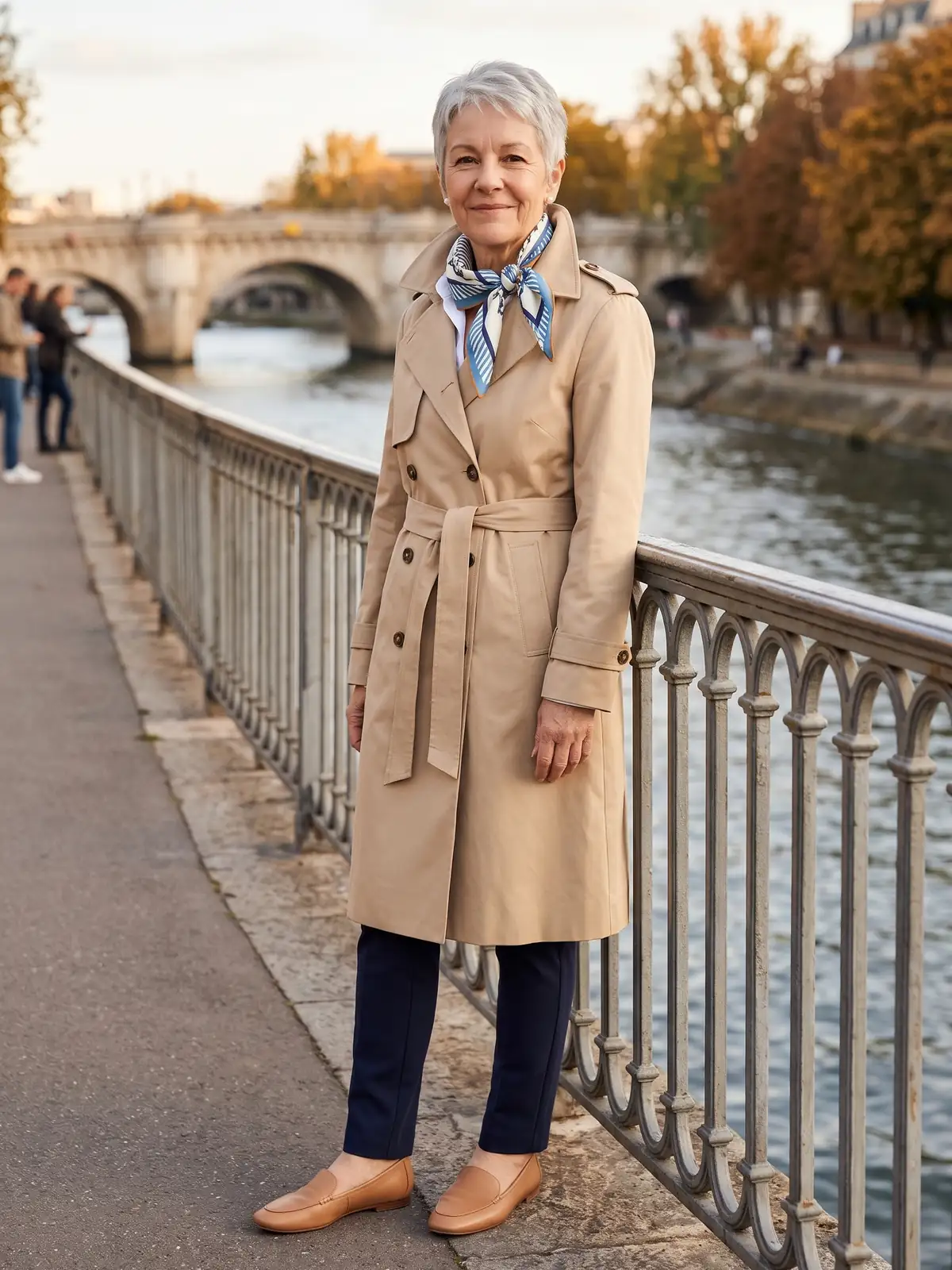
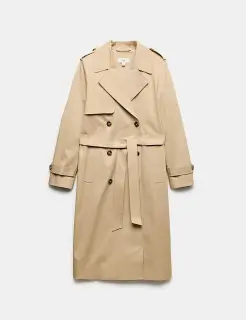 M&S Womens M&S Cotton Rich Trench Coat, Neutral CA$215 Shop at M&Saffiliate link
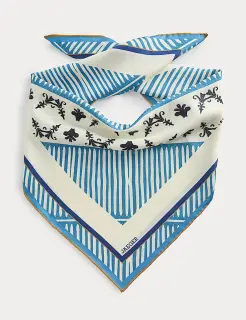 Jaeger Pure Silk Floral Scarf, Blue CA$169 Shop at M&Saffiliate link
M&S's cotton-rich trench in neutral (CA$215), belted, with a JAEGER pure silk scarf in a blue and white print (CA$169) folded into a band and knotted at the side of the neck, over a white shirt, navy trousers and tan loafers, on a US size 10 in her sixties. A silk square at the collar of a trench is one of the oldest pairings in the book, and it adds colour near the face without any bulk.
Off the neck. On a bag, Liberty wraps the scarf around the handle or ties it "into a bow around the base of one of the handles", which works best on totes. Who What Wear folds a larger square on the diagonal and ties it around the waist as a belt over jeans and a white T-shirt. In the hair, a small square knotted over a ponytail band.
Over the shoulders. Joules's shrug: drape the scarf loosely over the shoulders and knot it at the front, a pashmina in summer, a checked scarf in winter. Liberty uses the same kind of wrap over a party dress and against office air-conditioning.
If you are building a small wardrobe, two scarves, one light and one dark, do more work than a third coat; our capsule wardrobe guide counts accessories the same way.
How to wear a silk scarf
Silk has its own sizes. Hermès, which made its first silk carré in 1937, sells the classic square at 90 centimetres, with smaller 70 and 45 versions and a larger 100, and its own advice is short: "no rules required. Catch it, fold it, tie it!" (The Met holds a Hermès scarf dated 1937 in its Costume Institute.) For men, Gentleman's Gazette calls a square of "34 to 47 inches" the sweet spot for versatility; an 18-inch square is pocket-square size and only good for a small neckerchief.
Fold a square into a long band and you can tie it with any of the oblong knots above. Keep it to mild days, or wear it under a coat collar for colour. Gentleman's Gazette also notes the one formal use for men: a black or white silk evening scarf, draped, with a tuxedo and an evening overcoat. Silk works best with polished, quiet clothes; our guide to old money style puts a silk scarf next to pearls and a plain leather bag for that reason.
Care depends on the maker. Johnny Was says: "Always hand-wash scarves using cold water", with a gentle detergent, then dry on a rack out of the sun. If your scarf's label says dry clean only, follow the label: hand-washing a printed silk can make the colors run.
Warmth: when a scarf actually matters
A scarf is not decoration when the wind is up. The US National Weather Service explains that its wind chill index measures wind at about face height and "Is based on a human face model". Its example: "If the temperature is 0°F and the wind is blowing at 15 mph, the wind chill is -19°F." At that wind chill, it says, exposed skin can freeze in 30 minutes. A National Weather Service forecaster quoted by NPR put the advice in five words: "Grab a scarf, grab a hat." That index is only defined at 50°F and below. Our guide to what to wear in 50 degree weather starts at that line. On a mild day a scarf is a layer for the cool morning, as our guide to what to wear in 60 degree weather explains.
MedlinePlus, the US National Library of Medicine's health site, lists "Scarf or neck warmer" among the things that protect the hands, feet, neck and face in the cold. It also says "Never wear cotton in cold weather", because cotton holds moisture against the skin. In Britain, Asthma + Lung UK reports that 7 in 10 people in its survey said cold air made their lung symptoms worse, and suggests "loosely wrapping a scarf around your nose and mouth when outside" to warm the air you breathe.
So, for warmth: a wool or cashmere scarf, a knot that closes the neck of the coat, and the ends tucked inside. Gentleman's Gazette adds that a tight knot creates "a snug barrier", especially around the back of the neck, while a loose open knot lets air through on milder days.
Fabric, size and care
Wool. The Woolmark Company, the wool industry body, says "Wool can absorb up to 35% of its weight before feeling wet and clinging to the skin." That is why wool still feels warm on a damp, windy day. Johnstons of Elgin, a Scottish mill, adds that "Wool is naturally breathable and does not need frequent washing": air it between wears.
Cashmere. In the United States, a label can only say cashmere if the average fibre diameter "does not exceed 19 microns", under the federal wool labelling rules. Johnstons of Elgin says a cashmere goat "only gleans about 200g" of fibre a year, roughly one scarf. It also warns that cheap cashmere is often made from "coarse, dark or short fibres" and heavily bleached, which is why it pills fast.
Acrylic. Wikipedia's article on the fibre describes it as warm with a wool-like feel, used as a cheaper alternative to cashmere, but "not as warm when wet as alternatives like wool". Fine for a washable everyday scarf; less good in sleet.
Sizes. There is no single right length. Here is what each source says.
| Source | Length | Width |
|---|---|---|
| Gentleman's Gazette (2024) | 70-75 in (178-191 cm) | 10-14 in |
| Gentleman's Gazette (2016) | 72 in (180 cm) ideal | 12 in |
| The Art of Manliness | 50-90 in; at least 60 for an average man, about 70 for a larger one | 6-14 in |
| Savile Row Company | 140-178 cm (about 55-70 in) | 16-30 cm |
| Black Lapel (with a suit) | 60-75 in | Not given |
Care. Johnstons of Elgin separates two cases: "Woven Cashmere — including scarves, stoles and coats — benefits from professional dry cleaning", while knitted cashmere can be hand-washed every three or four wears. Dry it flat, never tumble dry, fold it rather than hanging it, and store it in a breathable bag with cedar or lavender against moths. Pilling, it says, "is a natural stage in the life of Cashmere": remove it with a cashmere comb after the first few wears.
A short history of the scarf
The big wrapped scarves of today have a Victorian ancestor. The V&A's label for an 1850s shawl woven in Paisley, Scotland, says: "Shawls based on Indian designs were very fashionable in Britain by the 1850s." Cooper Hewitt, the Smithsonian design museum, explains that the motif we call paisley came from Kashmir shawls, where a complex hand-woven design could take a team of weavers over a year, and that Paisley's mills copied them on machines. Men's neckwear came from the cravat. The Museum at FIT defines it simply: "A cravat is a length of white linen, casually knotted around the neck." The necktie that replaced it was named four-in-hand after the knot used for the reins of a four-horse carriage, and that name lives on in scarf knots.
In the 20th century, aviators in both world wars wore scarves to keep warm and to stop chafing when they turned their heads, and Hermès turned the silk square into a fashion object from 1937. The loop scarf without ends was a 2010s favourite, before oversized blanket scarves took over again.
What not to do
- A long scarf flapping below the belt with a suit: it looks "sloppy and unbalanced", says the Irreverent Gent.
- A short scarf in a Parisian loop: it opens up as you walk.
- A thin, smooth silk scarf as your only protection on a windy winter day.
- A cotton scarf in wet cold, for the reason MedlinePlus gives about cotton next to the skin.
- A chunky knit or a loop scarf with a tailored suit.
- A knot so elaborate that people look at it before they look at you.
Where the sources disagree
- Is the Parisian loop warm? Gentleman's Gazette in 2024 says it is "not ideal for very cold conditions" because its sides are open. The same site's founder, on video in 2014, called it "great for cold winters" and his "favorite for cold days". Black.co.uk, a British scarf maker, calls the loop knot "ultimate warmth". He Spoke Style rates it medium. Our reading: warm at the throat, less so on the chest; tuck the ends for real cold.
- Short scarves and the loop. Eton, the Swedish shirtmaker, calls the loop "ideal for shorter scarves". Gentleman's Gazette says "short scarves will usually come undone with this knot".
- How long. From 55-70 inches (Savile Row Company) to 70-75 inches (Gentleman's Gazette), with The Art of Manliness allowing 50 to 90. Tall people and twice-around knots need the longer end of the range.
- Must it be cashmere? Savile Row Company: "a smart winter scarf does need to be cashmere". Black Lapel, Next Level Wardrobe and the Irreverent Gent are happy with good wool.
- Men and blanket scarves. The Art of Manliness tells men to avoid scarves big enough to double as a blanket. The British Blanket Company says men wear them too, with a chunky jumper or a smart coat. Black Lapel keeps them for special occasions.
- Loop scarves. Avoid them with a suit, says Black Lapel; wear them with a parka, says the Irreverent Gent. Both are right: it depends on the coat.
- Drying cashmere. Johnstons of Elgin says dry it flat; Gentleman's Gazette's guide says let it air-dry hanging up. For knits, the maker's flat-dry advice is safer.
- Names. Ascot, overhand, French knot and four-in-hand each describe two or three different knots depending on the site. Go by the steps.
In the United Kingdom
British guides say jumper for sweater, and a loop or tube scarf is usually a snood. Wikipedia describes the snood as a scarf that "combines a muffler with a turtleneck", and notes that footballers' snoods were "banned by the IFAB in the summer of 2011". What Americans call an ascot is often a cravat in Britain, though Wikipedia's article on the ascot tie insists "the terms are not interchangeable": the ascot is the formal, knotted one, the day cravat the silk worn tucked into an open collar.
The weather favours mid-weight wool over polar knits. The Met Office recorded winter 2024/25 with "a mean temperature of 4.6°C, which is just over half a degree above the long-term meteorological average", but with two named storms and gusts up to 100 mph. A scarf in Britain is a windbreak first, and wool's ability to stay warm when damp matters more than its thickness. British scarf culture also has its own uniforms: university scarves in college colours, and football club scarves, worn since at least the early 1930s.
Questions people ask
How do you wear a scarf with a coat?
Match the scarf to the coat: a big brushed-wool scarf with a big wool coat, a fine wool or cashmere scarf with a tailored overcoat, a chunky knit or a loop with a parka. For cold days, wrap it once and tuck the ends inside the buttoned coat, or tie a knotted once-around that closes the neck.
Should a scarf go inside or outside your coat?
Inside when it is cold: tucked ends keep you warmer and close the gap at the neck. Outside when the scarf is mostly for colour, or when the coat is open. With a pea coat, a tied scarf looks best fully inside the collar.
How long should a scarf be?
For a scarf you want to knot, about 70 to 75 inches (178 to 191 cm) is the menswear consensus; 60 inches is too short for a loop. Sources range from 55 to 90 inches, so taller people and anyone who wraps twice should go long.
What is the easiest way to tie a scarf?
The drape (no knot), the once-around and the Parisian loop. For the loop, fold the scarf in half, put it around your neck and pull both ends through the folded end.
What is the warmest way to wear a scarf?
A twice-around or a knotted once-around in wool or cashmere, pulled close at the back of the neck, with the ends tucked into a buttoned coat. In real cold, health charities also suggest pulling a scarf loosely over the nose and mouth.
How do men wear a scarf?
A plain wool or cashmere scarf, about 70 to 75 inches long, in navy, charcoal, grey or burgundy. Parisian loop or once-around with an overcoat or a pea coat, a drape under a deep-V coat over a suit, ends tucked under the lapels with a blazer, and nothing hanging below the belt.
How do you wear a silk scarf?
At the neck as a bandana or a band knotted at the side, under the collar of a trench or a shirt, over the shoulders, in the hair or tied to a bag. Fold a square into a band to use the oblong knots. Keep it for mild days, or wear it under a coat for colour.
How do you wear a blanket scarf?
Fold it in thirds lengthways first. Then wrap it once around the neck, shrug it over the shoulders and knot it at the front, or drape it and belt it at the waist. It looks best with a big tailored wool coat, jeans and knits.
Are scarves still in style?
Yes. Liberty's styling guide says "the neck scarf is back" on the runways, and the oversized scarf with a big wool coat has been a winter staple for several seasons. The plain wool or cashmere scarf with a dark coat has never really left.
Sources
- Gentleman's Gazette, E.J. Daniels: 7 Stylish Men's Scarf Knots, Step-by-Step Guide (January 10, 2024)
- Gentleman's Gazette, Sven Raphael Schneider: How To Tie A Scarf (November 7, 2014)
- Gentleman's Gazette, Sven Raphael Schneider and J.A. Shapira: The Scarf Guide For Men (March 2, 2016)
- Gentleman's Gazette, Jack Collins: The Definitive Guide to Men's Silk Scarf Dimensions and Knots (March 8, 2026)
- The Art of Manliness, Antonio Centeno: A Man's Guide to the Scarf (updated March 16, 2026)
- Savile Row Company, Dominic Tracey: How Should Men Wear Scarves? (February 4, 2015)
- Black Lapel: How to Wear a Scarf with a Suit (September 12, 2024)
- The Irreverent Gent, Dave Bowden: 7 Timeless, Stylish Ways to Wear a Scarf (updated September 23, 2026)
- He Spoke Style, Brian Sacawa: 10 Ways To Tie a Scarf (updated September 23, 2026)
- Eton: How to Tie a Scarf, Essential Knots for Every Occasion (November 4, 2024)
- Next Level Wardrobe, Cassandra Sethi: How to Wear a Scarf (2023)
- Joules: How To Wear A Scarf, Tying and Styling
- Liberty London: That's a Wrap, The Liberty Scarf Styling Guide (April 25, 2026)
- The Met Store: How to Tie a Scarf Nine Ways (2026)
- Johnny Was: 10 Stylish Ways to Tie and Style Your Scarf (updated May 11, 2026)
- Johnny Was: How To Care For Your Silk Scarf (updated August 23, 2026)
- Who What Wear, Ava Gilchrist: A Lesson in How to Wear a Silk Scarf (August 14, 2025)
- Who What Wear, Indya Brown: A Big Coat and an Even Bigger Scarf (January 17, 2023)
- Black.co.uk: How To Wear A Silk and Wool Scarf
- The British Blanket Company, Bethan John: How to Wear a Blanket Scarf, 5 Styles to Try (updated February 4, 2025)
- Hermès: How To Tie Your Hermès Scarf
- Johnstons of Elgin, Angela McMillan: What Makes our Cashmere Special? (2026)
- Johnstons of Elgin, Angela McMillan: Caring for Cashmere, Washing and Storage Guide (2026)
- Johnstons of Elgin, Angela McMillan: Caring for Lambswool (November 2, 2026)
- The Woolmark Company: Wool Is Naturally Breathable (2018)
- Cornell Legal Information Institute: 16 CFR § 300.19, Use of Terms Mohair and Cashmere
- Wikipedia: Acrylic fiber
- National Weather Service: Understanding Wind Chill
- NPR, Rebecca Hersher: What Is Wind Chill, and Why Is It Dangerous? (January 30, 2026)
- MedlinePlus: How to Prevent Frostbite and Hypothermia (reviewed July 15, 2026)
- Asthma + Lung UK: Cold Weather and Your Lungs (updated October 20, 2026)
- Victoria and Albert Museum: Shawl, Paisley, 1851-1855
- Victoria and Albert Museum: Cravat (neckerchief), 1840-1900
- Cooper Hewitt, Smithsonian Design Museum, Shahzeen Nasim: Kashmir to Paisley (July 29, 2016)
- The Museum at FIT: The Tailor's Art, Neckties and Cravats
- The Metropolitan Museum of Art: Hermès, Scarf, 1937 (1986.516.15)
- Wikipedia: Scarf
- Wikipedia: Ascot tie
- Wikipedia: Snood scarf
- Wikipedia: Infinity scarf
- Met Office: Winter 2024/25 Statistics (2025)
The images in this guide are AI-generated: real garments from our catalogue, shown on our own recurring models and made from the shops' photos of each piece. They are not photographs of real people. Prices are the ones the shops showed on November 21, 2026 and can change. Wear It On Me earns a commission when you buy a garment through an affiliate link in a guide (the links are marked, and it costs you nothing extra); a commission never decides what we recommend. How we make these guides.