Après-ski outfits: what to wear after skiing, for women and men
Après-ski outfits: a warm knit, leggings, jeans or cords, and waterproof boots with grip. When to stay in ski boots, venue rules, and looks for women and men.
Wear It On Me earns a commission on garments bought through affiliate links in our guides. That never decides what we recommend. Details.
An après-ski outfit is what you wear for drinks, food and music after the last run: either your ski clothes with the helmet off and the boots unbuckled, or a warm sweater, leggings, jeans or cords and waterproof snow boots once you have changed. There is no dress code at most venues, and the sources agree that both versions are normal. Where they get specific is the footwear, because ski boots on a wet bar floor and city boots on an icy path are how après ends badly. Dictionary.com even uses the phrase as its example: "an après-ski outfit". Below: when to change and when not to, a footwear section most guides skip, the venues that do have rules, and two outfits, one for her and one for him, built from pieces you can buy.
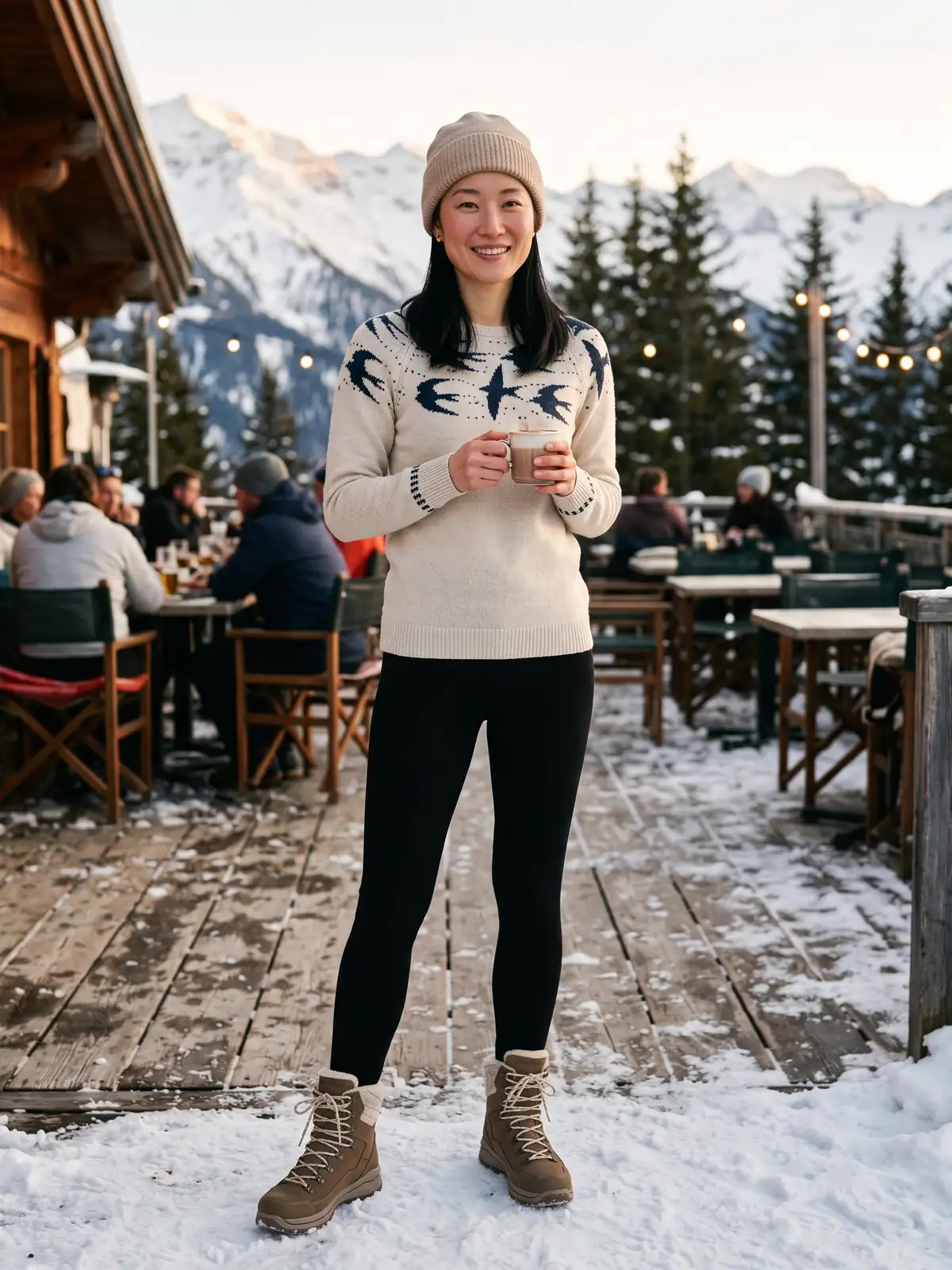
- Weird Fish Swallows Intarsia Fair Isle Jumper Ecru £58.50 no longer sold
- M&S Womens M&S High Waisted Stirrup Leggings, Black CA$57.99 no longer sold
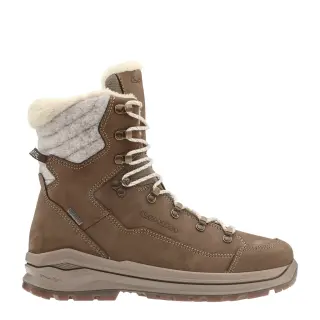 Lowa RENEGADE EVO ICE 2 GTX Ws €270 Shop at LOWAaffiliate link
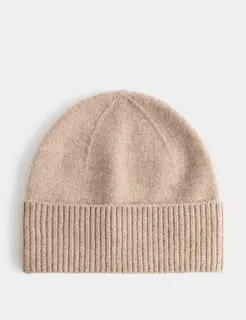 M&S Womens M&S Knitted Beanie Hat, Oatmeal CA$31.99 Shop at M&Saffiliate link
The first picture is the changed-and-ready version for a chalet terrace at sunset. Weird Fish's Swallows intarsia jumper in ecru, with navy birds around the yoke and cuffs (£58.50); M&S high-waisted stirrup leggings in black (CA$57.99); LOWA's Renegade Evo Ice 2 GTX winter boots for women, in beige and brown with a padded collar and a deep lug sole (€270); and an M&S knitted beanie in oatmeal (CA$31.99), on a US size 4. A patterned knit is the whole look; the leggings and boots are there to keep it warm and keep you upright.
What après-ski means
Après-ski is French for after skiing. Dictionary.com defines it as "the period of relaxation that follows skiing" and dates the English use to 1950–55. Wikipedia's entry on ski resorts places its birth in the mountains of central Europe: "The culture originated in the Alps, where it is most popular and where skiers often stop at bars on their last run of the day while still wearing all their ski gear." Mental Floss ties the word's spread to the 1950s boom of commercial skiing, when resorts turned into travel destinations.
What counts as après is wide. For Banff & Lake Louise Tourism it is "whatever you make it": a pub, a hot spring, a rooftop hot tub. It starts, in that guide's words, "the moment you unclip from your skis, lift the goggles off your face" and unbuckle your boots. In the Alps the slope-side parties run from early afternoon to about 5 pm. In Vail, the resort's guide warns that arriving at 3:00 pm rather than 4:30 pm can decide whether you get a seat at the popular slope-side bars.
Straight off the slopes, or change first?
This is the first decision, and it sets the whole outfit. Vail's guide answers it honestly: "Many visitors return briefly to their lodge or hotel before heading back out, especially if they plan to stay out into the evening. Others fully embrace ski boots and helmets as part of the atmosphere. Honestly, both approaches are normal."
| Where you are | What to wear | What the venue or resort says |
|---|---|---|
| A bar on the mountain, early afternoon | Full ski kit, helmet off, boots unbuckled | Val d'Isère calls partying in ski gear "the real thing" |
| A base-area bar after the last run | Ski pants and midlayer, ski boots or a quick swap to snow boots | Park City's Umbrella Bar is walkable from the gondolas "even in ski boots" |
| A village bar in the evening | A knit, jeans, cords or leggings, snow boots, a warm coat | AFAR: swap the ski boots, add a beanie, keep the rest |
| A hotel lounge or a sit-down dining room | Changed: a sweater or blouse with nice jeans, slacks or a skirt, and indoor-friendly boots | TEN 3 prints a dress code for its dining room |
| A catered chalet (UK operators) | Jeans and a jumper, slippers or house shoes indoors | "Chalet hotels are 'slipper zones'", in one operator's travel notes |
One thing does not change: on the mountain, you still have to get down. St. Anton's tourism office reminds visitors that "All slopes in the ski resort are closed from 5 pm" for grooming, so the last après drink on the hill comes before a run in fading light. Ski boots, gloves and a shell stay with you until you are at the bottom.
AFAR's travel editors give the shortcut for everyone else: "Just swap your ski boots for a pair of waterproof boots you can actually walk in—and pop on a beanie to cover your helmet hair." The rest of a ski outfit, the base layer and the midlayer, already works in a bar.
The one rule: your feet
Every guide talks about sweaters. The thing that actually goes wrong is the walk: wet wooden floors, icy steps, cobbles at night. This is where the sources are most useful.
If you stay in ski boots
Ski boots are built for skiing, not walking. Advnture's guide, written by a former Vail resident, gives the technique: check whether your boots have a walk mode and use it ("Just remember to flip it back down before you ski"); slow down on ice; exaggerate the heel-to-toe step; keep soft knees; and above all do not lean back, because "if you strike a slick surface while leaning back, you're more likely to slip and fall backwards". Newer boots help. Wikipedia's entry on ski boots describes GripWalk (ISO 23223) as a rockered rubber sole "allowing improved traction and walking ability on slippery or uneven surfaces", widely available as of 2024. If you are buying boots and you like a long après, it is worth asking for.
If you change
The Canada Safety Council's list for a winter boot is the best short checklist we found: "well-insulated, waterproof, thick non-slip tread sole made of natural rubber, wide low heels, light-weight". Two warnings follow from the same sources:
- Leather soles are the wrong choice. A researcher quoted by Mental Floss notes that "a rigid leather sole is far from ideal" compared with rubber. Handsome city boots with smooth soles are for the dining room, not the path to it.
- Ice grippers must come off at the door. "Grippers become dangerously slippery and must be removed before walking on smooth surfaces such as stone, tile and ceramic," the Canada Safety Council warns. Lodge floors are exactly those surfaces.
Not every winter boot grips. Researchers at Toronto's WinterLab tested nearly 100 boots and spikes on a floor of real ice, and, in a 2018 report, "More than 80 percent of the boots they've tested failed to score high enough" to earn a single snowflake on their three-snowflake scale. And the worst ice is not the coldest. A glaciologist told Mental Floss: "It's easier to walk on ice at 0°F or -20°F." And: "Ice is much slipperier when it's really melting." Spring afternoons, when the sun melts the surface of paths and decks, are the time to watch your step.
Moon boots and the first après shoe
The puffy snow boot is the original après shoe. Tecnica's own history says: "In 1969, Tecnica hit mass appeal by introducing the world to the après ski-specific Moon Boot." Wikipedia dates it a little later, to "the early 1970s", and both tie it to the Apollo landings. The brand claims 27 million pairs sold. Any well-insulated boot with a rubber tread does the same job.
Carrying a second pair
Skiers on the SkiTalk forum swap notes on packable booties with full rubber soles that fit in a small sling bag, and warn that fabric-soled slippers are for indoors only. Some resorts take the problem away: the Four Seasons in Whistler stores guests' own shoes at its ski concierge, so they can swap at the end of the day without carrying anything. If you are flying to the mountains, our guide to what to wear to the airport covers wearing your bulkiest boots and coat on the plane.
Après-ski outfits for women
There is no uniform, but the same pieces come back in every source.
- A statement knit. Fair Isle, a Nordic pattern, a turtleneck, or a matching knit set. It is what people see once your jacket is off.
- A one-piece ski suit, if you are coming straight from the slopes. An Aspen shop owner told AFAR: "The black stretch suit has become the little black dress for après-ski," worn with a long shearling vest instead of the ski jacket.
- Leggings or tights that double as a base layer. Outside recommends fleece-lined tights, "warm enough to double as a base layer for skiing", which makes the change quick.
- Jeans for the village or a chalet dinner.
- A throw-on top layer. Perfect Moment, the ski-wear brand, calls a faux fur coat "the ultimate easy après-ski layer". A cropped bomber or a light down jacket works too. At Mama's in Zermatt, guests on the champagne terrace are even wrapped in the house's "warm fake fur coat".
- Accessories that survive a bar. A beanie or a faux-fur trapper hat, gloves you do not mind wearing to dinner, small earrings.
- Snow boots with grip, as above.
Our look puts those rules into four pieces: a patterned knit with enough wool to take the jacket off, leggings slim enough to tuck into boots, and boots built for ice rather than for a city pavement. For a dressier evening, the same jumper goes with dark jeans and a pair of block-heel ankle boots with a rubber sole. Our guide to how to style leggings covers which tops are long enough.
Après-ski outfits for men
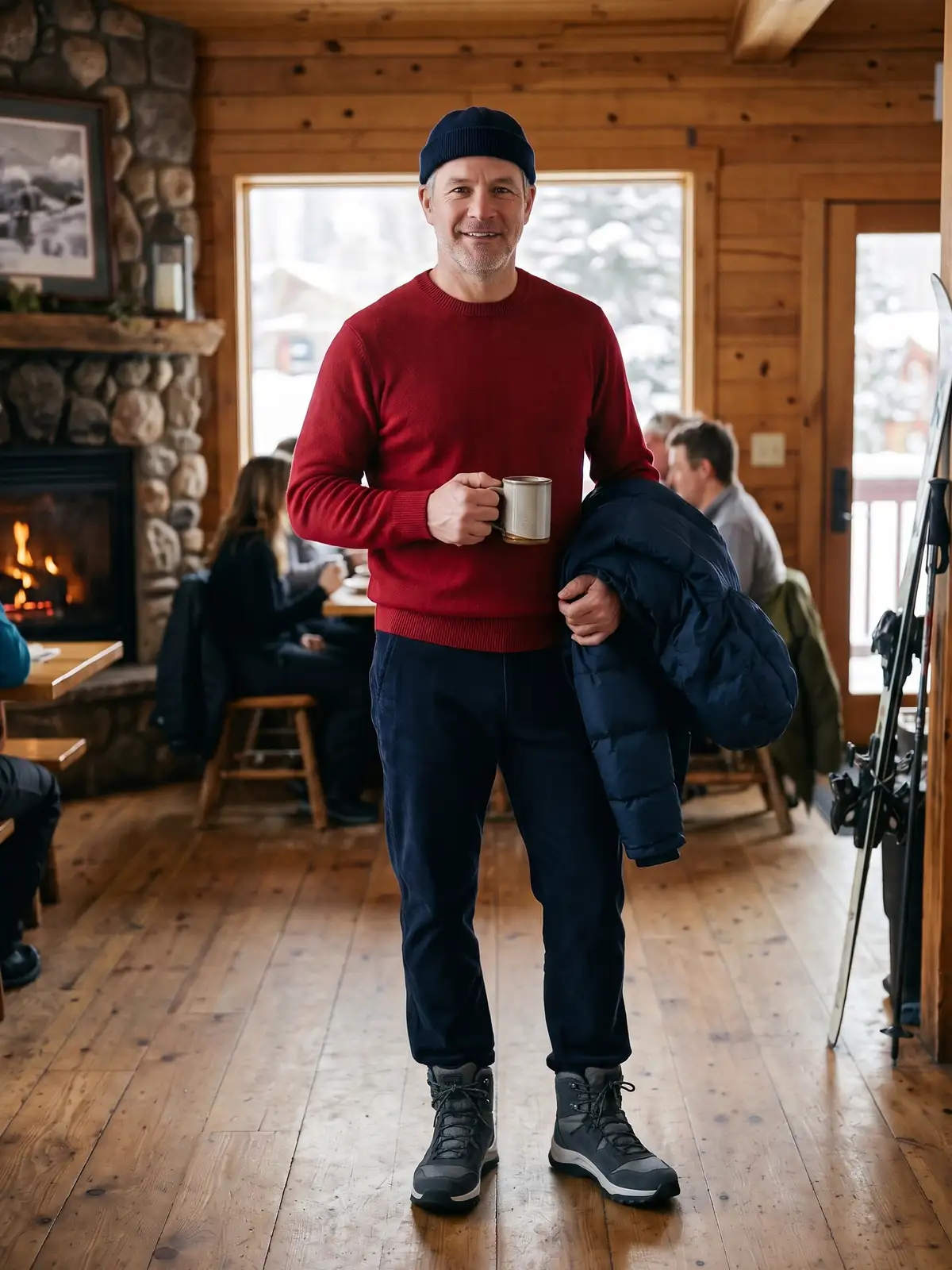
- M&S Mens M&S Pure Lambswool Crew Neck Jumper, Medium Red CA$109 no longer sold
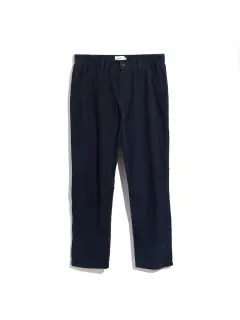 Farah Roachman Regular Fit Cord Trousers In True Navy £49 Shop at Farahaffiliate link
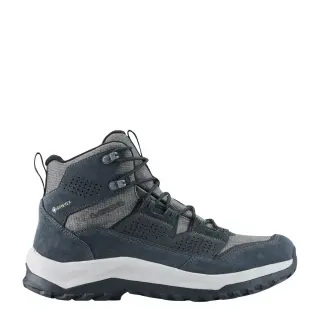 Lowa KALOYA WINTER GTX MID €180 Shop at LOWAaffiliate link
- M&S Mens M&S Corduroy Docker Beanie Hat, Dark Navy CA$48.99 no longer sold
The second picture is the evening version for a lodge bar: M&S's pure lambswool crew-neck jumper in medium red (CA$109); Farah's Roachman regular-fit corduroy trousers in true navy (£49); LOWA's Kaloya Winter GTX mid boots in grey and black, insulated and waterproof with a lug sole (€180); and an M&S corduroy docker beanie in dark navy (CA$48.99), on a 44R. The navy down jacket over his arm is described, not sold. Red and navy is the classic Nordic sweater palette, here in plain knit.
The sources give men as many options as women, even if few page-one guides do:
- A wool or brushed-cotton plaid shirt. AFAR points to plaid shirts with soft brushed cotton "that go from slopes to après to dinner". Visit Jackson Hole describes one bar's crowd as "like your buddy who owns a flannel shirt for every occasion".
- A merino base layer or a quarter-zip fleece under it, if you have come straight off the mountain.
- A Nordic or Fair Isle sweater, the heritage piece (see below).
- A waxed-canvas or down jacket instead of the ski shell. Outside: "Save the bright colors and puffy jackets for the slopes, and go with a classic waxed-canvas jacket for the bar scene."
- Jeans or cords. Outside recommends flannel-lined jeans, because in spring "once the sun sets, temperatures drop quickly".
- A beanie, and leather gloves if it is cold outside.
- Boots you can get on in a second. "There is really only one thing that makes for a great après boot—how easy it is to get on and off," says the same Outside guide.
For a sit-down dining room, TEN 3's code for men is a useful minimum anywhere: "a shirt that has a collar and sleeves, slacks, nice jeans, or khakis." A crew-neck jumper over a collared shirt, with cords and clean boots, meets it. For the town version of the same look, see our guide to smart casual.
The sweater: Fair Isle, Nordic and the Marius
The patterned ski sweater is not a costume; it has a museum record.
Fair Isle comes from a small island in Shetland, off the north of Scotland. The Shetland Museum describes a child's pullover bought there in 1913 as typical of knitting done on the island "for at least a century before" the fashion boom of the early 1920s. Adult versions of the same pullover were bought for the 1902-1904 National Scottish Antarctic Expedition, which says something about their warmth. The Victoria and Albert Museum credits the boom to the Prince of Wales, who "started a craze for knitted jumpers by wearing a Fair Isle sweater to play golf at St Andrews in Scotland." The V&A adds that in traditional knitting of this kind, knitters use no more than two colours in any one row.
The Norwegian sweater is a related family. The national encyclopedia Store norske leksikon traces the lusekofte, the black-and-white sweater with small single-stitch dots, to men in the Setesdal valley around 1840, and says tourists discovered it in the 1920s. A variant of it was used for an Olympic cardigan at the 1988 Winter Olympics in Calgary.
The Marius sweater, in red, white and navy, is the one most people picture. Life in Norway says it "was launched in 1953" by the designer Unn Søiland Dale and named for Marius Eriksen, a fighter pilot and alpine champion who skied at the 1948 Winter Olympics. Its colours, the same guide notes, mirror the Norwegian flag.
You do not need a museum piece. A patterned knit in wool or a wool blend, or a plain lambswool jumper like the one above, does the job. What matters is that it is warm enough to be the outer layer once the jacket comes off.
Layers, temperature and the walk home
Après is the cold part of a ski day: you have stopped moving. REI's cold-weather guide says heavyweight base layers make sense "for below-freezing temps and low activity levels", which is exactly a terrace at 4 pm. The three-layer system still applies: a base layer that wicks, a middle layer that insulates, and a shell that blocks wind and snow. REI adds a point about fleece: it stays warm when damp, but "wind blows right through", so it needs a shell over it outside.
The number to remember comes from the National Weather Service: "If the temperature is 0°F and the wind is blowing at 15 mph, the wind chill is -19°F. At this wind chill temperature, exposed skin can freeze in 30 minutes." The same page notes that bright sunshine can make it feel 10°F to 18°F warmer, which explains why a sunny deck at 3 pm feels like spring and the same deck at sunset does not. Keep the hat, the gloves and a real coat for the walk home. For milder days, our guide to dressing for 60 degree weather explains how sun and wind change what the forecast feels like.
Venue rules worth knowing
Most après bars print no dress code. A few have rules that change what you wear.
- Ischgl, Austria: no ski boots in the centre at night. In 2016 the resort banned walking in "hard-soled footwear (eg ski boots or similar plastic soles)" and carrying skis in the village centre "between the evening and night-time hours of 20:00 to 6:00", from November 20 to May 5, with fines "up to €2,000", according to PlanetSKI. The reasons given were falls and the noise of hard soles on the cobbles. We could not confirm whether the rule is still enforced for the 2026-27 season, so check locally. PlanetSKI notes that St Anton once tried a similar go-home-and-change policy: "It didn't work."
- Dining rooms with a written code. TEN 3, a mountain restaurant, splits its building in two. Its dining room asks women for "an elegant dress, a skirt or dressy pants, nice jeans or khakis with a blouse or top", bans athletic wear, and asks guests to take off beanies indoors. Its casual lounge next door says: "Ski or snowboard boots welcome."
- Age limits. At Cloud Nine, the famous bistro at Aspen Highlands, guests "must be 21 or older to enter the après seating, with a valid ID".
- Chalet slipper zones. Many UK ski operators run catered chalets where boots stay in a boot room by the door and guests wear slippers or house shoes inside.
If you have plans built around a famous name, check it is still there. St. Anton's Krazy Kanguruh, which had served après since 1965, "was levelled" in the summer of 2025, Skiing Austria reported, and its future was unclear.
Themed après parties
Après-ski is also a party theme, at home as much as on a ski trip. The resorts themselves lean into the retro look. Visit Park City, describing a bar at Deer Valley: "Dig out that 80s one piece and your dad's old aviators—it's that kind of vibe!" The safe formula for a party at home: a patterned knit or a retro one-piece, a beanie or a fluffy headband, aviator sunglasses, and snow boots. No one will ask you to walk on ice, so the boots can be any boots. For an après party on New Year's Eve, our guide to New Year's Eve outfits covers the dressier end.
Where the sources disagree
- Change or stay in ski gear. Val d'Isère's tourist office calls partying "fresh from the slopes in your ski gear, boots and all" the real après. Ischgl banned ski boots in its centre at night. Vail says both are normal. AFAR says swap the boots only.
- Cotton. REI: "Cotton is a no-no in any layer", flannel included, because it soaks up water. Outside, AFAR and Visit Jackson Hole all recommend flannel shirts and jeans for après. Our reading: cotton is fine indoors and dry; it is the wrong choice for an hour on a wet, windy deck.
- When the Moon Boot was born. 1969, says Tecnica; "the early 1970s", says Wikipedia's text.
- When the Marius sweater was launched. 1953 for Life in Norway; 1954 for a curator at the Vesterheim Norwegian-American Museum, writing in the Norwegian Textile Letter.
- How old the Norwegian sweater is. Around 1840, per Store norske leksikon; popular in Setesdal from the 1830s, per the Vesterheim curator.
- Whether there are rules at all. "There are no rules with Whistler après," says Tourism Whistler. TEN 3, Ischgl and Cloud Nine show that some venues do have them.
In the United Kingdom, Canada and Australia
United Kingdom. The Ski Club of Great Britain estimates 1.8 million active British skiers, and a 2025 market survey found that France keeps the lead as their destination and that the catered chalet market "continues to recover following Brexit and COVID". Chalet après has its own rhythm: boots and skis go in a heated boot room by the door, and guests head upstairs for what one UK operator calls sun-downers, or afternoon tea. Inside, it is often slippers. A Mumsnet thread describes dinner in such chalets as mostly "jeans and jumpers" worn with slippers. British retailers speak of "slippery pavements" rather than sidewalks, and of jumpers rather than sweaters; the Fair Isle jumper, of course, is British heritage.
Canada. Canadian ski areas counted 19.5 million skier visits in 2024/25, up 8.6 percent, according to the Canadian Ski Council, with an estimated 2.57 million Canadians buying at least one lift ticket. Whistler's two base bars, the Garibaldi Lift Company and the Longhorn Saloon, are called "the gold standard for North American après" by Tourism Whistler, and Whistler Blackcomb calls Dusty's in Creekside "the original après ski bar". In Banff, the tourism board points visitors to local flannel shops "for classic Canadian attire". Canadian winters also explain the footwear advice above: the Canada Safety Council's checklist and Toronto's WinterLab ice tests both come from there.
Australia. The season runs from June to October; in 2025 the lifts were open for 122 days, according to Mountainwatch. Australian snow comes with rain and wind more than deep cold: the same season wrap records 73 mm of rain at Perisher in ten hours and winds of 128 km/h at Thredbo's top station. A waterproof shell and a wind layer matter more there than a heavy parka. Thredbo's Alpine Bar bills itself as "Australia's best alpine outdoor après venue". Many Australians ski abroad: New Zealand's NZSki reported Australian visitors "up almost 14 per cent in 2024", so pack for the destination's weather rather than home's.
For a trip, the pieces above fit in a small capsule wardrobe: one knit, one pair of leggings or jeans, one pair of grippy boots and one warm coat cover every après of the week.
Questions people ask
What do you wear to après-ski?
Whatever is warm and easy to move in: a knit or a flannel shirt, leggings, jeans or cords, a down jacket or a shearling vest, a beanie, and waterproof boots with a rubber sole. Straight from the slopes, your ski clothes with the helmet off and the boots unbuckled are normal.
Can you wear ski boots to après-ski?
Yes, at most slope-side and base-area bars. Walk slowly, keep your knees soft, do not lean back, and use your boots' walk mode if they have one. Some places restrict them: Ischgl banned ski boots in its centre between 20:00 and 6:00 in 2016, and dining rooms often expect you to change.
What shoes should you wear for après-ski?
Insulated, waterproof boots with a thick rubber tread and a wide, low heel. Avoid smooth leather soles, and take ice grippers off before walking on tile or stone floors indoors, where they become slippery.
What should a woman wear to après-ski?
A patterned or chunky knit, fleece-lined leggings or jeans, a faux fur coat, a shearling vest or a short down jacket, a beanie, and snow boots with grip. Straight off the slopes, a one-piece ski suit with a vest over it is the classic look.
What should a man wear to après-ski?
A wool or flannel shirt, or a Nordic sweater, over a merino layer; jeans or cords; a waxed-canvas or down jacket instead of the ski shell; a beanie; and insulated boots you can slip on fast. For a dining room, add a collared shirt and slacks or nice jeans.
Can you wear jeans to après-ski?
Yes, for a bar, a village evening or a chalet dinner; Vail lists denim among the usual après clothes. Flannel-lined jeans help on a cold evening. Avoid cotton for long stretches outside in wet snow, where it soaks up water.
Is there a dress code for après-ski?
Usually not. Most bars have none, and Vail describes the crowd as "somewhere between mountain casual and elevated winter layers." A few venues print rules, such as the dining room at TEN 3, a mountain restaurant, which asks guests to remove beanies and bans athletic wear.
What does après-ski mean?
It is French for after skiing: the drinks, food, music and relaxation that follow a day on the slopes. Dictionary.com dates its use in English to 1950–55, and the custom grew up at ski resorts in the Alps.
What do you wear to an après-ski themed party?
A Fair Isle or Nordic knit, or a retro one-piece ski suit, with a beanie or a fluffy headband, aviator sunglasses and snow boots. Visit Park City's advice for one Deer Valley bar works for a party at home too: dig out the 80s one-piece and the old aviators.
Sources
- Dictionary.com: Après-ski
- Wikipedia: Ski resort, après-ski section
- Mental Floss, Sam Hindman: The Meaning of Après-Ski, and How the Lifestyle Became So Popular (January 5, 2026)
- Vail Mountain: Après Ski in Vail, Where to Unwind After the Slopes
- Val d'Isère Tourisme: Where to Drink and Dance Après-Ski in Val d'Isère (updated November 2, 2026)
- Visit Jackson Hole: Après in Teton Village, From First Chair to Last Call (March 7, 2025)
- Visit Park City, Rachel Friedman Elberts: The Complete Guide to the Best Après-Ski Spots in Park City (November 20, 2025)
- Banff & Lake Louise Tourism, Tera Swanson: The Best Après Ski in Banff and Lake Louise
- Tourism Whistler, Feet Banks: Insider's Guide, Whistler Spring Après (updated December 19, 2024)
- Whistler Blackcomb: Après and Nightlife
- Ski Arlberg: Après-Ski in St. Anton
- Skiing Austria: The Krazy Kanguruh Is No More (August 29, 2025)
- PlanetSKI: Ischgl's Après Boot Ban (November 17, 2016)
- InTheSnow, Patrick Thorne: Ischgl Bans Night-Time Partying in Your Ski Boots (November 27, 2016)
- TEN 3: Suggested Dress Code
- Aspen Snowmass: Cloud Nine Alpine Bistro
- Zermatt Tourism: Après-Ski With a Difference at Mama's in Zermatt (October 18, 2024)
- Four Seasons Resort Whistler: Ski Concierge
- Canada Safety Council: Safety Tips for Winter Walking (updated November 9, 2022)
- Mental Floss, Jennifer Lea Reynolds: 7 Science-Approved Tips for Walking Across Ice (February 16, 2018)
- Advnture, Julia Clarke: How to Walk in Ski Boots (December 3, 2023)
- Wikipedia: Ski boot
- Wikipedia: Moon Boot (last edited June 23, 2026)
- Blizzard Tecnica, Patty O'Connel: The Zanatta Family's Tradition
- SkiTalk forum: Favorite Packable Après Booties for Transitioning Out of Ski or Snowboard Boots (April 14, 2025)
- Shetland Museum & Archives: A 1913 Pullover from Fair Isle (December 19, 2025)
- Victoria and Albert Museum: Fair Isle Jumper, Tulloch of Shetland, about 1931
- Store norske leksikon, Barbro Tronhuus Storlien: Lusekofte (updated November 26, 2024)
- Life in Norway: The Marius Sweater, the Story Behind Norway's Most Iconic Knit (updated April 8, 2026)
- Norwegian Textile Letter, Laurann Gilbertson: From Underwear to Everywhere (September 28, 2015)
- REI, Ken Knapp: How to Dress in Cold Weather
- REI, Laura Evenson: Layering Basics
- National Weather Service: Understanding Wind Chill
- AFAR, Lyndsey Matthews: Après-Ski Attire Around the World (December 21, 2020)
- Outside, Bryan Rogala: The Best Après Ski Clothing to Pack for Your Next Trip (updated May 12, 2022)
- Perfect Moment: Après-Ski Gear Guide
- Mumsnet: What Exactly Does "Slipper Zone" Mean (June 19, 2011)
- Skiworld, Ryan Chitty: Chalets with the Best Boot Rooms (updated January 9, 2025)
- Snow+Rock: Après Ski Clothing
- J2Ski: Ski Club of Great Britain Estimate 1.8 Million Active British Skiers (May 27, 2024)
- Snow Industry News: State of the Snowsports Market Survey Results (October 28, 2025)
- Snowsports Industry News: CWSAA Financial Analysis and Economic Impact Reports (August 28, 2025)
- Mountainwatch: 2025 Season Wrap, Long, Consistent and Pretty Damned Good (October 8, 2025)
- Thredbo: In the Village, Eat and Drink
- The Canberra Times, Sarah Falson: More Aussies Ski Overseas as Local Snow Seasons Decline (September 3, 2024)
The images in this guide are AI-generated: real garments from our catalogue, shown on our own recurring models and made from the shops' photos of each piece. They are not photographs of real people. Prices are the ones the shops showed on November 21, 2026 and can change. Wear It On Me earns a commission when you buy a garment through an affiliate link in a guide (the links are marked, and it costs you nothing extra); a commission never decides what we recommend. How we make these guides.