Airport outfit ideas: what to wear on a plane, from security to the slide
Airport outfits that get through security fast: one zip layer, an elastic waist, no metal, closed shoes. TSA, UK, Canada and Australia rules, and 2 real looks.
Wear It On Me earns a commission on garments bought through affiliate links in our guides. That never decides what we recommend. Details.
The best airport outfit is a pair of soft trousers or joggers with an elastic waist, a plain T-shirt, one warm layer that zips open, and low, closed shoes you can walk a long concourse in. That combination does three jobs at once. It gets through the security scanner without a second pass, it stays comfortable whether the flight is one hour or fourteen, and it is close to what the US Federal Aviation Administration has told passengers to wear in case they ever have to leave by the slide. Everything else, the color, the brand, the matching set, is style on top of those three rules.
The timing matters this month. AAA, the motoring club, expects 81.5 million Americans to travel at least 50 miles for Thanksgiving 2026, and "AAA projects 5.96 million travelers will take domestic flights for Thanksgiving". The busiest day ever at TSA checkpoints came last year: 3,134,613 people were screened on November 30, 2025, the Sunday after Thanksgiving, according to TSA's own table. Holiday lines are long, and the outfit decides how long you spend at the tray.
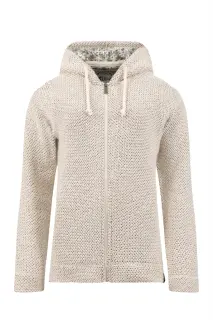 Weird Fish Chicoa Full Zip Macaroni Hoodie Ecru £56 Shop at Weird Fishaffiliate link
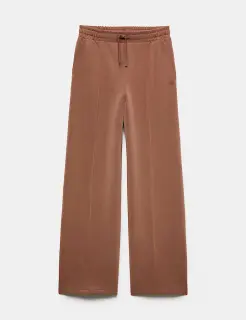 Goodmove Womens Goodmove Modal Blend Luxe Marl Wide Leg Joggers, Mocha CA$105 Shop at M&Saffiliate link
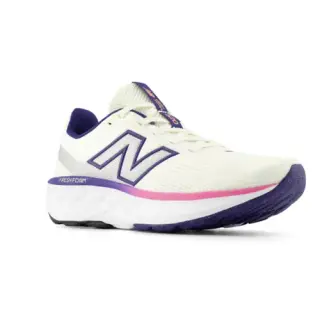 New Balance Women`s 520 V9 Wide Width D Lightweight Running Shoes Beige, Blue $56.99 Shop at eFootwearaffiliate link
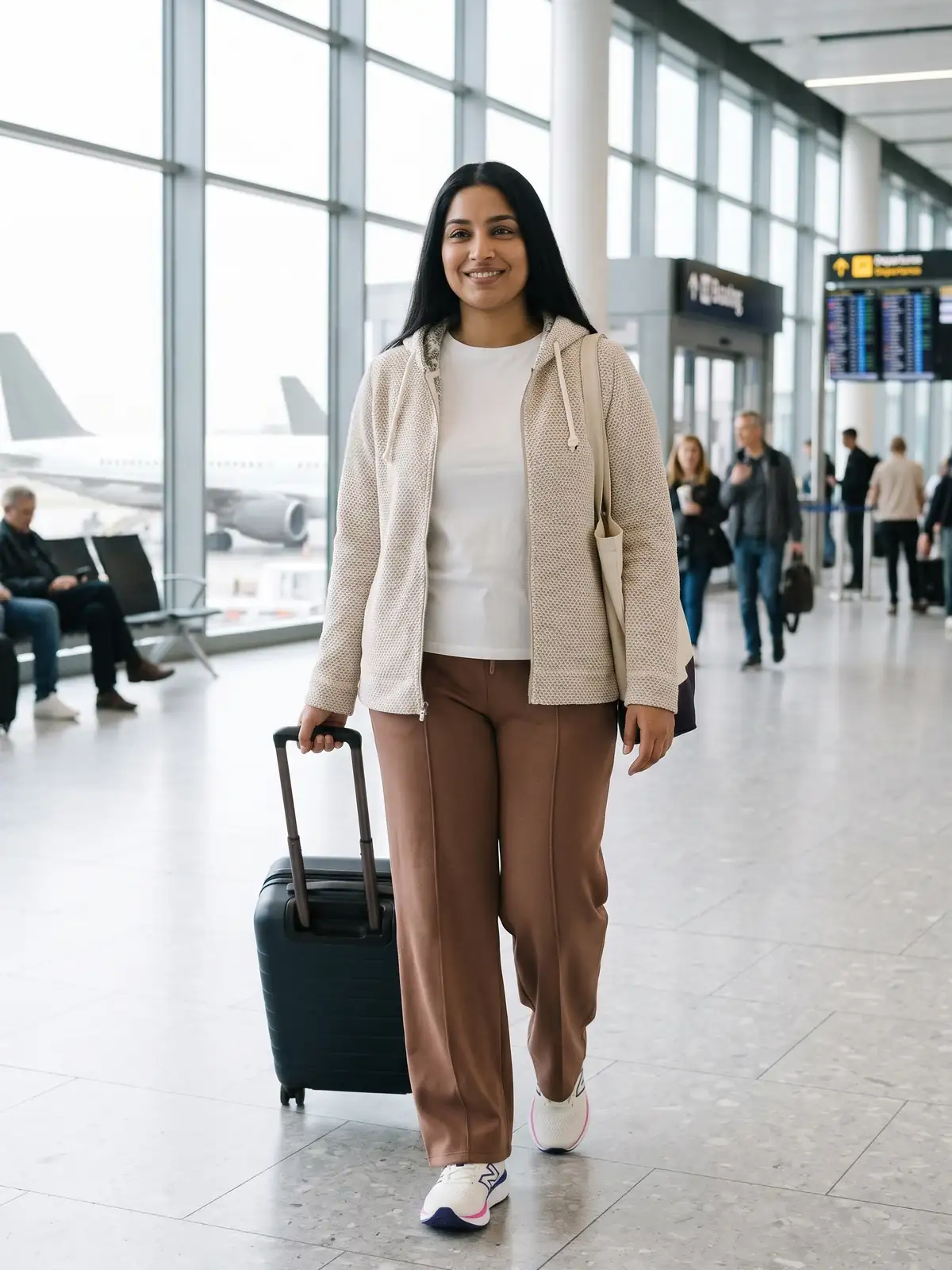
The first look is built around the scanner. Weird Fish's Chicoa full-zip hoodie in ecru (£56) is a textured fleece that unzips in one motion, over a plain white tee. Under it, M&S's Goodmove wide-leg joggers in a mocha marl (CA$105), soft and with a drawstring, so no belt. On the feet, New Balance's 520 v9 running shoes in a wide fit (US$56.99), sold as beige and white with a blue logo in the photo. Our model is a US 18, 5'8". The hoodie is the point: at a TSA body scanner it counts as a layer to remove, and a zip means it comes off without lifting anything over your head.
Dress for three things: the scanner, the seat and the slide
Most airport outfit pages are about looking good in a terminal photo. The official sources care about three other moments.
- The scanner. Security in every country we checked asks you to take off coats, jackets and bulky knits before the body scanner, and to keep metal to a minimum. The fewer things you have to remove, the shorter your time at the tray.
- The seat. On a long flight, loose clothes and a waist that does not dig in are a health matter, not only comfort. And cabins run cool and dry, so you need a layer.
- The slide. In the rare event of an evacuation, your shoes and fabrics matter. The FAA's advice has been natural fibers, covered skin and low shoes.
The rest of this guide takes each in turn, then turns them into outfits for women and men.
Security: what comes off, country by country
The rules are set by four different authorities and they do not match. Here is what each one publishes.
| At security | United States (TSA) | United Kingdom | Canada (CATSA) | Australia |
|---|---|---|---|---|
| Shoes | Stay on at domestic checkpoints since July 8, 2025 | You "may be asked" to remove them | Large or bulky shoes and boots go in the bin at the body scanner | Not named; an officer may ask you to remove clothing |
| Jacket, hoodie, cardigan | Zip or button-front layers and bulky clothing come off at the body scanner | Coat off | Jacket, coat or bulky sweater off | Jackets, coats or bulky jumpers off |
| Belt | Off, except in TSA PreCheck | Off | Avoid big buckles; you may be asked to unbuckle | Off at Brisbane |
| Watch and jewelry | Avoid high-metal clothes, shoes and jewelry | Off, says the government checklist; Manchester lets you keep watches on | Small earrings, a watch, rings and glasses only | Into your carry-on |
| Liquids | 3.4 oz (100 ml) per item, one quart bag | Depends on the airport: 2 liters at some, 100 ml at others | 100 ml, one 1-liter bag | 100 ml on international flights; no limit on domestic ones |
United States
The biggest change of the last two years is the shoes. On July 8, 2025, the Department of Homeland Security announced a policy to "allow passengers traveling through domestic airports to keep their shoes on while passing through security screening at TSA checkpoints." TSA's own pages have not all caught up; its general Security Screening page still describes the old routine.
The jacket rule has not changed, and it is the one most outfit guides miss. TSA asks anyone going through the body scanner in a light outer garment or bulky clothing to take it off. A light outer garment is "an outer layer of clothing which has a full front zipper or buttons", which covers windbreakers, vests, blazers and light jackets. Bulky clothing includes "oversize pullover hoodies, large sweaters, cardigans, and ponchos". So the oversized hoodie in many airport photos is the one piece most likely to cost you time. A fitted zip layer is quicker.
Metal is the other delay. TSA: "You should avoid wearing clothes, shoes and jewelry with a high metal content." Empty your pockets before the line, not at the tray.
TSA PreCheck changes the routine: "leave on belts, light jackets, and shoes", and keep liquids and laptops in the bag. It costs $85 or less for five years, and TSA says "About 99% of passengers wait less than 10 minutes." If you request the body scanner in a PreCheck lane, light jackets still come off.
Liquids stay at the familiar limit: "3.4 ounces (100 milliliters) or less per item", in one quart-sized bag.
If you wear compression socks or a sleeve, TSA asks you to "inform the TSA officer if you have a bandage, compression sleeve or dressing" before screening. And the shoes rule has a limit: TSA's page for travelers 75 and older says that if an alarm goes off, "you may be required to remove your shoes for further screening or undergo a pat-down."
United Kingdom
The UK government's air travel checklist, updated on July 21, 2026, tells passengers to "take off your coat, watch and belt" before the tray, and adds: "You may be asked to remove your shoes, other items of clothing or jewellery." Gatwick puts it as a list: "Remove coats, jackets and belts." and "You may need to remove your shoes before going through the security scanner". Heathrow's tips page: "Be prepared to take off additional items such as belts, shoes or watches."
Liquids are now set airport by airport, because some airports have new scanners and some do not. Heathrow and Gatwick allow containers of up to 2 liters, kept in the bag. Which?, the UK consumer group, lists the 2-liter airports as Heathrow, Gatwick, Edinburgh, Birmingham, Bristol, Belfast International and Belfast City, and adds: "At Luton and Manchester airports, the maximum allowed is still 100ml." The trap is the flight home. Heathrow: "Many airports outside Heathrow still have a 100ml liquids limit."
Canada
The Canadian Air Transport Security Authority publishes the clearest official "what to wear" list we found anywhere. "Wear easy-to-remove outerwear, jackets, belts and slip-on shoes." "Wear clothing without snaps, metal buttons or studs." "Wear shoes without metal arches, buckles, steel-toes or shanks." It also limits jewelry to small earrings, watches, wedding and engagement rings, and glasses. At the full body scanner, outer layers including scarves and hats go in the bin, along with "Large or bulky shoes/boots".
Australia
The Department of Home Affairs (page updated September 18, 2026): "Remove any outerwear including jackets, coats or bulky jumpers." Empty your pockets of keys, coins, tissues, pens and phones. Body scanners are the government's preferred method, and "If a screening officer selects you for security screening via body scanner, you cannot opt out."
The security checklist
- One outer layer that zips or buttons open, not an oversized pullover.
- An elastic or drawstring waist, so no belt.
- Shoes that slip on but have a closed back, with no metal shank or buckle.
- Jewelry, watch and anything from your pockets already in the carry-on.
- No studs, snaps or metal buttons.
- Toiletries sized for the strictest airport on your route, there and back.
Short-haul or long-haul: the four-hour line
Four hours is where the health advice starts. The NHS lists among the risks for deep vein thrombosis (DVT) any time you "go on a long journey (more than 4 hours) by plane, car or train". For journeys that long, its advice is short: wearing loose clothing, drinking plenty of water, avoiding alcohol, and walking around when possible. The CDC uses the same four-hour definition of a long flight, and its clinical chapter calls the risk of a symptomatic clot on flights under four hours negligible.
So on a short flight, wear what you like, as long as it gets through security and you can walk off fast. On a long one, the waist matters. An American Airlines flight attendant interviewed by Who What Wear, Andrea Fischbach, put it plainly: "I would advise against anything really constricting." Jeans can do it; joggers, knit trousers and wide soft trousers do not.
Compression socks. Here the sources differ on who and how much.
- NHS 111 Wales says studies found that compression stockings on flights of four hours or more reduce DVT risk and leg swelling, suggests passengers consider them, and adds: "Class 1 stockings (exerting a pressure of 14-17 mmHg at the ankle) are generally sufficient." It also warns: "Ill-fitting stockings could further increase the risk of DVT." Get them fitted at a pharmacy.
- The CDC's travel health handbook, the Yellow Book, summarizes medical guidelines that recommend below-knee stockings of 15 to 30 mmHg at the ankle for travelers at increased risk on trips of more than six hours, and not for travelers without increased risk. The CDC's public page says some people may benefit and should ask their doctor.
The practical reading: if you are older, pregnant, recently operated on, or have had a clot, ask your doctor before a long flight. For everyone else, loose clothes, walking and ankle exercises come first. NHS Wales adds: "Wear loose, comfortable clothes."
Why you need the layer, even to a beach
Cabins feel cold for a reason. A former flight attendant told Popular Science: "The sweet spot for a plane's cabin temperature is somewhere between 70 and 75 degrees". The air is very dry at cruising altitude, around 10 to 20 percent humidity, which makes it feel cooler. His tell: "It might be July in Miami and a temperature of 95 degrees outside, but they're all wearing jackets and sweaters." The same article notes that exit rows and window seats run colder.
Delta's own travel tips say: "Dress in layers so you can adapt to changing temperature." On a long-haul flight the cabin warms up later, so the layer comes off again. A zip layer handles both, and a scarf doubles as a blanket.
Dressing for the slide: fabric and shoes
Evacuations are rare, and the advice is still worth following because it costs nothing. The FAA's former passenger page on clothing, archived on October 27, 2025, said: "Dress to cover as much skin as possible." It recommended natural fabrics such as cotton, wool, denim or leather, because "Synthetics may melt when heated", and it said: "Wear low-heeled, leather, or canvas shoes." The page has since been removed from the FAA site. The FAA's live safety page still says, for the slide: "Remove high-heeled shoes."
An aerospace safety professor at Embry-Riddle told AARP: "Passengers should seriously consider what they're wearing." Of his own polyester polo, he said that "synthetic fibers could be really bad in a fire situation". AARP's advice on shoes: closed-toe, kept on for takeoff and landing, because "you don't want to be in flip-flops or worse, barefoot."
In practice that means a cotton tee or a wool or cotton knit, denim or cotton trousers if you can, and closed shoes. A mostly synthetic legging or fleece is not banned anywhere; it is the one trade-off the comfort guides and the safety guides disagree on.
Shoes: the piece every source argues about
Security wants shoes that come off fast; safety wants shoes that stay on.
- CATSA, in Canada, recommends slip-on shoes.
- The American Airlines flight attendant in Who What Wear says she would "really advise against high heels, flip-flops or any slip-on shoes, mostly for safety purposes."
- AARP and the FAA rule out flip-flops and heels.
The shoe that satisfies all of them is a low, closed sneaker or loafer with a back to the heel, easy to step out of at a UK or Canadian tray, secure on a slide and comfortable for a twenty-minute walk to a gate. In the US you will usually not have to take it off at all. Leave boots with heavy soles in the suitcase if you can; boohooMAN's men's guide puts it bluntly: "Boots are a no-go too".
Cold destination or warm destination
Flying somewhere warm. The cabin is still cool, so pack the layer even for Florida or Cancún. Fischbach wears tights under a dress on short tropical hops: "If you must wear a skirt or dress, wear tights underneath, even if it's the middle of summer and you are traveling from Miami to Cancún." Closed shoes beat sandals for the flight; change at the other end.
Flying somewhere cold. Wearing your coat and boots saves suitcase space, but both go in the tray, and bulky boots come off at Canadian body scanners. Two thinner layers beat one thick one. For a winter city trip, our guide to dressing for New York in December covers the coat, the layers and the boots. Landing somewhere mild, around 60°F? Our guide to what to wear in 60 degree weather has the outfits. If you are heading to the mountains, our guide to après-ski outfits covers boots that grip on ice.
On a cruise. The flight is usually the day before boarding. Fly in the outfit you will wear on embarkation day; our cruise attire guide has the rest.
Airport outfits for women
The formula: soft trousers or leggings, a tee or tank that covers the midriff when you lift a bag, one zip layer, closed shoes.
- Joggers and a zip hoodie. The first look on this page. Wide-leg knit joggers look less like gym clothes than cuffed ones.
- Leggings and a long layer. Leggings are fine for paying passengers; more on the 2017 confusion below. A long cardigan or a zip jacket over them, and see our guide on how to style leggings for proportions.
- A knit dress and tights. Warm, easy, and Fischbach's own choice.
- A matching knit set. Comfortable and photographs well; check that the top is not so bulky that TSA classes it as a layer to remove.
Avoid long fringe, heavy studs and statement multi-finger rings: Fischbach says anything that looks like a potential weapon can slow you down.
Airport outfits for men
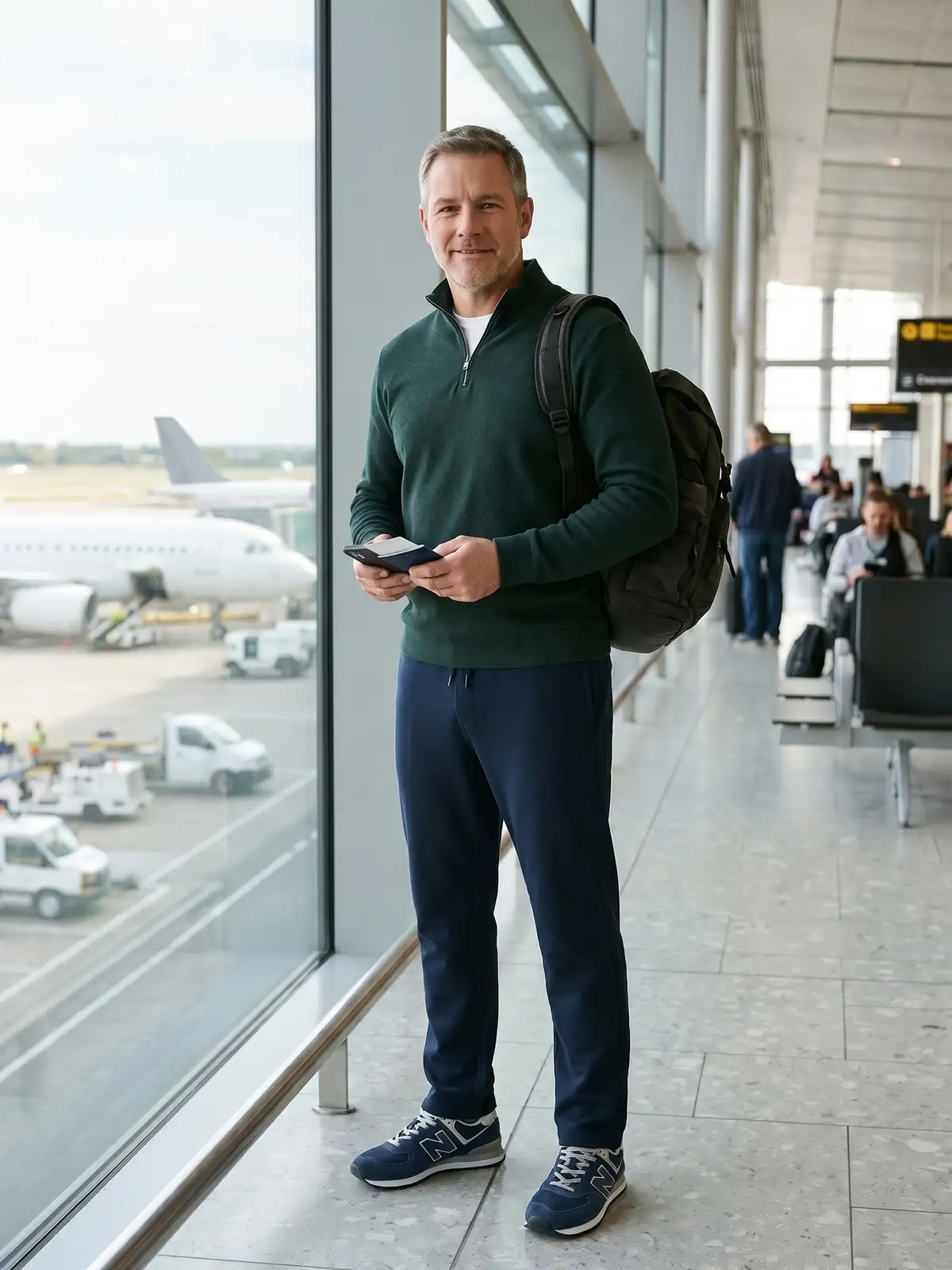
- M&S Mens M&S Pure Cotton Textured Half Zip Jumper, Dark Evergreen CA$94.99 no longer sold
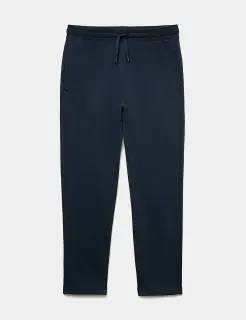 M&S Mens M&S Cotton Rich Straight Leg Jogger, Navy CA$67.99 Shop at M&Saffiliate link
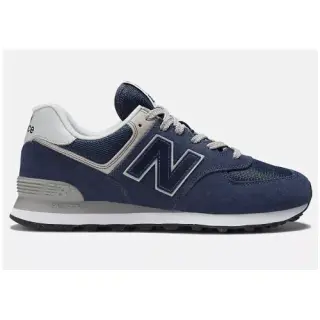 New Balance ML 574 Core Men's Wide 4E Classic Shoes, Navy, With White $99.98 Shop at eFootwearaffiliate link
The second look: M&S's textured half-zip jumper in dark evergreen (CA$94.99), pure cotton, over a white tee; M&S's straight-leg joggers in navy (CA$67.99); and New Balance's 574 Core sneakers in navy suede with white details, wide fit (US$99.98). Our model is a 44R, 5'10". A half-zip is a pullover, not a full-zip layer, so at a TSA scanner it usually stays on; it is the one-piece answer if you do not want to take anything off.
For men the same rules apply, with a few habits to break:
- Skip the belt. Joggers, chinos with a drawstring, or trousers with side adjusters.
- Long trousers, not shorts. boohooMAN: "long trousers are preferred over shorts, not just for hygienic reasons but also to keep you warm on the plane."
- A blazer counts as a layer. TSA lists sport coats and blazers among the light outer garments that come off at the scanner. If you fly in one for a meeting, it goes in the tray.
- Watch and wallet in the bag. The UK checklist asks for watches off; Manchester lets you keep them on. Putting it in the bag ends the question.
A smart casual version, for a business trip: dark chinos, an oxford shirt, a merino crew neck and leather sneakers.
Leggings, jeans and the dress-code myths
Airlines can refuse passengers for clothing, but the published rules are short. Delta's contract of carriage lets it refuse a passenger "When the passenger is barefoot" or when "attire, hygiene or odor creates an unreasonable risk of offense or annoyance to other passengers". That is the whole of it.
The famous 2017 leggings story was not about passengers. One Mile at a Time, the travel blog, explained at the time: "The girls in question were likely non-revs, as they're subjected to a dress code". Non-revs are airline staff and their families flying free on passes. United told paying customers, as Paddle Your Own Kanoo reported, "your leggings are welcome".
Jeans divide the style writers. Who What Wear UK, in 2018: "Jeans are a definite no-go on any flight". Lindsay Silberman writes that "jeans are not my first preference to wear on a plane" but makes exceptions for very comfortable pairs or flights under three hours. No airline rule bans them.
As for dressing up to get upgraded, the people who run upgrade lists say it no longer works. One Mile at a Time: "dressing up won't increase your odds of scoring a first class upgrade. Period." An airline operations employee quoted by AFAR: "Not only are flight attendants unlikely to give you an upgrade to first or business due to your dress code, they literally can't." Upgrades are now allocated by computer, by status and fare.
Where the sources disagree
- Slip-on shoes. CATSA recommends them for security; a flight attendant advises against them for evacuation. A low shoe with a closed back meets both.
- Flip-flops. A 2026 Who What Wear piece recommends a pair of flip-flops for the plane; AARP, the FAA and flight attendants say no.
- Synthetic fabrics. The FAA's archived advice and the Embry-Riddle professor warn that synthetics may melt; the same flight attendant who warns about polyester recommends tights, and AeroCorner suggests a "silk-touch polyester camisole". Natural fibers are the safer default; nobody bans synthetics.
- Compression socks. NHS Wales: consider them on long flights, Class 1 at 14–17 mmHg. The CDC Yellow Book: 15–30 mmHg, for people at increased risk only.
- Water and alcohol. The NHS says drink water and avoid alcohol; the CDC Yellow Book says there is no direct evidence either prevents clots.
- Dressing up for an upgrade. Sarah Tucker's blog says "looking put together on a plane might actually help you get an upgrade", and a Who What Wear title promised outfits that "Will Guarantee You an Upgrade". One Mile at a Time and AFAR's airline source say it does not work.
- Watches in the UK. The government checklist and Heathrow's assistance guide say take them off; Manchester says: "You can keep all watches on, including smart watches".
- Heathrow's own liquids pages. One says the 2-liter rule applies at Terminals 2, 3, 4 and 5; the assistance guide says "In Terminal 4, security upgrades are ongoing" with a 100 ml limit. Check your terminal.
In the UK, Canada and Australia
United Kingdom. Rules are per airport, so check both ends of your trip: your departure airport and the one you fly home from. The government checklist still describes the older 100 ml routine with a clear bag, while Heathrow, Gatwick and others now allow 2 liters. Empty metal or insulated bottles before security. In British terms, wear trainers, a jumper and soft trousers, and keep the coat over your arm.
Canada. CATSA's "What to Wear" list is the most explicit official guide published by any of the four countries; follow it and you will rarely set off the arch. Liquids stay at 100 ml in a 1-liter bag, and Verified Travellers at select checkpoints in eight major airports keep shoes, belts and light jackets on. Winter matters here: boots and parkas go through the scanner as bulky items, so a packable down jacket and lower boots save time.
Australia. On domestic flights there is no liquid limit: Sydney Airport says "Flights within Australia are not subject to PLAGs restrictions for onboard baggage." On international departures, "you can only take 100mls of liquid through security". Heathrow warns that "Liquids in containers over 100ml can't be taken on flights to Australia." Long flights to Europe or North America cross the four-hour line many times over, so the loose-clothing advice applies in full.
Questions people ask
What is the best airport outfit?
Soft trousers or joggers with an elastic waist, a T-shirt, one zip-front layer, and low, closed shoes that slip on but have a back. It gets through security quickly, stays comfortable on long flights and follows the FAA's past advice for evacuations.
Do you have to take your shoes off at the airport anymore?
At US domestic checkpoints, no: TSA ended the shoes-off rule on July 8, 2025, although shoes may still be checked after an alarm. In the UK you "may be asked" to remove them, and in Canada large or bulky shoes and boots go in the bin at the body scanner.
Can you wear a hoodie through TSA?
Yes, but at the body scanner TSA asks you to take off zip-front layers and bulky clothing, and lists oversize pullover hoodies as bulky. A fitted zip hoodie comes off fastest.
Can you wear a belt through airport security?
In TSA PreCheck, yes. In standard lanes in the US, the UK and Australia, belts usually come off, and in Canada you may be asked to unbuckle. An elastic or drawstring waist avoids the question.
Should I wear compression socks on a plane?
They are mainly for people at higher risk of blood clots on long flights. NHS Wales suggests considering Class 1 stockings (14–17 mmHg) on flights of four hours or more; the CDC's guidance points to 15–30 mmHg for at-risk travelers. Ask a doctor if you have risk factors, and get them fitted.
Is it OK to wear leggings on a plane?
Yes. The 2017 leggings controversy concerned airline staff traveling on passes, who follow an employee dress code. Paying passengers can wear leggings.
Can you wear jeans on a plane?
Yes; no airline bans them. Some stylists avoid them on long flights because a rigid waist gets uncomfortable, and the NHS advises loose clothing for journeys of four hours or more.
What should you not wear on a plane?
High heels, flip-flops, heavy metal studs or buckles, an oversized pullover you would have to take off at the scanner, and anything tight at the waist on a long flight. Safety sources also advise against mostly synthetic clothing.
What should men wear to the airport?
Joggers or drawstring chinos, a tee, a half-zip or zip jacket, and low sneakers or loafers. Skip the belt, put the watch in your bag, and remember that a blazer counts as a layer to remove at a TSA scanner.
Sources
- TSA: Security Screening
- TSA and DHS: DHS to End 'Shoes-Off' Travel Policy (July 8, 2025)
- TSA: Liquids, Aerosols, and Gels Rule
- TSA: TSA PreCheck
- TSA: Frequently Asked Questions
- TSA: Disabilities and Medical Conditions
- TSA: Screening for Passengers 75 and Older
- TSA: 2025 TSA Checkpoint Travel Numbers
- AAA Newsroom: Thanksgiving Travel Expected to Dip Slightly Compared to Last Year (November 16, 2026)
- GOV.UK, Department for Transport: Air Travel Checklist for Travel From the UK (updated July 21, 2026)
- GOV.UK: Hand Luggage Restrictions at UK Airports, Liquids
- Gatwick Airport: Security Screening
- Heathrow: Hand Baggage and Liquids
- Heathrow: Travel Tips
- Heathrow: Assistance Departure Guide
- Manchester Airport: Guide to Going Through Security (April 2026)
- Which?, Trevor Baker: The UK's Airport Liquid Rules for 2026 (updated January 23, 2026)
- CATSA: Walk-Through Metal Detector (December 19, 2022)
- CATSA: Full Body Scanner (January 5, 2026)
- CATSA: What Do I Put in the Bins? (January 5, 2026)
- CATSA: Verified Travellers (November 5, 2026)
- Australian Government, Department of Home Affairs: Security Screening at Airports (updated September 18, 2026)
- Sydney Airport: Security Screening
- Brisbane Airport: Security Screening
- NHS: DVT (Deep Vein Thrombosis) (updated November 6, 2026)
- NHS 111 Wales: Travel Health, Travel Tips
- CDC: Blood Clots and Travel (May 2024)
- CDC Yellow Book 2026, Nimia L. Reyes and Karon Abe: Deep Vein Thrombosis and Pulmonary Embolism (April 23, 2025)
- FAA: Wear Sensible Clothing (archived October 27, 2025)
- FAA: Flying Safe
- AARP, Adam Pitluk: What You Need to Know to Stay Safe on a Plane (updated March 14, 2025)
- Popular Science, Laura Kiniry: Why Are Airplanes So Cold? It's for Your Health (June 28, 2026)
- Delta Air Lines: Before You Go, Delta Travel Guide
- Delta Air Lines: Contract of Carriage, U.S., Rule 7
- One Mile at a Time, Ben Schlappig: No, Dressing Up Won't Score You a Flight Upgrade (updated April 17, 2025)
- One Mile at a Time, Ben Schlappig: Here's Why United Was (Probably) Right to Deny Boarding to a Girl in Leggings (March 26, 2017)
- Paddle Your Own Kanoo, Mateusz Maszczynski: British Airways Is Relaxing Its Dress Code for Non Revs (June 10, 2018)
- AFAR, Victoria M. Walker: Why Airlines Still Have Dress Codes for Passengers (December 2, 2022)
- Who What Wear UK, Dacy Knight: What to Never Wear on a Plane, According to a Flight Attendant (updated August 8, 2025)
- Who What Wear, Ava Gilchrist: Rich-Looking Airport Outfits (July 21, 2026)
- Who What Wear UK, Maxine Eggenberger: The Perfect Long-Haul Travelling Outfit (November 5, 2018)
- Sarah Tucker: How to Create Comfortable Airport Outfits Without Sacrificing Style (2025)
- Lindsay Silberman: Travel Outfits, How to Look Chic When You're Flying (2024)
- AeroCorner: 25 Airport Outfit Ideas That Are Comfy and Cute (2026)
- boohooMAN, Marco Ferrai: What to Wear to the Airport, the Do's and Don'ts (2018)
The images in this guide are AI-generated: real garments from our catalogue, shown on our own recurring models and made from the shops' photos of each piece. They are not photographs of real people. Prices are the ones the shops showed on November 21, 2026 and can change. Wear It On Me earns a commission when you buy a garment through an affiliate link in a guide (the links are marked, and it costs you nothing extra); a commission never decides what we recommend. How we make these guides.