What to wear in 60 degree weather: outfits for sun, wind, rain and a cold morning
What to wear in 60 degree weather: a top, one layer you can take off, long pants and closed shoes. Outfits for sun, wind, rain, work, runs and kids.
Wear It On Me earns a commission on garments bought through affiliate links in our guides. That never decides what we recommend. Details.
What should you wear in 60 degree weather? A top you would be happy in at the warmest part of the day, one light layer you can take off and carry, full-length jeans, chinos or trousers (or a midi skirt), and closed shoes. A long-sleeve tee or a fine knit with a trench, a denim jacket or an overshirt, jeans and sneakers or loafers covers most 60°F days. Then adjust for what the number does not tell you: in still, bright sun, take the layer off; in wind, cloud or rain, keep it on and make it one that blocks wind; and if you are out early or late, dress for that hour, not for the afternoon high. Menswear rental site Taelor puts the rule well: "Dress for the coldest hour you'll spend outside". This guide adds the numbers behind it: how the forecast temperature is measured, how far the day swings in different cities, and how warm each piece of clothing actually is.
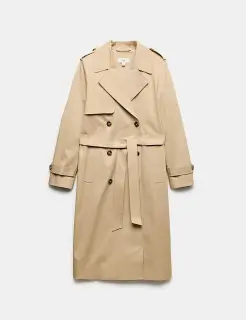 M&S Womens M&S Cotton Rich Trench Coat, Neutral CA$215 Shop at M&Saffiliate link
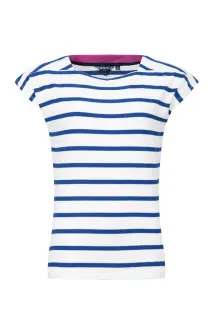 Weird Fish Bowe Striped Jersey T-Shirt Mazarine Blue £12 Shop at Weird Fishaffiliate link
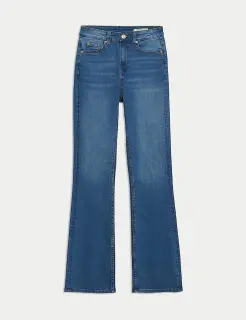 M&S Womens M&S Eva Bootcut Jeans, Medium Indigo CA$68.99 Shop at M&Saffiliate link
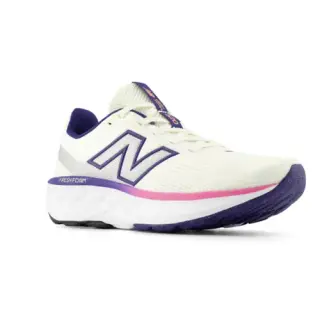 New Balance Women`s 520 V9 Wide Width D Lightweight Running Shoes Beige, Blue $56.99 Shop at eFootwearaffiliate link
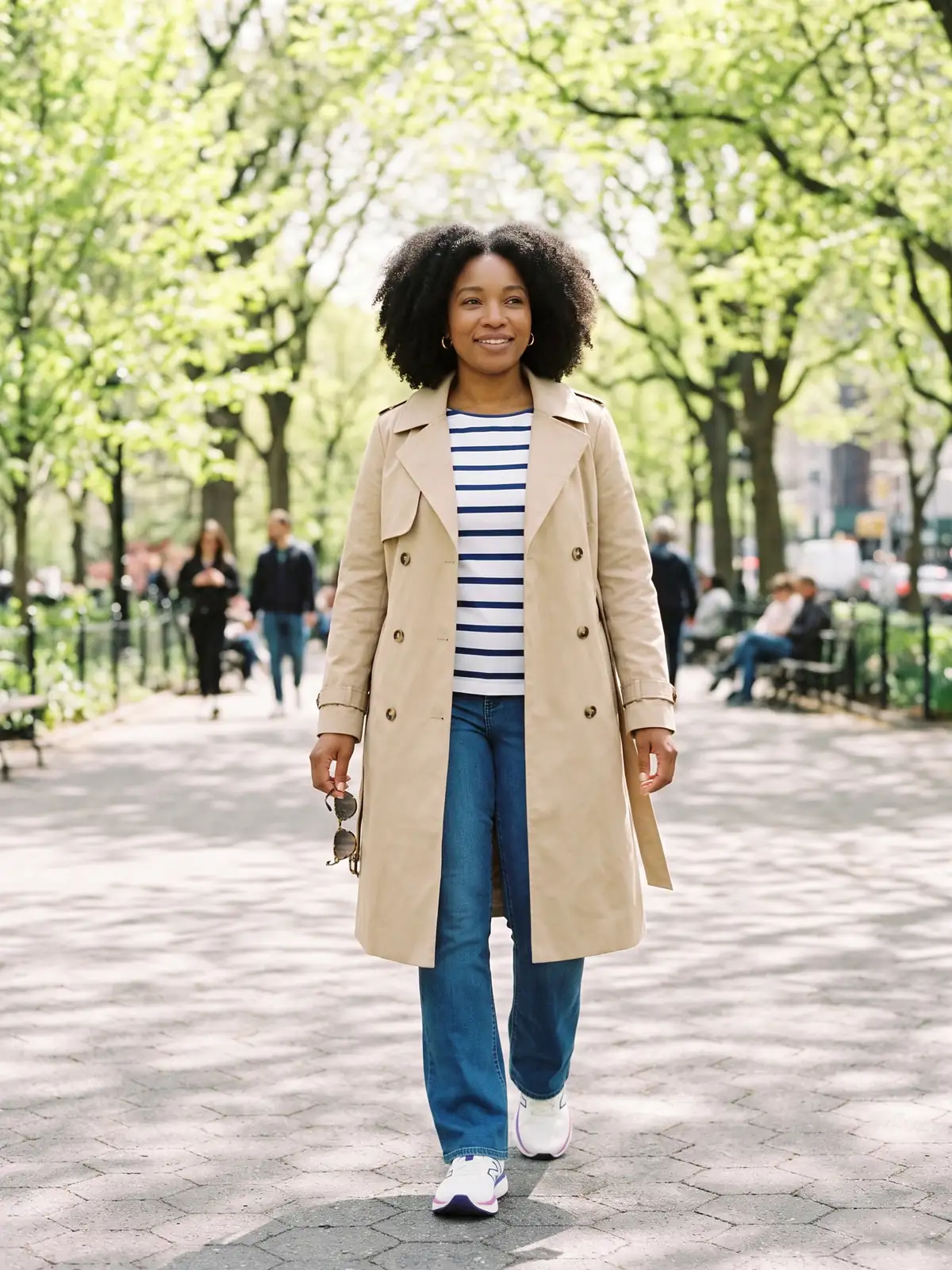
The first look is the most useful 60°F outfit there is. M&S's cotton-rich trench coat in a neutral beige (CA$215) is worn open, so it can come off at noon and go back on when the sun drops. Under it, Weird Fish's Bowe striped jersey T-shirt in navy and white (£12), M&S's Eva bootcut jeans in medium indigo (CA$68.99) and New Balance's 520 v9 running shoes in a wide width (US$56.99 at eFootwear), on a US size 12. A trench blocks wind and light rain, which a sweater does not, and it weighs little enough to carry over an arm.
Why 60°F feels different from one day to the next
The 60°F in your weather app is a very specific measurement. The National Weather Service's own instruction for climate stations defines air temperature as the air "between 4 and 6 feet above ground level", taken by an instrument "shielded from precipitation, direct and reflected sunshine". The shelter stands over grass or soil, at least 100 feet from large paved surfaces. Australia's Bureau of Meteorology says the same of its own figure: the temperature quoted in forecasts is a shade temperature from a thermometer inside a weather screen.
So the forecast number is the temperature of shaded, moving air over a lawn. You spend your day somewhere else: on a sunny sidewalk, in the wind between two buildings, or on a shaded platform waiting for a train. Three things push the feeling away from 60°F.
The sun. No official US index covers sun at 60°F, but the ones that exist on either side of it show how big the effect is. For cold weather, the NWS says "Bright sunshine may increase the wind chill temperature by 10°F to 18°F." For hot weather, its heat index page says "exposure to full sunshine can increase heat index values by up to 15°F". Australia's Bureau of Meteorology puts the effect of full sun at up to about 8°C (14°F) on its apparent temperature, with the sun at its highest. Our reading, which is an inference and not a published figure: a still, sunny noon at 60°F can feel like the upper 60s, and the same air in shade feels like 60 again. The Met Office in Britain describes spring days that are "bright but deceptively chilly conditions, where it feels much colder in the shade or once the sun drops behind cloud."
The wind. The NWS wind chill is "defined only for temperatures at or below 50°F and wind speeds above 3 mph", so at 60°F there is no official US number for wind. Ten degrees lower the index applies, and our guide to what to wear in 50 degree weather uses it. Canada works the same way: Environment and Climate Change Canada only adds wind chill to forecasts at 0°C or below, because above zero "there is no risk of frostbite no matter how windy it is". That does not mean the wind does nothing. Using the formula the Bureau of Meteorology publishes for its apparent temperature, our own calculation for 16°C (61°F) at 70% humidity, with wind measured 10 m up as in forecasts, gives about 16°C in calm air, about 13°C (55°F) in an 11 mph wind and about 11°C (51°F) in an 18 mph wind. The Met Office, which does blend wind into its feels-like figure at mild temperatures, gives the plain advice: "Windy days may need extra layers, even if temperatures look reasonable".
Wet clothes. Rain, sweat and a breeze are what make a mild day feel cold. The CDC notes that hypothermia, while most likely in real cold, "can occur even at cool temperatures (above 40°F) if a person becomes chilled from rain, sweat, or submersion in cold water." For a city day at 60°F this is about comfort, not danger, but it explains why a damp cotton shirt in a breeze feels so much colder than the forecast.
Is 60 degrees cold? It depends on the city and the hour
Is 60 degrees cold? For most people it is cool rather than cold. Kimi, the author of the women's style blog Cotton Cashmere Cat Hair, sums it up: "For most people, 60 degrees feels slightly cool because most people prefer room temperatures in the 70s." What decides the outfit is the rest of the day. A 60°F afternoon in San Francisco is a different day from a 60°F afternoon in Denver.
We counted, from NOAA's 1991-2020 daily climate normals, how many days a year each city's normal high falls between 55 and 65°F, and how far the normal low sits below the normal high on those days. The counts and averages are our own arithmetic on NOAA's published normals, not figures NOAA publishes.
| City | Days a year with a normal high of 55-65°F | When | Normal high minus normal low on those days |
|---|---|---|---|
| San Francisco (downtown) | 200 | November to May | 12°F |
| Dallas-Fort Worth | 106 | November to March | 20°F |
| Atlanta | 82 | November to March | 19°F |
| Portland, Oregon | 81 | March, April, October, November | 17°F |
| Seattle | 79 | March to May, October | 15°F |
| Denver | 76 | March to May, October, November | 28°F |
| Nashville | 62 | February, March, November, December | 22°F |
| Boston | 58 | April, May, October, November | 15°F |
| Washington, DC | 54 | March, April, October, November | 18°F |
| New York (Central Park) | 53 | Mostly April, October, November | 14°F |
| Chicago (O'Hare) | 47 | April, October | 18°F |
| Houston | 44 | December, January | 20°F |
| Los Angeles, San Diego, Phoenix, Miami | 0 | Normal highs never fall that low | - |
Three things come out of it. First, in the Northeast and Midwest a 60°F high is an April or October day; New York's normal October is 64.5°F at its warmest and 51.4°F at its coolest. Second, in Denver a 60°F April afternoon comes after a morning in the mid-30s (the April normals are 61.7°F and 33.9°F), so the layer you need at 8 a.m. is a real jacket. Third, in Los Angeles, 60°F is not an afternoon at all: downtown's normal January is 68.0°F at its warmest and 48.9°F at its coolest, an average of 58.4°F. There, you meet 60°F at breakfast and after dark.
The formula: one base, one layer, and how warm each piece is
The simplest rule comes from REI, the outdoor co-op: carry every layer even if you start without it, because "You can peel off layers if things heat up, but you can't put on layers that you didn't bring along." At 60°F that means one base you could wear alone at the warmest hour and one layer for the coolest hour. If the morning low is under about 50°F, add a second thin layer that fits in a bag.
How much does each piece add? Building engineers measure clothing in clo, where 1 clo is roughly a business suit, enough for someone sitting indoors to be comfortable at 70°F. ASHRAE's thermal comfort standard publishes a value for each garment. It is an indoor standard for people sitting or standing, so read the numbers as how warm each piece is compared with the others, not as a prescription for the street.
| Piece | Insulation (clo) |
|---|---|
| T-shirt | 0.08 |
| Short-sleeve knit polo | 0.17 |
| Long-sleeve shirt | 0.25 |
| Long-sleeve flannel shirt or sweatshirt | 0.34 |
| Sweater, thin / thick | 0.25 / 0.36 |
| Suit jacket or blazer, single-breasted, thin / thick | 0.36 / 0.44 |
| Trousers, thin / thick | 0.15 / 0.24 |
| Walking shorts | 0.08 |
| Skirt, thin / thick | 0.14 / 0.23 |
| Long-sleeve shirtdress, thin / thick | 0.33 / 0.47 |
| Shoes / boots | 0.02 / 0.10 |
| Light summer jacket* | 0.25 |
| Down jacket* | 0.55 |
| Coat* / parka* | 0.60 / 0.70 |
*From the Engineering ToolBox, a reference site, because the ASHRAE table has no outdoor coats. Neither table lists jeans; heavy denim probably sits near the thick trousers, but that is our guess.
Four things in that table matter at 60°F. A thin sweater adds about as much as a long-sleeve shirt, so a fine knit over a tee is a real layer. A blazer adds a bit more than a thin sweater. A parka adds almost three thin sweaters, which is why a winter coat is too much on a 60°F day. And moving lowers the value: the ASHRAE standard lets engineers reduce insulation for people who move, and at an easy walking pace our arithmetic with its formula gives about 80% of the still value. You feel warmer walking to the train than standing on the platform, which is the moment the layer is for.
Outfits by situation
Sunny and still
On a bright, calm afternoon, 60°F is close to short-sleeve weather in the sun. Wear the base on its own, keep the layer on your arm or in a bag, and plan for the shade. A dress works here: a thin short-sleeve shirtdress is about 0.29 clo in the ASHRAE table, less than a long-sleeve shirt and thin trousers together (0.40), so add a cardigan or a denim jacket for when you sit in the shade or the sun goes down.
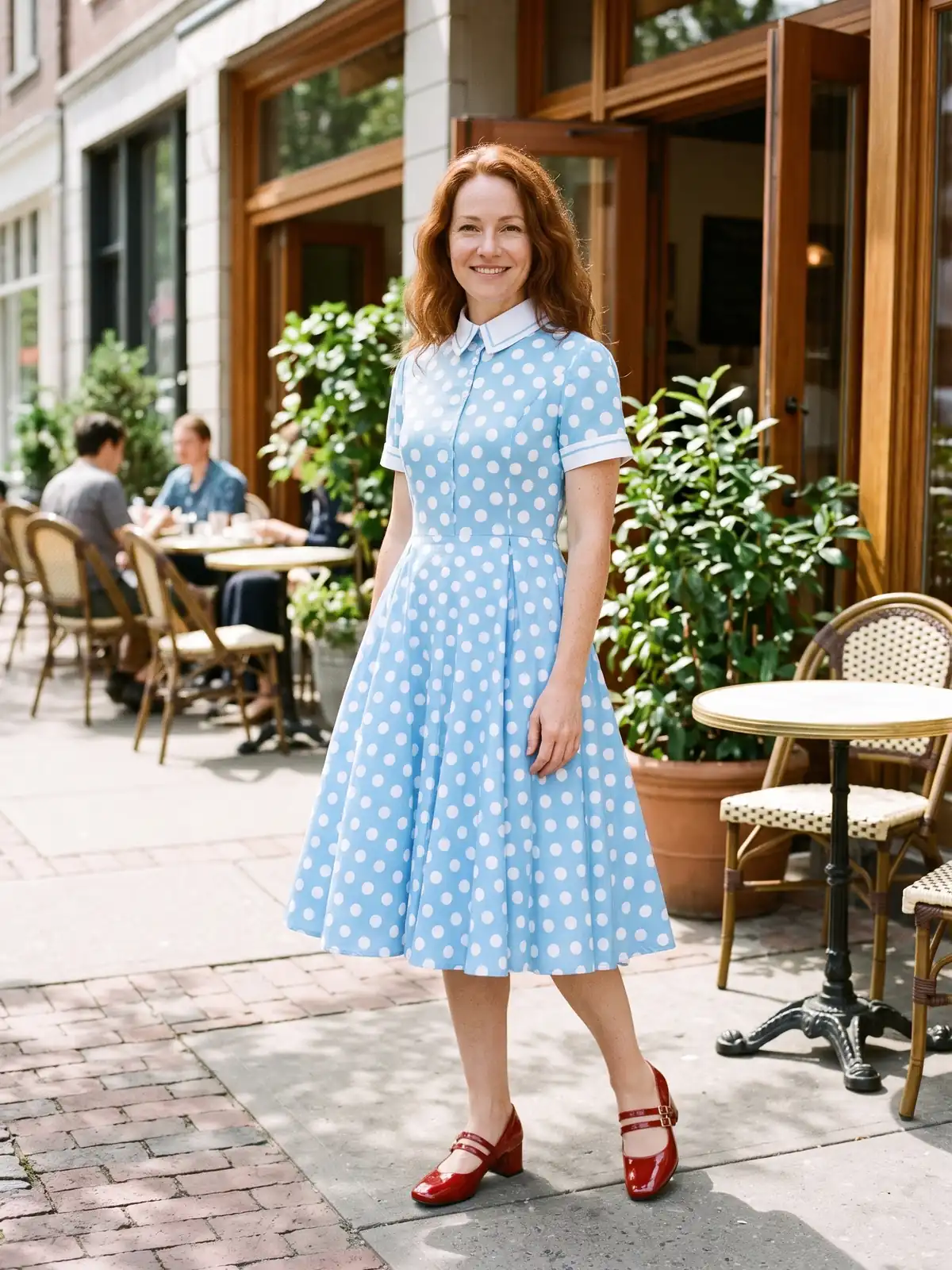
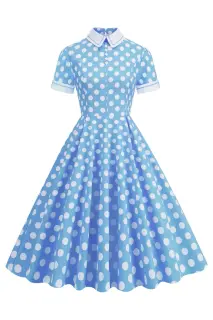 Zapaka Hepburn Style Polka Dots Vintage Dress with Short Sleeves $49 Shop at Zapakaaffiliate link
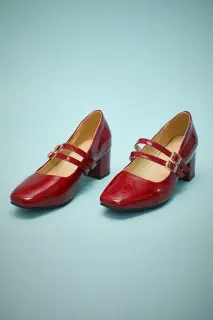 Zapaka Red Straps Retro Heels $54 Shop at Zapakaaffiliate link
Zapaka's polka dot shirt dress in light blue (US$49) is the sunny-afternoon version: short sleeves, a collar and a full skirt below the knee, with Zapaka's red Mary Jane heels (US$54), on a US size 8. The longer skirt matters on a breezy day. Cotton Cashmere Cat Hair recommends midi lengths at 60°F because "it won’t blow up too high in gusts of wind", and a below-the-knee skirt does the same job.
Sun also brings UV, which has nothing to do with temperature. The EPA puts it plainly: "Even on a cloudy day, you can be sunburned by UV radiation." Spring days at 60°F can have a high UV index; between 3 and 7 the EPA's advice is to "Seek shade during late morning through mid-afternoon" and wear sunscreen, a wide-brimmed hat and sunglasses.
Cloudy or windy
Under cloud, or in a steady breeze, keep the layer on and choose one that stops wind. Knits and fleece let it through; REI writes of fleece that "wind blows right through, which can steal warmth". A trench, a denim or field jacket, a leather or suede jacket, a windbreaker or a waxed jacket all block it. A long-sleeve top under the layer is better than a tee, and a thin scarf at the neck closes the gap where wind gets in. Our guide to wearing a scarf has the knots that stay put.
Rain
Rain is where 60°F outfits fail, because wet fabric loses its warmth. The National Park Service's hiking advice says to "avoid cotton, which retains water" and to put rain gear on before you get wet. For a city day, a water-resistant trench or a light shell with a hood over a thin knit, dark jeans or trousers and boots or leather sneakers is enough. Kimi's rain rule is worth keeping: "Don’t wear anything in the rain that can’t get wet, like untreated suede!" She also says to skip wide-leg or flared jeans that drag on wet ground. Our ankle boots guide covers which ones handle the wet.
A cold morning and a warm afternoon
This is the 60°F day most people actually get: the high is 60 to 65°F, the morning is in the 40s or low 50s, and the evening drops back. Taelor's day plan for men starts with a tee, a merino knit and an overshirt at 8 a.m., loses the knit by lunch and puts it back on at 7 p.m. if you eat outside. The same logic works for anyone: a base for noon, one layer for the commute, and a second thin one if the morning low is under 50°F.

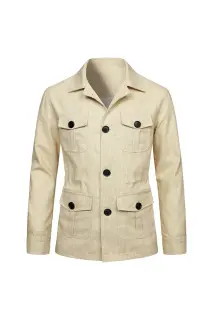 Zapaka Beige Notch Lapel Single Breasted Men's Jacket $96 Shop at Zapakaaffiliate link
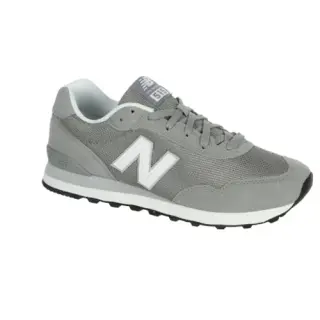 New Balance 515 Men's Sneaker Grey $59.99 Shop at eFootwearaffiliate link
Zapaka's beige jacket (US$96), a single-breasted cut with four flap pockets, is the kind of unlined layer that suits a cool morning: open over a white tee, with dark jeans and New Balance 515 sneakers in grey (US$59.99 at eFootwear), on a 44R. By lunch it comes off and the tee and jeans still look finished.
At the office
Offices run warm and commutes run cool, so the layer has to look right both on and off. Taelor's office default for men is "an oxford shirt, chinos or light wool trousers, loafers, and an unstructured blazer for the commute". Women can do the same with a knit or a blouse, trousers or a midi skirt and loafers or flats, with a blazer or a trench on top. In the ASHRAE numbers, trousers and a long-sleeve shirt, with shoes and underwear, come to 0.61 clo and adding a suit jacket takes it to 0.96, close to the 1 clo of a suit, which is why the blazer comes off at the desk. Our business casual guide has the dress-code side.
Evening out
Evenings are the low end of the day. On a normal October day the low is 51.4°F in New York's Central Park and 45.4°F at Chicago's O'Hare airport. Taelor's line on shorts applies to the whole evening outfit: "If you'll be outside after 5 p.m., the answer is almost always no." For a dinner or a date, a midi skirt or dark jeans with a knit, boots or closed heels and a leather jacket or a blazer is the safe version.
60 degree weather outfits for women
- Trench and stripes. A striped long-sleeve or short-sleeve tee, straight or bootcut jeans, a trench worn open, and sneakers or loafers, as in the first picture.
- Fine knit, no coat. A thin cotton or merino sweater over a tee, straight jeans or wide-leg trousers, loafers or ankle boots. Kimi calls 60°F "truly the perfect temperature to pull out your sweaters and NOT also need a coat" on a dry, calm day.
- Denim jacket. A long-sleeve tee, a denim or utility jacket, jeans and white sneakers or ballet flats.
- Leather jacket. A tee, a leather or faux-leather jacket, cropped jeans and lug-sole boots, for an evening or a windy day. More ways to wear one are in our leather jacket outfits.
- Midi skirt. A midi skirt with a cropped sweater, ballet flats, low heels or boots.
- Shirtdress plus layer. A long-sleeve or short-sleeve shirtdress with a denim jacket or cardigan, and boots or Mary Janes.
- Office. A knit over a collared shirt, ponte or wide-leg trousers, loafers or flats, and a blazer for the commute.
- Active. Leggings, a long-sleeve top and a windbreaker. Our leggings guide has the rest.
If you are building a wardrobe for spring and fall, most of these pieces overlap; our capsule wardrobe guide shows how few you need.
60 degree weather outfits for men

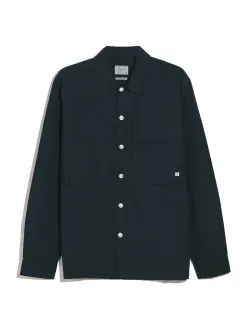 Farah Ralph Overshirt In True Navy £38 Shop at Farahaffiliate link
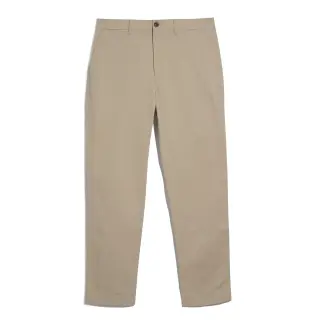 Original Penguin Straight Fit Chinos In Travertine £56 Shop at Original Penguinaffiliate link
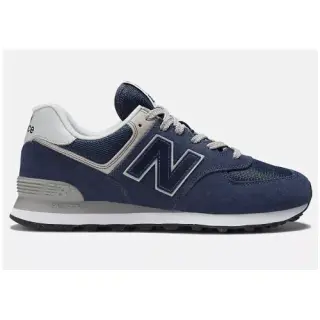 New Balance ML 574 Core Men's Wide 4E Classic Shoes, Navy, With White $99.98 Shop at eFootwearaffiliate link
The men's picture is the standard 60°F formula in navy and stone: Farah's Ralph overshirt in true navy (£38) worn open over a white tee, Original Penguin's straight-fit chinos in a stone shade the brand calls travertine (£80), and New Balance's 574 sneakers in navy suede (US$99.98 at eFootwear, wide fit), on a 40R. The overshirt is heavier than a shirt and lighter than a jacket, which is exactly the job at 60°F.
- Overshirt. A tee or long-sleeve tee, a cotton twill or corduroy overshirt, jeans or chinos, sneakers or chukkas.
- Cooler end (55 to 59°F). A merino crewneck under a denim trucker jacket, dark jeans and suede boots.
- Office. An oxford shirt, chinos or light wool trousers, loafers and an unstructured blazer.
- Upper 60s. A polo or tee with chinos and sneakers, and a light shirt-jacket for the evening.
- Weekend or golf. A polo with a vest or a quarter-zip, which works as an on-off switch for the sun.
- Rain. A knit under a water-resistant shell or a trench, dark trousers, leather shoes or boots, and no unprotected suede.
Kids and babies at 60°F
The American Academy of Pediatrics gives two rules that apply directly. For newborns and babies, dress them in one more layer than you are wearing to be comfortable in the same place; the AAP only lets you drop a baby to a single layer above 75°F. For young children in cold weather, the AAP also recommends one more layer than an adult and several thin layers rather than one heavy one. Those cold-weather pages are written for winter, so applying them at 60°F is our extension, but the logic is the same.
In practice, if you are in a long-sleeve tee and a light jacket, a toddler wants a long-sleeve top, a fleece or cardigan and a light jacket they can take off at the playground, plus long pants. In a car seat, the AAP prefers thin snug layers to a bulky coat. Change wet clothes as soon as you can. The NWS adds that its wind chill tests were only done on adults and tells readers to "be even more cautious with children". And on sunny days, a hat: the EPA notes that sunburns raise lifetime skin cancer risk, "especially for children."
Running in 60 degree weather
Running is the one case where you dress for a much warmer day. Runner's World's rule of thumb is to "Dress like it’s 15 to 20 degrees warmer than it actually is", which at 60°F means dressing for 75 to 80°F: shorts and a singlet or your lightest tee. Elizabeth Corkum, a run coach quoted in the same piece, adds that you should feel cold at the start: "If you’re fine simply standing outside, the odds are good you’ll overheat once you warm up into your run." Wyndo, a running weather app, uses a smaller gap for easy runs (10°F, then 15°F for workouts and 20°F for races) and is honest that "Most of this chart is coaching convention, labeled as such".
60°F is also close to the best racing weather there is. A study of 1,258 endurance races in the journal Medicine & Science in Sports & Exercise (January 2022 issue) found that "Conditions of 7.5°C–15°C WBGT (or 10°C–17.5°C air temperature) increased the likelihood for peak performance". In air temperature, that is 50 to 63.5°F, so 60°F sits inside it. Add a light wind shell in wind or cold rain, and if you will stop and stand around after, bring a dry layer.
What not to wear at 60°F
- A winter coat or parka. At 0.60 to 0.70 clo it is more than you need, and you will carry it by noon. The activewear brand tasc says "A heavy coat is overkill for most people."
- A single warm layer and nothing under it. If the only option is keeping a thick sweater on or freezing in a tank top, the outfit has no way to adjust.
- Cotton on a wet or sweaty day. Fine when dry; cold when damp.
- Untreated suede and floor-length jeans in the rain.
- Shorts after dark. In the sun at a barbecue, maybe; for the walk home, no.
- Sandals. At 60°F, closed shoes are the default; most sources agree on that more than on anything else.
Where the sources disagree
How much the sun adds. Taelor's rule is "in full sun, dress as if it's a few degrees warmer". tasc goes further: "Sixty in direct sun with no wind can feel closer to 70, while 60 under clouds with a steady breeze can feel like 50." Neither gives a source. The official figures (10 to 18°F on wind chill, up to 15°F on the heat index, up to about 8°C on Australia's apparent temperature) are measured for colder or hotter weather than 60°F, but they suggest that a few degrees undersells it on a still, bright day.
Humidity. Taelor writes: "In my experience, damp air makes 60 feel cooler than dry air does." The official indices say the opposite, if only slightly. Using the simple heat index formula published by the NWS's Weather Prediction Center, our calculation at 60°F gives about 57°F at 30% humidity and about 60°F at 100%, so humid air reads a little warmer, not cooler. What makes a damp day feel cold is wet clothing and wind, not humidity in the air.
The ideal running temperature. Runner's World says the ideal for long-distance running is "between 45 and 59 degrees Fahrenheit", citing that race study. The study's 7.5 to 15°C band is a WBGT figure, a heat-stress index; the matching air temperature band it prints is 10 to 17.5°C, or 50 to 63.5°F.
Sweater weather or not. Nike calls 60°F "not quite warm enough for shorts, but it’s not sweater weather, either". Cotton Cashmere Cat Hair calls it the perfect sweater temperature. Taelor lands in the middle: a sweater at the low end and after dark. The clo table backs Taelor: a thin sweater adds as much as a long-sleeve shirt, so it is right for a cool morning and too much for a sunny noon.
Coats. The cashmere brand Fibflx suggests pieces like "an oversized wool coat" and shearling jackets for 60°F. tasc and Taelor both say skip the heavy coat. The clo numbers side with skipping it.
Cotton. Taelor recommends a cotton base, while the National Park Service's Theodore Roosevelt park page says "Do not wear cotton even as an under-layer." Both are right for their setting: cotton is fine on a dry city day, and wool or synthetic is better if you will sweat, then stop, or get rained on.
In the UK, Canada and Australia
60°F is 15.6°C, so read this guide as 15 to 17°C.
- UK. 16°C is London's normal spring and autumn high. At Heathrow the 1991-2020 average high is 15.0°C in April and 15.8°C in October, and the average high across the whole year is 15.7°C. The Met Office's feels-like figure accounts for wind and humidity "at around 5 feet off the ground (the typical height of a human face!)", and, unlike the US, it gives one at mild temperatures, so check it rather than the bare number. A jumper is a sweater and trainers are sneakers; the rest of the outfits apply as written.
- Canada. Environment and Climate Change Canada shows no wind chill above 0°C, so a 16°C forecast on a windy day looks milder than it feels. Dress for the wind as above.
- Australia. 16°C is a winter high: Melbourne's average high is 14.9°C in June, 14.5°C in July and 15.6°C in August, and Sydney's July average high is 16.4°C. The Bureau of Meteorology's feels-like is a shade figure that includes wind but not sun, and its own page warns: "In wet, windy conditions, someone wearing inadequate clothing can become hypothermic in quite mild temperatures."
If you are flying from a 60°F city to a warm one, our airport outfits guide covers the layer for the plane.
Questions people ask
Is 60 degrees cold?
For most people, 60°F (16°C) is cool rather than cold. It feels warmer in still sun and colder in shade, wind or rain, and the morning is usually 12 to 28°F colder than the afternoon high, depending on the city. Dress for the coolest hour you will be outside.
Do you need a jacket in 60 degree weather?
Usually yes, a light one you can take off: a trench, a denim or field jacket, an overshirt, a blazer or a windbreaker. In still, bright afternoon sun you may not wear it, but carry it for the shade, the evening and the wind. A heavy winter coat is too much.
Can you wear shorts in 60 degree weather?
For running, yes: runners dress as if it were 15 to 20°F warmer. For a day in town, mostly no. Shorts can work in full sun in the upper 60s, with a long-sleeve top or an overshirt, but not if you will be out after dark.
Is 60 degrees sweater weather?
At the cool end of the day, yes. A thin sweater adds about as much warmth as a long-sleeve shirt, so it suits a cool morning or evening. At a sunny noon, it is usually too warm unless it is very fine and you can take it off.
Can you wear a dress in 60 degree weather?
Yes. A midi or below-the-knee dress, ideally with sleeves, plus a denim jacket, cardigan or trench, and closed shoes or boots. Midi lengths stay put in gusts. Tights help on cloudy or windy days.
What shoes should you wear in 60 degree weather?
Closed shoes: sneakers, loafers, ballet flats, ankle boots or leather lace-ups. Skip sandals. In rain, pick leather or rubber over untreated suede.
What should you wear in 60 degree weather when it rains?
A water-resistant trench or shell with a hood over a thin knit, dark jeans or trousers that do not drag on the ground, and waterproof boots or leather shoes. Avoid cotton next to the skin if you will be out for long, because wet cotton stays cold.
What should you wear to run in 60 degree weather?
Dress for 75 to 80°F: shorts and a singlet or a light tee. You should feel a little cold at the start. Add a light wind shell for wind or rain, and bring a dry layer if you will stand around after.
What should a baby wear in 60 degree weather?
One more layer than you. If you are in a long-sleeve top and a light jacket, a baby wants a bodysuit, a long-sleeve top and a light fleece or cardigan, or a blanket in the stroller. In a car seat, use thin snug layers rather than a bulky coat.
Sources
- National Weather Service: Understanding Wind Chill
- National Weather Service: Heat Forecast Tools
- National Weather Service, T. Day: Instruction 10-1302, Requirements and Standards for NWS Climate Observations (November 9, 2023)
- NOAA Weather Prediction Center, Lans P. Rothfusz: The Heat Index Equation (page modified May 12, 2022)
- NOAA National Centers for Environmental Information: U.S. Climate Normals (2025)
- NOAA NCEI: Daily climate normals 1991-2020, San Francisco Downtown
- NOAA NCEI: Daily climate normals 1991-2020, New York Central Park
- NOAA NCEI: Daily climate normals 1991-2020, Denver International Airport
- NOAA NCEI: Daily climate normals 1991-2020, Dallas-Fort Worth Airport
- NOAA NCEI: Monthly climate normals 1991-2020, Los Angeles Downtown
- NOAA NCEI: Monthly climate normals 1991-2020, Chicago O'Hare
- ASHRAE: Addendum h to ANSI/ASHRAE Standard 55-2010, Thermal Environmental Conditions for Human Occupancy (January 2013)
- The Engineering ToolBox: Clo, Clothing and Thermal Insulation (modified March 7, 2025)
- REI Co-op, Laura Evenson: How to Dress in Layers
- Met Office: What is 'feels like' temperature? (updated March 17, 2022)
- Met Office: Temperature versus 'feels like', why they are not always the same (2026)
- Met Office: Heathrow location-specific long-term averages, 1991-2020
- Bureau of Meteorology: Thermal Comfort observations
- Bureau of Meteorology: Climate statistics, Melbourne (Olympic Park)
- Bureau of Meteorology: Climate statistics, Sydney (Observatory Hill)
- Environment and Climate Change Canada: Wind chill index
- CDC: Preventing Hypothermia
- US EPA: Ultraviolet (UV) Radiation and Sun Exposure (modified September 29, 2026)
- US EPA: UV Index Scale (modified June 15, 2026)
- American Academy of Pediatrics, HealthyChildren.org: Cold Weather Safety (updated January 25, 2023)
- American Academy of Pediatrics, HealthyChildren.org: Dressing Your Newborn (updated June 17, 2016)
- American Academy of Pediatrics, HealthyChildren.org: Winter Safety (updated January 27, 2026)
- National Park Service: Hiking Safety, Great Smoky Mountains National Park (updated December 17, 2025)
- National Park Service: Trail and Hiking Safety, Theodore Roosevelt National Park (updated April 10, 2015)
- Runner's World, The Editors: What to Wear Running (updated June 9, 2025)
- Medicine & Science in Sports & Exercise, Mantzios et al.: Effects of Weather Parameters on Endurance Running Performance, Discipline-specific Analysis of 1258 Races (January 2022)
- Wyndo: What to Wear Running in 60°F (16°C)
- Taelor, Taelor Team: What to Wear in 60 Degree Weather, A Stylist's Guide for Men (October 13, 2026)
- tasc Performance: What To Wear in 60 Degree Weather
- Cotton Cashmere Cat Hair, Kimi: What to Wear in 60-degree Weather (October 23, 2024)
- Nike, Emily DiNuzzo: So, It's 60 Degrees Outside. Here's What to Wear (February 16, 2023)
- Fibflx: What to Wear in 60 Degree Weather, Style and Comfort Guide
The images in this guide are AI-generated: real garments from our catalogue, shown on our own recurring models and made from the shops' photos of each piece. They are not photographs of real people. Prices are the ones the shops showed on November 21, 2026 and can change. Wear It On Me earns a commission when you buy a garment through an affiliate link in a guide (the links are marked, and it costs you nothing extra); a commission never decides what we recommend. How we make these guides.