What to wear in 50 degree weather: a real layer, and what the wind chill adds
What to wear in 50 degree weather: a sweater or long-sleeve top, a real jacket, long pants and closed shoes. At 50°F (10°C) the wind chill starts to count.
Wear It On Me earns a commission on garments bought through affiliate links in our guides. That never decides what we recommend. Details.
What should you wear in 50 degree weather? A sweater (UK: jumper) or long-sleeve top under a jacket you can take off, pants (UK: trousers), closed shoes, and a waterproof or windproof outer layer when rain or wind is forecast. ScienceInsights calls it too warm for a winter coat and too cool for a T-shirt alone, and Nike.com, which sells the pieces it recommends, says these days "aren’t quite balmy enough for short sleeves, but they aren’t chilly enough for a heavy jacket".

- M&S Womens M&S Double Breasted Longline Overcoat, Ivory CA$259 no longer sold
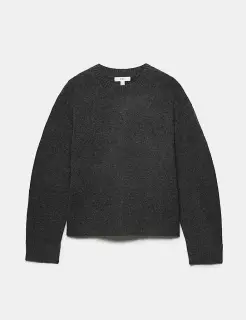 M&S Womens M&S Crew Neck Relaxed Jumper, Charcoal CA$57.99 Shop at M&Saffiliate link
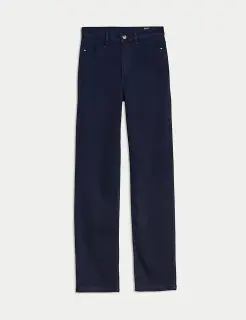 M&S Womens M&S Roma Straight Leg Jeans, Indigo CA$105 Shop at M&Saffiliate link
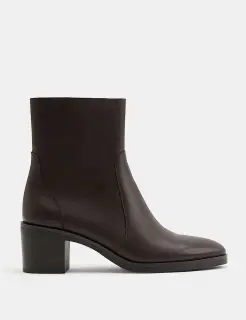 M&S Womens M&S Leather Block Heel Ankle Boots, Brown CA$159 Shop at M&Saffiliate link
This is the 50°F outfit in one picture, on a windy gray morning. M&S's ivory double-breasted longline overcoat (CA$259) is worn open over its charcoal crew-neck sweater (CA$57.99), with M&S indigo straight-leg jeans (CA$105) and brown leather block-heel ankle boots (CA$159), on a US size 14, 5 ft 5. The coat is the piece that comes off in the afternoon and goes back on when the wind picks up.
Is 50 degrees cold?
For most people 50°F (10°C) is cool rather than cold, but it changes what you wear. Rank & Style writes that "Most people feel comfortable at room temperature, which typically ranges from 59 to 77 degrees Fahrenheit." Mayo Clinic defines hypothermia this way: "Hypothermia is a condition that occurs when core body temperature drops below 95 degrees Fahrenheit (35 degrees Celsius)." At 50°F (10°C) nobody is near that, but wet clothes and wind still pull heat away, which is why the outfit matters. The CDC's National Institute for Occupational Safety and Health says: "When temperatures drop below normal, heat can rapidly leave your body."
At 50°F the wind chill starts to count
Wind chill is how cold the air feels on exposed skin once the wind blows. Popular Science, quoting a lead forecaster at the National Weather Service, puts it this way: "It’s how it feels when you’re out in cold weather with wind blowing." The National Weather Service computes it from the air temperature in degrees Fahrenheit (T) and the wind speed in miles per hour (V): 35.74 + 0.6215T - 35.75V^0.16 + 0.4275TV^0.16. Its own page sets the limit that makes 50°F special: "The Wind Chill Temperature is defined only for temperatures at or below 50°F and wind speeds above 3 mph." The index measures the wind at five feet, roughly face height, and assumes no sunlight.
We ran the formula ourselves for the temperatures around 50°F. The figures below are our calculation, Celsius included, not a published NWS chart.
| Air temperature | 5 mph | 10 mph | 15 mph | 20 mph | 25 mph | 30 mph |
|---|---|---|---|---|---|---|
| 50°F (10°C) | 48.2°F (9.0°C) | 46.0°F (7.8°C) | 44.6°F (7.0°C) | 43.6°F (6.4°C) | 42.8°F (6.0°C) | 42.0°F (5.6°C) |
| 45°F (7°C) | 42.3°F (5.7°C) | 39.8°F (4.3°C) | 38.2°F (3.4°C) | 37.0°F (2.8°C) | 36.1°F (2.3°C) | 35.3°F (1.8°C) |
| 40°F (4°C) | 36.5°F (2.5°C) | 33.6°F (0.9°C) | 31.8°F (-0.1°C) | 30.5°F (-0.8°C) | 29.4°F (-1.4°C) | 28.5°F (-1.9°C) |
On a 50°F (10°C) day, the gap between a light breeze and a 30 mph wind is about 6°F, roughly the difference between a sweater and a sweater with a jacket. Lower down the gap grows: at 40°F with a 20 mph wind it feels like 30.5°F. The NWS notes that frostbite needs an air temperature below freezing, so even that is a comfort problem, not a danger.
The city and the hour: when a 50°F day happens
How often a 50°F (10°C) day comes depends on where you live. We counted, from NOAA's 1991-2020 daily normals, the days a year when the normal high falls between 45°F (7°C) and 55°F (13°C). The counts are ours, not figures NOAA prints.
| City (NOAA station) | Days a year in the band | Days by month (our tally) |
|---|---|---|
| Seattle-Tacoma | 140 | Jan 31, Feb 29, Mar 21, Nov 28, Dec 31 |
| Portland, OR | 117 | Jan 31, Feb 29, Mar 5, Nov 21, Dec 31 |
| Washington, DC (Reagan) | 88 | Jan 10, Feb 29, Mar 12, Nov 6, Dec 31 |
| Nashville | 78 | Jan 31, Feb 19, Dec 28 |
| New York (Central Park) | 62 | Feb 2, Mar 30, Nov 18, Dec 12 |
| Boston (Logan) | 58 | Mar 17, Apr 11, Nov 25, Dec 5 |
| Denver | 54 | Feb 16, Mar 12, Nov 20, Dec 6 |
| Chicago (O'Hare) | 47 | Mar 21, Apr 5, Nov 21 |
| Minneapolis-St. Paul | 40 | Mar 9, Apr 12, Oct 10, Nov 9 |
| Atlanta | 39 | Jan 29, Dec 10 |
Six stations have no day in that band, because their lowest normal high is above 55°F (13°C), from Dallas-Fort Worth at 55.6°F (13.1°C) to Miami at 75.9°F (24.4°C). Seattle-Tacoma spends about 38 percent of the year there, while Atlanta's 39 days all fall in December and January. How the forecast number itself is taken (in the shade, over grass) is explained in our guide to what to wear in 60 degree weather.
The formula: a base, a warm layer and a shell
Three layers do the work. ScienceInsights describes a base, a mid layer and an outer layer, with the trapped air as the insulation, and Hincapie Sportswear, writing about cycling, gives the same three parts. The National Institute on Aging, writing for older adults, says: "Wear warm and loose layers of clothing. The air between the layers helps to keep you warm." Mayo Clinic adds: "Outer clothing made of tightly woven, water-repellent material is best for wind protection."
Engineers measure clothing warmth in clo, and the ASHRAE comfort standard lists values for everyday sets of clothes. According to Wikipedia, "One clo is the amount of insulation that allows a person at rest to maintain thermal equilibrium."
| Outfit (ASHRAE set) | Insulation |
|---|---|
| Knee-length skirt, short-sleeve shirt and sandals | 0.54 clo |
| Pants and short-sleeve shirt | 0.57 clo |
| Pants and long-sleeve shirt | 0.61 clo |
| Pants and long-sleeve shirt, plus a suit jacket | 0.96 clo |
| Pants, long-sleeve shirt, long-sleeve sweater and T-shirt | 1.01 clo |
| Knee-length skirt, long-sleeve shirt, half slip and long-sleeve sweater | 1.10 clo |
Read the table as building blocks: a jacket adds about 0.35 clo to a shirt and pants, a sweater over a tee about 0.40. The lightest set, a skirt with sandals, is the one that fails at 50°F, and the sweater set at 1.01 clo is a sensible base for a day with some wind, with a jacket on top when it blows. A leather or faux-leather jacket over a sweater does the same job; our guide to leather jacket outfits has the combinations.
50 degree weather clothes by situation
The layers stay the same from one situation to the next. What changes is the one you carry.
Sunny and still
On a still afternoon there is no wind chill at all, since the NWS defines it only above 3 mph, and the sun works the other way. The NWS says: "Bright sunshine may increase the wind chill temperature by 10°F to 18°F." That is the afternoon to carry the jacket rather than wear it.
Wind
Wind is where the outfit changes most. The NWS advice for extreme cold, to get out of the wind and change out of wet clothes at once, is written for much colder days, but the habit holds at 50°F. ScienceInsights says thin gloves or liners are worth bringing for more than 20 or 30 minutes outside, especially in wind. Our guide to what to wear in New York in December shows how wind between tall buildings makes a city feel colder than its forecast.
Rain
ScienceInsights puts the effect of wet clothes in numbers: "Water conducts heat away from your body about 25 times faster than air." It advises a waterproof, not just water-resistant, outer jacket when rain is forecast. OSHA notes that trench foot can occur at temperatures as high as 60°F (16°C) if the feet stay wet, so the shoes matter as much as the coat. Rank & Style suggests a water-resistant windbreaker, trench or chore coat for rainy days.
A cold morning and a mild afternoon
The Output by Peloton suggests long sleeves you can tie around your waist, or something light enough to tuck away once you warm up. Dress for the morning and carry the layer for the afternoon. For a Thanksgiving dinner on a day like this, our Thanksgiving outfit ideas go from dinner to the drive home.
At the office
The building does most of the warming, so the jacket comes off at the desk. A shirt with a sweater, or an overshirt, under a jacket is the practical set.
Evening
After dark the sun's extra warmth is gone. Carry a layer for the walk home, and take the shell if the wind is up.
50 degree weather outfits for women
The coat-over-sweater outfit at the top is the template, and the other looks are variations on it. Who What Wear builds its outfits for these days on a long structured coat, a trench or a wool coat, with sneakers, boots or a turtleneck. Its opening line: "Cold weather is on the horizon, and we’re more than ready to pull out the oversize jackets and cozy sweaters." AOL.com agrees: "Cozy sweaters, fun patterned pants, and unique jackets are to the rescue." Rank & Style suggests a fitted turtleneck with wide-leg pants under a long wool coat. For a dress, the 1.10 clo set above shows the way: long sleeves and a sweater over it. For shoes, Nike.com says high-top sneakers keep the ankles covered in brisk weather, and our ankle boots guide covers boots.
50 degree weather outfits for men
The two men's pictures show the range. A pea coat is more coat than a still 50°F (10°C) day needs, but it earns its place in wind or rain.

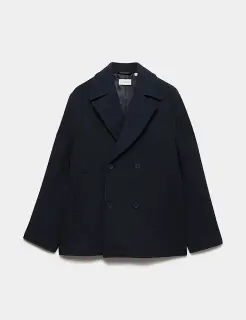 Autograph Mens Autograph Wool Blend Melton Pea Coat, Dark Navy CA$299 Shop at M&Saffiliate link
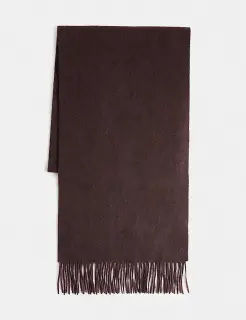 Autograph Mens Autograph Pure Cashmere Scarf, Dark Burgundy CA$155 Shop at M&Saffiliate link
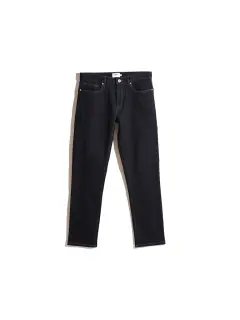 Farah Elm Slim Fit Jeans In Rinse Denim £49 Shop at Farahaffiliate link
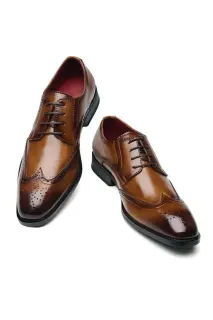 Zapaka Brown Lace-Up Leather Men's Shoes $89 Shop at Zapakaaffiliate link
The picture shows a man on a winter evening in a buttoned dark navy melton pea coat, a dark burgundy cashmere scarf tied in a Parisian knot, a gray crew-neck sweater, black slim jeans and brown wingtip brogues. The model is a 40R at 6 ft 0. The pieces are the Autograph melton pea coat (CA$299), the Autograph cashmere scarf (CA$155), Farah's Elm slim fit jeans (£70) and Zapaka's brown lace-up leather shoes (US$89). For ways to tie the scarf, see how to wear a scarf.

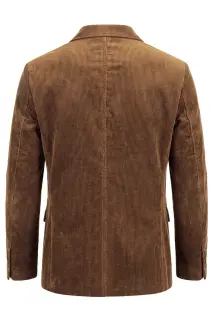 Zapaka Notch Lapel Brown Single Breasted Men's Prom Blazer $89 Shop at Zapakaaffiliate link
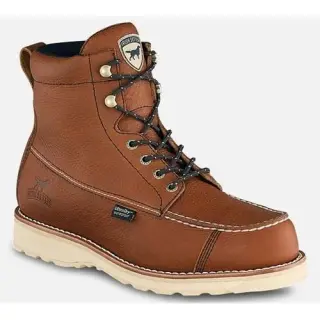 Irish Setter Wingshooter 7' Waterproof Leather Boot $199.95 Shop at eFootwearaffiliate link
The second picture shows a man on an autumn campus path in the Zapaka brown corduroy-look sport coat over a cream knit and dark jeans, with brown moc-toe boots. The model is a 40R at 6 ft 0. The Zapaka blazer is US$89, and the Irish Setter Wingshooter waterproof leather boot (US$199.95) is the one to wear on a wet 50°F day.
Kids, babies and older adults at 50°F
Children get the one-more-layer rule. HealthyChildren.org says: "Older babies and young children should wear one extra layer compared with what an adult would wear in the same weather." Mayo Clinic adds: "Children lose heat faster than adults do." And the wind chill figures above were built on adults, as the NWS says: "The tests that were done on wind chill were conducted on adult subjects." For a child, treat them as a floor.
Older adults are the other group. The NWS says: "Young children under the age of two and the elderly (those over the age of 65) are most susceptible to hypothermia." The NHS advises heating the rooms you use to at least 18°C (about 64°F) and names babies, children under 5 and people aged 65 and older as more vulnerable.
Running, cycling and hiking in 50 degree weather
Exercise changes the arithmetic, because the body makes its own heat. Wyndo puts it plainly: "Running warms you well past the air reading, and the harder you run the more it warms you." For an easy run at 50°F (10°C), Wyndo dresses the runner for about 60°F (16°C) once moving: a short-sleeve tee and shorts. Runner's World's rule: "Dress like it’s 15 to 20 degrees warmer than it actually is." ChalkTalk Sports admits the catch: "When you first step outside, 50 degrees feels chilly." Torokhtiy's running guide adds the usual advice to favor layers and moisture-wicking fabrics.
Cycling changes with the ride. Hincapie Sportswear writes: "Cycling in 50 degrees often means variable conditions, cool at the start, comfortable mid-ride, and possibly breezy on descents." REI's hiking advice uses the same three layers and warns that exposed skin in cold wind is prone to frostbite.
What not to wear at 50°F
- Cotton that gets wet. REI says: "When cotton gets wet, it takes a very long time to dry, which can leave you feeling damp, cold and miserable."
- Shorts for a day in town. ScienceInsights says: "Skip shorts unless you’re exercising hard enough to generate significant body heat."
- A heavy puffer or parka. Nike.com calls it overkill at this temperature; a lightweight jacket does the job.
- Sandals. The skirt, short sleeves and sandals set is the lightest in the table at 0.54 clo. Wear closed shoes.
- A thin top with no outer layer on a windy day. Mayo Clinic's advice for wind is a tightly woven outer layer, which a top alone is not.
Where the sources disagree
Head heat. ScienceInsights says roughly 10% of body heat leaves through the head, so a lightweight beanie is enough. Mayo Clinic tells you to wear a hat to stop heat escaping from the head, face and neck. The 10% figure comes from one commercial page and neither Mayo Clinic nor the NWS gives a percentage; we wear a hat when the wind is up.
Running boost. How much warmer to dress a runner? ChalkTalk Sports' 10-Degree Rule says 10 to 20 degrees; Runner's World and ScienceInsights say 15 to 20. Wyndo uses +10 for an easy run and +20 for a race, and Peloton dresses a 45°F (7°C) recovery run as if it were 55°F (13°C). Where we come down: the boost grows with effort, so use the low end for an easy run.
Gloves. Mayo Clinic says: "Cover your hands with mittens instead of gloves." REI suggests fleece gloves under shell mittens, and ScienceInsights thin liners beyond 20 or 30 minutes outside. Where we come down: at 50°F a thin liner is plenty, with a shell mitten only for a long, windy outing.
Shorts. ScienceInsights says to skip shorts unless you are exercising hard. Wyndo's easy run at 50°F (10°C) is a tee and shorts, and FlipBelt says shorts work with proper layering on top. Where we come down: shorts are for running, pants for town.
The year of the new index. The NWS describes its new index as planned for the 2001/2002 winter season, while according to Wikipedia, "In November 2001, Canada, the United States, and the United Kingdom implemented a new wind chill index." Either way, the formula in use today dates from that winter.
Child thresholds. Caring for Kids says: "Consider keeping them indoors whenever the temperature or the wind chill is reported to be -27°C (-16°F) or lower." HealthyChildren.org draws the line at -15°F (about -26°C). Both are deep-winter numbers; at 50°F (10°C) the one-more-layer rule is all a parent needs.
In the United Kingdom, Canada and Australia
Outside the US the same day is 10°C, and the wind threshold of 3 mph is about 5 km/h.
- UK. The Met Office says: "There is no official definition of wind chill and definitions vary globally, dependent on how it is measured." British forecasts give a feels-like temperature instead. The NHS advises heating the rooms you use to at least 18°C.
- Canada. Environment and Climate Change Canada says: "The weather outside feels colder when it is windy, and we call this the wind chill." Canada and the US share the same index.
- Australia. The Bureau of Meteorology says: "In colder conditions, the body must either reduce heat loss", with shelter from the wind as one way to do it. A 10°C day there calls for the same three layers.
Questions people ask
Is 50 degrees cold?
For most people 50°F (10°C) is cool rather than cold. The NWS wind chill index applies only at or below 50°F (10°C), and only when the wind is above 3 mph. Dress for the coolest hour you will spend outside.
Do you need a jacket in 50 degree weather?
Usually yes, a light one. Nike.com says a lightweight jacket is wanted as an outer layer at this temperature, and Rank & Style suggests a denim jacket for someone who gets cold easily. Carry it on sunny days, because the shade and the wind come back.
Is 50 degrees too cold for shorts?
For a day in town, usually yes. ScienceInsights says to skip shorts unless you are exercising hard, and Wyndo dresses an easy runner in a tee and shorts at this temperature.
Can you wear a dress in 50 degree weather?
Yes, with a layer over it and tights or leggings under it. The 1.10 clo set has a long-sleeve shirt, a half slip and a long-sleeve sweater, while the 0.54 clo set has sandals, so change the sandals for closed shoes. For tights, see our tights with dresses guide.
What shoes should you wear in 50 degree weather?
Closed shoes: sneakers, boots or leather shoes. Nike.com says high-top sneakers keep the ankles covered in brisk weather, and boots suit sweater weather, especially when rain is forecast.
What should you wear in 50 degree weather with wind or rain?
A layer that stops the wind, and a waterproof jacket when rain is forecast. ScienceInsights advises a waterproof, not just water-resistant, outer jacket, and Mayo Clinic says tightly woven, water-repellent material is best for wind protection. Rank & Style suggests a water-resistant windbreaker, trench or chore coat for rainy days.
What should you wear to run in 50 degree weather?
For an easy run, Wyndo dresses the runner in a short-sleeve tee and shorts. Runner's World says to dress 15 to 20 degrees warmer than the actual temperature. Treat both as rules of thumb, and carry a layer you can tie around your waist.
What should a baby or a child wear in 50 degree weather?
One more layer than an adult, in several thin layers rather than one heavy garment. HealthyChildren.org says: "Rule of thumb: dress the baby in one more layer of clothing than you are wearing to be comfortable in the same environment." Its winter play page adds that children should change out of wet clothes right away.
Is 50 degrees cold enough for a winter coat?
Usually not. Rank & Style says: "a thick, heavy winter coat is probably overkill for 50 degrees." A sweater under a light or waterproof shell does the job, and a longline coat makes sense when the wind is strong.
Sources
- Nike.com: What to Wear in 50-Degree Weather: 7 Nike Outfit Essentials (originally published January 30, 2023)
- National Weather Service: The New Improved Wind Chill Index
- National Weather Service: Wind Chill
- National Weather Service: Wind Chill Questions
- CDC, National Institute for Occupational Safety and Health: Cold Stress and Workers
- OSHA: Winter Weather - Cold Stress
- Mayo Clinic: Hypothermia - Symptoms and causes
- National Institute on Aging: Cold Weather Safety for Older Adults
- NHS: Winter vaccinations and winter health
- Met Office: Wind chill factor
- Who What Wear: 14 Fashion Person-Approved Outfits That Are Perfect for 50-Degree Weather
- Rank & Style: What to Wear in 50 Degree Weather
- ScienceInsights: What to Wear Outside in 50-Degree Weather
- Wyndo: What to Wear Running in 50°F (10°C)
- The Output by Peloton: What to Wear Running In Any Temperature, According to Experts
- FlipBelt: How to Dress for 50-degree Running Success
- ChalkTalk Sports: Running Clothes for 50 Degrees: Your Guide to the Perfect Run
- Hincapie Sportswear: How to Dress for Cycling in Any Weather Condition
- REI: Cold-Weather Hiking Tips
- Caring for Kids, Canadian Paediatric Society: Winter safety: Advice for parents and kids
- Popular Science: Wind chill isn't what you think it is
- National Weather Service: During Extremely Cold Weather
- National Weather Service: Understanding Wind Chill
- HealthyChildren.org: Cold Weather Safety
- HealthyChildren.org: Playing Outside in Winter: Tips to Keep Kids Warm and Safe
- HealthyChildren.org: Dressing Your Newborn
- ANSI/ASHRAE: Addendum h to Standard 55-2010, clothing insulation values
- Wikipedia: Clothing insulation
- Wikipedia: Wind chill
- Bureau of Meteorology (Australia): Thermal stress
- Environment and Climate Change Canada: Wind chill and the Wind Chill Index
- Torokhtiy: What To Wear Running In 50-Degree Weather For Men And Women
- AOL.com: 10 Transitional Outfit Ideas for Those Chilly and Illusive 50 Degree Days
- NOAA National Centers for Environmental Information: U.S. Climate Normals 1991-2020, daily
- Runner's World: What to Wear on a Run
The images in this guide are AI-generated: real garments from our catalogue, shown on our own recurring models and made from the shops' photos of each piece. They are not photographs of real people. Prices are the ones the shops showed on November 21, 2026 and can change. Wear It On Me earns a commission when you buy a garment through an affiliate link in a guide (the links are marked, and it costs you nothing extra); a commission never decides what we recommend. How we make these guides.