What to wear to an interview: outfits for women and men, by job
Dress one level above what the job wears every day. Interview outfits for women and men, by industry and for video calls, and what hiring managers say.
Wear It On Me earns a commission on garments bought through affiliate links in our guides. That never decides what we recommend. Details.
To an interview, wear one level above what employees wear on an ordinary day. In a casual office that means chinos or tailored trousers with a button-down, a knit or a blouse, and a blazer. In a business casual office it means a suit or a jacket with trousers or a skirt, or a tailored dress. In law, banking and the most formal offices, wear a dark suit, a white or light shirt, and leather shoes. For every interview: clean and pressed clothes that fit, closed shoes you can walk in, quiet accessories, and nothing you would not want the interviewer to remember instead of you. This guide sets out the rule, how to find a company's dress code, outfits for women and for men, the industries that differ, video calls, and what the surveys and the research actually say.
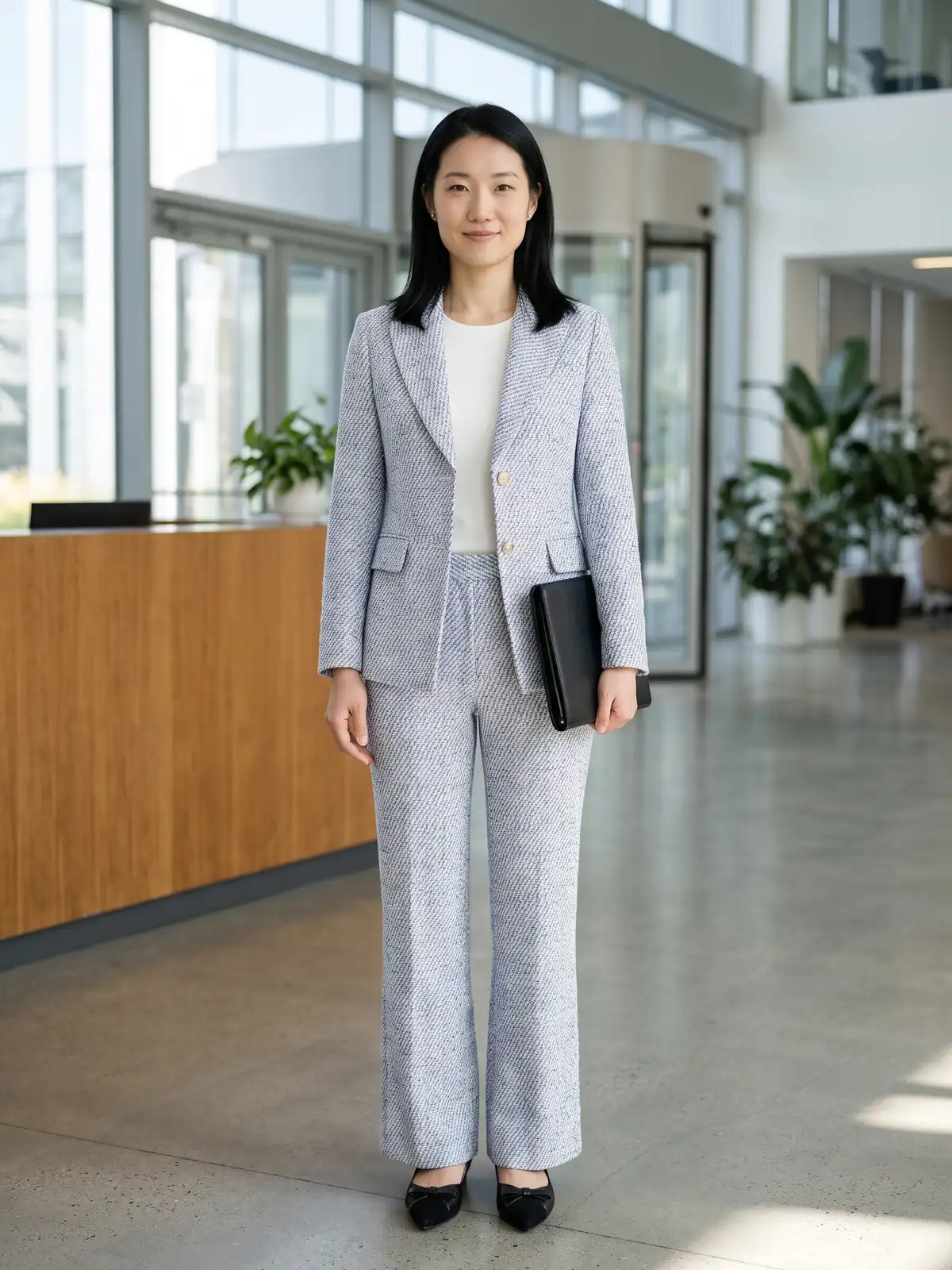
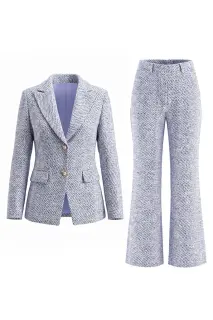 Zapaka 2-Piece Light Blue Tweed Notched Lapel Women Suits $139 Shop at Zapakaaffiliate link
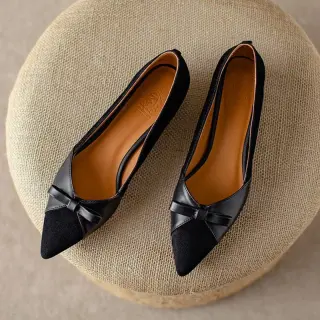 CHIKO Ieasha Pointy Toe Block Heels Pumps Shoes $105 Shop at CHIKOaffiliate link
The first picture is the answer for most office interviews: Zapaka's two-piece suit in light blue tweed (US$139), a jacket with notched lapels and gold buttons, worn buttoned, over matching flared trousers, with CHIKO's Ieasha pumps in black (US$105), pointed, with a small bow and a low block heel, on a US size 4. The white top and the portfolio are described, not sold by the shops we work with. It is a suit, so it clears almost any bar; the soft color and the texture keep it from looking severe. For a law firm or a bank, the same shape in navy, gray or charcoal is the safer choice.
The rule: dress one level above the job
The advice is so consistent that it reads like one sentence copied from site to site.
- The University of Massachusetts Dartmouth career center: "Plan to dress one step above the typical work attire for that role."
- CareerOneStop, the job site sponsored by the US Department of Labor: "A rule of thumb is to dress one step above the dress required for the job."
- Duke University's career hub tells students to find the normal level for the industry, then dress "up one level" for an interview.
- Robert Half's Accountemps division: "ensure your outfit is one step above the hiring company's usual protocol in formality."
- Reed, the British recruiter: "When in doubt, dress slightly smarter than the daily office attire."
- Hays, in Australia: "Dress at the most formal end of each dress code spectrum."
The reason is that an interview is not a normal working day. Joshua Davis, a personal stylist in Atlanta quoted by GQ, puts it plainly: "even if all your research says the office is pretty casual, you should still go more conservative for the interview." Indeed's career guide says the same: "Even if their dress code is casual, it may benefit you to look more professional than the employer requires."
The rule also works downward. CareerOneStop adds: "Do not wear a suit to an interview at a construction site". One level above a site crew is clean work trousers, a collared shirt and boots, not a pinstripe.
How to find out what the company wears
You need to know the everyday level before you can go one above it. The sources agree on where to look:
- The company's own photos. The careers page, the team page, and posts from events on its social accounts. Indeed, Reed, SEEK and Indeed UK all start here.
- Employees' profiles. GQ's stylist suggests looking at how staff present themselves on LinkedIn.
- The building. CareerOneStop's first suggestion is to "visit the company and notice what people are wearing."
- Ask. The recruiter, the HR contact who scheduled you, or someone in your network. Indeed UK says an employer may appreciate the call. Prospects, the UK graduate careers site: "If you're unsure on the dress code, ask before attending the interview."
Read the invitation email too. Some employers state the attire, and Robert Half asks managers to do exactly that.
If you find nothing, default to business casual with a jacket. You can take the jacket off. As a career director at St. John's University told GQ: "It's a lot easier to remove a blazer that you may not need than to put one on that you didn't bring". Our guide to business casual for women and men sets out what that level includes.
What to wear, industry by industry
| Field | What people wear day to day | What to wear to the interview |
|---|---|---|
| Law firms, banking, finance, insurance | Suits or business professional | A dark suit, white or light shirt, leather shoes; a tie for men |
| Consulting, accounting, large corporate offices | Business casual to business professional | A suit, or a jacket with trousers or a skirt |
| Government | Business casual to traditional business | A suit or a jacket with trousers or a skirt |
| General office, administration | Business casual | A jacket over a shirt or blouse, tailored trousers or a skirt, or a tailored dress |
| Tech, start-ups | Casual | Business casual: chinos or tailored trousers, a button-down or a fine knit, a blazer you can remove |
| Creative agencies, media, design | Smart casual, personal style | Smart casual with one point of personality; the portfolio counts more |
| Nonprofits | Business casual | A blazer and button-up with trousers or dark jeans; nothing flashy |
| Education, academia | Business casual | A jacket, and shoes you can walk a campus in |
| Healthcare | Scrubs or business casual | Business casual; scrubs only if the recruiter confirms |
| Retail, hospitality | Uniform or the brand's own style | Business casual, or the brand's look for a clothing store |
| Trades, construction, field work | Work clothes | Clean chinos or work trousers, a collared shirt, boots; bring gear if asked to demonstrate |
A few notes behind the table.
Law and finance are still formal. Jessica Chin Somers, a legal recruiter in New York, told GQ: "Lawyers do not show up to interviews wearing sneakers". J. Daniel Chi, who chairs the finance department at the University of Nevada, Las Vegas: "unless the firm gives clear instructions on dressing casually, dressing formally is a safer bet." Robert Half's 2019 survey found the same split by sector: 46% of managers in finance, insurance and real estate said a suit should always be worn, against 28% in construction and 26% in retail.
Tech is relaxed, but not for the interview. Toast's chief people officer told GQ that recruiters still suggest something "in the realm of business casual", and admitted that on video calls he has seen candidates with formal tops and sweatpants below the camera.
Creative fields judge the work. Matt Johnson, who runs a Los Angeles agency, told GQ to "dress to represent your best and most true self." That is not permission to be sloppy; it is permission to wear color.
Retail and food service. SEEK, the Australian job site, suggests emulating the brand's style for a clothing store, and dark jeans with no rips and a collared shirt for a casual food-service job.
Trades. CareerOneStop: if you may be asked to show your skills, as a welder might, bring work clothes and tools. The Muse adds "clean chinos, sturdy boots, and a button-up shirt" for an interview on a job site.
Healthcare. The Muse: "For medical or clinical roles, scrubs might be acceptable if you know that's the norm." Without that confirmation, wear business casual.
Do you still need a suit?
Not always, and the sources say so with dates attached.
In September 2019, Robert Half's Accountemps division asked more than 2,800 senior managers at American companies with 20 or more employees. 37% said candidates should always wear a formal suit; 36% said it depends on the position or department. 52% said what a candidate wears is very important, and 42% somewhat important. Cities differed: Miami, New York and Washington, D.C. led for always wearing a suit, at 54% each, while Austin and Seattle were the markets most willing to skip it. Bigger companies were stricter: at least 40% of managers at firms with more than 250 employees preferred a suit, against 31% at firms with 20 to 99.
Alison Green, who writes the workplace advice column Ask a Manager, revised her own answer in January 2023: "This convention has changed!" In all but parts of law and finance, she wrote, "it's become normal to interview in something a step down from a formal suit." For women she lists a jacket and trousers that are not cut from the same cloth, a businesslike dress on its own, or a dress with a cardigan. SEEK's answer is just as direct: "You do not need a suit for every interview."
So: a suit is never wrong in an office, and it is expected in law, finance and senior roles. Elsewhere, a jacket over good trousers or a skirt, or a tailored dress, is the standard.
Interview outfits for women
Four outfits, from most to least formal, all of which clear an office interview. Our guides to business professional attire and business casual for women have more at each level.
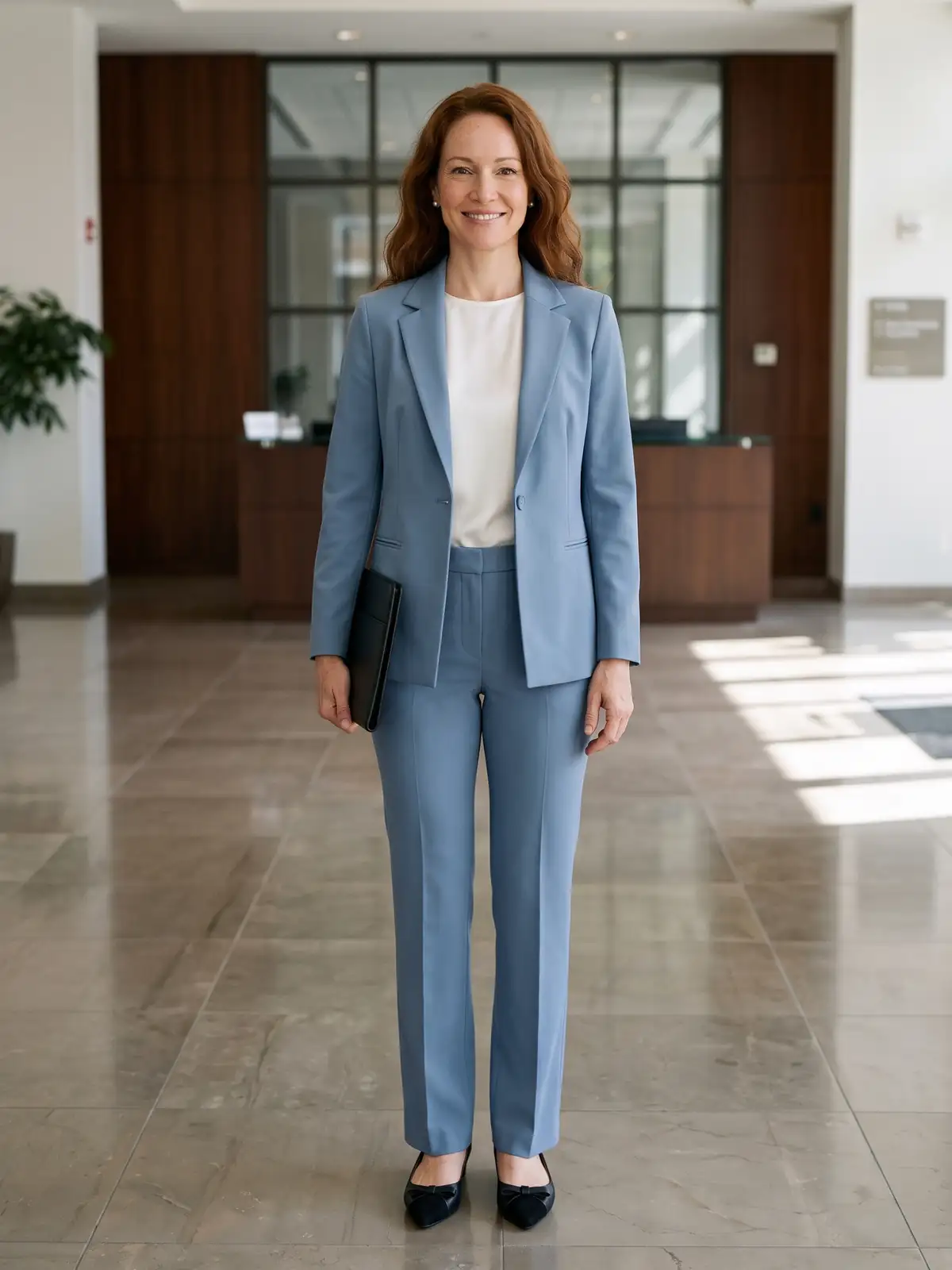
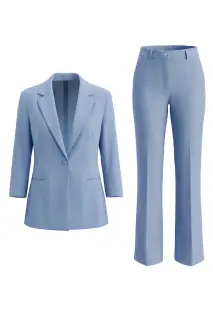 Zapaka Dusty Blue Notched Lapel One Button Slim Fit Long Women Suit $125 Shop at Zapakaaffiliate link
- CHIKO Ieasha Pointy Toe Block Heels Pumps Shoes $105 Shop at CHIKOaffiliate link
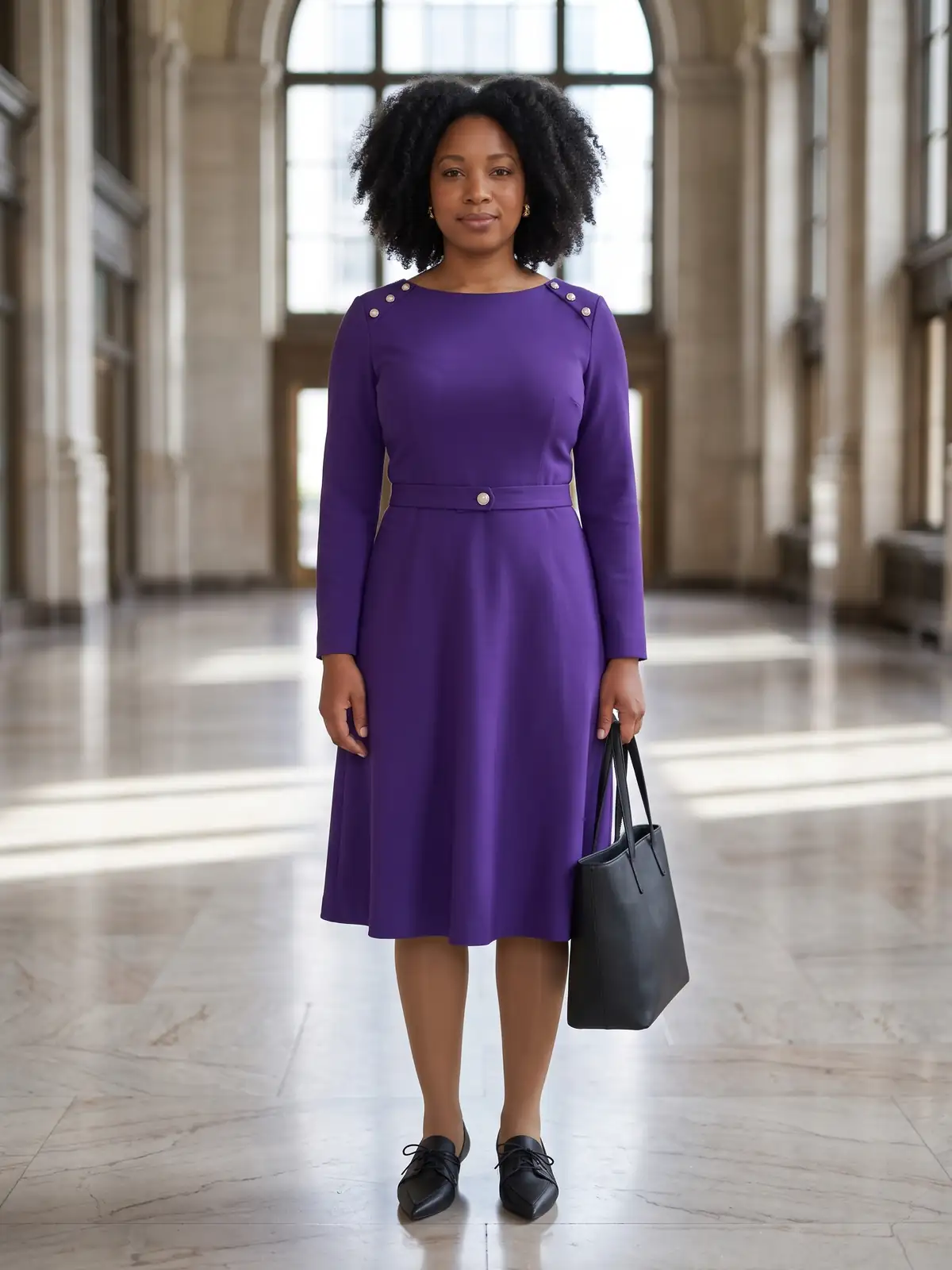
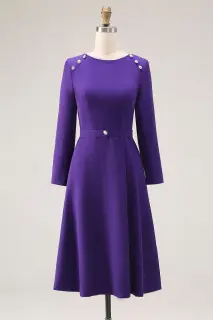 Zapaka Purple A Line Boat Neck Long Sleeve Work Dress $135 Shop at Zapakaaffiliate link
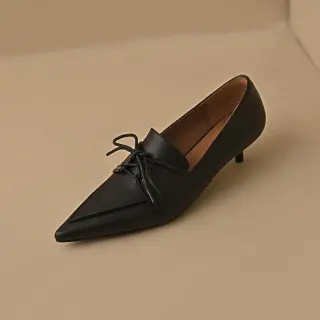 CHIKO Coralee Pointy Toe Kitten Heels Oxfords Shoes $109 Shop at CHIKOaffiliate link
On the left, the suit for a conservative office: Zapaka's two-piece in dusty blue (US$125), a single-button jacket worn buttoned over a plain white blouse, with straight trousers and the same CHIKO Ieasha pumps (US$105), on a US size 8. The blouse and portfolio are described, not sold.
On the right, the dress that does the work of a suit: Zapaka's A-line work dress in purple (US$135), with a boat neck, long sleeves, a belt and a hem below the knee, and CHIKO's Coralee kitten-heel oxfords in black (US$109), on a US size 12. A dress counts when it is tailored and reaches the knee. The Muse: "Just keep it knee-length or longer, and pair it with a blazer for a polished look." This one has sleeves, so a blazer is optional.
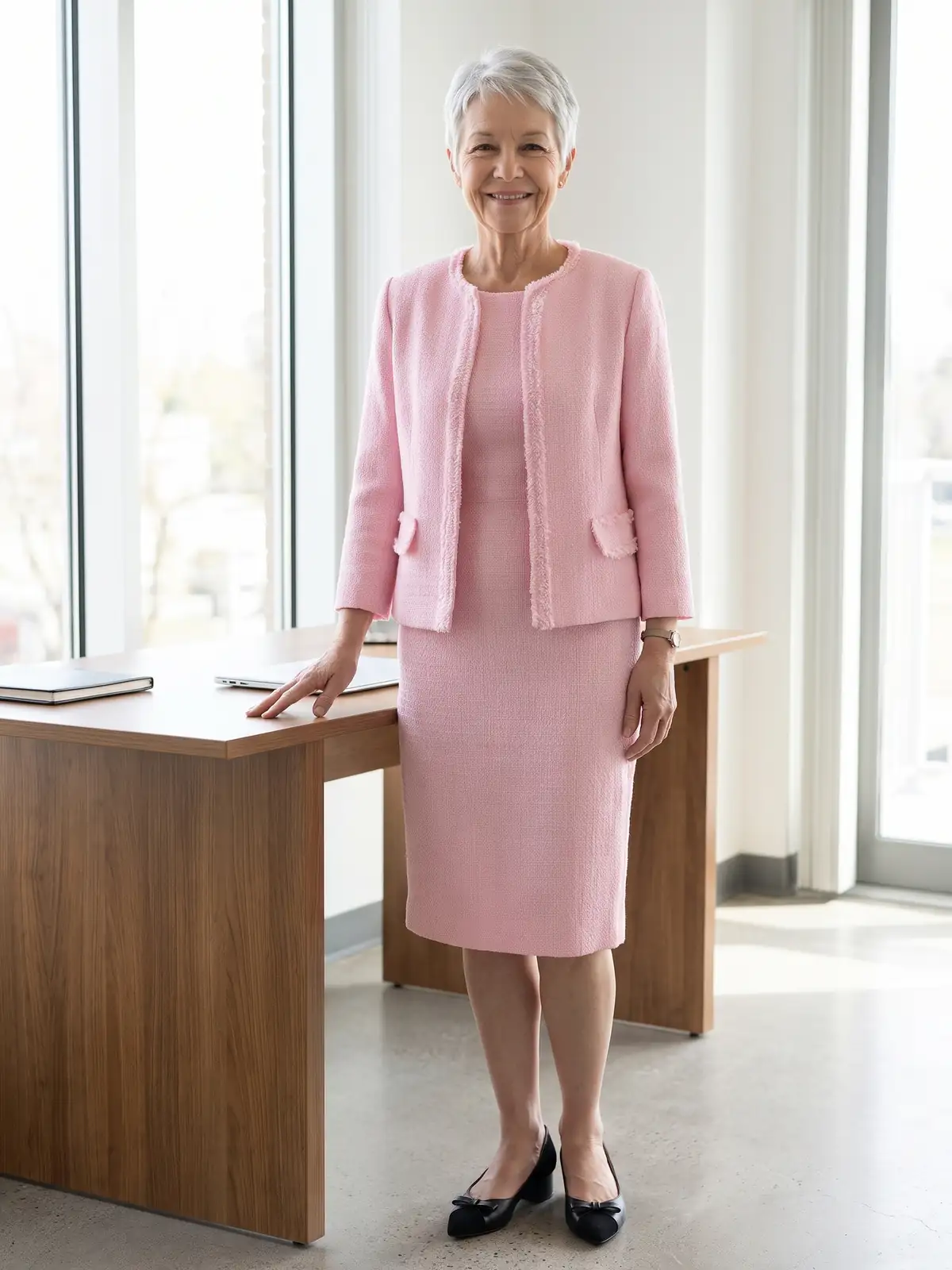
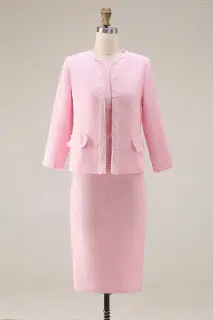 Zapaka Pink Sheath Tweed 2-piece Long Sleeve Work Dress $158 Shop at Zapakaaffiliate link
- CHIKO Ieasha Pointy Toe Block Heels Pumps Shoes $105 Shop at CHIKOaffiliate link
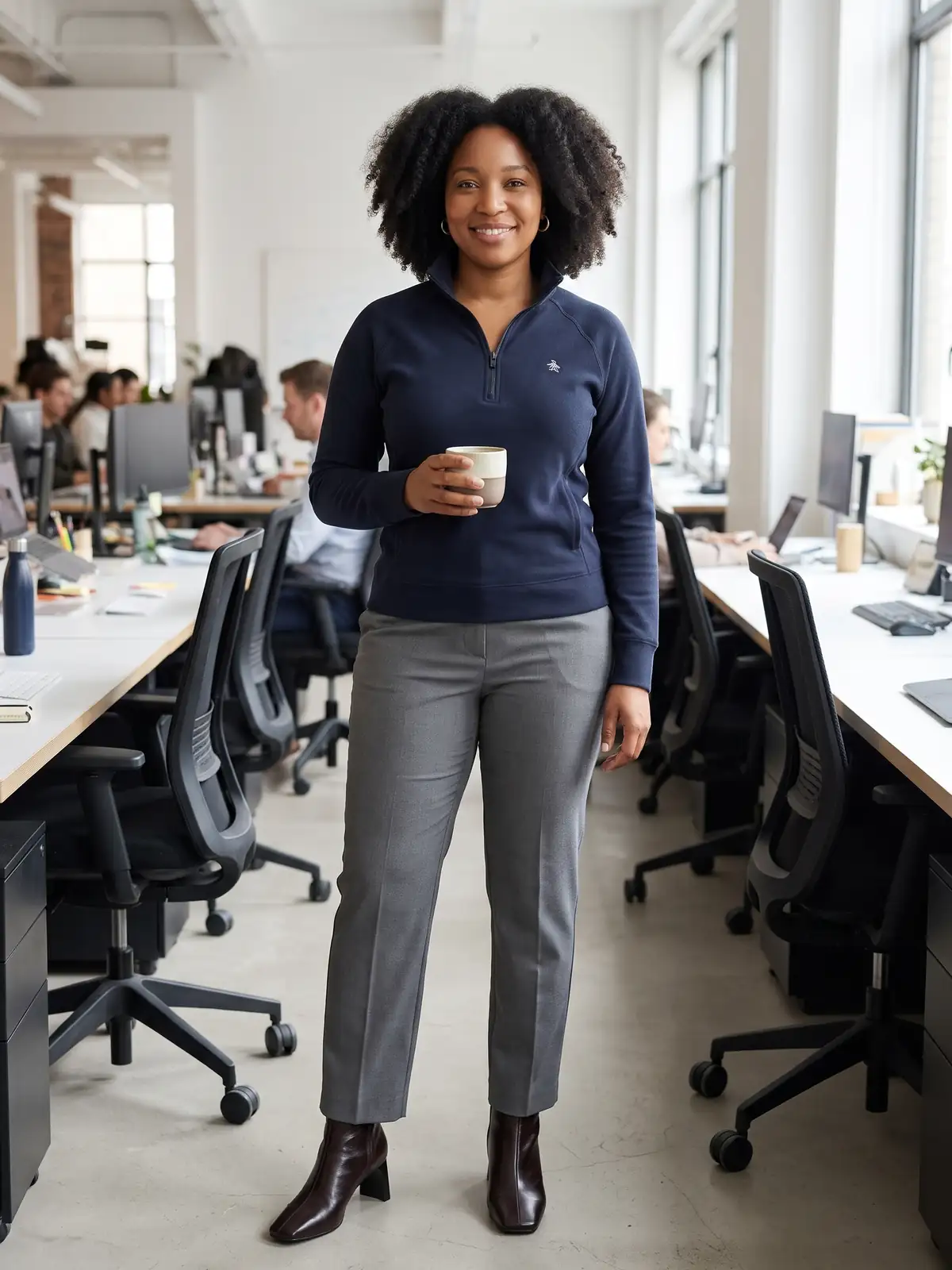
- Original Penguin Women's Midweight 1/4 Zip Golf Pullover In Black Iris Heather £77 no longer sold
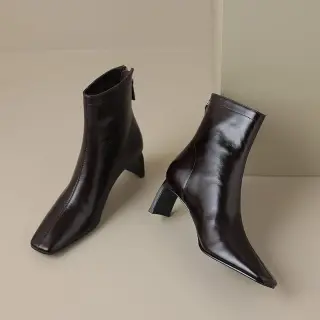 CHIKO Brielle Square Toe Chunky Heels Ankle Boots $138 Shop at CHIKOaffiliate link
On the left, the matched set: Zapaka's pink tweed jacket over a matching knee-length sheath dress (US$158), with the Ieasha pumps, on a US size 10. A two-piece in a textured fabric has the order of a suit without its severity; for a bank, choose the same cut in navy or gray.
On the right, the level for a casual office or a start-up: Original Penguin's quarter-zip pullover in Black Iris Heather, a very dark navy (£110), with gray tailored trousers and CHIKO's Brielle ankle boots in dark brown (US$138), on a US size 12. The trousers are described, not sold. Add a blazer and it is right for most business casual offices.
What the career offices add for women:
- Skirts and dresses at the knee or below. Duke's guide says hemlines should not sit above the top of the kneecap, and to test how the fabric moves when you sit.
- Separates in the same cloth. Duke points out that many women need a different size for the jacket and the trousers, and suggests brands that sell both cuts in the same fabric rather than a fixed suit.
- Low heels or flats you can walk in. SEEK: "Only wear heels if you're able to comfortably walk in them". UMass Dartmouth asks for fairly low heels.
- Tights. Indeed UK suggests tights with a skirt or dress, sheer ones included.
Interview outfits for men
Three outfits. The first two are suits for a formal office; the third is the jacket-and-trousers answer for everywhere else. Our guide to business casual for men covers the level below.
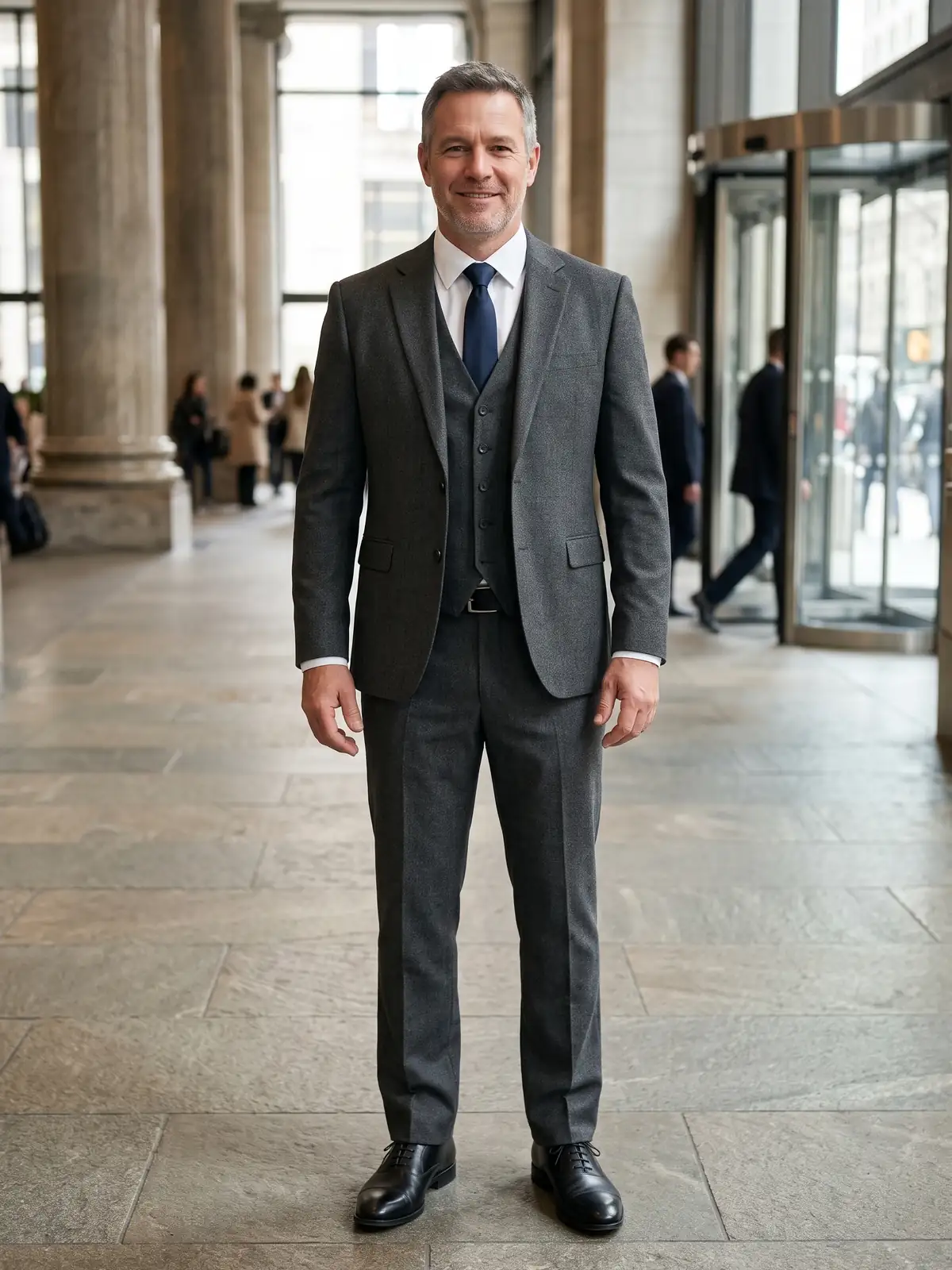
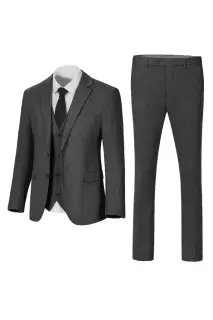 Zapaka Dark Grey Notched Lapel Single Breasted 3-Piece Men's Wedding Suits $119 Shop at Zapakaaffiliate link
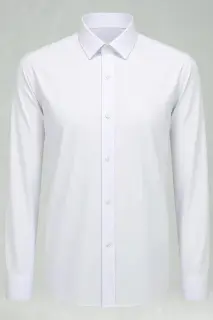 Zapaka White Classic Solid Point Collar Slim Fit Men's Suits Shirt $39 Shop at Zapakaaffiliate link
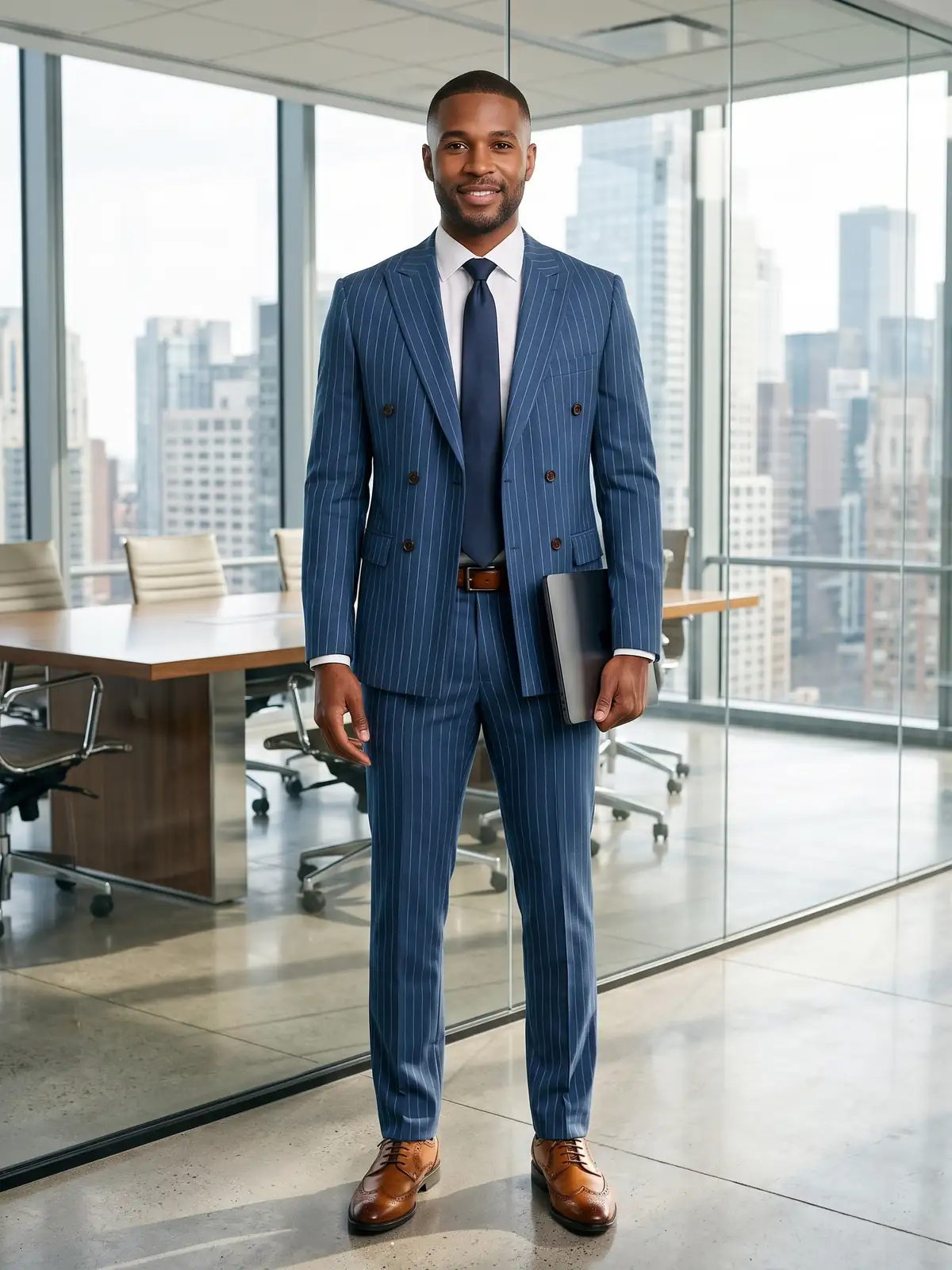
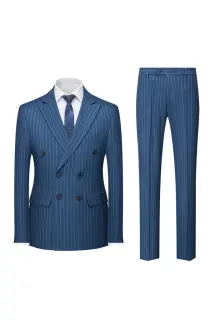 Zapaka Navy Pinstriped Peak Lapel 2 Piece Men's Formal Suits $126 Shop at Zapakaaffiliate link
- Zapaka White Classic Solid Point Collar Slim Fit Men's Suits Shirt $39 Shop at Zapakaaffiliate link
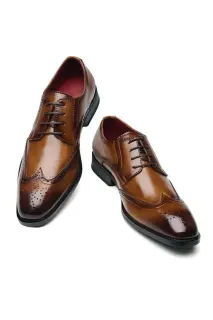 Zapaka Brown Lace-Up Leather Men's Shoes $89 Shop at Zapakaaffiliate link
On the left, the most conservative combination a man can wear: Zapaka's dark gray three-piece (US$119), the white point-collar shirt (US$39), a plain navy tie and black cap-toe oxfords, on a 44R. The tie and shoes are described, not sold. For the interview, leave the vest at home and wear it as a two-piece. Chin Somers, the New York legal recruiter, describes the classic pairings as "a blue suit with brown shoes or a gray suit with black shoes", and adds that fit matters more than color.
On the right, the same idea with more confidence: Zapaka's pinstriped double-breasted two-piece in a medium navy (US$126), the same white shirt, a dark navy tie and tan wingtip brogues (US$89), on a 40R. Right for a client-facing role; a little loud for a courtroom. If you have a court date of your own, our guide on how to dress for court goes through it role by role.
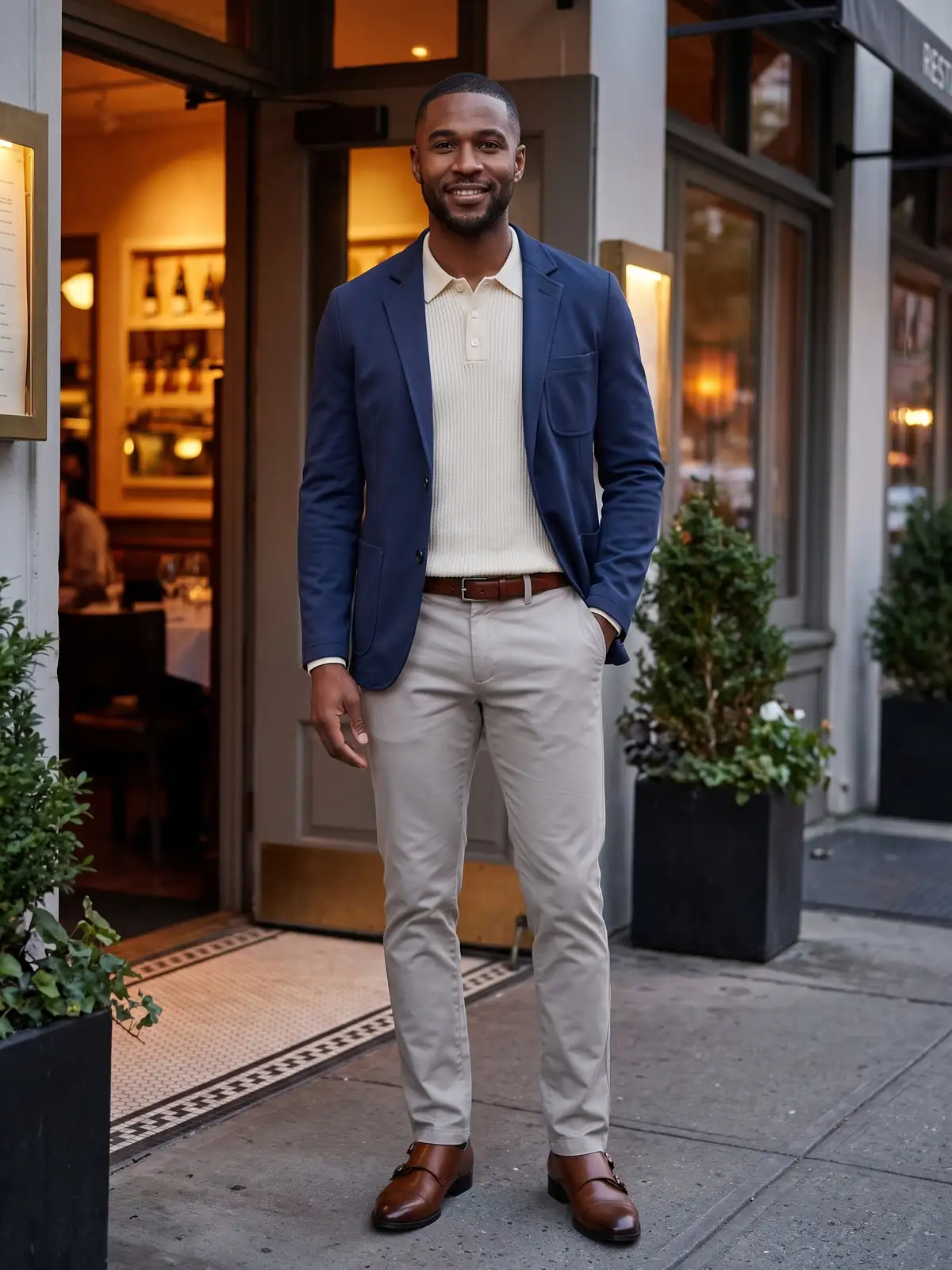
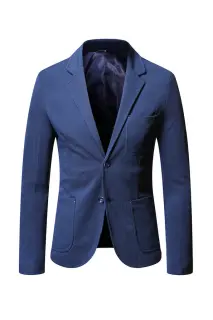 Zapaka Navy Notch Lapel Single Breasted Men Suits Jacket with Pockets $79 Shop at Zapakaaffiliate link
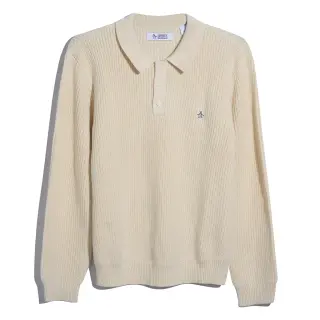 Original Penguin Half Cardigan Long Sleeve Sweater Polo In Birch £59.50 Shop at Original Penguinaffiliate link
- Original Penguin Straight Fit Chinos In Travertine £56 no longer sold
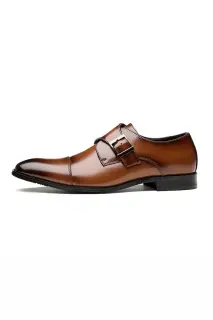 Zapaka Brown Slip-On Leather Men's Party Shoes $89 Shop at Zapakaaffiliate link
For a tech company, a creative agency or a casual office: Zapaka's navy blazer with patch pockets (US$79), worn open over Original Penguin's long-sleeved knit polo in Birch, a cream (£85), its straight chinos in Travertine, a pale stone (£80), and Zapaka's brown monk-strap shoes (US$89), on a 40R. No tie. Reed calls a crisp shirt, chinos, brogues and a textured blazer a failsafe combination, and says it shows more personality than a suit. Indeed UK disagrees on one point: it says "beige is typically too casual for an interview" and prefers black or navy trousers. In a formal office, swap the chinos for gray wool trousers. More outfits at this level are in our guide to smart casual for men.
What the career offices add for men:
- The tie. UMass Dartmouth suggests a tie that contrasts with the suit, such as red with navy or yellow with gray, with subtle patterns and nothing novelty. Its tip should just touch the top of the belt buckle.
- Belt and shoes match. Black with black, brown with brown.
- Socks. Mid-calf or over-the-calf, matching the trousers, so no skin shows when you sit.
- Beard. Clean-shaven or carefully trimmed; the career guides we read accept both.
Shoes, bag, jewelry and grooming
Shoes. Closed, clean and polished, in a heel you can walk in. Men: leather oxfords, derbies, brogues or loafers. Women: pumps, loafers, flats or ankle boots. Several guides say no sneakers for an office interview; Reed and The Muse allow clean, plain ones only where the company is casual. Our guide to what shoes to wear with business casual covers the options.
Bag. A slim leather portfolio for your résumé, or a structured handbag. UMass Dartmouth goes as far as "Avoid carrying a briefcase." SEEK and CareerOneStop list a slim briefcase or satchel as fine. Either way, carry one thing, not three. A career fair is a different day, with hours on your feet and venues that ban bags; our guide to what to wear to a career fair covers it.
Jewelry. Simple earrings, a watch, a wedding ring. SEEK: "Wedding rings and other culturally appropriate items of jewellery are also acceptable." Avoid anything that clinks when you gesture.
Grooming. Clean hair, clean trimmed nails, light makeup or none, and little or no fragrance, because interview rooms are small and some people are allergic. Indeed puts cologne and perfume in its tips for that reason.
The night before. Lay everything out, check for stains, holes and pet hair, press the shirt, and sit down in the trousers or skirt at home. Reed suggests a lint roller and a spare shirt in your bag.
Colors that work
Dark and neutral is the safe base. UMass Dartmouth lists acceptable suit colors for formal industries as navy, gray, charcoal, taupe, pewter or black, with more room for color in creative roles, and prefers solids to prints.
The one color with data behind it is orange. Money reported in 2018 that a 2013 CareerBuilder survey of 2,099 hiring managers found "orange was the worst color to wear to a job interview". The same survey linked blue with being a team player, black with leadership, gray with logic, white with organization and brown with dependability. Take that as hiring managers' impressions, not science. CareerBuilder's chief people officer gave the better rule: "make sure the people remember you more than your clothes."
Black is fine. The Muse: "Absolutely—black is classic and always looks polished. Just avoid head-to-toe black if the company culture is more relaxed."
What to wear to a video interview
Most sources say: exactly what you would wear in person.
- Robert Half Australia: "candidates should still dress and conduct themselves the same way they would for an in-person interview." It calls treating a video call as less formal one of the most common errors it has seen.
- SEEK: "You should make as much effort for a virtual interview as you would for an in-person interview", tailored bottoms included, in case you have to stand.
- Reed: "Dress fully (yes, including trousers) for remote interviews."
- Hays: "If it looks unprofessional at work, it probably looks unprofessional at home."
The Muse is the one dissenting voice: "For a virtual setting, you can scale down a bit—but not too much." It suggests a button-up, a sweater or a polo with tailored trousers. Indeed's guide to video interviews leaves shoes "up to you".
What changes on camera is color and pattern:
- Solid colors. CareerOneStop: "Experts recommend avoiding patterned shirts as they can distract more readily on video." Reed warns that tight stripes can strobe on camera.
- Contrast with the wall. Reed: "If you have a white wall, wear a dark top to create contrast." Indeed adds that "A busy pattern can look wild if the Zoom video buffers".
- Light from the front. Indeed suggests facing a window for even light.
- Test it. Open your camera with the outfit on, at the angle you will use, the day before.
For what it is worth, most people would rather be in the room. In a Harris Poll for the American Staffing Association, 70% of American adults said they prefer in-person interviews, 17% video and 9% audio only.
Tattoos, piercings and hair
Most people change something about how they look for an interview. In the same Harris Poll of 2,019 American adults, conducted in October 2022, the association's chief executive said "far too many (67%) feel the need to modify their normal appearance in some way prior to a job interview". The burden is uneven: 19% of Hispanic and 17% of Black respondents felt they had to cover tattoos, against 10% of white respondents, and 18%, 14% and 9% felt they had to remove piercings.
Tattoos. The career guides lean cautious. CareerOneStop: "Tattoos and visible facial piercings still carry a stigma in many settings". Duke and UMass Dartmouth suggest covering them in conservative fields. Hays notes they are "becoming more common in corporate business environments." The research is split, as SHRM, the HR professionals' association, reported: one study from the University of Miami and the University of Western Australia found "tattoos make no difference in terms of getting hired", while a study from Colorado State and California State universities found hiring and wage biases against almost any tattoo or piercing. In the United States, SHRM adds, "There are no current laws that prohibit employers from discriminating against people with visible tattoos." A practical middle: in law, finance and client-facing roles, long sleeves cover most tattoos at no cost; in tech, creative work and many service jobs, nobody will ask.
Hair. Clean and styled is the only real standard. The 2023 CROWN Workplace Research Study, co-commissioned by Dove and LinkedIn, found that "Approximately 2/3 of Black women (66%) change their hair for a job interview", and that 41% of them changed it from curly to straight. Dove co-founded the CROWN Coalition, which campaigns for laws against discrimination based on natural hair texture and protective styles. The study is advocacy research by a hair-care brand, and its figures should be read that way. Natural hair, neat and kept off the face, is professional hair.
Summer and winter
Summer. Indeed suggests cotton and light colors such as white or light blue, and loafers or laced shoes with socks. Keep the jacket: carry it and put it on in the lobby. SEEK notes that cotton breathes but wrinkles, while a blend holds its press.
Winter. Wear boots for the commute and change into your shoes on arrival, as Indeed suggests, or wear smart leather ankle boots for the whole day. Opaque tights under a dress or skirt. Indeed's small but good point: gloves on the way, so your handshake is not cold. Ask where to hang your coat.
Second interviews and dressing on a budget
You do not need a new outfit for every round. Ask a Manager suggests re-wearing a basic black blazer and trousers with a different shirt and accessories, and saving the very memorable dress for one meeting only.
If you are buying, Duke's career office says to invest first in shoes, a blazer and possibly a work bag, because they outlast trends and weight changes better than trousers or shirts. Department stores, consignment and thrift stores are the next stop.
Charities provide interview clothes free:
- Dress for Success, founded in 1996, gives women "clothing to confidence" for an interview and can provide work clothes once they are hired. Its own pages give two different sizes for the network, "130 affiliates in 15 countries" with "more than 1.3 million women" helped on one page, and 130 offices in 17 countries with 1,500,000+ women served on the homepage. "Most of our global Network Members see women by referral from a range of agencies", so ask a job center, a training program or a college career office to refer you.
- Career Gear does the same for men, also working through agencies and colleges.
- Smart Works, in the UK, provides "confidence, clothing and coaching to lift women into work" at 10 centers. It reports that 68% of women get the job after visiting Smart Works; that is the charity's own figure, without a published method.
Does what you wear change how you perform?
Probably a little, and in two directions.
What the interviewer sees. A 2013 study at the University of Hertfordshire, published in the Journal of Fashion Marketing and Management, showed 274 people pictures of the same man, face blurred, for at most five seconds each. In one he wore a made-to-measure suit, in the other an off-the-peg suit in the same dark blue cloth with the same shirt, tie and shoes; the made-to-measure suit cost around three times as much. In the made-to-measure suit he was rated higher on all five measures; the difference was significant for confidence, success, salary and flexibility, but not for trustworthiness. The lesson is about fit, not price: a tailor can make the suit you own look made for you.
What the clothes do to you. In 2012, two researchers reported that students wearing a white lab coat made half as many errors on an attention test as students in their own clothes, and that in later experiments the same coat helped more when it was described as a doctor's coat than as a painter's. They called it "enclothed cognition", and the study has been cited more than 600 times. In 2019, a larger preregistered replication of the first experiment found no effect. The original authors replied that the replication was done competently and that "the results cast doubt on our finding that wearing a lab coat decreases errors on the Stroop test", while maintaining that the broader idea "is generally valid". A 2023 analysis of 40 studies from 24 articles, reported by the British Psychological Society, concluded that the effect of clothing on thoughts, feelings and behavior is "small to moderate", and more reliable in studies published after 2016.
A 2015 study from California State University, Northridge and Columbia found that 54 students who changed into the formal clothes they would wear to a job interview leaned more toward big-picture thinking than those in their everyday clothes. The authors themselves wrote that "further research with larger, more diverse samples is needed".
So the honest summary: feeling put together may help, slightly. Fit helps more. And neither replaces preparation; in Robert Half's survey of 300 Australian hiring managers, published in 2022, not researching the company was the most damaging mistake (33%), ahead of arriving late (29%) and inappropriate clothes (27%).
What not to wear
- Anything wrinkled, stained, torn or that you have never worn before. Reed warns that brand-new clothes may itch or restrict.
- Ripped jeans, shorts, sweatpants, leggings as trousers, athletic wear.
- Flip-flops, slides and scuffed sneakers. The Muse: "Don't wear anything overly casual, such as sneakers, shorts, or leggings."
- Tank tops, very short skirts, low necklines.
- Baseball caps, loud logos, novelty ties and socks.
- Heavy perfume or cologne, noisy jewelry.
- A tight stripe or a busy print on a video call.
GQ's stylist Joshua Davis said the HR calls he gets about strong candidates come down to two problems. "To translate, that means too sloppy or too sexy."
Where the sources disagree
- The suit. 37% of American managers in 2019 and 33% of Canadian managers said always wear one. Ask a Manager says the convention has changed outside parts of law and finance. SEEK says you do not need one for every interview.
- Jeans. Indeed (US), SEEK, The Muse and Reed allow dark jeans with no rips for casual workplaces. Indeed UK says it is "usually best not to wear them to an interview no matter how casual the workplace is." Our advice: only if you have confirmed the company is casual, and with a blazer.
- Sneakers. Never for a law interview, says GQ's legal recruiter; never, says Indeed UK; clean ones only if you are sure, says Reed.
- Video calls. Same as in person (Robert Half, SEEK, Reed, CareerOneStop, Hays, Prospects) or "scale down a bit" (The Muse).
- Open-toe shoes. UMass Dartmouth says avoid them; Indeed's summer guide lists low open-toed heels.
- Briefcase. UMass Dartmouth says leave it; SEEK and CareerOneStop list one.
- Education. SEEK puts education and academia in business formal; Reed and Duke put education in business casual.
- Tattoos. Studies disagree on whether they cost jobs at all.
- Clothes and performance. The famous lab-coat result did not replicate; the wider effect looks real but small.
In the United Kingdom, Canada and Australia
United Kingdom. British guides are a little more formal than American ones. Indeed UK says an office job generally requires a suit, rules out polo shirts and jeans, and suggests tights with a skirt. Reed lists four levels and says to avoid blue denim unless you know the company is very casual; if you do wear jeans, "choose black or very dark indigo" with a blazer. Prospects: "it's better to be too smart than too casual." Trainers means sneakers; a jumper is a sweater.
Canada. Robert Half asked more than 600 Canadian managers the same questions on the same day in 2019: 33% said always wear a suit and 37% said it depends, and 40% said dress is very important, against 52% in the United States. Its Toronto spokesperson fell back on the old line: "dress for the job you want".
Australia. SEEK advises "corporate casual" when you are unsure, and lists thongs (flip-flops), slides and singlets (tank tops) among what not to wear. Robert Half's survey of 300 Australian hiring managers put inappropriate attire third among the most damaging mistakes, at 27%. Hays recommends the most formal end of whatever the dress code is.
Questions people ask
What should you wear to an interview?
One level above what employees wear on a normal day. For most offices that means a suit, or a jacket with trousers or a skirt, or a tailored dress, with closed leather shoes. In law and finance, a dark suit.
What is the best interview outfit for women?
A suit or matched set in navy, gray or a soft neutral, or a tailored dress at the knee with a blazer, with low pumps, loafers or flats. In a casual office, tailored trousers with a fine knit or blouse and a blazer.
What should a man wear to an interview?
For a formal office, a navy or charcoal suit, a white or light blue shirt, a tie, and black or brown leather shoes with a matching belt. For a casual office, a blazer, an open-collar shirt or knit, chinos or wool trousers, and leather shoes.
Do you need to wear a suit to an interview?
Not always. In 2019, 37% of American managers said candidates should always wear one, and most of the rest said it depends on the role. Law, finance and senior roles still expect one.
Can you wear jeans to an interview?
Only for a company you know to be casual, such as a start-up or a casual food-service job, and then dark, with no rips, worn with a collared shirt or a blazer. British guides advise against jeans almost everywhere.
What should you wear to a virtual interview?
The same as in person, trousers included. Choose a solid color that contrasts with your background, avoid tight stripes and busy prints, and face the light.
What colors should you avoid in an interview?
Orange, according to the hiring managers in CareerBuilder's 2013 survey, and neon or very bright colors in general. Navy, gray, black, white and soft neutrals are the safe base.
Can you wear sneakers to an interview?
Not for law, finance or a formal office. In a casual tech or creative company, clean, plain leather sneakers can pass, but leather shoes are never wrong.
Should you cover tattoos for an interview?
In conservative fields, many career offices suggest it, and long sleeves do it easily. In tech, creative and many service jobs it is rarely an issue. Research disagrees on whether tattoos affect hiring at all.
Sources
- Indeed, Amy Heine: How To Dress for a Job Interview (updated June 15, 2026)
- Indeed: What To Wear for a Zoom Interview (updated November 13, 2026)
- Indeed: What To Wear to a Job Interview in the Winter (updated June 16, 2026)
- Indeed: Summer Interview Outfits (updated June 15, 2026)
- Indeed UK: What to wear to an interview (updated 16 June 2026)
- GQ, Jeremy Freed: What to Wear to a Job Interview, According to Hiring Experts
- UMass Dartmouth Career Center: Interview Attire (March 11, 2026)
- Duke University Career Hub: Attire Guide
- CareerOneStop, US Department of Labor: Dress for success
- CareerOneStop, US Department of Labor: Virtual interviews
- Ask a Manager, Alison Green: Do I still need to wear a suit to a job interview? (January 9, 2023)
- The Muse Editors: What to Wear to an Interview (November 5, 2024)
- Robert Half, Accountemps: Are Suits Still Suitable For Job Interviews? (September 10, 2019)
- Robert Half Canada, Accountemps: Are Suits Now Unsuitable For Job Interviews? (September 10, 2019)
- Robert Half Australia: Top errors costing job applicants the job in 2022 (April 27, 2022)
- American Staffing Association: Vast Majority of Americans Prefer In-Person Job Interviews vs. Virtual (February 16, 2023)
- The Official CROWN Act: CROWN Act Research Studies
- Dove: Hair discrimination research
- SHRM, Dana Wilkie: What Are an Applicant's Tattoos Telling Potential Employers?
- Money, Jennifer Calfas: You Should Never Wear This Color to a Job Interview (December 27, 2018)
- SEEK: What to wear to a job interview (updated October 29, 2026)
- Hays Australia: What to wear to a job interview
- Reed, Michael Cheary: What to wear to an interview (January 27, 2026)
- Prospects, Rachel Swain: How to prepare for an interview (updated September 10, 2026)
- University of Hertfordshire, Howlett, Pine and Fletcher: The influence of clothing on first impressions (2013)
- University of Hertfordshire: The influence of clothing on first impressions, author's draft (PDF)
- British Psychological Society, Christian Jarrett: Introducing enclothed cognition (March 1, 2012)
- British Psychological Society, Emma Young: Enclothed cognition brushes up well (August 25, 2023)
- Missouri S&T Scholars' Mine, Burns et al.: An Old Task in New Clothes, a preregistered replication (2019)
- University of Bath, Adam and Galinsky: Reflections on enclothed cognition (July 1, 2019)
- Association for Psychological Science: When Clothing Style Influences Cognitive Style (May 8, 2015)
- Dress for Success: What We Do
- Dress for Success: Styling
- Dress for Success: Home
- Career Gear
- Smart Works
The images in this guide are AI-generated: real garments from our catalogue, shown on our own recurring models and made from the shops' photos of each piece. They are not photographs of real people. Prices are the ones the shops showed on November 21, 2026 and can change. Wear It On Me earns a commission when you buy a garment through an affiliate link in a guide (the links are marked, and it costs you nothing extra); a commission never decides what we recommend. How we make these guides.