Business professional attire: what it means, for women and men, and where it is still required
Business professional attire means a dark matching suit, a tie for men and closed leather shoes. The rules on color, hosiery, heels and black suits.
Wear It On Me earns a commission on garments bought through affiliate links in our guides. That never decides what we recommend. Details.
Business professional attire means a matching suit in navy or charcoal, a white or light blue shirt or blouse, closed leather shoes and restrained accessories, with a tie for men. Women can wear a pantsuit, a skirt suit or a tailored dress with a jacket. It is one clear step above business casual, where the suit is taken apart, and it is what "professional attire" or "business attire" means when an employer, a court or a recruiter says so without further detail. This guide gives the rules that are written down, with who wrote them, and shows four outfits built from pieces you can buy.
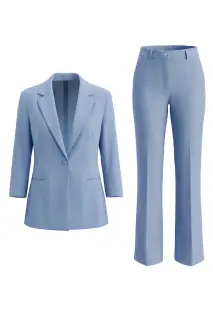 Zapaka Dusty Blue Notched Lapel One Button Slim Fit Long Women Suit $125 Shop at Zapakaaffiliate link
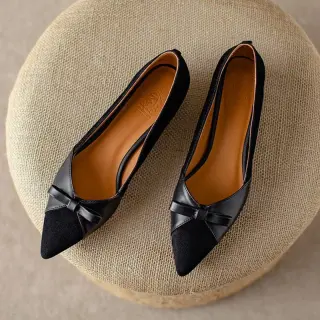 CHIKO Ieasha Pointy Toe Block Heels Pumps Shoes $105 Shop at CHIKOaffiliate link
What business professional attire means
Indeed, the job site, defines it this way: "Business professional is a traditional form of attire used in more conservative settings". Its list: "well-fitted, dark-colored suits (such as charcoal or navy), ties, pantsuits", and tops that are "button-down shirts or blouses (in colors like white or light blue) and a blazer." It names the places you will meet it: "Professions such as finance, government and law".
West Texas A&M University's career guide gives it its rank: "Business professional attire is the most formal workplace dress code". And FashionBeans has the shortest version for half the population: "Put simply, business professional attire for men calls for a suit and tie."
The same clothes travel under several names. Wikipedia's article on the business suit as a dress code says it "is also known as international standard business dress, business professional or business formal." The University of Washington's business school tells MBA students that the code is "Referred to as 'Business Formal', 'Business Professional', or 'Business Attire'", and adds a useful detail: "White shirts and blouses are most formal."
The checklist
| Women | Men | |
|---|---|---|
| Suit | Matching pantsuit or skirt suit, or a tailored dress with a jacket, in navy, charcoal or another dark neutral | Matching two-piece suit in navy or charcoal, single-breasted |
| Shirt | Blouse or shell in white, ivory or light blue, not sheer, modest neckline | Dress shirt in white or light blue |
| Neck | Nothing required; a simple necklace or scarf | Silk tie, darker than the shirt, solid or small pattern |
| Hem and fit | Skirt at the knee; pants to the top of the shoe | Pants with one small fold at the shoe; jacket sleeve shows a little cuff |
| Shoes | Closed-toe pumps or flats, heel up to about 3 inches | Black or dark brown leather oxfords or derbies, polished |
| Legs | Sheer hosiery with a skirt in conservative offices | Dark socks that match the pants and cover the calf |
| Extras | Small earrings, a watch, a structured bag | Leather belt matching the shoes, a plain watch |
| Leave out | Open toes, sleeveless without a jacket, loud prints | Loud ties, sneakers, a suit jacket with different pants |
Business professional attire for women
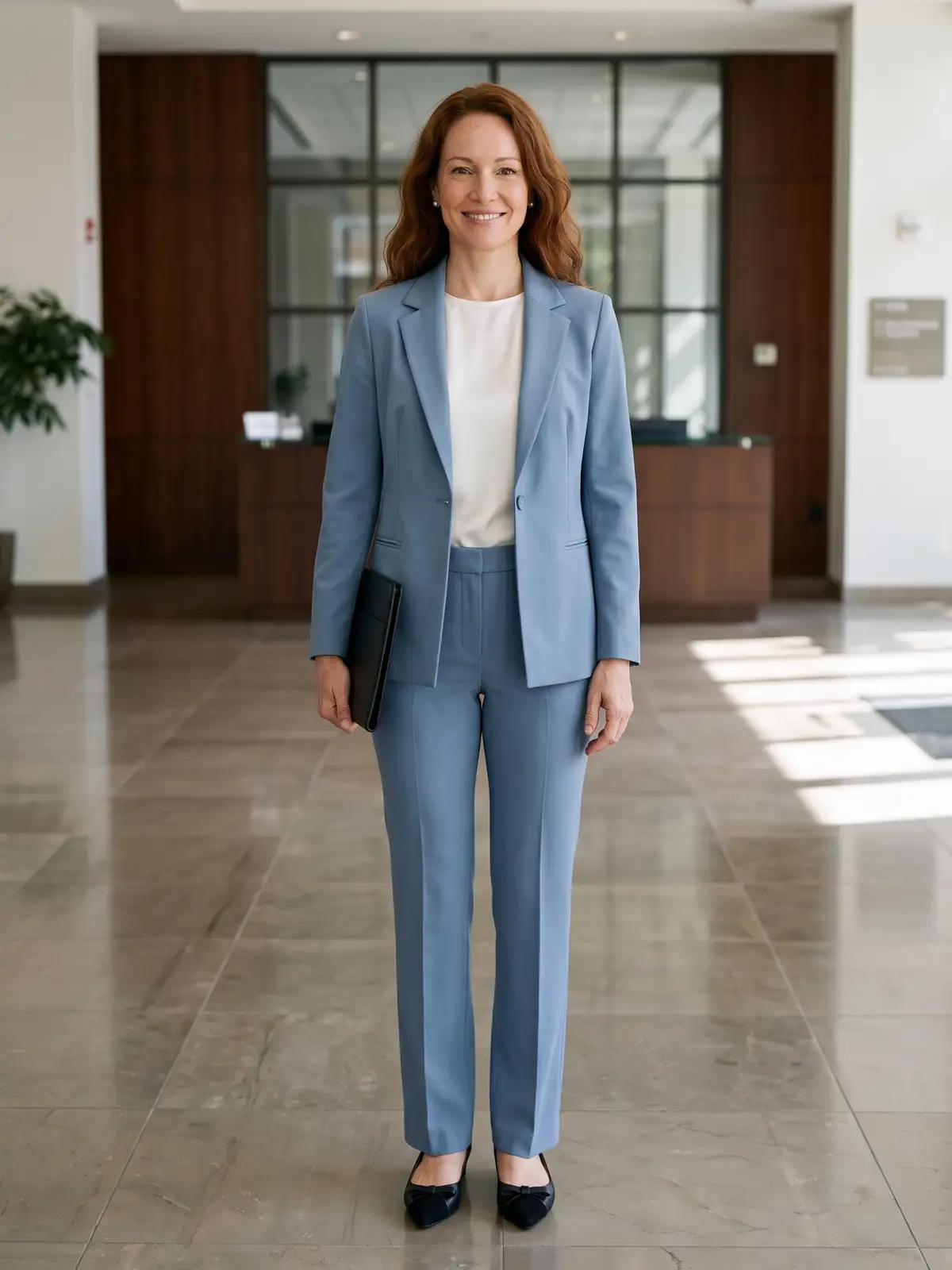
The outfit at the top of the page is the form most offices expect now: a pantsuit. Yale's career office writes that "Skirt and pant suits are both appropriate." Corporette, the long-running workwear blog for women in law and finance, agrees with one reservation: "in all but the most conservative of places a pantsuit is usually fine."
The suit is Zapaka's two-piece in dusty blue (US$125): a single-button jacket with notched lapels, worn buttoned, and straight pants. Under it is a plain white blouse with a round neck. The shoes are CHIKO's Ieasha pumps (US$105), black, pointed, with a small bow and a low block heel.
One thing about it is not by the book, and it is the color. Yale's advice is: "If you wear a suit, choose darker colors, such as dark grey or navy." Northwestern asks for a "two-piece suit in a neutral color (gray, navy, or black)." Dusty blue is lighter than all of those. It is correct for a business professional office from spring to early fall and for most client meetings, and I would not wear it to a courtroom or a first interview at a bank. For those, take the same cut in navy or charcoal.
Skirt length, heels and hosiery
These are the three points where career centers write numbers down, and they do not all write the same ones.
Skirt length. NC State's business school: "Skirts knee length". The University of Memphis allows a little less: "Skirt should be no shorter than 1 inch above knee cap". The retailer C&A's guide says the same thing for dresses: "Skirts and dresses should reach the knee."
Heel height. Penn State's engineering career office says to avoid anything with a heel higher than two inches. Kansas State: "Flats or low heels up to 2 inches are appropriate." The University of Washington allows "Heel height from 1-3 inches". Gardner-Webb University goes highest: "Never go higher than 4 inches". Two inches satisfies every one of them, and flats are accepted too. Anne Klein's guide: "A classy pair of flats will work in both formal and casual business offices."
Hosiery. This is the rule that has changed most. The University of Memphis still writes "Always wear pantyhose", and Gardner-Webb says "Hosiery must be worn with a skirt suit." Northwestern softens it: "It is recommended to wear hosiery with a dress or skirt." Corporette's current position is that hosiery marks the top of the scale and is no longer the price of entry: "(The most formal look is always going to be nude-for-you pantyhose plus a skirt suit.)" In a courtroom or a conservative interview, wear sheer hosiery with a skirt. In most offices it is now your choice. (Pantyhose is the American word; in the UK they are tights.)
The dress with sleeves
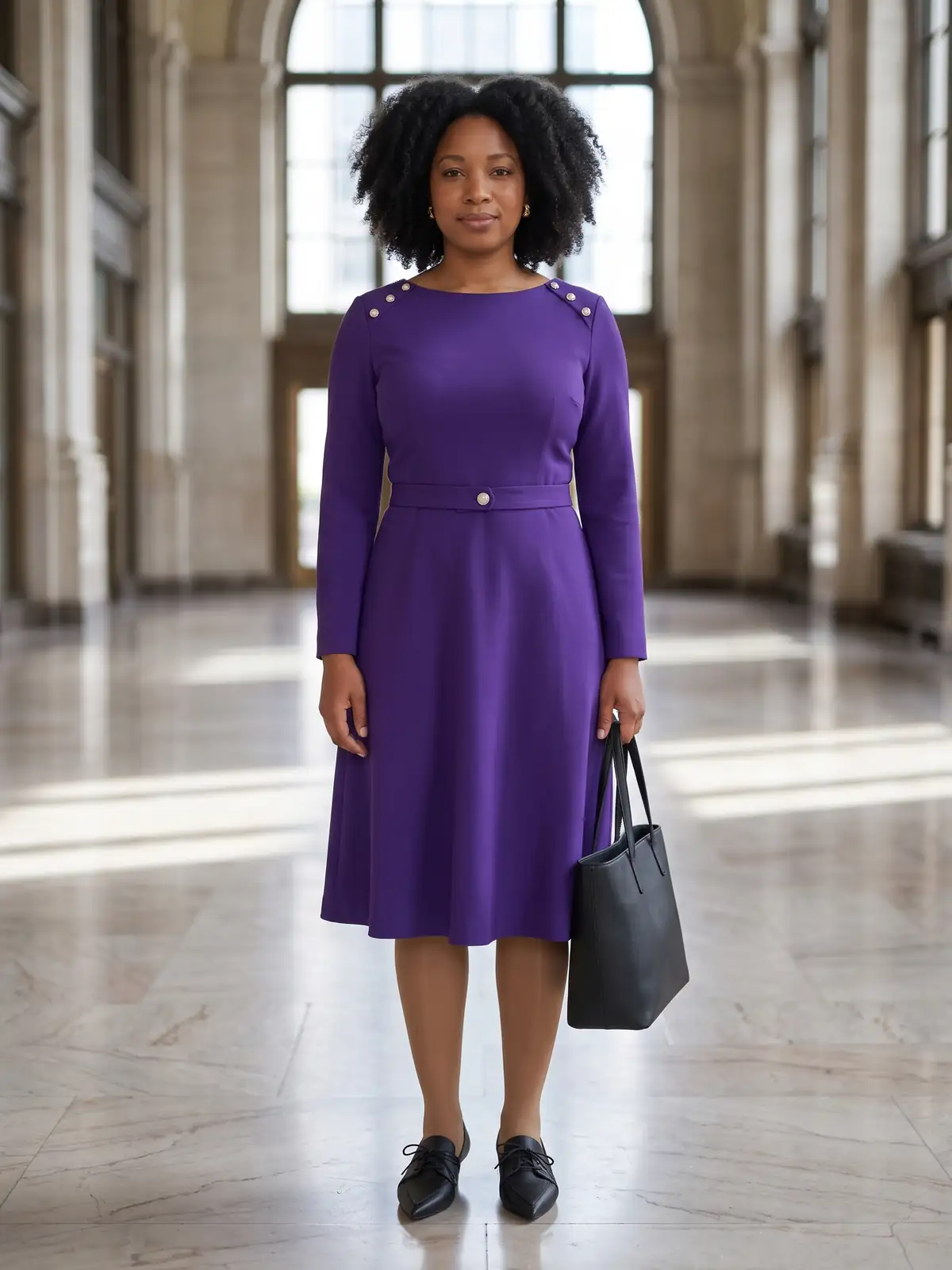
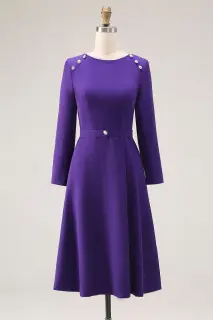 Zapaka Purple A Line Boat Neck Long Sleeve Work Dress $135 Shop at Zapakaaffiliate link
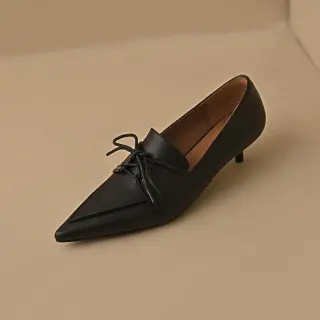 CHIKO Coralee Pointy Toe Kitten Heels Oxfords Shoes $109 Shop at CHIKOaffiliate link
A dress counts when it is tailored, covers the shoulders and reaches the knee. Harvard's career office describes interview dress as "a suit or dress/set with a jacket." This one is Zapaka's A-line work dress in purple (US$135), with a boat neck, long sleeves, a matching belt and a hem below the knee. Because it has sleeves it does not need a jacket to be covered, though adding a dark blazer moves it up to the level of a suit. The shoes are CHIKO's Coralee (US$109), black pointed lace-up oxfords on a kitten heel, and the bag is a structured black tote.
Purple is a jewel tone, not a neutral. It fits offices that say business professional and mean "look like you could see a client today". For the strictest rooms, the same dress in navy or black is the choice. On black for women the schools are relaxed: NC State's guide says black is "OK for skirt suits and dresses".
Sleeveless dresses and tops are the other question. Luxe Digital's guide puts it plainly: "Avoid sleeveless dresses, unless paired with a blazer or jacket." Corporette's advice is that "you should know your office when it comes to bare arms." Keep the jacket on until you do.
Business professional attire for men
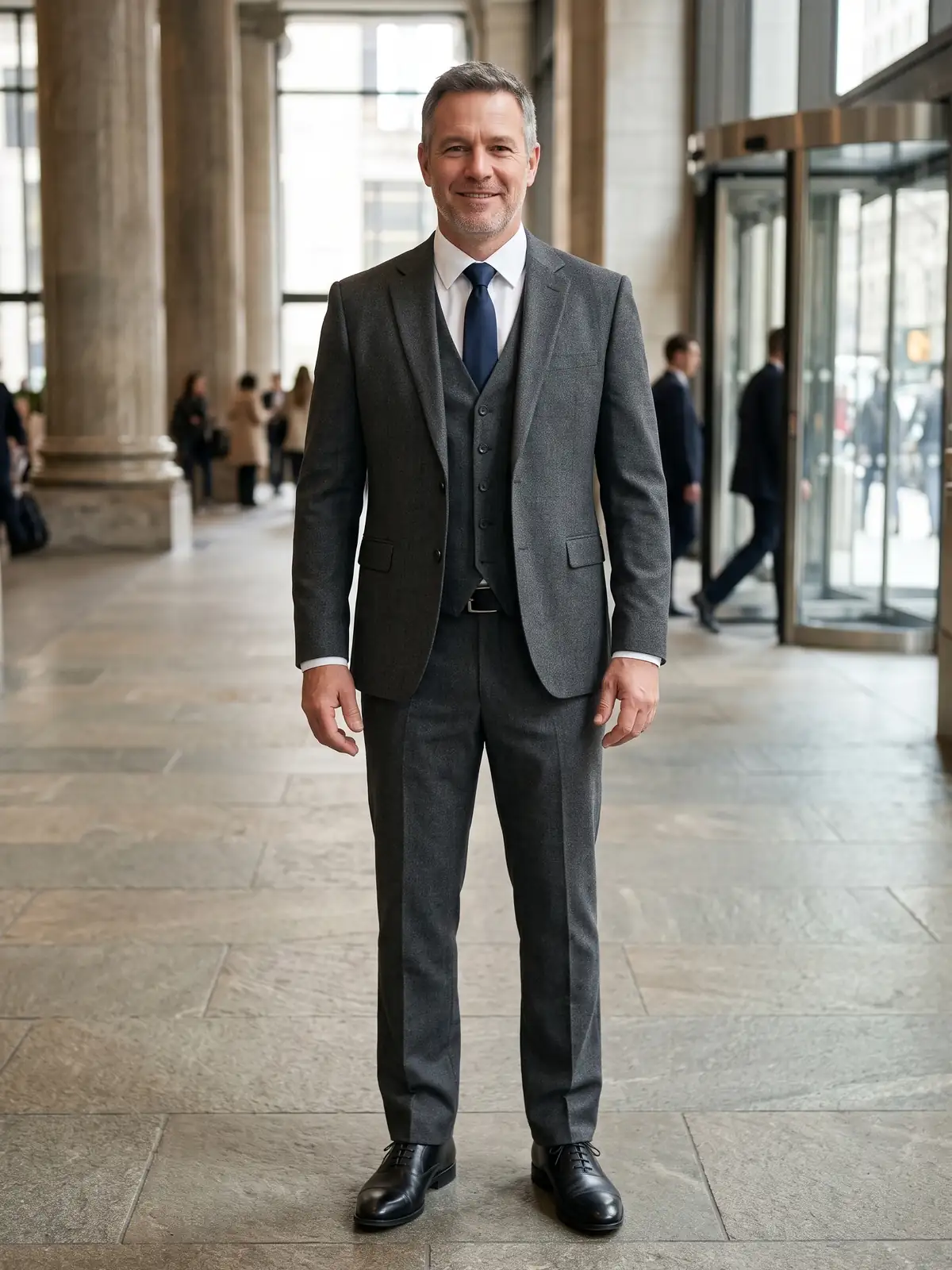
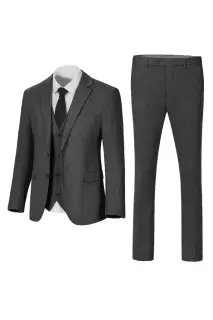 Zapaka Dark Grey Notched Lapel Single Breasted 3-Piece Men's Wedding Suits $119 Shop at Zapakaaffiliate link
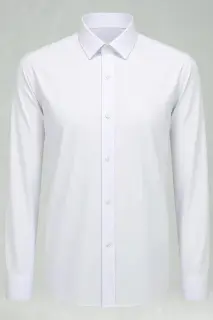 Zapaka White Classic Solid Point Collar Slim Fit Men's Suits Shirt $39 Shop at Zapakaaffiliate link
A suit and tie, and the suit is navy or charcoal. Gardner-Webb's list reads: "Well pressed and tailored black, navy, or gray suit." The Modest Man: "You want solid suits in black, charcoal, or navy." Eton, the Swedish shirtmaker, asks for "classic, conservative hues–think charcoal, navy, or black".
This is Zapaka's dark gray three-piece (US$119): a single-breasted jacket with notched lapels, a matching vest and pants. The shirt is Zapaka's white point-collar dress shirt (US$39). The tie is a plain navy silk and the shoes are black cap-toe oxfords; neither is sold by the shops we work with, so they are described here and not linked. Charcoal with a white shirt, a navy tie and black shoes is the most conservative combination a man can wear to work, and nothing in it will be noticed, which is the goal.
One caution about the vest (a waistcoat, in the UK). NC State's interview guide lists three-piece suits among its don'ts. For an interview or a first day, leave the vest at home and wear the same suit as a two-piece. Once you know the office, the vest is a good way to stay dressed with the jacket off.
Shirt, tie, shoes and socks
Shirt. Sven Raphael Schneider of Gentleman's Gazette: "The shirt should be white or light blue or maybe a pastel color". NC State is narrower: "With ties, use white or light blue shirts".
Tie. Expected. The VOU's guide: "A tie is normally expected with business professional unless your employer says otherwise." Rampley & Co, a British accessories maker, gives the rule for choosing one: "the tie must be darker than the shirt."
Shoes. Black is the formal default and dark brown is the accepted second choice. Schneider: "While black is still the color of choice for business wear, you can also wear brown shoes." SuitShop: "Choose leather oxford or derby shoes in black or brown, depending on the color of your suit." Kansas State adds the detail people forget: "Wear brown or black dress shoes; match your belt and shoes."
Socks. Penn State: "Dark socks that coordinate with your suit". Schneider says to "match them with your pair of pants."
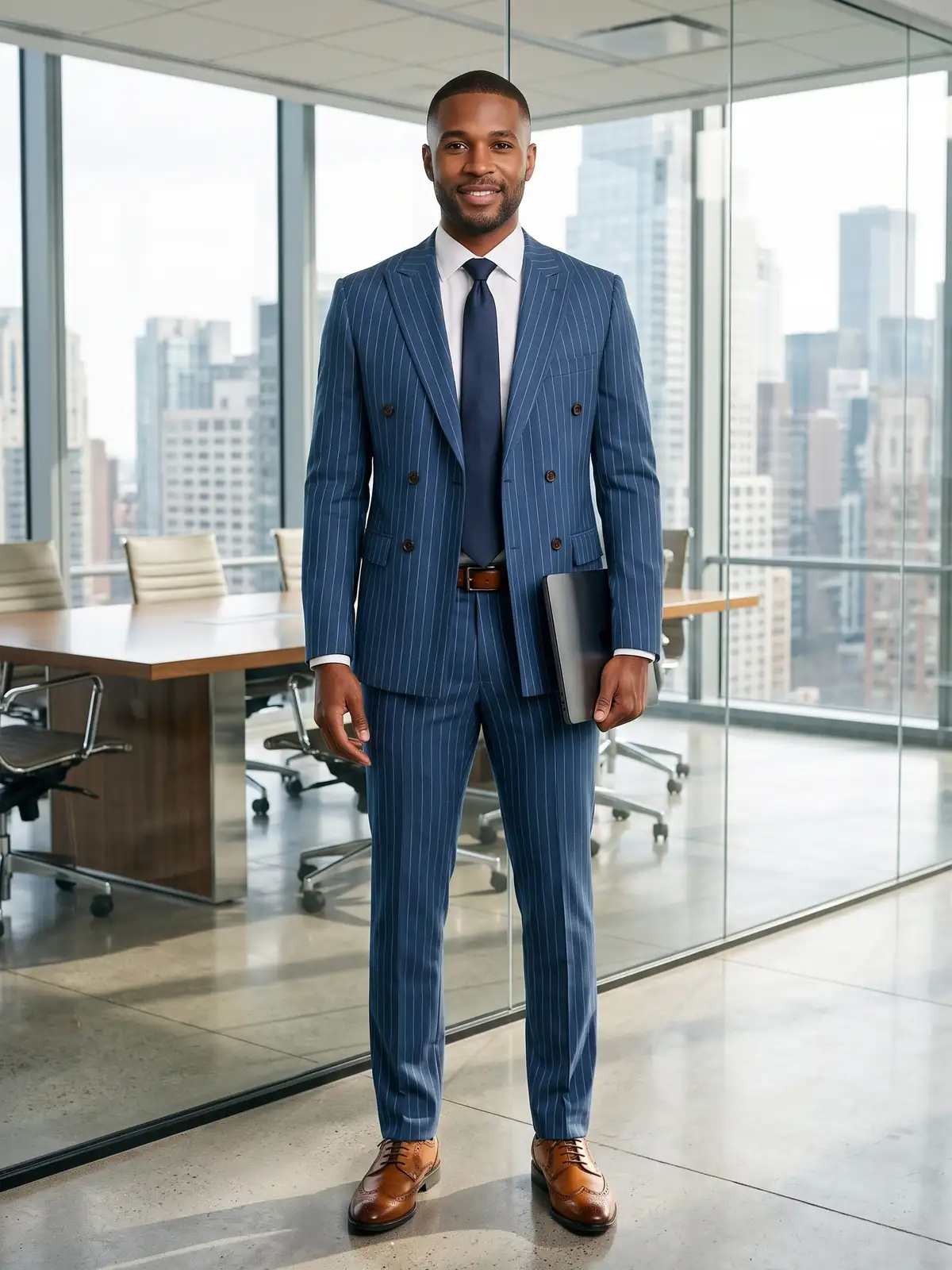
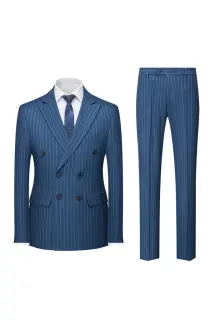 Zapaka Navy Pinstriped Peak Lapel 2 Piece Men's Formal Suits $126 Shop at Zapakaaffiliate link
- Zapaka White Classic Solid Point Collar Slim Fit Men's Suits Shirt $39 Shop at Zapakaaffiliate link
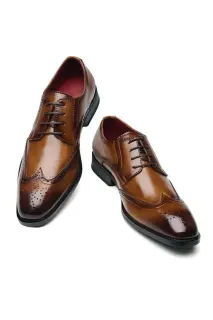 Zapaka Brown Lace-Up Leather Men's Shoes $89 Shop at Zapakaaffiliate link
The second outfit shows the brown-shoe option and a pattern. The suit is Zapaka's pinstriped two-piece (US$126), sold as navy and closer to a medium blue, double-breasted with peak lapels, with the same white Zapaka shirt (US$39), a dark navy tie and Zapaka's tan wingtip brogues (US$89). A pinstripe is a traditional business cloth. The double-breasted cut and the tan shoes both make this a more confident outfit than the gray one: right for a client presentation, a little loud for a courtroom. With black oxfords it moves a step back toward the conservative end.
Can you wear a black suit?
For women, yes; the schools say so. For men, the sources split.
- Yes. SuitShop, The Modest Man, The VOU, Eton, Gardner-Webb and Northwestern all list black among the acceptable suit colors.
- No. Art of Manliness: "Black suits are made to be worn at night, while most business is conducted during the day." Rampley & Co: "Avoid black for business dress."
- The written rules. The Supreme Court of the United States, in its guide for lawyers arguing before it: "Appropriate attire for counsel is conservative business dress in traditional dark colors (e.g., navy blue or charcoal gray)." NC State calls navy and dark gray "preferable".
A black suit will not get you sent home from an office. If you are buying one suit for work and interviews, though, buy navy or charcoal; both are accepted everywhere, and black is accepted in most places. If your one suit is already black, our guide to what color shoes with a black suit covers how to wear it.
The gray areas, in one table
| Question | The stricter answer | The looser answer |
|---|---|---|
| Black suit (men) | Art of Manliness, Rampley & Co: no | SuitShop, The Modest Man, Gardner-Webb: yes |
| Hosiery with a skirt | University of Memphis: "Always wear pantyhose" | Northwestern: "recommended"; most offices: optional |
| Heel height | Penn State, Kansas State: 2 inches | Gardner-Webb: up to 4 inches |
| Open-toe shoes | NC State and Penn State list them as don'ts | Corporette: peep toes are "often questionable at the most conservative offices" |
| Sleeveless | Only under a jacket (Luxe Digital) | "Know your office" (Corporette) |
| Brown shoes (men) | Black only at the boardroom level (Duke) | Brown accepted (SuitShop, Kansas State, Gentleman's Gazette) |
| A tie | Courts require one | Some offices accept a suit with an open collar |
Business professional, business formal and business casual
| Dress code | Women | Men | Where |
|---|---|---|---|
| Business formal | Dark suit, hosiery, closed pumps; a long dress at an evening function | Dark suit and tie, black oxfords; a tuxedo at an evening function | Boardrooms, award dinners, the most conservative firms |
| Business professional | Pantsuit, skirt suit or dress with a jacket | Suit and tie | Law, finance, government, client meetings, interviews |
| Business casual | Tailored pants or skirt, blouse or knit, blazer optional | Chinos or wool pants, collared shirt, blazer optional, no tie | Most offices |
Many sources treat the first two as one code; Wikipedia and the University of Washington do. Those that separate them put business formal one notch higher. Indeed: "Business formal is the most formal standard of workplace dress." The Modest Man: "Business formal includes only dark-colored suits and ties." The Manual places business formal "just above cocktail attire and just below black tie." The VOU describes business professional as "a slightly broader code that allows tailored separates."
The line with business casual is easier to see: the suit. Once the jacket and pants no longer match, or the tie is gone and the shoes are loafers, you have moved down a level. That code has its own guide, business casual, with separate pages on business casual for men and business casual for women. Outside the office the word formal means something else again: see formal attire for men.
Where it is still required
Courtrooms. Courts are the one workplace where the dress code is a written rule with a judge behind it. Clark County District Court in Washington State: "Male attorneys shall wear coats and ties." Nebraska's court rules: "Attorneys shall be attired in business wear while present in court, whether in the courtroom or in chambers." The US Bankruptcy Court for the Northern District of Alabama asks women for a "suit, dress with long sleeves or jacket". A federal judge's dress code in the Eastern District of Texas spells out what does not count: "A coat and tie with jeans or other denim pants are not acceptable." Most of those rules are written for lawyers; if you have a hearing of your own, see what to wear to court.
Finance, consulting, law and government. Duke University's career guide lists where traditional business attire is "Commonly Found": finance, banking, consulting, law and government. Even there it has loosened. In March 2019 Goldman Sachs announced a "firm-wide flexible dress code", with a reminder that "All of us know what is and is not appropriate for the workplace".
Client meetings and ceremonies. In offices that are business casual from Monday to Friday, the suit comes back for the days that matter: a pitch, a board presentation, a hearing, a swearing-in.
Business professional attire for an interview
A suit is still the safe answer. Harvard's career office: "For interviews, unless instructed otherwise by the employer, we recommend business formal". Duke gives the rule in four words: dress "up one level" from what the office wears. Our interview outfit guide applies it industry by industry. For a recruiting event, our guide to career fair outfits by field covers the day in person and online.
The best data is from Robert Half. In September 2019 it published a survey of more than 2,800 senior managers at US companies: "37% of respondents said candidates should always wear a formal suit when interviewing for a job", and 36 percent said it depends on the position. The answer changes with the industry: "Suits are more often preferred in finance, insurance and real estate (46%) than construction (28%) or retail (26%)." It changes with the city too. In Miami, New York and Washington, 54 percent of managers said a suit should always be worn.
For a video interview the advice is the same. Indeed: "Dress as you would for an in-person interview." Spark Hire, a video-interview platform, adds a note for the camera: "try to stick to solid colors (avoid neon) and subtle patterns to avoid distracting the interviewer."
How rare the suit has become
- In Gallup's August 2023 poll of US workers, 3 percent said business professional clothes were their norm, down four points from 2019, and 41 percent said business casual.
- In YouGov's November 2023 survey of British workers, 7 percent said they wear business attire. Among those in higher managerial and professional jobs the figure "still only hits 13%".
- In Australia, a SEEK survey of 4,800 people put "Formal business (e.g. business suit and tie for men; business suit or business style dress for women)" at 11 percent.
- A June 2025 survey of 1,000 US hybrid workers for IWG found "two-thirds of employees (67%) saying their dress code has relaxed in recent years."
There is a small movement the other way. In September 2025 the British trade site TheIndustry.fashion reported that John Lewis's own-brand suit sales were "up 68% year on year" and that Marks & Spencer had seen an "18% jump in suit sales over the past two years", as more people returned to offices.
So a suit is no longer what most people wear to work. It is what they wear when the day is important, and that is why it is worth getting right.
Summer and winter
The code does not take a season off. C&A's guide: "it typically applies year-round, with no exceptions for summer or winter." What changes is the cloth. In summer, lightweight wool and half-lined jackets; The Modest Man notes that "Usually, a lighter-colored suit is allowed at the office during the summer." In winter, C&A suggests "thicker, warmer materials such as virgin wool or tweed", with a wool overcoat long enough to cover the jacket. If you wear a dress with tights in winter, our guide to how to wear tights with dresses shows which weights look right with which shoes.
In the United Kingdom, Canada and Australia
In Canada the term is used as in the US. In Britain and Australia you are more likely to read "business attire", "corporate wear" or, on an invitation, "lounge suit", which Gentleman's Gazette translates as "Basically, a dark suit with a necktie." The British employment law firm DavidsonMorris describes business professional as the level that "represents the most formal level of workplace attire", and reminds employers that "Office dress codes must comply with UK equality and employment law."
Some words change. American pants are British trousers, a vest is a waistcoat, and pantyhose are tights. The suit is the same.
Questions people ask
What is business professional attire?
A matching suit in a dark color, a white or light blue shirt or blouse, closed leather shoes and quiet accessories. Men wear a tie. Women may wear a pantsuit, a skirt suit or a tailored dress with a jacket.
What is the difference between business professional and business casual?
The matching suit. Business professional requires one, with a tie for men. Business casual takes the suit apart: pants or a skirt with a shirt, blouse or knit, a blazer if you like, and no tie.
Is business professional the same as business formal?
Often, yes; many employers and schools use the terms for the same clothes. Where they are separated, business formal is slightly stricter: only dark suits, black shoes, and evening dress at formal functions.
Can I wear a black suit for business professional?
Most guides say yes. Traditional menswear sources say no, because black is an evening color, and the US Supreme Court's guide names only navy and charcoal. Navy or charcoal is accepted everywhere.
Do men have to wear a tie?
Yes, unless your employer says otherwise. Courts require one in writing. A suit with an open collar is business casual at its dressiest.
Do women have to wear pantyhose?
In most offices, no. Some university career guides and conservative workplaces still expect sheer hosiery with a skirt, and it remains the most formal option. With a pantsuit the question does not arise.
Can women wear pants for business professional?
Yes. Yale's career office says skirt and pant suits are both appropriate, and Corporette calls a pantsuit fine in all but the most conservative places.
What shoes go with business professional attire?
For women, closed-toe pumps or flats with a heel of about 2 to 3 inches at most. For men, black or dark brown leather oxfords or derbies, with a belt in the same color.
Sources
- Indeed: Guide to Business Attire (updated July 30, 2026)
- Wikipedia: Informal wear (business suit)
- West Texas A&M University: Professional Dress Style Guide
- FashionBeans: Business Professional Attire for Men
- University of Washington Foster School of Business: MBA Career Attire Tips
- NC State Poole College of Management: Attire Guide
- Penn State College of Engineering: Dress for Success
- University of Memphis Career Services: Dress for Women
- Gardner-Webb University: Business Attire Guide
- Northwestern Career Advancement: Dressing for the Interview
- Harvard Mignone Center for Career Success: Professional Attire Guide
- Yale Office of Career Strategy: Interview Attire
- Kansas State University Career Center: Dress to Impress
- Duke University Career Hub: Attire Guide
- Corporette: Guide to Basic Women's Suiting
- Corporette: Pantyhose for Work
- Corporette: What Not to Wear to the Office
- Corporette: Sleeveless at the Office
- Luxe Digital: Business Professional Dress Code for Women
- C&A: Business Professional Dress Code
- Anne Klein: Professional Women's Attire
- Gentleman's Gazette: Business Attire Dress Code
- Gentleman's Gazette: Lounge Suit Dress Code
- Art of Manliness: The Suit Ladder
- The Modest Man: Business Professional Attire
- The VOU: Business Professional Attire for Men
- SuitShop: Business Casual vs Business Professional Attire
- Eton: Business Formal Dress Code
- Rampley & Co: How to Dress for Conservative Business
- The Manual: Business Formal Dress Code
- Supreme Court of the United States: Guide for Counsel, October Term 2024
- US District Court, Eastern District of Texas: Appropriate Courtroom Attire
- Clark County District Court, Washington: Attire of Counsel and Litigants
- Nebraska Judicial Branch: Rule 3-6
- US Bankruptcy Court, Northern District of Alabama: Courtroom Attire and Conduct
- NBC News: Goldman Sachs rolls out a flexible dress code (March 5, 2019)
- Robert Half: Are Suits Still Suitable for Job Interviews? (September 10, 2019)
- Spark Hire: What to Wear to a Video Interview
- Gallup: Casual Work Attire Is the Norm for U.S. Workers (September 8, 2023)
- YouGov: Just 7% of workers wear a suit to work (November 14, 2023)
- SEEK: The right fit, how what you wear affects work
- IWG: Workwear Reimagined report (July 30, 2025)
- TheIndustry.fashion: Retailers witness surge in demand for men's tailoring (September 29, 2025)
- DavidsonMorris: Office Dress Code
The images in this guide are AI-generated: real garments from our catalogue, shown on our own recurring models and made from the shops' photos of each piece. They are not photographs of real people. Prices are the ones the shops showed on November 21, 2026 and can change. Wear It On Me earns a commission when you buy a garment through an affiliate link in a guide (the links are marked, and it costs you nothing extra); a commission never decides what we recommend. How we make these guides.