Best walking shoes for women: how to choose, and 8 pairs from 7 brands
What makes a good walking shoe, the 1-2-3 test podiatrists use, where the experts disagree on cushioning and stability, and eight pairs from $58 to $175.
Wear It On Me earns a commission on garments bought through affiliate links in our guides. That never decides what we recommend. Details.
The best walking shoes for women are light, cushioned enough for your weight and your miles, firm at the heel and flexible at the ball of the foot. In practice that means most good daily running shoes: the HOKA Clifton 10, the ASICS Gel-Cumulus 27 and the adidas Supernova Rise 3 are all running shoes that lab and editor reviewers call good walking shoes. Two kinds of women should look further: those who want maximum cushion for long days (the HOKA Bondi 9), and those who feel better with a stability shoe (the Mizuno Wave Inspire 21).
Walking is the most common exercise in the country. In 2022, "58.7% of adults walked for leisure in the past 7 days", according to the CDC's National Center for Health Statistics, and "women (60.5%) were more likely than men (56.9%) to walk for leisure." Feet are the price of it: in a 2014 survey of 1,000 adults for the American Podiatric Medical Association, "the majority of Americans say they have experienced foot pain (77 percent)", and half said foot pain had kept them from doing something.
Below: what to look for, how to fit a pair, where the experts disagree, and eight pairs from seven brands, each shown on one of our regular models. All eight are sold by eFootwear, and each picture has the shop link and the price we last checked under it.

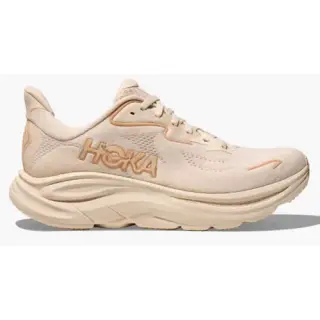 Hoka Clifton 10 Women's Vanilla, Birch $113.99 Shop at eFootwearaffiliate link
The HOKA Clifton 10 is the pair I would buy first: neutral, light for its cushioning at about 8 oz in a women's size, with an 8 mm drop by HOKA's figure. Doctors of Running, whose reviewer is a physical therapist, says the Clifton line is "popular for long hours of prolonged standing and walking", and a Running Warehouse tester wrote: "It's quite comfortable to walk in or if I must stand for extended periods of time." It also carries the APMA Seal of Acceptance. $113.99 in vanilla and birch.
What makes a good walking shoe
Walking lands on the heel and rolls forward to the toes, and the shoe should help that roll rather than fight it. Harvard Health puts it in two lines: "The shoe should bend easily at the ball of the foot", and "Stay away from shoes with big bulky heels, which can hinder the natural rolling foot motion of walking."
The American Podiatric Medical Association gives a three-step test you can do in the store:
| Step | What to do | What you want |
|---|---|---|
| 1. Heel | "Press on both sides of the heel area" | The heel is stiff "and won't collapse" |
| 2. Toe | Bend the front of the shoe | It bends, but is not floppy: "it shouldn't be too stiff and inflexible either" |
| 3. Middle | "Try twisting the shoe" | "it shouldn't twist in the middle" |
Dr. Karl Schweitzer, an orthopaedic foot and ankle surgeon at Duke, adds a quick check of his own: "If you can bend your shoe in half, it's probably too flexible."
Running shoe or walking shoe?
Harvard Health says either works for walking: "You can even wear a running shoe for walking because both are designed for forward motion." The rule only goes one way: "don't wear walking shoes to run, as they aren't made to handle the higher impact." That is why six of the eight pairs below are sold as running shoes. The other two, the New Balance 608v5 and the Reebok Classic Leather, are walking and city shoes, and I say below what they are good for and what not.
The APMA seal
The American Podiatric Medical Association's Seal of Acceptance "recognizes footwear found to promote good foot health", and each product is "reviewed by a committee of APMA podiatric physicians." It is worth knowing what it is not. APMA writes that the seal "is not an endorsement", that companies apply and pay for each product, and that it "does not test all products on the market." A shoe without the seal has simply not been submitted. On APMA's women's list, which we read on November 5, the Clifton 10 and the Bondi 9 have it; the ASICS Gel-Cumulus 28 has it but not the 27 below.
How to fit a pair
- Shop late. "Because your feet tend to expand by the end of the day, it's best to try on new shoes when your feet are at their largest" (Harvard Health). APMA says the same: "Measure both feet—late in the day—and shop for the larger foot."
- Wear your socks. Dr. Joy Rowland, a podiatrist at Cleveland Clinic, suggests wearing "the sock they typically use while working out".
- Leave room in front. Harvard says "at least one finger's width between your longest toe and the front of your shoe"; Duke's Schweitzer says "a half-inch". A podiatrist at Phelps Health, Dr. Chris Johnson, says a thumb's width, measured "while standing".
- Trust the store test. Dr. Jordan Metzl, a sports medicine physician at HSS, says to choose the pair that "makes the pain go away when you're walking around the store."
If your feet are wide, read our guide to running shoes for wide feet before you order: the Mizuno below is a Wide D, the Clifton and the Bondi also come in wide, and the width letters work differently for women and men.
Where the experts disagree
| Question | One answer | The other answer |
|---|---|---|
| Is more cushion better? | Thick cushioning can "lessen impact per step and absorb impact" (Dr. Anne Holland Johnson, foot and ankle surgeon, HSS) | In a 2018 Scientific Reports study, maximal shoes "amplify rather than attenuate impact loading" (running, not walking); Harvard: "don't assume that the more support and cushioning a walking shoe has, the better" |
| Stability shoe for flat feet? | Stability shoes "help to correct for overpronation" (APMA) | "matching shoe type to address pronation or supination doesn't prevent more injuries than wearing a neutral shoe" (Dr. Adam Tenforde, Harvard Health) |
| Rocker soles? | They help "when you're walking long distances since you use less energy to keep moving" (Dr. Bobby Pourziaee, podiatrist, NBC Select) | A 2021 review found "static balance control is reduced when rocker bottom shoes" are used, in people with diabetic neuropathy |
| When to replace? | "every 300 to 500 miles" (Harvard Health) | "after 600–800 miles of running or walking, or every 6–8 months" (APMA) |
| Break them in? | "A quality pair of shoes should feel good instantly; you should not have to break them in" (Dr. Chris Johnson, Phelps Health) | Wear them "for about two hours a day for a week" (Dr. Esther Jonas, Baylor Medicine) |
My reading: comfort in the store is the best guide anyone has found. The two big running-shoe studies, Nigg's "comfort filter" paper in the British Journal of Sports Medicine in 2015 and a Danish study of 927 new runners in 2014, both found pronation a weaker predictor of injury than the labels suggest, and both were about running. For walking, I would take a stability shoe if it feels better, not because a chart says so. On replacement, the honest answer is a range: count on somewhere between 300 and 800 miles, and replace sooner if the heel collapses when you do step 1 of the test.
Max cushion for long days
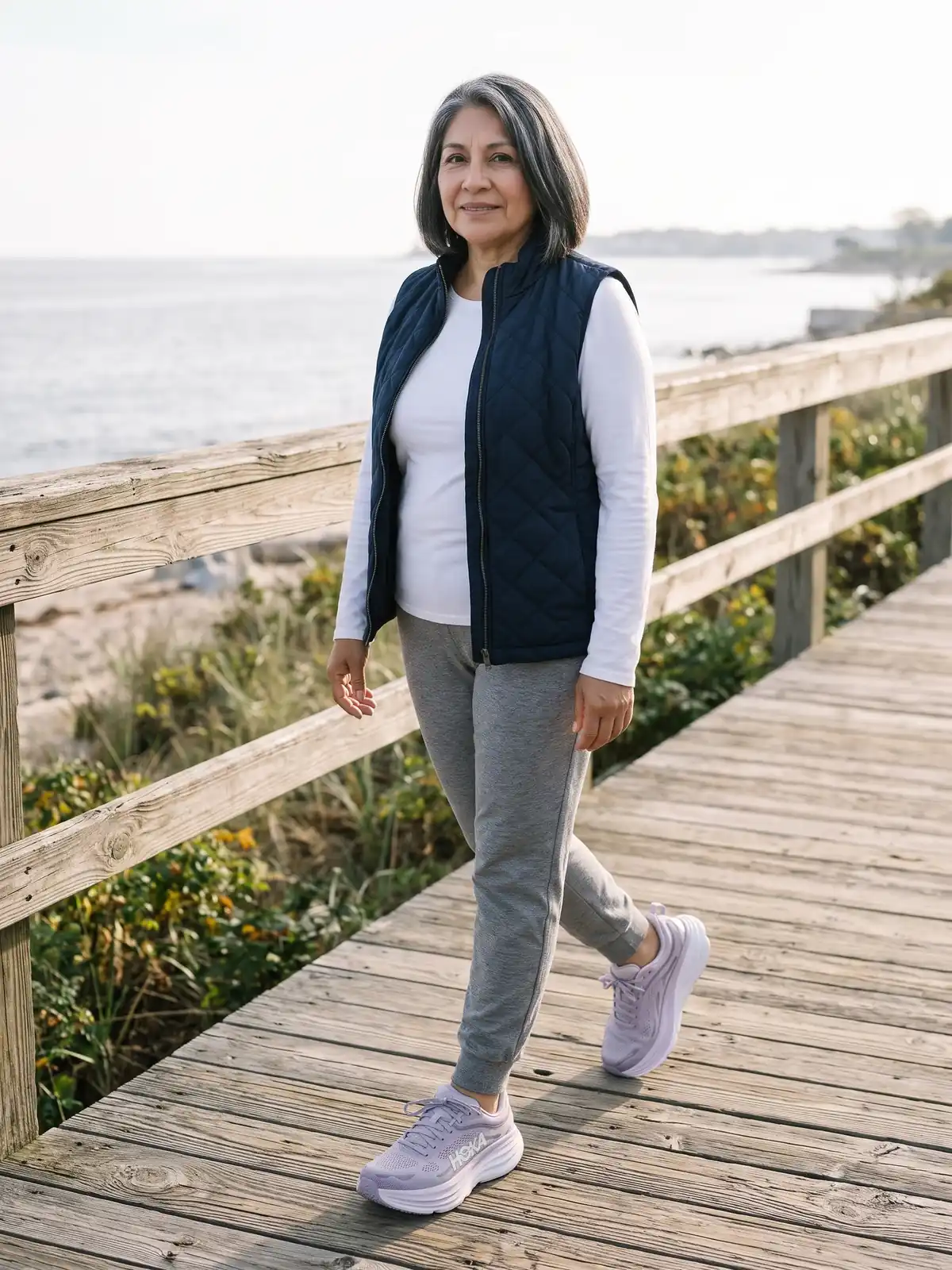
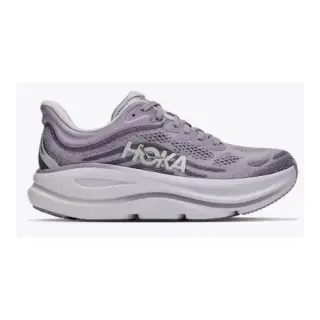 Hoka Bondi 9 Women's Mellow Lilac, Purple Fog $174.99 Shop at eFootwearaffiliate link
The HOKA Bondi 9 is the most cushioned pair here, and the one reviewers argue about. It carries the APMA seal, RunRepeat says it "Doubles as a walking shoe", and an NBC Select tester wrote: "These shoes feel like a cloud." The same NBC review lists "Lifts you off the ground" and "May feel unsteady for some" as cons, and RunRepeat calls it "heavy and clunky underfoot" and "Not for wide feet" in the standard width. Women's weight is 9.3 oz. I would choose it for long days on hard floors, and skip it if your balance is not what it was: that is where the tall stack works against you. $174.99 in mellow lilac. If your long days are at work, our guide to shoes for standing all day starts with the same shoe.
Everyday neutral pairs
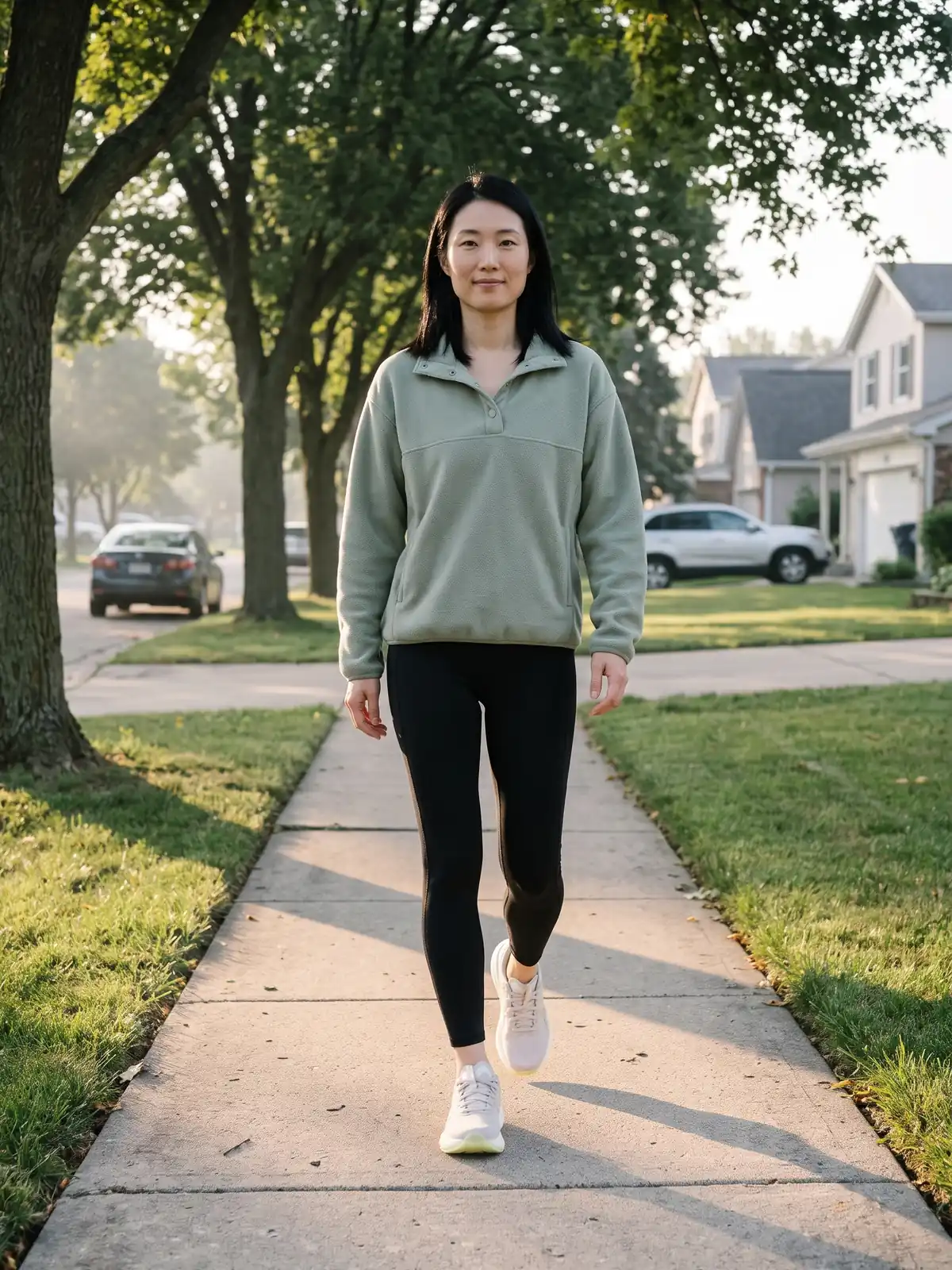
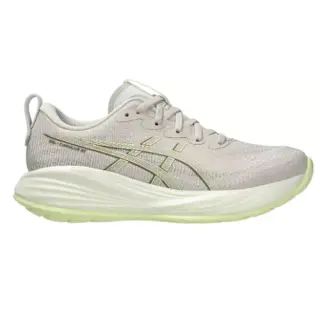 Asics Women's Gel-Cumulus 27 Running Shoes Mineral Beige, Huddle Yellow $79.99 Shop at eFootwearaffiliate link
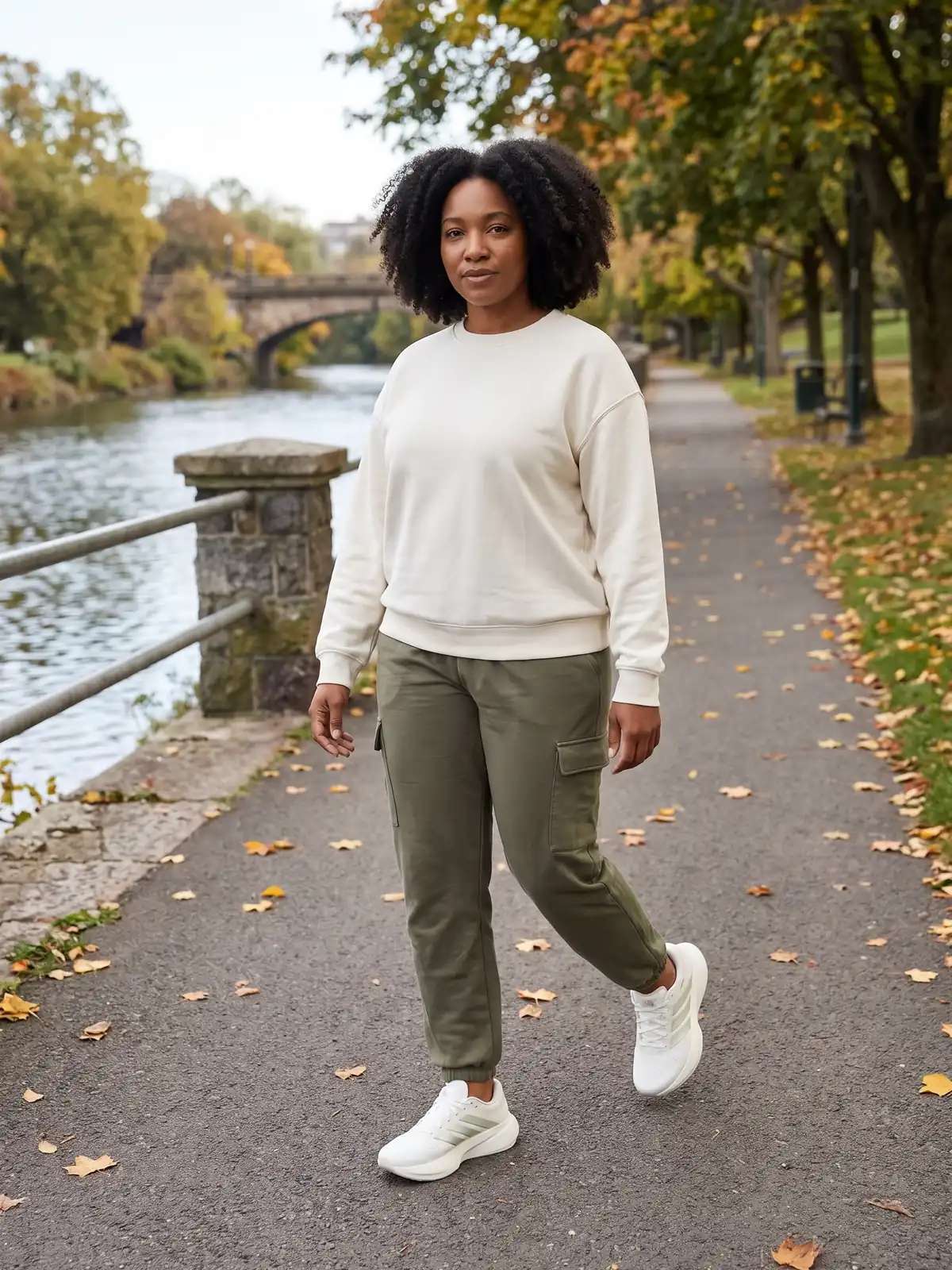
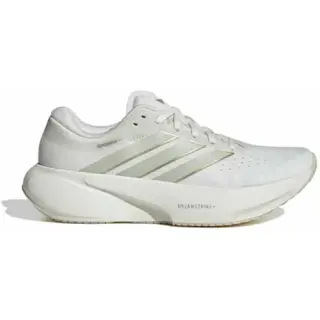 Adidas Women's Supernova Rise 3 Running Shoe White Tint, Halo Green, Thermal Chrome $99.99 Shop at eFootwearaffiliate link
The ASICS Gel-Cumulus 27 ($79.99) is the value pick among the classic trainers: neutral, 8.1 oz in a women's size, with an 8 mm drop by ASICS's figure. Doctors of Running answers the question directly: "Is This a Good Shoe for Walking: Yes". The catch is wear. The same reviewer was "already shredding through the outsole" at 45 miles, and RunRepeat flags "Outsole durability concerns". At $80, that may still be the right trade.
The adidas Supernova Rise 3 ($99.99) is the steadiest of the neutral pairs, with an 8 mm drop and 8.4 oz in a women's size. Doctors of Running calls it "a solid, dependable daily trainer" and says "It also works equally well for walking"; RunRepeat praises its "Crazy GOOD grip". It runs low over the toes ("the upper sits low across the toes"), so try it if you have tall toes or bunions.
Stability for flat feet
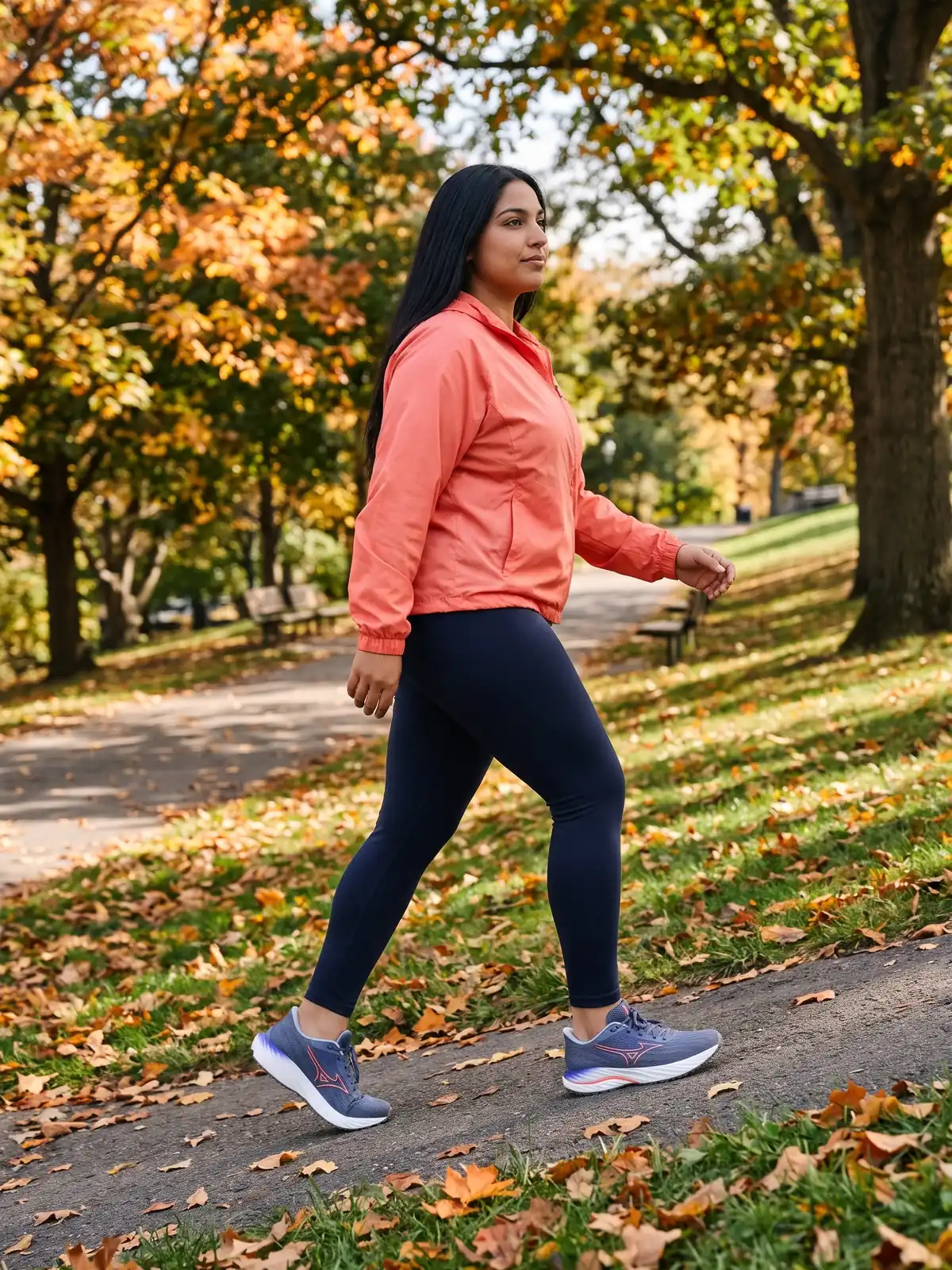
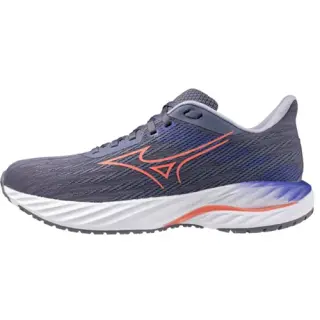 Mizuno Wave Inspire 21 Women's Wide D Running Blue Granite-Striking Coral $89.99 Shop at eFootwearaffiliate link
The Mizuno Wave Inspire 21 ($89.99, women's Wide D) is the stability pick: Doctors of Running calls it "moderate stability", "great for walking around", and says "The wider forefoot is really comfortable." Its drop is high at 12 mm, which RunRepeat says makes it a "Great choice for heel strikers", and most walkers are. If you have worn flat shoes for years, give your calves a few walks to get used to it.
A walking shoe for every day

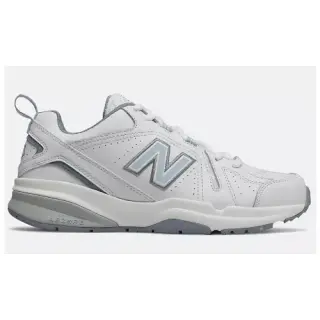 New Balance 608v5 Classic Trainer Women's White with Light Blue $60 Shop at eFootwearaffiliate link
The New Balance 608v5 ($60) is not a running shoe and does not try to be. It is a leather trainer with a firm heel and New Balance's ABZORB cushioning, and there is a slip-resistant version for work, sold in narrow, standard and wide (2A, B and D). RunRepeat tested it as a walking shoe and was blunt: "if you're looking for a light pair of shoes to walk around, this ain't it!" At 13.6 oz in their lab, it is the heaviest pair here, and RunRepeat warns against it for narrow feet. What you get is a stable, wipe-clean leather shoe at $60, which is why it is a fixture for errands, dog walks and long days at work. Our guide to shoes for nurses shows the slip-resistant version on a hospital shift.
Two pairs under $70
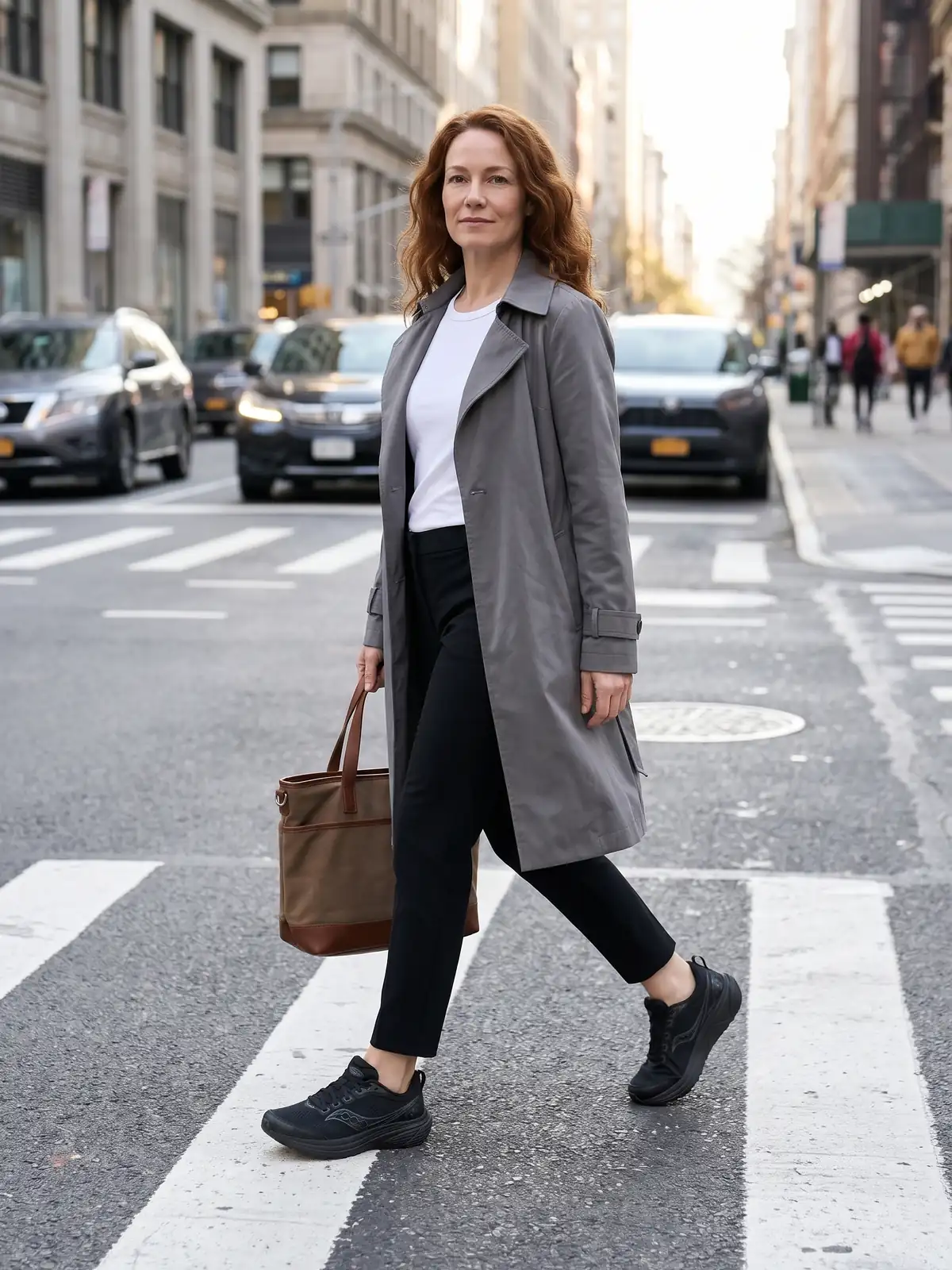
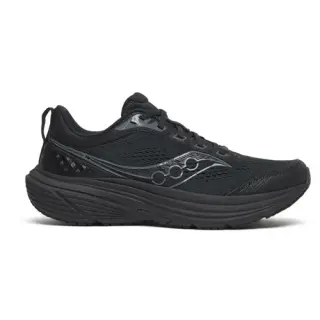 Saucony Cohesion 19 Women's Running Black, $69.99 Shop at eFootwearaffiliate link

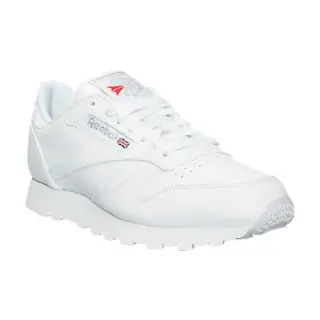 Reebok Classic Leather White, White, Pure Grey Women's Classic $69.99 Shop at eFootwearaffiliate link
The Saucony Cohesion 19 ($69.99) is the budget neutral pair. RTINGS, the only lab that has tested it, liked its "Impressively secure platform" and the heel cushioning, but found "Forefoot shock absorption is sub-par overall." I would buy it for short daily walks and the commute, not for long distances.
The Reebok Classic Leather ($69.99) is the city sneaker: the pair you wear for a day of errands and want to look like a sneaker, not a running shoe. RunRepeat found it can "feel super comfy on the foot, even when walking around for extended periods of time", with a secure heel, but also that the midsole "doesn't feel very well-cushioned underfoot", and it measured a 13.6 mm drop. It also says people "with wide feet and bunions should stay away." It is a good shoe for a few miles of town; for long walks, pick one of the pairs above.
The eight pairs side by side
| Shoe | Type | Drop | Women's weight | APMA seal | Price |
|---|---|---|---|---|---|
| HOKA Clifton 10 | Neutral, cushioned | 8 mm (brand) | about 8 oz | Yes | $113.99 |
| HOKA Bondi 9 | Neutral, max cushion | 5 mm (brand) | 9.3 oz | Yes | $174.99 |
| ASICS Gel-Cumulus 27 | Neutral | 8 mm (brand) | 8.1 oz | No (the 28 has it) | $79.99 |
| adidas Supernova Rise 3 | Neutral | 8 mm (brand) | 8.4 oz | Not this version | $99.99 |
| Mizuno Wave Inspire 21 | Stability, Wide D | 12 mm (brand) | 8.8 oz | Not listed | $89.99 |
| New Balance 608v5 | Leather walking trainer | 9.6 mm (lab) | 13.6 oz (lab) | Not listed | $60 |
| Saucony Cohesion 19 | Neutral, budget | 10.1 mm (lab) | not published | Not listed | $69.99 |
| Reebok Classic Leather | City sneaker | 13.6 mm (lab) | 11.4 oz (lab) | Not listed | $69.99 |
Brand figures are for a women's size; RunRepeat's lab often measures drops a few millimetres higher, and its lab weights do not always say which size or gender was tested. APMA seals are as listed on November 5, 2026. Prices are eFootwear's on the day we checked, for the colour shown.
What I wouldn't do
Buy the softest shoe in the store because it feels nice for one minute. Walk around in it, and do the twist test.
Wear one pair for years. Even the most generous guidance runs out at about 800 miles, and Duke's Schweitzer says: "Don't keep the same pair for more than five years."
Run in a walking shoe. The 608v5 and the Reebok are built for walking, not for running.
Questions people ask
Can I use running shoes for walking?
Yes. Harvard Health says running shoes work for walking because both are built for forward motion. Most of the pairs on this page are running shoes that reviewers also recommend for walking.
How do I know if a walking shoe fits?
Try it late in the day, in your usual socks. You want about a finger's width in front of your longest toe while standing, a heel that does not slip, and no pinching anywhere. If it hurts in the store, it will not get better.
What is the APMA Seal of Acceptance?
A recognition from the American Podiatric Medical Association that a product promotes foot health, reviewed by a committee of podiatrists. Brands apply for it product by product. A shoe without it has usually just not been submitted.
How often should I replace walking shoes?
Guidance runs from 300 to 800 miles, or every six months to a year. Replace them sooner if the heel collapses when you press it, or the sole is worn smooth.
What walking shoes are best for flat feet?
Many podiatrists suggest a stability shoe, like the Mizuno Wave Inspire 21. Research on running shoes finds comfort a better guide than foot type, so try a stability and a neutral pair side by side and keep the one that feels better. Our guide to running shoes for flat feet goes through that research in more detail.
Are HOKA shoes good for walking?
Many are. The Clifton 10 and Bondi 9 both carry the APMA seal, and reviewers recommend both for walking and standing. The Bondi is the softer and taller of the two; the Clifton is lighter and more stable.
Sources
- Walking for leisure and transportation among adults, 2022, CDC NCHS Data Brief 504
- Survey: majority of Americans suffer from foot pain, APMA via PR Newswire
- Tips for choosing walking shoes, Harvard Health Publishing
- Choose the right walking shoes, Duke Health
- Balance-boosting footwear tips, APMA
- Choosing shoes for sports, APMA
- FAQ about the APMA Seal program, APMA
- APMA Seal of Acceptance database
- Choosing a running shoe, APMA fact sheet (PDF)
- Choosing the best shoe for your workout, Cleveland Clinic
- If the shoe fits, Phelps Health
- Best walking shoes for women, according to podiatrists and orthopedists, HSS
- Navigate your journey with the right shoes, Baylor College of Medicine
- Running in highly cushioned shoes increases leg stiffness and amplifies impact loading, Scientific Reports (2018)
- Running shoes and running injuries: the comfort filter, British Journal of Sports Medicine (2015)
- Foot pronation is not associated with increased injury risk in novice runners, British Journal of Sports Medicine (2014)
- Offloading devices and balance in diabetic peripheral neuropathy, a systematic review (2021)
- Best HOKA walking shoes, NBC Select
- HOKA Clifton 10 review, Running Warehouse
- HOKA Clifton 10 review, Doctors of Running
- HOKA Bondi 9 review, RunRepeat
- ASICS Gel-Cumulus 27 review, RunRepeat
- ASICS Gel-Cumulus 27 review, Doctors of Running
- adidas Supernova Rise 3 review, RunRepeat
- adidas Supernova Rise 3 review, Doctors of Running
- Mizuno Wave Inspire 21 review, RunRepeat
- Mizuno Wave Inspire 21 review, Doctors of Running
- New Balance 608v5 review, RunRepeat
- New Balance 608v5 Slip Resistant, Zappos
- Saucony Cohesion 19 review, RTINGS
- Reebok Classic Leather review, RunRepeat
The images in this guide are AI-generated: real garments from our catalogue, shown on our own recurring models and made from the shops' photos of each piece. They are not photographs of real people. Prices are the ones the shops showed on November 21, 2026 and can change. Wear It On Me earns a commission when you buy a garment through an affiliate link in a guide (the links are marked, and it costs you nothing extra); a commission never decides what we recommend. How we make these guides.