Best shoes for nurses: what a 12-hour shift needs, and 8 pairs from 6 brands
How far nurses walk, what hospitals require, slip-resistant soles, clogs vs sneakers, where clinicians disagree, and eight pairs from $60 to $180.
Wear It On Me earns a commission on garments bought through affiliate links in our guides. That never decides what we recommend. Details.
The best shoes for nurses are supportive running shoes or slip-resistant work shoes that fit with room for swelling: a firm heel, a stable base, cushioning for miles of walking, and a sole that grips on wet floors. Most clinicians quoted below lean toward running shoes such as the HOKA Clifton 11 or the HOKA Gaviota 6; if your unit gets wet, or your hospital requires it, choose a slip-resistant pair such as the New Balance 608v5 SR. Clogs are a legitimate choice too, and some podiatrists prefer them.
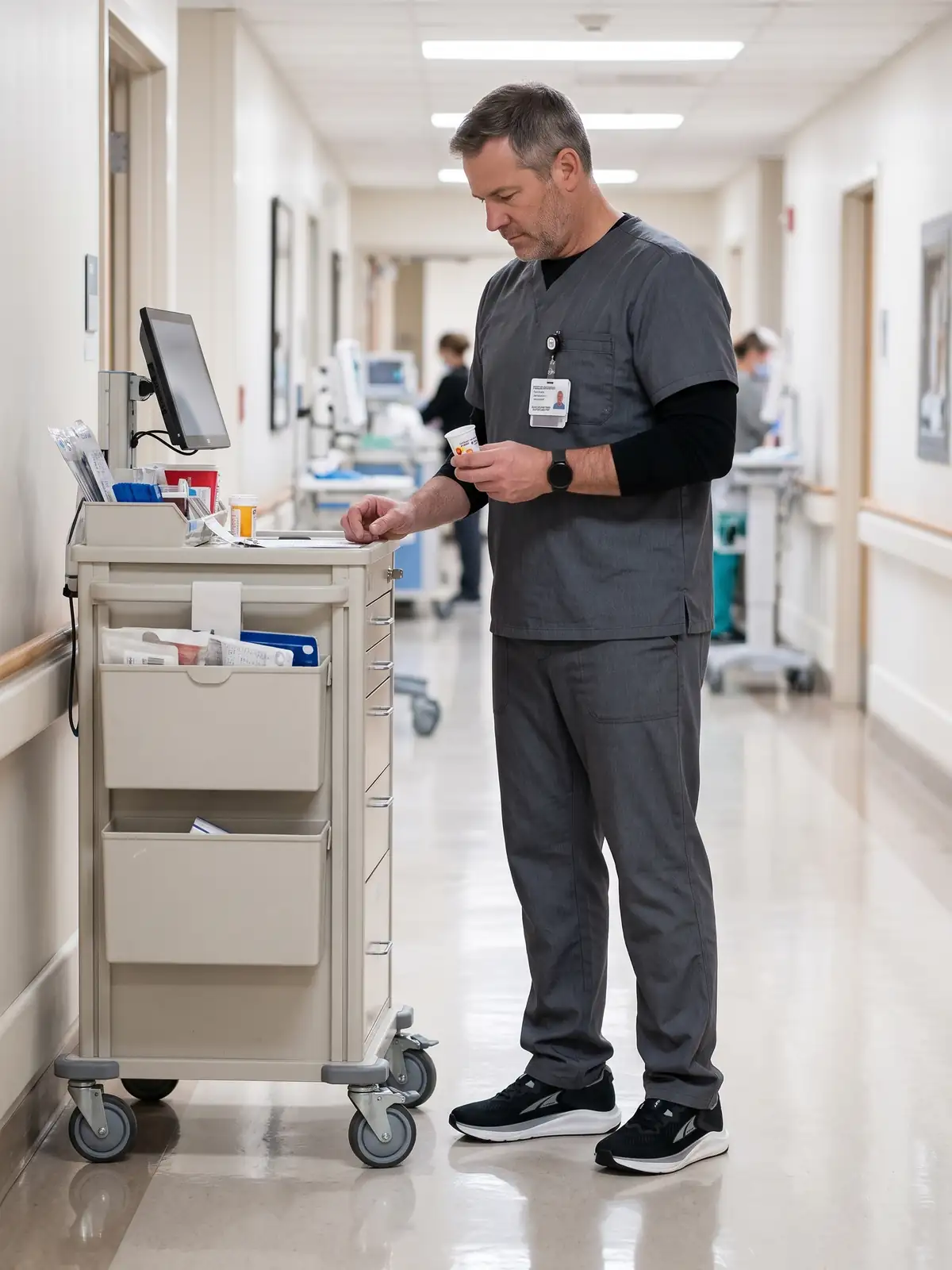
The job is as hard on feet as it looks. In a 36-hospital time-and-motion study, "Individual nurses across all study units traveled between 1 and 5 miles per 10-hour daytime shift", with a median of 3 miles. In a US study of 12-hour shifts, nurses spent "on average, 65% or approximately 7.8 hours on their feet". And the Bureau of Labor Statistics found that "Falls, slips, and trips represented the next most common event, accounting for 25.0 percent of all injuries and illnesses occurring to RNs", after overexertion.
Below: what hospitals require and why, what the slip-resistance evidence says, the clogs-or-sneakers debate, and eight pairs shown on our regular models at work. All eight are sold by eFootwear, and each picture has the shop link and the price we last checked under it. For the general research on long days on your feet, see our guide to shoes for standing all day.
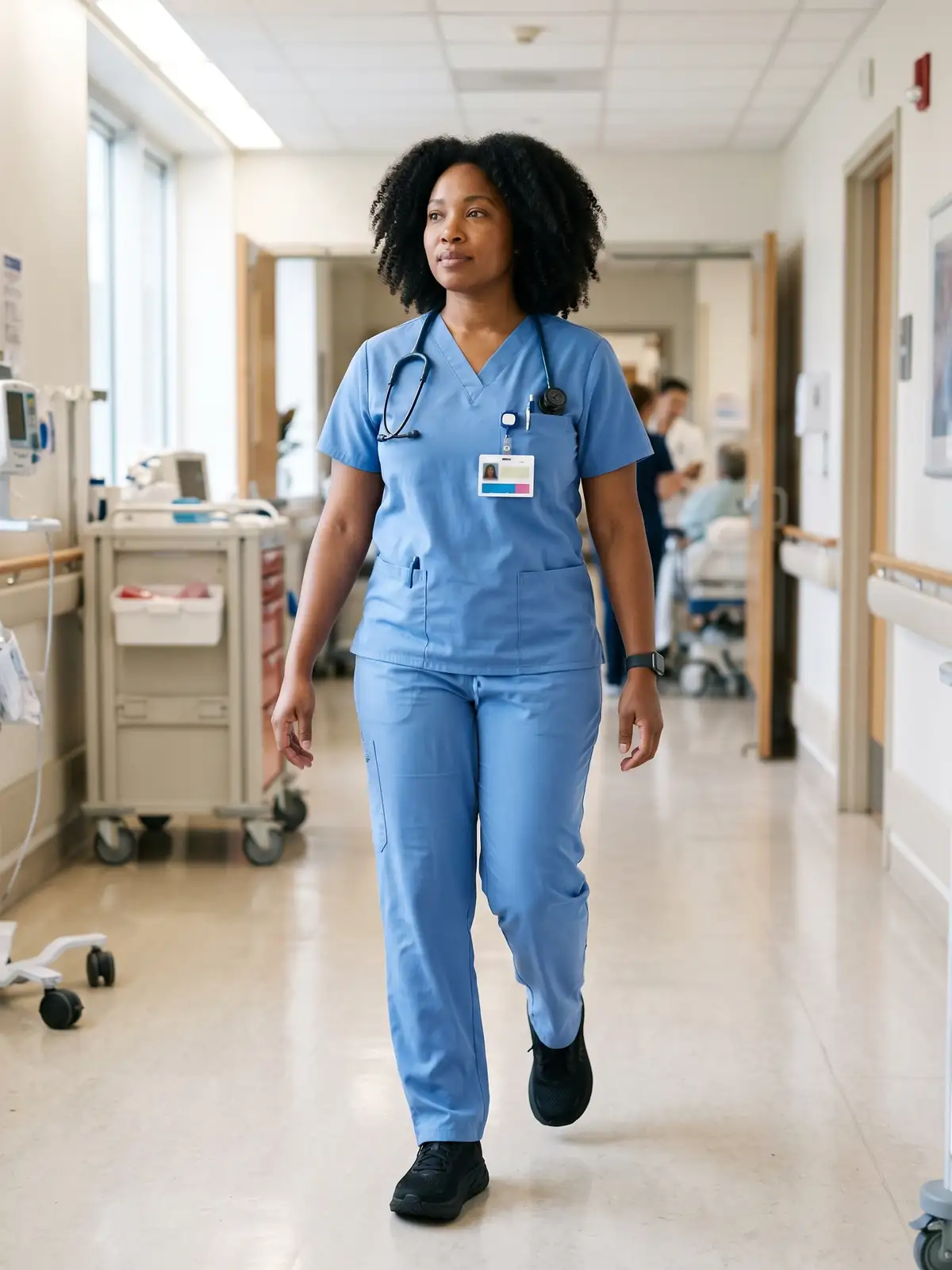
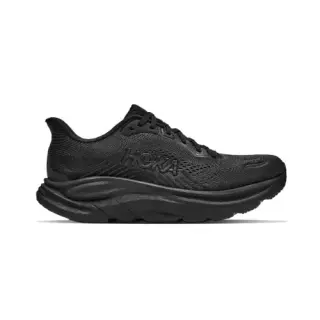 Hoka Clifton 11 Women's Wide D Black, Black $154.99 Shop at eFootwearaffiliate link
The HOKA Clifton 11 is the pair I would start with: a neutral, cushioned, fairly light running shoe in regular, wide and extra-wide. RunRepeat's 2026 guide to all-day shoes calls it "Best overall" and says "It's hard to find a walking shoe that can match the HOKA Clifton 11 for all-day wear", and Doctors of Running, whose reviewer is a physical therapist, answers yes to "Is This a Good Shoe for Standing". The all-black pair above is a women's Wide D, $154.99. Its known weakness is a "Narrow, tapered toebox" in the regular width, which is why I would try the wide. If you are also looking at the Bondi, our HOKA Clifton vs Bondi comparison puts the two side by side.
What hospitals require, and why
Rules vary by hospital, so read your own dress code first. A typical one, from a Cincinnati hospital system, says: "Open-toed shoes, thongs, sandals and high-top shoes are not to be worn", and allows Crocs-style clogs only "without holes (ports)" and with a heel strap. NHS England's guidance is similar: "Wear soft-soled shoes, closed over the foot and toes", because "Closed shoes offer protection from spills and dropped objects."
What OSHA actually says is narrower than many guides claim. Its bloodborne pathogens rule requires shoe covers or boots where "gross contamination can reasonably be anticipated", and a 2006 OSHA letter explains that shoes worn outside the facility are not protective equipment "regardless of whether the shoes cover the toes or not." In other words, closed shoes are hospital policy and good sense; where blood may reach your feet, your employer supplies covers. For operating rooms, AORN's guidance is to "Wear clean shoes in the semi-restricted and restricted areas" and "fluid-resistant shoe covers or boots when gross contamination can be anticipated."
Slip resistance: the strongest evidence
Hospitals are slippery. NIOSH counts slips, trips and falls as "the second most common cause of lost-workday injuries in hospitals", and in a study of three hospitals, "Nursing and office administrative staff generated the largest numbers of STF claims", most often from "liquid contamination".
The best trial comes from England. In 2021, researchers gave 4,553 NHS staff, 42.5% of them nurses or midwives, either slip-resistant shoes with the top UK rating or their usual work shoes. The slip-resistant shoes "reduce the rate of slips by 37% and the rate of falls resulting from a slip by 49%." Two cautions from the paper: slips were self-reported, and only half the group wore the shoes all the time. The effect was larger for older staff; in the comparison group, "those aged 60+" slipped twice as often as those under 30.
The UK rating is not the US one. In the US, look for ASTM F2913 or the SR and SRO levels on the label; our standing-all-day guide explains what they mean. Of the eight pairs below, only the New Balance 608v5 SR is sold as slip-resistant, and I could not confirm which test it passed; the running shoes are not slip-resistant.
Clogs or sneakers?
| Question | One side | The other side |
|---|---|---|
| Clogs or running shoes? | A Dansko-type clog was "my personal favorite for long hours of standing in the OR during residency" and is still "my top recommendation" (Dr. Anne Sharkey, podiatrist, Prevention) | "Running shoes are the way to go." (Dr. Stephen Smik, podiatrist, Cleveland Clinic), who also warns that foam clogs "offer no heel counter and little arch support" |
| Mesh or leather? | Dr. Bonnie Chien, an orthopedic surgeon, likes mesh "so that sweat (and odor) do not accumulate, and fungal/bacterial infections are prevented" (Shop TODAY) | "Mesh is made to let air through, so spills can soak in; leather and synthetic uppers can be wiped down." (Balance Foot & Ankle, a podiatry practice) |
| Soft or firm? | Choose softer if "you work on a hard surface like concrete and your facility doesn't have anti-fatigue rubber mats" (RunRepeat) | "Nurses need a firmness and stiffness to the arch." (Dr. Smik); a 2026 review favors "hard soles for standing and soft soles for walking" |
| Certified slip-resistant? | "All healthcare facility employees may benefit from slip-resistant shoes." (NIOSH) | On "clean and dry surfaces, the footwear was expected to behave like any other footwear" (the NHS trial's authors) |
| Compression for everyone? | "Nurses who stand much of their shift would greatly benefit from the use of compression stockings." (Dr. Smik) | Dr. Alain Tanbe, a vascular surgeon, advises against them for "advanced peripheral vascular disease"; see a doctor first if your legs already swell |
| How often to replace? | Nurses' shoes "should be replaced every 500 miles" (Dr. Sharkey) | "There's no fixed schedule." Replace them "once the tread or heels are worn down." (Balance Foot & Ankle) |
My reading: the clog debate is really about the heel and the arch. Smik's warning is about foam clogs with no heel support, not leather clogs, and a podiatry practice sums it up fairly: "Neither is better for everyone." If you are in the OR or a unit with a lot of fluid, a wipe-clean upper matters more; on a medical-surgical floor where you walk three miles, a cushioned running shoe in a dark color is the practical pick. A nurse quoted by Shop TODAY said the same: "A lot of nurses I know wear tennis shoes for the support".
Cushioned picks for long shifts
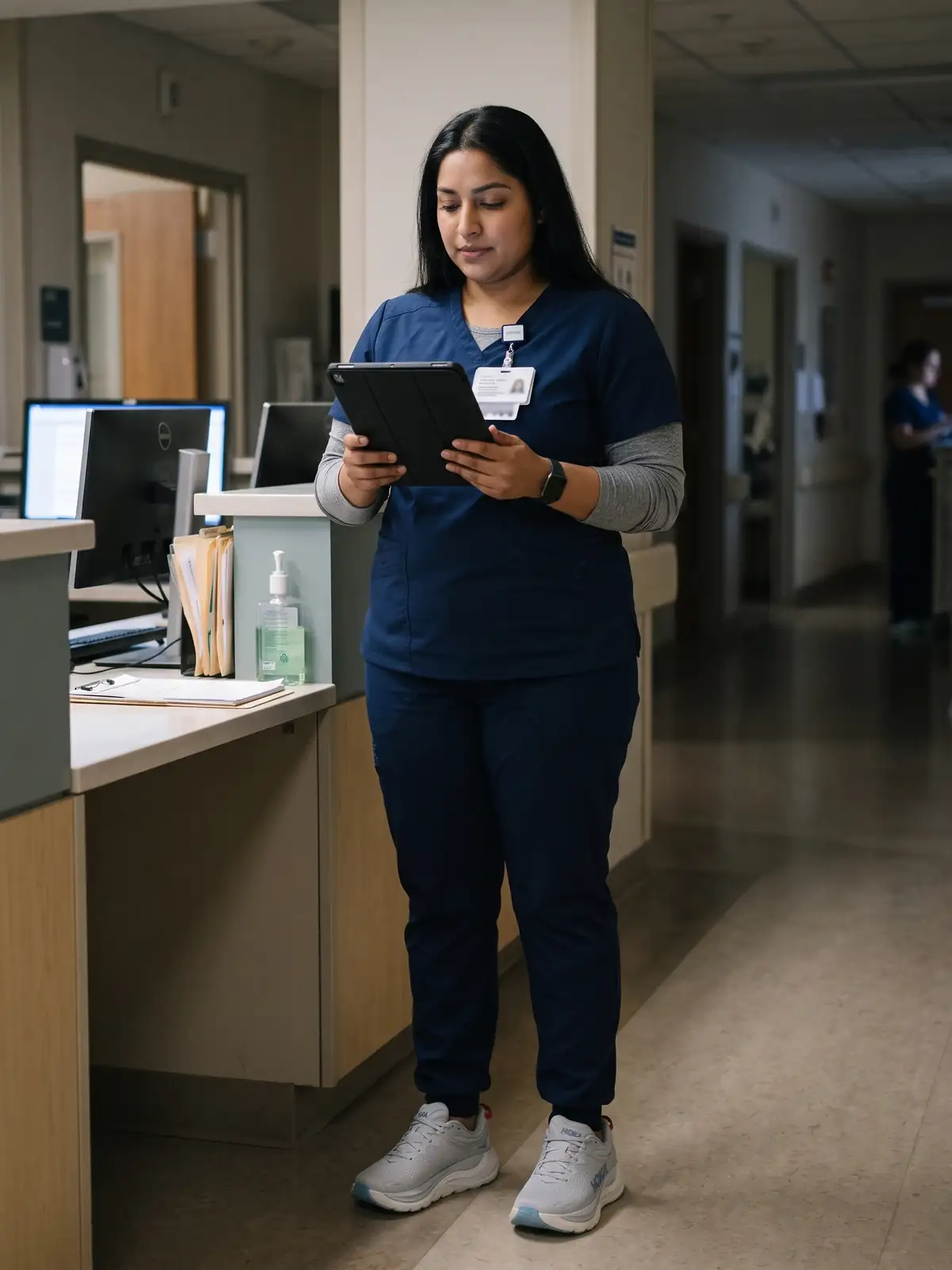
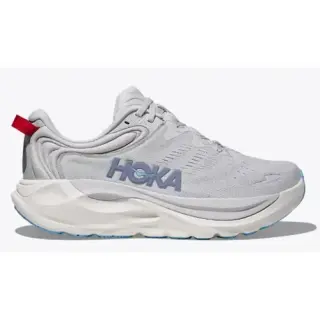 Hoka Gaviota 6 Women's Cosmic Grey, Stardust $179.99 Shop at eFootwearaffiliate link

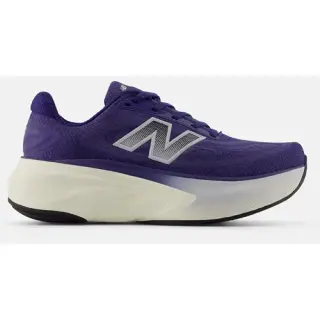 New Balance Fresh Foam X More v6 Women's Dream State, with Blue Oyster, and Pearl Grey $109.99 Shop at eFootwearaffiliate link
The HOKA Gaviota 6 ($179.99) is the one Doctors of Running names for the job: "healthcare workers / others that stand on their feet all day wanting a wider fitting, comfortable shoe, the Hoka Gaviota series is back." It is a stability shoe with a wide fit; NBC Select found it had "the roomiest fit out of all the models we tested" and that even after hours of wear, when the reviewer's feet swelled, "they still aren't tight or restrictive." The other side: RunRepeat rates its shock absorption "Average", NBC notes "No APMA Seal of Acceptance", and it may be "too wide" for narrow feet.
The New Balance Fresh Foam X More v6 ($109.99, down from $160 at list) is the softest pair here, with a 4 mm drop and a very thick midsole, and it carries the APMA seal. Running Warehouse's testers called it "a dream for walking, standing, or general all-day comfort on your feet", and found that "it feels inherently stable, so the amount of foam feels very manageable." It is heavy, about 8.5 to 9.1 oz in a women's size, and "might get a little stuffy on hot days".
Support at a lower price
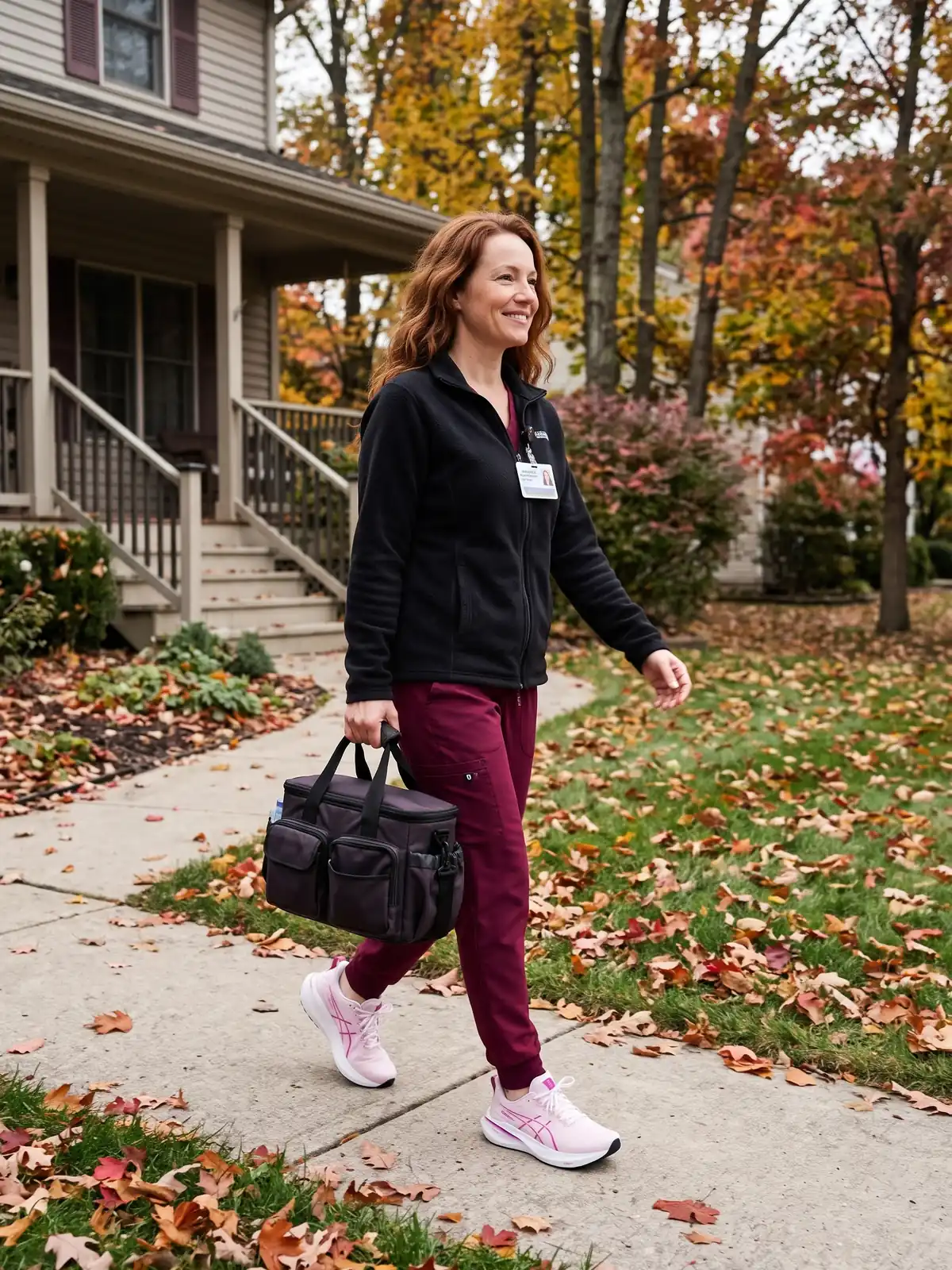
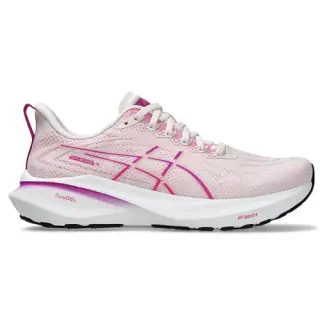 Asics GT-2000 13 Women's Running Shoe Pale Pink, Bold Magenta $79.99 Shop at eFootwearaffiliate link

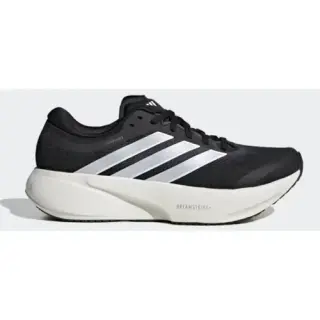 Adidas Women's Supernova Rise 3 Running Shoe Core Black, Cloud White $99.99 Shop at eFootwearaffiliate link
The ASICS GT-2000 13 ($79.99) is a mild stability shoe that Doctors of Running rates good for standing and walking, and RunRepeat calls "Exceptionally durable". ASICS has released the GT-2000 14 since, so the 13 is now the cheaper older version; its weak points are an "Insufficiently padded tongue" and an "Upper lacks vertical room", so try it if you have a high instep.
The adidas Supernova Rise 3 ($99.99) is the steady neutral option. Doctors of Running says it "works equally well for walking as the stable neutral design also feels comfortable transitioning throughout the day", but the same reviewer noted "a little slippage" on wet roads, so I would not count on it for wet floors. The men's version is on APMA's seal list; for women's, only the all-terrain version is listed.
For wet floors: slip-resistant leather
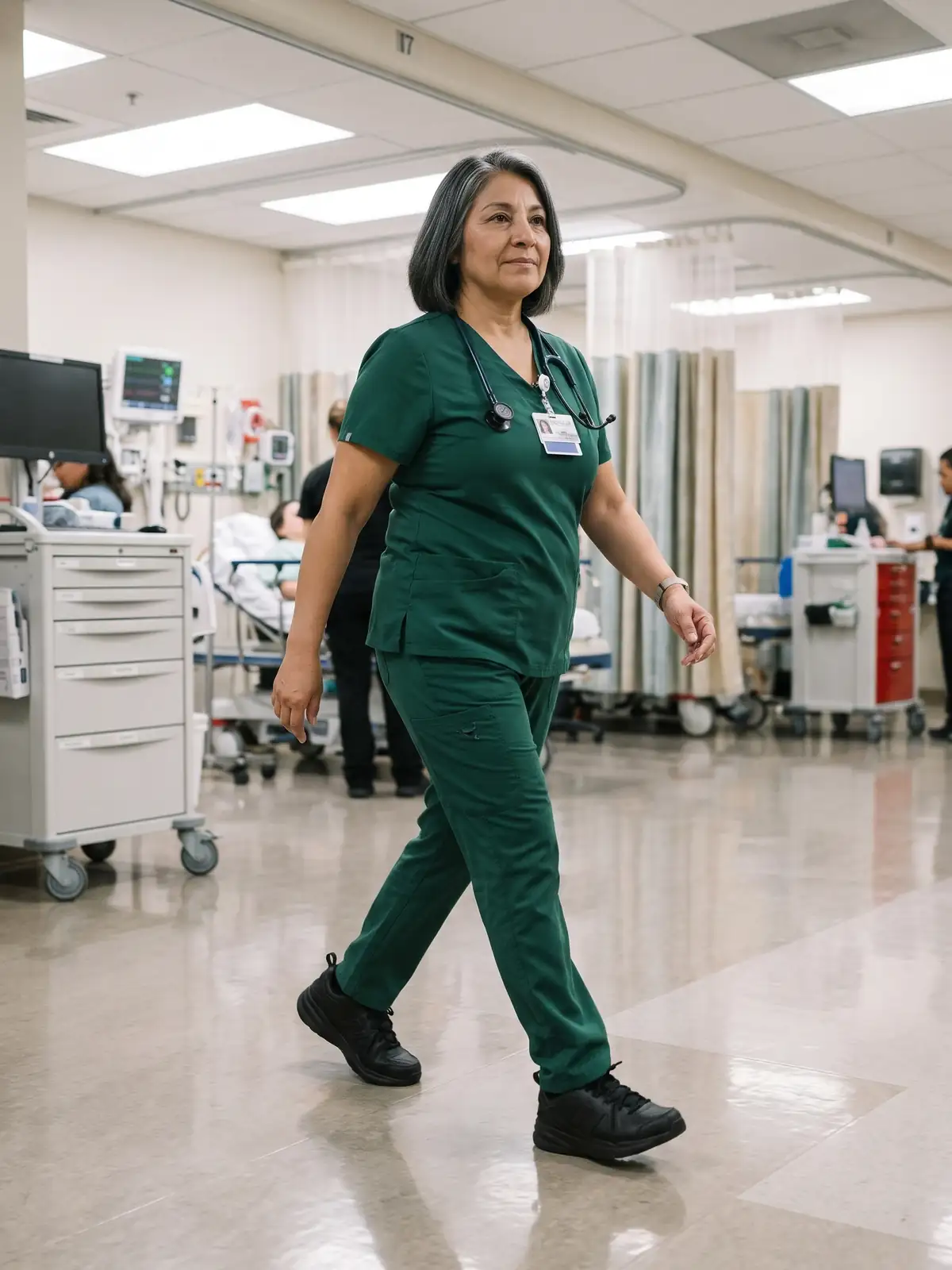
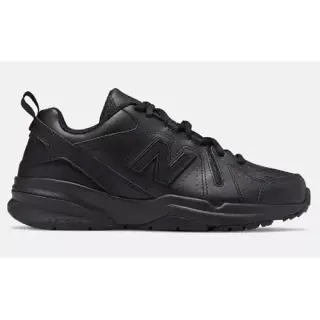 New Balance 608v5 classic trainer Women's Wide D With, Slip Resistant Black $60 Shop at eFootwearaffiliate link
The New Balance 608v5 Slip Resistant ($60, women's Wide D here) is the budget pick for the emergency department, the OR or any unit where floors get wet: a leather upper that wipes clean, ABZORB cushioning and a slip-resistant rubber outsole, in widths from narrow to wide. It is heavy and firm; RunRepeat warned of the regular 608v5 that "if you're looking for a light pair of shoes to walk around, this ain't it!" Customers on Zappos rate it four stars out of five across more than 1,500 reviews, and one wrote that they "needed comfort for my job standing up or walking for 12 hours with 1 break." I could not confirm which slip test it passed, so ask if your hospital requires a standard.
For men
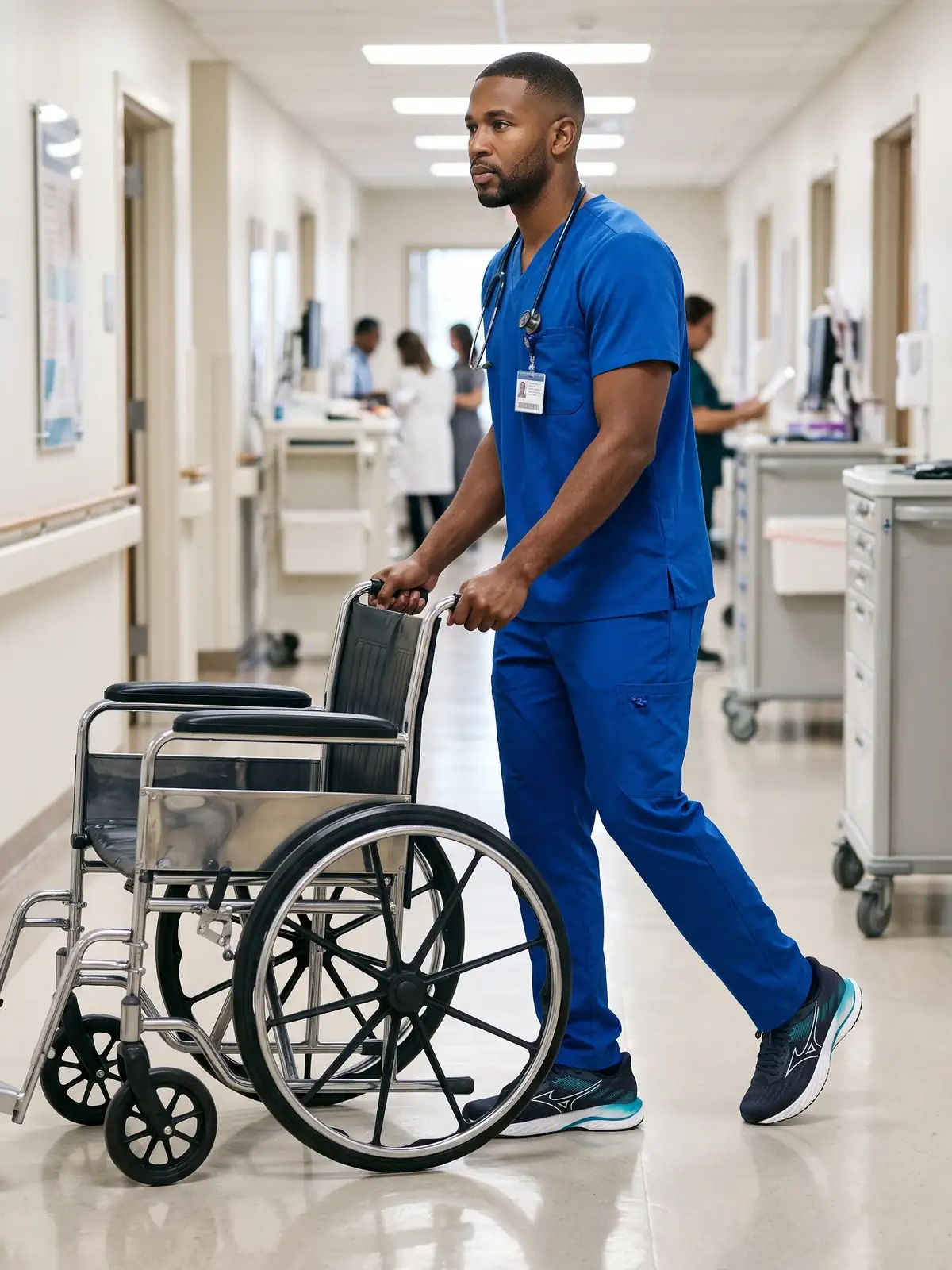
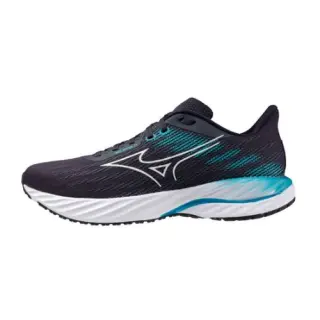 Mizuno Wave Inspire 21 Men's Running Odyssey Grey, White $89.99 Shop at eFootwearaffiliate link
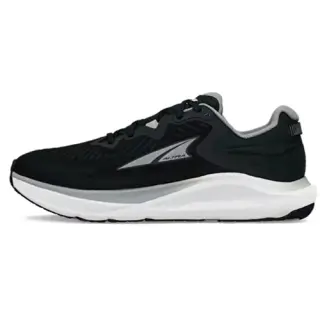 Altra Paradigm 8 for Men Wide EE Black, White $124.99 Shop at eFootwearaffiliate link
The Mizuno Wave Inspire 21 ($89.99) is a stability shoe with a high 12 mm drop, the opposite of zero drop. Doctors of Running rates it good for standing and walking, and RunRepeat found the interior "offers solid space for those with broader feet". The men's version weighs 10.3 oz, and RunRepeat warns the "Sky-high drop" is "not for everyone".
The Altra Paradigm 8 ($124.99, men's Wide EE) is the zero-drop stability pick, with a "Very roomy toebox with excellent toe splay" by RunRepeat's measure and grip that is "still solid on both dry and wet surfaces." Doctors of Running calls it "a comfortable fit and easy shoe to wear all-day". Zero drop takes getting used to: RunRepeat says to "transition slowly and with care to reduce injury risk", and a podiatrist advises people with Achilles problems to "avoid zero drop until the tendon is fully rehabilitated."
The eight pairs side by side
| Shoe | Type | Drop | Slip-resistant | APMA seal | Price |
|---|---|---|---|---|---|
| HOKA Clifton 11 (women's Wide D) | Neutral | 8 mm | No | Not listed | $154.99 |
| HOKA Gaviota 6 (women's) | Stability, wide fit | 6 mm | No | Not listed | $179.99 |
| New Balance More v6 (women's) | Max cushion | 4 mm | No | Yes | $109.99 |
| ASICS GT-2000 13 (women's) | Mild stability | 8 mm | No | Not listed (the 14 is) | $79.99 |
| adidas Supernova Rise 3 (women's) | Neutral | 8 mm | No | Men's version listed | $99.99 |
| New Balance 608v5 SR (women's Wide D) | Leather work shoe | about 10 mm (lab) | Sold as SR | Not listed | $60 |
| Mizuno Wave Inspire 21 (men's) | Stability | 12 mm | No | Not listed | $89.99 |
| Altra Paradigm 8 (men's Wide EE) | Stability, zero drop | 0 mm | No | Not listed | $124.99 |
Drops are the brand's figures except where marked. APMA seals are as listed on November 6, 2026; a missing seal usually means the brand has not applied. Prices are eFootwear's on the day we checked.
Habits that help on a long shift
Size for swelling. Shop at the end of a shift, in the socks you work in. "The biggest issue is that people are wearing one or two sizes smaller than their actual size," a podiatrist told Shop TODAY. Our guide to walking shoes for women has the podiatrists' three-step store test for checking a pair before you buy.
Wear light compression if your legs swell. In a 12-month trial of healthcare staff on standing shifts, "Leg volume increased" in the group without stockings "and decreased" in the group with them. A vascular surgeon suggests "15 to 20 mmhg" if you wear them to prevent swelling.
Keep work shoes for work. A systematic review found drug-resistant bacteria on shoe soles in hospitals, and "none have been shown to be consistently successful at disinfecting shoe soles." A dedicated pair, wiped down after each shift, is the practical answer; NurseJournal suggests "a new wipe for each shoe".
Rotate two pairs, and check the soles. Rotating shoes was linked to less plantar fasciitis in a factory study, and Dr. Chien recommends "checking the bottom soles of the shoes about every four to six months".
What I wouldn't do
Wear vented foam clogs on the floor. Most dress codes ban the holes, and podiatrists warn about the missing heel support.
Rely on a mesh running shoe in the OR or the emergency department. It breathes, but it soaks up what it should keep out. A leather or wipe-clean pair, or shoe covers, is the safer choice there.
Buy your usual size online without checking the width. Most of the pairs above come in wide, and a 12-hour shift is long enough for your feet to swell into it.
Questions people ask
What shoes do most nurses wear?
Mostly running shoes and clogs. HOKA, ASICS, New Balance and Dansko come up again and again in nurses' and podiatrists' recommendations. A nurse quoted by Shop TODAY put it simply: "A lot of nurses I know wear tennis shoes for the support".
Are HOKAs good for nurses?
Many podiatrists think so. Dr. Priya Parthasarathy told Prevention she recommends them "due to their superior cushioning, stability, and their rocker-like bottom". The Clifton 11 and the Gaviota 6 are the models I would try first; the Gaviota fits wider.
Do nurses need slip-resistant shoes?
Hospital floors are often wet, and in a trial of 4,553 NHS staff, top-rated slip-resistant shoes cut slips by 37%. Some hospitals require them; many units would benefit from them.
Are clogs or sneakers better for nurses?
Neither is better for everyone. Clogs wipe clean and some podiatrists prefer them for standing; running shoes are lighter and better for walking miles. Avoid foam clogs without a heel strap.
Does OSHA require closed-toe shoes for nurses?
Not as a general rule. OSHA requires shoe covers or boots where heavy blood contamination is expected, and lets hospitals set dress codes. Most hospital dress codes require closed shoes.
How often should nurses replace their shoes?
One podiatrist says every 500 miles; at three to four miles per 12-hour shift and three shifts a week, that is roughly ten months to a year. Replace them sooner if the heel collapses or the tread is worn smooth.
Sources
- A 36-hospital time and motion study, The Permanente Journal (2008)
- 12-hour day and night shifts and nurses' fatigue, International Journal of Nursing Studies Advances (2022)
- Nurses' steps and distance in a three-shift schedule, Human Resources for Health (2022)
- Occupational injuries and illnesses among registered nurses, Bureau of Labor Statistics (2018)
- Slip, trip and fall prevention for healthcare workers, NIOSH
- A slip, trip and fall prevention programme for hospital employees, Ergonomics (2008)
- Slip-resistant footwear reduces slips among NHS workers, a randomised trial, Occupational and Environmental Medicine (2021)
- Age, workplace slips and slip-resistant footwear among healthcare workers, Injury Prevention (2022)
- Bloodborne pathogens, 29 CFR 1910.1030, OSHA
- Wearing sandals in a medical office, OSHA interpretation letter (2006)
- Surgical attire guideline essentials, AORN (2024)
- Uniforms and workwear, guidance for NHS employers, NHS England (2020)
- Dress code for nursing service personnel, TriHealth
- Nursing self-care: keep feet feeling their best, Cleveland Clinic Consult QD
- Best shoes for nurses, according to nurses, Shop TODAY
- Real nurses swear these shoes get them through long shifts, Prevention
- Hoka is a podiatrist-approved brand for nurses, Prevention
- Best shoes for nurses, Balance Foot & Ankle
- Shoe soles as a potential vector for pathogen transmission, a systematic review (2016)
- How to keep nursing shoes clean, NurseJournal
- Occupational graduated compression, a randomized trial, International Angiology (2023)
- Are compression socks effective? Mercy Medical Center
- Footwear and comfort in prolonged standing, a systematic review (Safety and Health at Work, 2026)
- Risk factors for plantar fasciitis among assembly plant workers (PM&R, 2010)
- Best shoes for walking and standing all day, RunRepeat
- HOKA Clifton 11 review, RunRepeat
- HOKA Clifton 11 review, Doctors of Running
- HOKA Gaviota 6 review, Doctors of Running
- HOKA Gaviota 6 review, RunRepeat
- Best HOKA walking shoes, NBC Select
- New Balance Fresh Foam X More v6 review, Running Warehouse
- Women's New Balance Fresh Foam X More v6, Fleet Feet
- ASICS GT-2000 13 review, RunRepeat
- ASICS GT-2000 13 review, Doctors of Running
- adidas Supernova Rise 3 review, Doctors of Running
- New Balance 608v5 review, RunRepeat
- New Balance 608v5 Slip Resistant reviews, Zappos
- Mizuno Wave Inspire 21 review, RunRepeat
- Mizuno Wave Inspire 21 review, Doctors of Running
- Altra Paradigm 8 review, RunRepeat
- Altra Paradigm 8 review, Doctors of Running
- Altra zero drop, a podiatrist's review, Balance Foot & Ankle
- APMA Seal of Acceptance database
The images in this guide are AI-generated: real garments from our catalogue, shown on our own recurring models and made from the shops' photos of each piece. They are not photographs of real people. Prices are the ones the shops showed on November 21, 2026 and can change. Wear It On Me earns a commission when you buy a garment through an affiliate link in a guide (the links are marked, and it costs you nothing extra); a commission never decides what we recommend. How we make these guides.