1920s men's fashion: what men really wore, from Gatsby to Peaky Blinders
1920s men's fashion: a three-piece suit, a soft collar, a hat and oxfords, slim early in the decade and wide after 1925. Day, evening, Gatsby, Peaky Blinders.
Wear It On Me earns a commission on garments bought through affiliate links in our guides. That never decides what we recommend. Details.
In the 1920s, a man dressed in a suit, nearly always with a waistcoat, a white shirt with a soft or detachable collar, a tie, braces to hold up high-waisted trousers, leather oxfords or brogues, and a hat whenever he stepped outside. The look changed during the decade. Wikipedia's history of the period puts it simply: "In men's wear, there were two distinct periods in the 1920s." The first half kept the slim, high-buttoned shape left over from the war years; by the second half, suits were roomier and trousers wide. Around that core came new things: golf trousers, patterned sweaters, two-tone shoes and the dinner jacket. This guide goes through each piece with museum objects as proof, then shows what the Gatsby novel and films, and Peaky Blinders, really put on screen, and how to dress for a 1920s party today without looking like a costume shop.
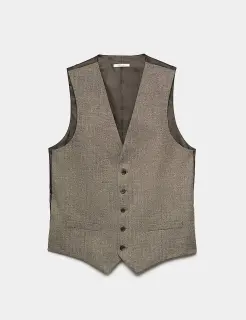 M&S Mens M&S Regular Fit Striped Suit Waistcoat, Brown CA$139 Shop at M&Saffiliate link
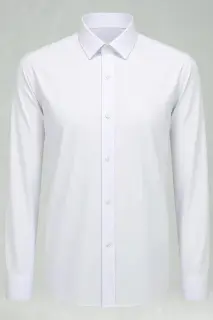 Zapaka White Classic Solid Point Collar Slim Fit Men's Suits Shirt $39 Shop at Zapakaaffiliate link
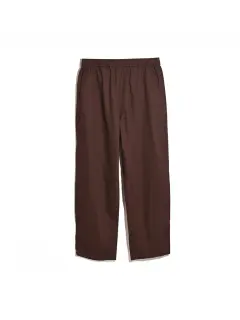 Farah Greenport Loose Fit Herringbone Trousers In Dark Brown £49 Shop at Farahaffiliate link
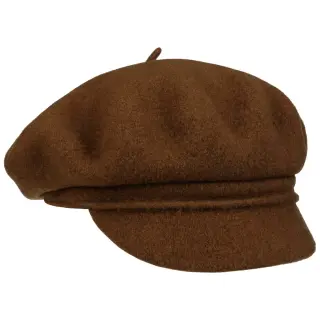 Barascon Casquette Gavroche Uni Wool by Barascon €59.90 Shop at Chapeaushopaffiliate link
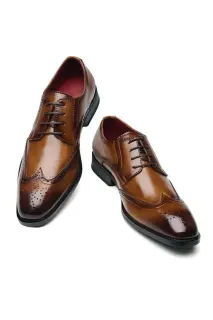 Zapaka Brown Lace-Up Leather Men's Shoes $89 Shop at Zapakaaffiliate link
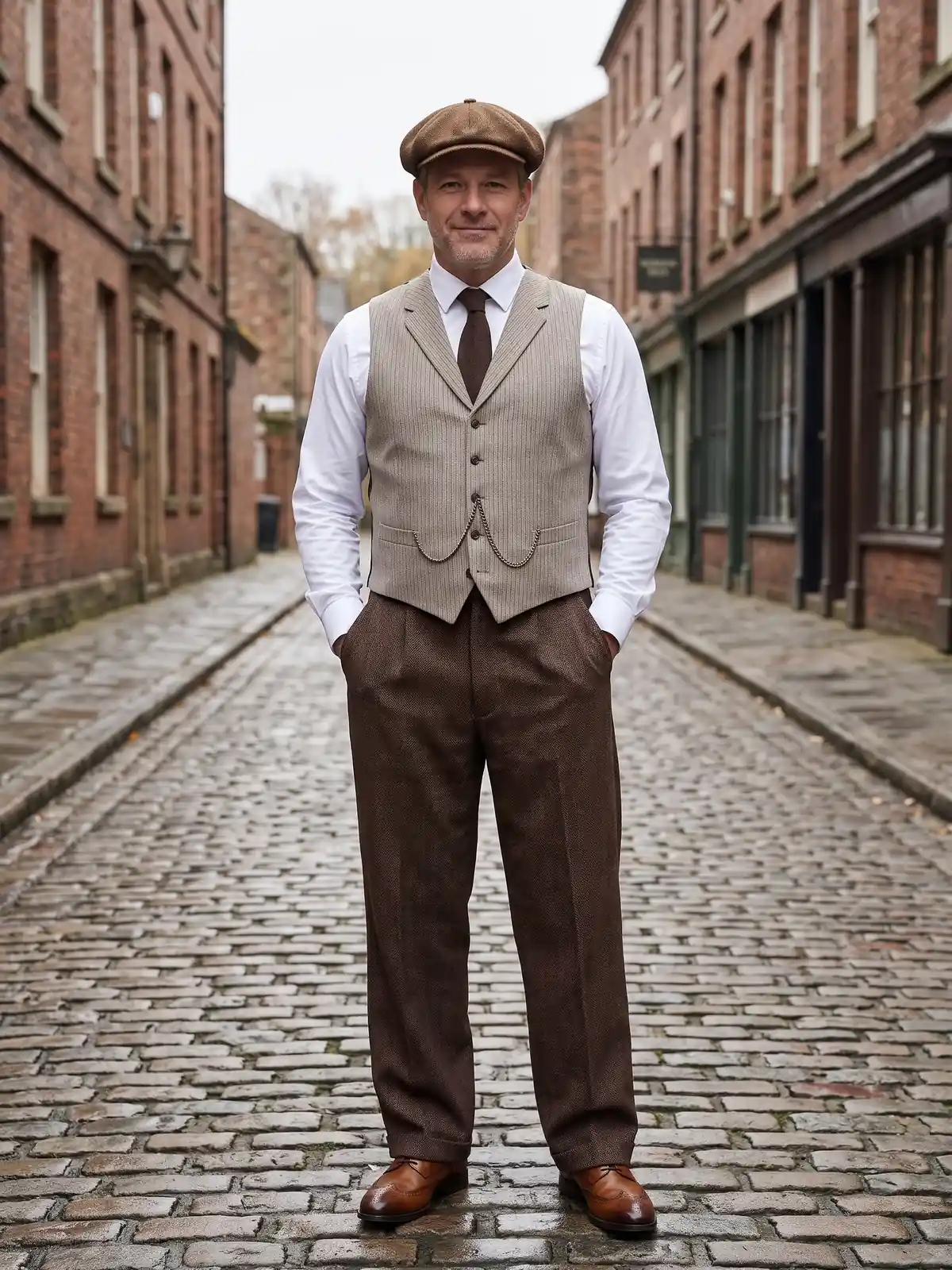
The first picture is a 1920s day look built from pieces you can buy now. M&S's striped suit waistcoat (CA$139; the shop calls it brown, it reads light taupe with a fine stripe), Zapaka's white point-collar shirt (US$39), Farah's Greenport loose-fit herringbone trousers in dark brown (£49), a brown wool newsboy cap by Barascon sold by Chapeaushop (€59.90), and Zapaka's brown wingtip brogues (US$89), on a 44R. The tie and the watch chain are styling. The trousers are the point: high on the waist, wide in the leg, in a heavy textured cloth, which is how the second half of the decade looked.
Two halves of one decade
The early 1920s (about 1919 to 1924). Jackets were short and fitted, sometimes belted, and buttoned high. Wikipedia notes that "Lapels on suit jackets were not very wide as they tended to be buttoned up high", a shape it links to wartime uniforms, and that "Trousers were relatively narrow and straight and they were worn rather short so that a man's socks often showed." Cuffs at the hem began to appear.
The late 1920s (about 1925 to 1929). "By 1925, wider trousers commonly known as Oxford bags came into fashion," the same article continues, "while suit jackets returned to a normal waist and lapels became wider and were often worn peaked." Double-breasted waistcoats under single-breasted jackets became fashionable late in the decade.
The Museum at FIT, the fashion school's museum in New York, describes the general direction: "Men moved away from starched collars and formal three-piece suits during the day." In their place came soft collars and "one- or two-button suit jackets often worn without a waistcoat". FIT also names the model everyone followed. Martin Pel, whom it quotes, writes that "British men were perceived to be sartorially the most elegant", and the man who set the tone on both sides of the Atlantic was Edward, Prince of Wales, "the epitome of the English style that men looked to in the 1920s."
| Early 1920s | Late 1920s | |
|---|---|---|
| Jacket | Short, high waist, sometimes belted, buttoned high | Normal waist, looser, wider lapels, often peaked |
| Trousers | Narrow, straight, short enough to show socks | Wide and straight, cuffed; Oxford bags at the extreme |
| Waistcoat | Expected with a suit | Often lower-cut, double-breasted, or skipped in summer |
| Collar | Starched, often detachable | Soft, increasingly attached |
| Best-known example | The Great Gatsby, set in summer 1922 | Oxford undergraduates, 1924 to 1925 |
The suit, piece by piece
Jacket. Single-breasted was the everyday norm, double-breasted the dressier alternative, and most jackets had no vent. Gentleman's Gazette, which has written the most detailed page-one guide, explains why: no vents made jackets "look sleeker". Button counts vary by source and by year, from one or two (FIT) to four or more on early high-buttoned suits.
Waistcoat. Most sources treat it as part of the suit. Wikipedia's article on the suit: "Waistcoats (called vests in American English) were almost always worn with suits prior to the 1940s." The same waistcoat could be skipped in summer, and later in the decade it often was. One rule has not changed: no shirt should show between the waistcoat and the trousers. VintageDancer, which writes for people who dress in period clothes, calls an "exposed shirt between pant and vest" taboo, which is why the trousers sat high.
Trousers. High on the waist, held up by braces, with a crease and a cuff. Wikipedia gives "a standard width at the cuff of 23 inches (58 cm)" for the decade; VintageDancer says the cuffs were "cuffed with a 2 inch fold". Pleats were single or none; the double pleat came later.
Color and cloth. Tweed, worsted and flannel through the cooler months, with linen and lighter cloths for summer, in browns, grays, medium blues and greens, often with a stripe, a check or a windowpane. One color was missing. VintageDancer: "one color a man's suit was not was solid black." Wikipedia agrees that lounge suits "were never traditionally worn in plain black", which was kept for evening wear and mourning. The black pinstripe gangster suit is a later invention: "The 1920s gangster wearing a black pinstripe suit was one perpetuated by Hollywood in the 1940s and 1950s," VintageDancer writes.
Museum pieces show the real thing. The Metropolitan Museum of Art holds a British wool suit dated 1925 and an American wool tuxedo from the same year. The Victoria and Albert Museum in London keeps a "complete ensemble showing a fashionable day suit of c.1929, from head to toe": a black double-breasted coat and striped trousers, a beige double-breasted waistcoat, a cream silk shirt with two separate cream silk collars, a striped public-school tie and a black beaver bowler from Lock & Co. It was worn in the City of London, the financial district, where that uniform lasted for decades.
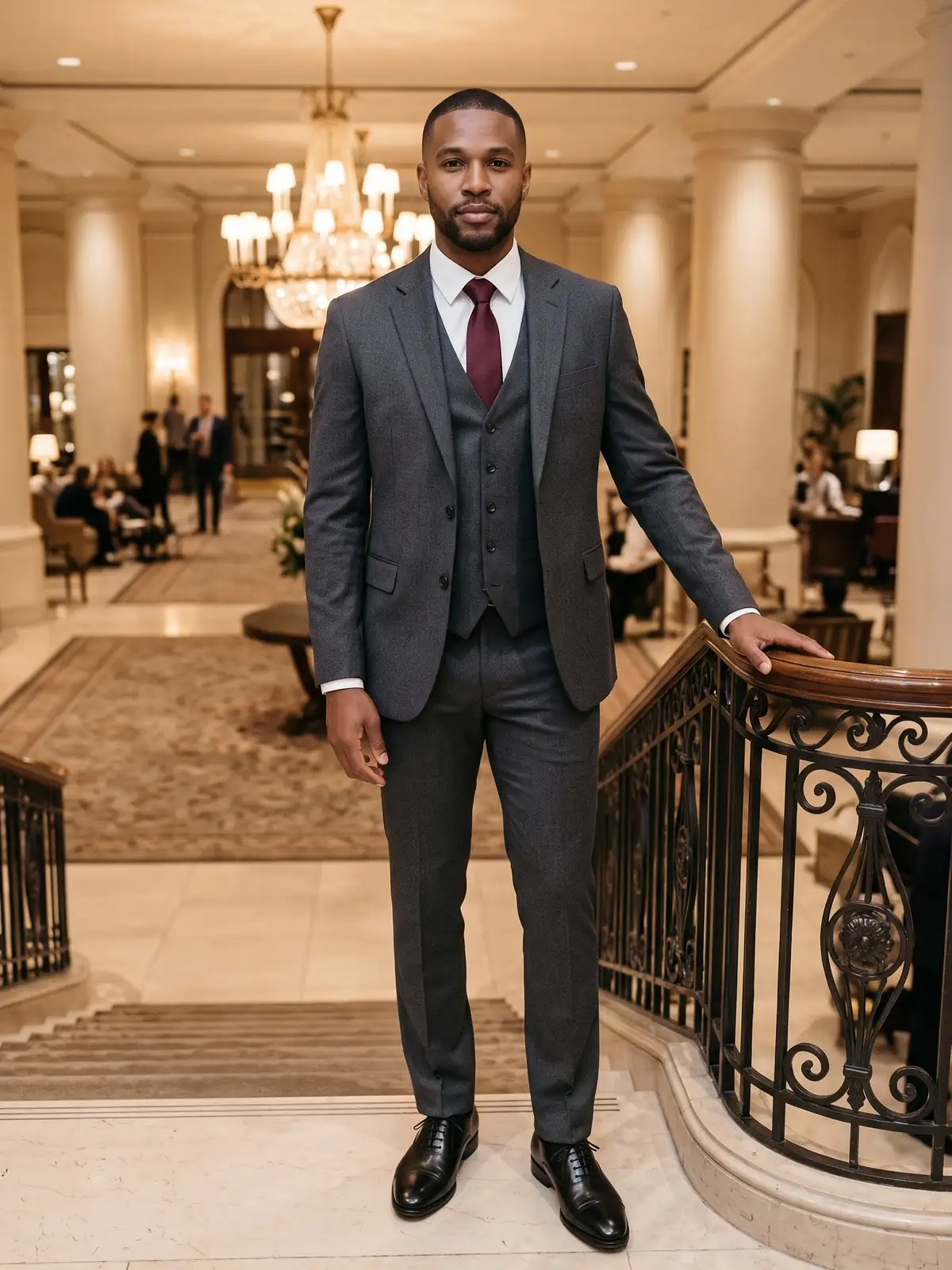
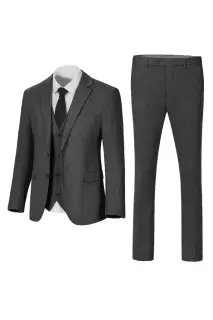 Zapaka Dark Grey Notched Lapel Single Breasted 3-Piece Men's Wedding Suits $119 Shop at Zapakaaffiliate link
- Zapaka White Classic Solid Point Collar Slim Fit Men's Suits Shirt $39 Shop at Zapakaaffiliate link
The closest modern equivalent is a dark three-piece suit. This is Zapaka's dark gray three-piece with a notched lapel (US$119), with its white shirt, a burgundy tie and black cap-toe oxfords, on a 40R. It is sharper and slimmer than a 1920s cut, and the trousers sit lower, but the three pieces and the dark, solid cloth read as the decade at a party. A higher-rise trouser and braces would bring it closer.
Shirts, collars and ties
The collar is where the decade moved fastest. At the start, many shirts had detachable stiff collars, fastened with studs. Then came the soft collar sewn onto the shirt. Wikipedia's history of the Arrow brand records that "In the early 1920s, Cluett, Peabody & Co. began manufacturing their shirts with attached collars in response to consumer demand". Gentleman's Gazette adds a transatlantic split: in Europe "you could still see many detachable collar shirts", while American men preferred the attached kind.
Moss, the British menswear chain, describes the contrast look that films borrow: separate collars "in white to contrast with a coloured shirt", with a rounded "penny collar", a collar pin or a tie clip. Ties were shorter than today's, in stripes, dots, small patterns and knits; bow ties were self-tied.
Hats, and the rules for wearing them
"Men of the 1920s always wore a hat," VintageDancer writes, and every source agrees. Which hat depended on class, season and occasion. Wikipedia's summary: upper-class men wore top hats or a homburg; "Middle-class men wore either a fedora, bowler hat, or a trilby hat"; in summer a straw boater; and "Working-class men wore a standard newsboy cap or a flat cap."
- Fedora and trilby. Soft felt, the business hat that took over during the decade. Gentleman's Gazette says "1920s fedoras typically had narrower or shorter brims and higher crowns". VintageDancer disagrees (see below).
- Homburg. Stiff felt with a curled brim, the formal business hat, and the winter hat with a dinner jacket.
- Bowler (derby). The City of London's hat. Wikipedia: "It became the quintessential attire of City of London gents in the early 1900s". How common it was in America is disputed.
- Boater. Stiff straw, summer only. In New York the cut-off was firm: the Straw Hat Riot of 1922 started when youths harassed men still wearing straw hats after September 15, the unofficial end of the season. Wikipedia: "It lasted eight days, leading to many arrests and some injuries."
- Flat cap and newsboy cap. The working man's hat, and the young man's. Wikipedia: "Flat caps were worn by fashionable young men in the 1920s." Americans called the flat cap "an English cap or Irish cap".
The etiquette was as fixed as the styles. According to Wikipedia's fedora article, "men would remove their hats when at home or when engaged in conversation with women", and a man without a hat outdoors looked poor.
Shoes, braces and the pocket watch
Shoes. The lace-up oxford replaced the high boot. FIT: men "preferred lower-cut oxfords or brogues". Cap-toes were the plainest, wingtips dressier in the country sense. Two-tone shoes, known as spectators, belonged to summer and sport. Wikipedia says the style "reached the height of popularity during the 1920s and 1930s"; Gentleman's Gazette puts it in proportion: "Two-tone shoes were definitely more popular than they are today, but it's not like every man wore them."
Braces. High trousers needed them. Wikipedia: "suspenders were still regular attire throughout the 1920s", buttoned inside the waistband and hidden by the waistcoat. Belts existed, mostly for casual and summer wear.
Pocket watch. On a chain through a waistcoat buttonhole. The wristwatch was arriving from the war, but Wikipedia notes that until the early 20th century the pocket watch remained predominant, "with the wristwatch considered feminine and unmanly".
Sportswear: plus fours, Oxford bags, Fair Isle and the raccoon coat
The 1920s is the first decade when sports clothes entered everyday dress, and four pieces define it.
Plus fours. Knickerbockers cut four inches longer so they hang over the knee band. FIT calls them "popular golf attire" and says the Prince of Wales popularized them in the US during his 1924 visit. He wore them, FIT adds, "with argyle sweaters and socks both on and off the golf course." The Met holds a pair of American wool knickerbockers from about 1925.
Oxford bags. Very wide flannel trousers, the student fashion of 1924 and 1925. FIT says the origin is contentious but that "it is generally agreed that it derived from the trousers that rowers on Oxford's crew teams pulled on over their shorts". The Los Angeles County Museum of Art holds a complete American "Oxford Bags Ensemble" from about 1928, proof that the fashion crossed the Atlantic.
Fair Isle. The V&A: "The Prince of Wales popularised the Fair Isle sweater when he wore one as part of his golfing attire in 1921". Patterned knits, argyles, cable sweaters and shawl-collar cardigans followed.
The raccoon coat. America's campus craze. Wikipedia: "Such coats were particularly popular with male college students in the middle and later years of the decade." At the other end of the social scale, the University of Vermont's photo-dating guide notes that "At the end of the 1920s, the leather jacket and cap was a popular style".
For a modern sporting jacket, see what a sport coat is; the tweed jacket with flannels is a direct descendant of this decade.
Evening: white tie, the dinner jacket and the hat that went with it
Evening dress was the most rule-bound part of a man's wardrobe, and the decade is when it changed most. The V&A, describing a British dinner suit of 1928 to 1929 in its collection (jacket, trousers and waistcoat), explains the two levels: "Dinner suits were fashionable for informal occasions such as evening parties, the theatre and concerts." Tails and a white waistcoat "were correct for dances, assemblies and public dinners." It adds a story: "In 1923 a West End hotel reportedly turned away a man for wearing a dinner jacket to a dance."
In America the dinner jacket won faster. Wikipedia's history of 1920s fashion: "For evening wear men preferred the short tuxedo to the tail coat, which was now seen as rather old-fashioned and snobby." Moss is blunter still: "Full evening dress was out, dinner jackets were in." Young men without a tuxedo could get away with their best suit at the theater, VintageDancer notes. Our guides to black tie and white tie cover both codes as they stand today.
The hat followed the coat. Wikipedia's black tie article gives the 20th-century standard: "a black or midnight blue Homburg in winter", or a straw boater in summer; top hats were kept for white tie from the First World War on.
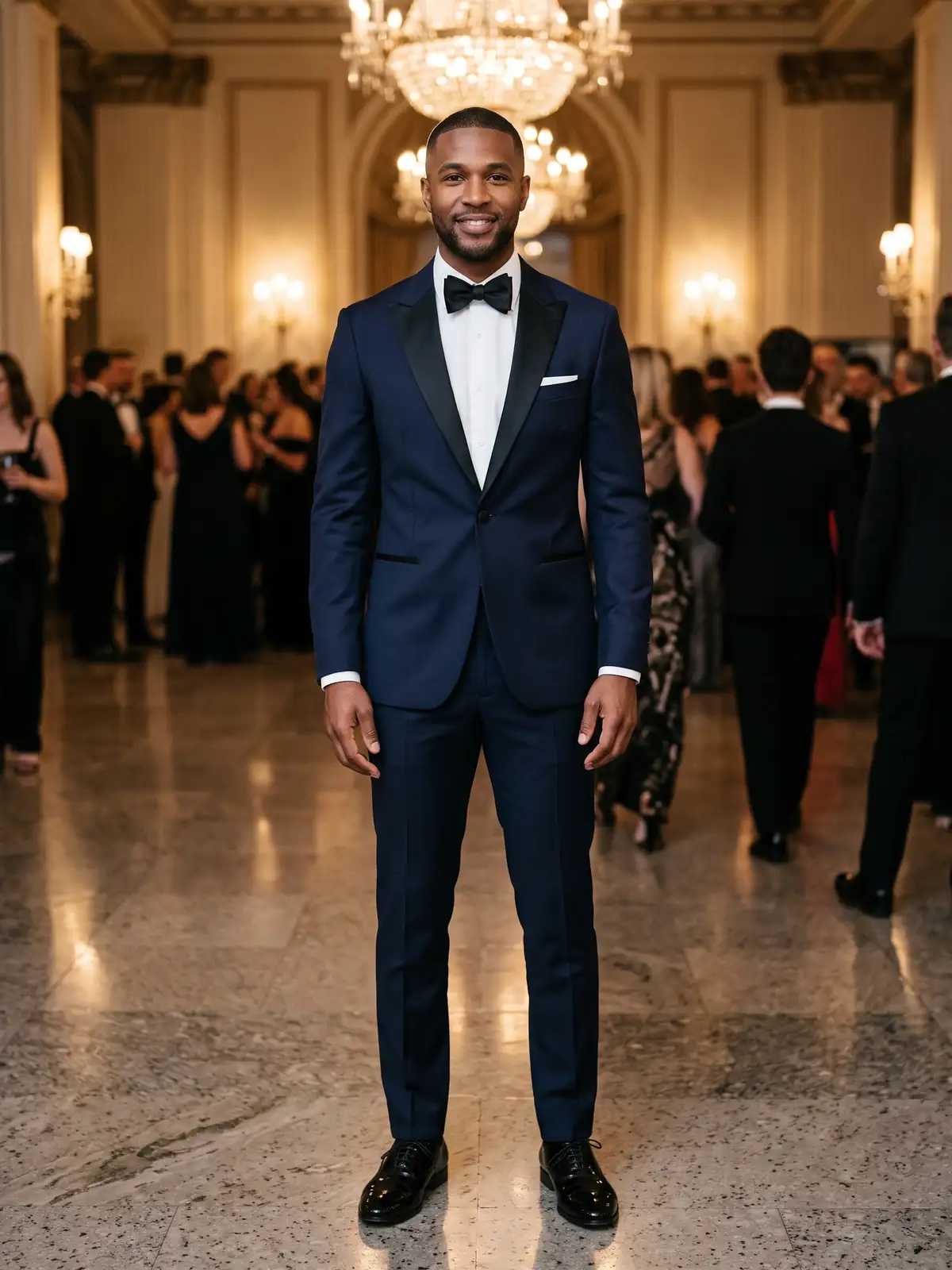
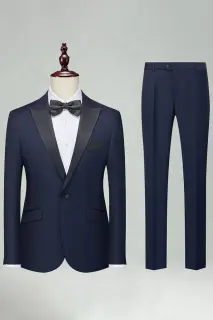 Zapaka Navy Peak Lapel Slim Fit 2 Piece Men's Suits $109 Shop at Zapakaaffiliate link
- Zapaka White Classic Solid Point Collar Slim Fit Men's Suits Shirt $39 Shop at Zapakaaffiliate link
For a 1920s party at night, a tuxedo is the safe choice, and midnight blue has a period argument behind it (see below). This is Zapaka's navy slim-fit suit with peak lapels (US$109), worn as a dinner suit with the white shirt, a black bow tie and black patent shoes, on a 40R. A 1920s version would be cut fuller, with a waistcoat and a higher trouser.
Hair and grooming
Short, neat and oiled. FIT: "Men generally wore their hair short and covered with a hat". Wikipedia's article on the undercut says army barbers made "short back and sides" the standard: "This made the short back and sides style the norm in the UK after 1918". Brilliantine gave the shine. Faces were shaved. He Spoke Style, a menswear site on page one: "Having any kind of facial hair, but especially a beard, was often seen as unsanitary." A trimmed moustache was the only accepted exception, mostly for older men.
The Great Gatsby: what the book and the films show
F. Scott Fitzgerald's novel came out in 1925 and is set in the summer of 1922. Nick Carraway dates it himself, from a timetable headed "This schedule in effect July 5th, 1922." So the true Gatsby silhouette is the early one: shorter, slimmer, higher-buttoned. Alice Jurow of the Art Deco Society, quoted by Wikipedia about the 2013 film, makes the point: "1922, it was the Jazz Age in terms of music, but the fashions hadn't quite caught up yet."
The book is specific about clothes, and almost all of it is summer wear:
- Nick goes to his first party "Dressed up in white flannels".
- Gatsby, waiting for Daisy, arrives "in a white flannel suit, silver shirt, and gold-coloured tie".
- He wears a "caramel-coloured suit" on the drive to the city.
- His shirts come from abroad: "I've got a man in England who buys me clothes."
- Tom Buchanan's sneer is about color: "He wears a pink suit."
The films added their own layers. The 1974 film won the Academy Award for costume design for Theoni V. Aldredge, and Wikipedia records that "The male costumes were executed by Ralph Lauren". For the 2013 film, costume designer Catherine Martin worked with Brooks Brothers, which announced in June 2012 that it would produce "more than 500 outfits for the male principals and extras" from its archives; in April 2013 the brand sold a Gatsby Collection inspired by her designs.
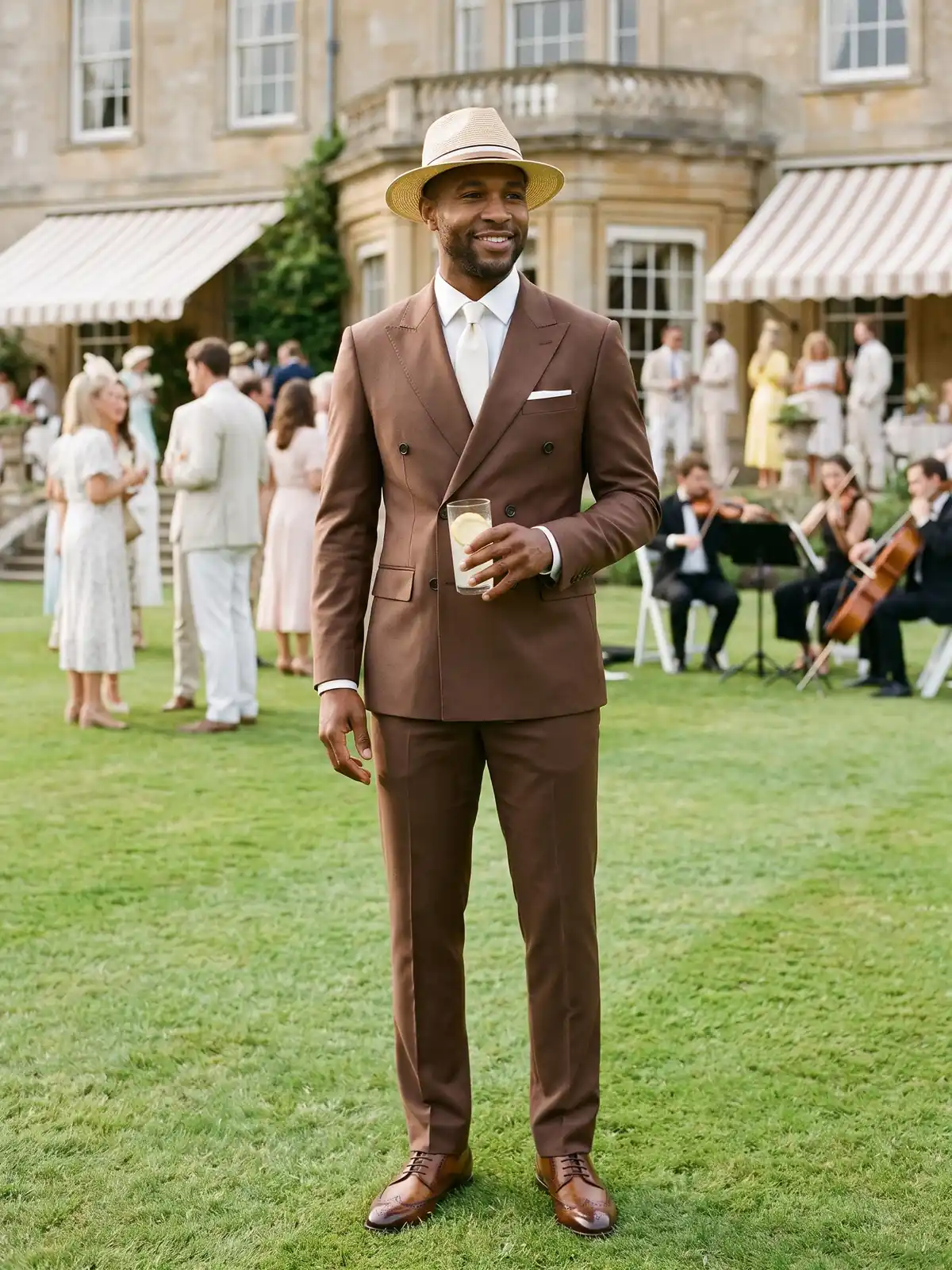
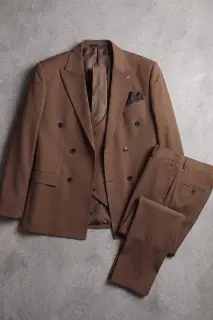 Zapaka Khaki Peak Lapel Double Breasted 2‑Piece Men's Prom Suits $139 Shop at Zapakaaffiliate link
- Zapaka White Classic Solid Point Collar Slim Fit Men's Suits Shirt $39 Shop at Zapakaaffiliate link
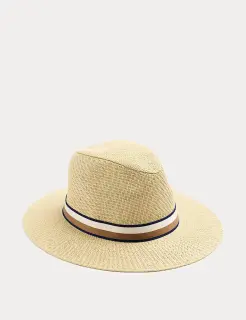 M&S Mens M&S Striped Band Fedora Hat, Stone CA$81.99 Shop at M&Saffiliate link
- Zapaka Brown Lace-Up Leather Men's Shoes $89 Shop at Zapakaaffiliate link
A summer Gatsby look from today's catalogue: Zapaka's double-breasted two-piece with wide peak lapels (US$139; listed as khaki, it reads brown), the white shirt, M&S's striped-band fedora in stone (CA$81.99) and the brown brogues, on a 40R. A boater would be more 1922 than a fedora at a lawn party; a lighter suit in cream or linen would be more Gatsby still.
Peaky Blinders: the cap, the coat and the liberties
The BBC drama begins in Birmingham in 1919, "several months after the end of the First World War", according to Wikipedia, and its sixth series starts on 5 December 1933. The real gang was older. Wikipedia's article on it: "Although they had disappeared by the 1920s, the name 'Peaky Blinders' became synonymous slang for any street gang in Birmingham." The first series' costume designer, Stephanie Collie, told Clothes on Film: "The real Peaky Blinders were about 20 years earlier, actually."
The look on screen is deliberate exaggeration. Collie again: "So, trousers were quite short then, but we just thought we'd lift them a bit more." Tommy Shelby wears no tie, though a man of the time always would. VintageDancer notes that "'20s ties were much more colorful" than his, and that real 1920s overcoats were "hardly ever black". Alison McCosh, who designed later series, told Netflix what matters: the cap "was very, very important. Having the overcoat was very important also."
The cap carries a legend. The V&A, describing a costume from the show in its collection, says the real gang "were known to hide a sharp piece of steel or metal inside the hat to be used as a weapon", and Netflix's own coverage speaks of "the razor-blade cap that gave the Peakys of the original series their name". Wikipedia disagrees: Gillette's first replaceable safety-razor system dates from 1903 in the US, and the first British factory from 1908, so "this idea of the origin of the name is apocryphal". A Birmingham historian, Carl Chinn, reads the name instead as slang: a peaky was any flat cap with a peak, and a blinder was Birmingham slang for someone dapper.
For a Peaky Blinders outfit, keep the three pieces in a heavy tweed or herringbone, add an eight-panel or flat cap and a long overcoat, and decide whether you want the show (collarless, no tie) or the period (collar and tie).
How to dress for a Gatsby or 1920s party today
You do not need a costume. The Vou, a styling site, gives the shortcut: "add a separate waistcoat to a plain suit; the hat and the waistcoat give the quickest 1920s impression." Here is what to buy, what to borrow and what to leave out.
Buy: a hat that fits. "Wide brims and tall crowns are more authentic to the 1920s," says VintageDancer's hat guide, which warns against "trendy stingy brim fedoras and slim ivy caps". A tweed flat cap is the cheapest period hat. Add braces and, if you can, a trouser with a higher rise. Two-tone shoes are a splurge, not a requirement.
Borrow or wear what you own: any suit in brown, gray, blue or green plus a separate waistcoat; an overcoat from a thrift or charity shop; a rented tuxedo for an evening party. To make those pieces part of an everyday wardrobe, our guide to building a capsule wardrobe shows how to choose a few that all go together.
Avoid: the black pinstripe suit with a toy gun, which is the Hollywood gangster; the striped blazer with armbands, which is barbershop-quartet theater; a white dinner jacket for a 1920s evening ("The white dinner jacket over black pants wasn't worn until the 1930s," writes VintageDancer); and very slim, low-rise suits, which push the waistcoat up and the shirt out.
For the women's side of a 1920s night, see our guide to sequin dresses, and for the rest of the evening, New Year's Eve outfits.
Where the sources disagree
- How wide Oxford bags were. FIT says the original pair was "about 22 inches wide at the bottom" and the extreme ones up to 44. Gentleman's Gazette says "in the '20s, they were typically around 23 inches". VintageDancer gives "leg widths of up to 16 inches". Wikipedia suggests the confusion is in the measuring, "possibly due to a misunderstanding of the measurement as the width rather than circumference".
- Why Oxford bags existed. Encyclopedia.com states as fact that they "first were worn to get around the university's ban on wearing knickers"; Wikipedia calls the ban something "sometimes said"; The Vou says the story "is best treated as a story rather than a documented rule"; FIT points to rowers' over-trousers.
- The bowler in America. VintageDancer's main guide says it "was hardly seen in America"; its own hat page says "Most middle class men wore a black or brown felt bowler or derby hat". Gentleman's Gazette: more so in England than in the US.
- Fedora brims. Narrower brims and higher crowns in the 1920s (Gentleman's Gazette; Wikipedia says US brims widened in the 1940s) against "Vintage fedora hats had wide brims" (VintageDancer).
- The waistcoat. "Required" (VintageDancer), "almost always worn" (Wikipedia) or "often worn without" and "no longer mandatory" (FIT, Gentleman's Gazette).
- The razor-blade caps. Repeated by the V&A and Netflix, called apocryphal by Wikipedia.
- Black or midnight blue at night. Moss: "what we know today as the classic black tux was midnight blue in the '20s". Wikipedia's black tie article says midnight blue only "rivalled black by the mid-1930s".
- The white dinner jacket. Moss calls white tuxedos "a symbol of wealth" in the decade; VintageDancer says they were not worn until the 1930s; Wikipedia says they were tried in warm weather between the wars.
The United Kingdom and the United States
The two countries dressed alike in the 1920s, with American men following London tailoring, but the vocabulary and some customs differ.
| United States | United Kingdom | |
|---|---|---|
| Holding up trousers | Suspenders | Braces (British "suspenders" hold up stockings) |
| Evening coat | Tuxedo | Dinner jacket or dinner suit |
| Trouser hem | Cuffs | Turn-ups |
| Waistcoat | Vest | Waistcoat |
| Collars | Attached collars spread early | Detachable collars lasted longer |
| Bowler | Disputed: rare or common, depending on the source | The City of London's uniform |
| Two-tone shoes | A summer and sport shoe | "Co-respondent shoes", thought too flashy |
| Evening rule | The dinner jacket widely accepted | Tails still expected at dances |
| White dinner jacket | From the 1930s, in warm weather | "never worn, even on the hottest day of summer" |
| Haircut | The brush cut was common | Short back and sides, the norm after 1918 |
Wikipedia explains the shoe nickname: in England the two-tone style "was considered too flamboyant for a gentleman" and was linked to cads named in divorce cases. Three of the decade's lasting fashions are British in origin: Oxford bags (Oxford, 1924 to 1925), the Fair Isle sweater (the Prince of Wales, 1921) and the flat cap, which "originating in Northern England" was worn by working men and fashionable young men alike. Peaky Blinders' Birmingham is a British story, and its caps a British hat.
Questions people ask
What did men wear in the 1920s?
A suit, usually with a matching waistcoat, a white shirt with a soft or detachable collar, a tie, braces, leather oxfords or brogues and a hat. Early in the decade the suit was slim and short; from about 1925 it was looser, with wide trousers. Sportswear such as plus fours and Fair Isle sweaters joined everyday dress.
How did men's fashion change in the 1920s?
It relaxed. Starched collars gave way to soft attached ones, waistcoats became optional in summer, trousers widened, and sports clothes entered daily wear. At night, the dinner jacket replaced the tailcoat for most occasions.
What should a man wear to a 1920s party?
A three-piece suit, or a plain suit with a separate waistcoat, in brown, gray or blue, with a tie, braces and a hat (a felt fedora or a tweed flat cap). For an evening party, a tuxedo with a bow tie. Skip the black pinstripe gangster costume.
What is a Great Gatsby men's outfit?
For day: white flannels or a light suit with a striped or pastel shirt and a tie, as the novel describes, and a straw boater on top; the story is set in summer 1922. For night: a black or midnight blue tuxedo with a bow tie. Keep the cut slim and high-buttoned, as in 1922.
What is a Peaky Blinders outfit?
A three-piece suit in tweed or herringbone, a collarless or plain shirt, a long overcoat and an eight-panel or flat cap. The show drops the tie and shortens the trousers on purpose; a period version keeps the collar and tie.
Did men wear jeans in the 1920s?
Only for work. VintageDancer notes that dark blue denim was used for overalls and heavy work trousers, and that jeans did not become casual everyday wear for a few more decades. Casual trousers were wool, tweed, corduroy or flannel, along with knickerbockers for sport.
Did all men wear suits in the 1920s?
No. Gentleman's Gazette answers "No, definitely not!": working men wore sturdy trousers, shirts, overalls and workwear on the job, and young men took to sportswear for leisure. For town, the office and going out, though, the suit was the standard, and working men often owned one or two in heavy tweed.
What hats did men wear in the 1920s?
The fedora and trilby for most men, the homburg for formal business, the bowler (above all in the City of London), the straw boater in summer, and the flat or newsboy cap for working men and the young. The top hat was kept for white tie.
What shoes did men wear in the 1920s?
Low lace-up oxfords and brogues, cap-toe or wingtip, in black, brown or tan; two-tone spectators for summer and sport; black patent oxfords or pumps with evening dress.
Sources
- Wikipedia: 1920s in Western fashion (last edited October 17, 2026)
- The Museum at FIT, Karina Reddy: Fashion History Timeline, 1920-1929 (updated August 18, 2020)
- Victoria and Albert Museum: Dinner suit, Great Britain, 1928-1929
- Victoria and Albert Museum: Ensemble, man's suit, 1929, English
- Victoria and Albert Museum: A history of sweaters
- Victoria and Albert Museum: Peaky Blinders costume, designed by Alison McCosh (record created May 12, 2022)
- Los Angeles County Museum of Art: Oxford Bags Ensemble, circa 1928
- The Metropolitan Museum of Art: Tuxedo, American, 1925
- The Metropolitan Museum of Art: Suit, British, 1925
- The Metropolitan Museum of Art: Knickerbockers, American, ca. 1925
- Project Gutenberg: F. Scott Fitzgerald, The Great Gatsby (1925)
- Wikipedia: The Great Gatsby (1974 film) (last edited October 20, 2026)
- Wikipedia: The Great Gatsby (2013 film) (last edited October 24, 2026)
- Ivy Style, Christian Chensvold: Brooks Outfitted Gatsby Cast (June 7, 2012)
- Wikipedia: Peaky Blinders (TV series) (last edited November 12, 2026)
- Wikipedia: Peaky Blinders (last edited October 15, 2026)
- Clothes on Film, Christopher Laverty: Peaky Blinders, Q&A with Costume Designer Stephanie Collie
- Netflix Tudum, Amanda Richards: From Caps to Three-Piece Suits, a Look at the Peaky Blinders Costumes (June 27, 2022)
- Netflix Tudum, John DiLillo: In Peaky Blinders, the Cap Makes the Man (2026)
- Wikipedia: Suit (last edited November 7, 2026)
- Wikipedia: Black tie (last edited October 15, 2026)
- Wikipedia: Oxford bags (last edited May 7, 2026)
- Encyclopedia.com: Oxford Bags (Fashion, Costume, and Culture)
- Wikipedia: Plus fours (last edited April 22, 2026)
- Wikipedia: Raccoon coat (last edited July 23, 2024)
- Wikipedia: Fedora (last edited November 8, 2026)
- Wikipedia: Bowler hat (last edited October 7, 2026)
- Wikipedia: Flat cap (last edited June 16, 2026)
- Wikipedia: Straw Hat Riot (last edited November 13, 2026)
- Wikipedia: Spectator shoe (last edited August 4, 2026)
- Wikipedia: Suspenders (last edited October 12, 2026)
- Wikipedia: Pocket watch (last edited October 30, 2026)
- Wikipedia: Arrow (brand) (last edited May 21, 2026)
- Wikipedia: Undercut (hairstyle) (last edited June 1, 2026)
- University of Vermont, Landscape Change Program: Men's Fashions, 1920s
- Gentleman's Gazette, Sven Raphael Schneider: What Men Really Wore in the 1920s (May 22, 2024)
- VintageDancer, Debbie Sessions: 1920s Men's Fashion, What Did Men Wear in the 1920s? (2019)
- VintageDancer, Debbie Sessions: What Did Men Wear in the 1920s (2023)
- VintageDancer: 1920s Men's Hats and Caps
- VintageDancer, Debbie Sessions: Peaky Blinders Outfit (2018)
- VintageDancer, Debbie Sessions: Great Gatsby White Suit
- He Spoke Style, Angela Mae: The Ultimate Guide to 1920s Men's Fashion (updated December 17, 2025)
- Moss, A. Fozzard: 1920s men's style, from the working class to gangsters (2019)
- The Vou, Mandy Meyer, Elizabeth Wilson and Amira Tiessan: 1920s Men's Fashion in 8 Looks (updated October 14, 2026)
The images in this guide are AI-generated: real garments from our catalogue, shown on our own recurring models and made from the shops' photos of each piece. They are not photographs of real people. Prices are the ones the shops showed on November 21, 2026 and can change. Wear It On Me earns a commission when you buy a garment through an affiliate link in a guide (the links are marked, and it costs you nothing extra); a commission never decides what we recommend. How we make these guides.